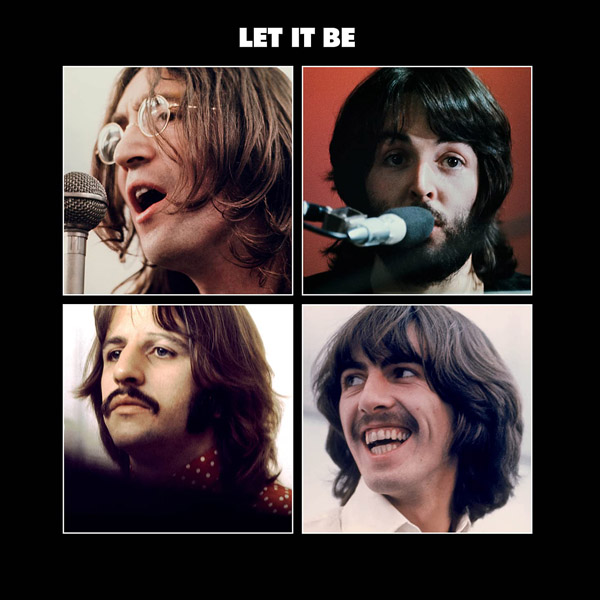

Jan 3 - April 2, 1970 • Songs recorded during this session appear on Let It Be (US version)
Recording studio: EMI Studios, Room 4, Abbey Road • London • UK
Session Mar 25, 1970 • Mixing "Let It Be" album #2
Session Mar 26, 1970 • Mixing "Let It Be" album #3
Session Mar 27, 1970 • Mixing "Let It Be" album #4
Album Mar 27, 1970 • "Sentimental Journey" by Ringo Starr released in the UK
AlbumSome of the songs worked on during this session were first released on the "Let It Be (UK - 1st pressing with "Get Back" book)" LP
This was the fourth day of work for Phil Spector on the “Get Back” tapes recorded in January 1969. On this day, he worked on “Dig It” and added snippets of dialogue between songs.
For “Dig It,” Glyn Johns had selected take DDSI.24.85, recorded on January 24. Phil Spector decided to use DDSI.26.55, recorded on January 26, 1969. Only one stereo remix (RS1) was prepared.
Spector then crossfaded RS1 with a snippet of John Lennon’s spoken dialog from DDSI.24.85: “That was ‘Can You Dig It’ by Georgie Wood, and now we’d like to do ‘Hark the Angels Come.” This served as a segue into the next track of the album, “Let It Be.”
[Phil Spector] selected the same January 26th rendition of the song as Glyn Johns had chosen but edited it down to the :49 “like a rolling stone…Matt Busby” section for inclusion on the album. Although vocalizations from Paul were heard during this segment of the performance, especially during the “like a rolling stone” lyrics, Phil Spector decided to pan this out of the mix entirely. Since McCartney was not involved in the mixing of the album and Lennon was instrumental in Phil Spector taking on this project, one can assume that Paul’s vocal contributions were omitted at John’s request. Phil Spector also chose the “…’Hark, The Angels Come’” announcement from January 24th to use as a segue to the song “Let It Be” as Glyn Johns originally proposed.
From beatlesebooks.com
On the same day, Spector also combed through the “Get Back” tapes for other spoken-word snippets to enhance the album’s flow. Two of these were ultimately included in the final mix:
Phil Spector continued his work on the “Get Back” tapes on March 30, 1970.
Written by Paul McCartney, Ringo Starr, John Lennon, George Harrison
Mixing • DDSI.24.85 • Stereo mixing - Remix 1
AlbumOfficially released on Let It Be (UK - 1st pressing with "Get Back" book)
Dialogue and miscelleneous pieces
Mixing • Stereo mixing - Remix 1-8
The Complete Beatles Recording Sessions • Mark Lewisohn
The definitive guide for every Beatles recording sessions from 1962 to 1970. We owe a lot to Mark Lewisohn for the creation of those session pages, but you really have to buy this book to get all the details - the number of takes for each song, who contributed what, a description of the context and how each session went, various photographies... And an introductory interview with Paul McCartney!
The Beatles Recording Reference Manual: Volume 5: Let It Be through Abbey Road (1969 - 1970)

The fifth and final book of this critically acclaimed series, "The Beatles Recording Reference Manual: Volume 5: Let It Be through Abbey Road (1969 - 1970)" follows The Beatles as they "get back to where they once belonged...". Not once, but twice. With "Let It Be", they attempted to recapture the spontaneity of their early years and recordings, while "Abbey Road" was a different kind of return - to the complexity, finish and polish that they had applied to their work beginning with "Revolver" and through to "The Beatles".
If we modestly consider the Paul McCartney Project to be the premier online resource for all things Paul McCartney, it is undeniable that The Beatles Bible stands as the definitive online site dedicated to the Beatles. While there is some overlap in content between the two sites, they differ significantly in their approach.

Notice any inaccuracies on this page? Have additional insights or ideas for new content? Or just want to share your thoughts? We value your feedback! Please use the form below to get in touch with us.


