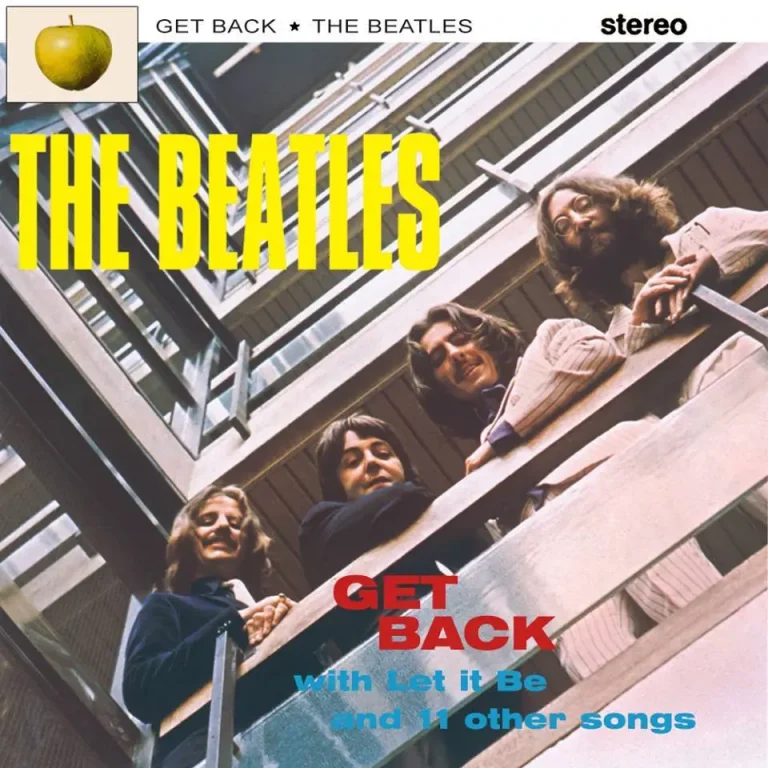
Monday, September 22, 1969
US radio WBCN broadcasts the “Get Back” LP
Last updated on May 16, 2025
Monday, September 22, 1969
Last updated on May 16, 2025
Previous article Sep 20, 1969 • The Beatles sign the new Capitol / EMI agreement
Interview Sep 20, 1969 • Paul McCartney interview for Evening Standard
Interview Sep 21, 1969 • Paul McCartney interview for BBC Radio 1
Article Sep 22, 1969 • US radio WBCN broadcasts the “Get Back” LP
Article Sep 25, 1969 • Paul and Linda McCartney at the UK premiere of "Midnight Cowboy"

By The Beatles • Bootleg

The “Get Back” LP rumours • April to May 1969
April - May 1969
Photo shoot of the “Get Back” LP album
May 13, 1969
The “Get Back” LP rumours • June to July 1969
June - July 1969
The “Get Back” LP rumours • August 1969
August 1969
The “Get Back” LP rumours • September to December 1969
September - December 1969
US radio WKBW broadcasts the “Get Back” LP
Sep 20, 1969
In January 1969, towards the end of the “Get Back” sessions, engineer Glyn Johns began mixing tracks and, on January 30, completed a first version of the “Get Back” LP. He also prepared acetates for The Beatles to review.
Beatles press officer Derek Taylor obtained one of the acetates — or a copy of it — and passed it along to his friend, San Francisco-based DJ Tom Donahue. Donahue, in turn, shared it with DJ Steven Segal, then working at the underground Boston radio station WBCN-FM. It was likely understood by both DJs that the recordings were not intended for broadcast.
From March to May 1969, Glyn Johns resumed more formal work on assembling a “Get Back” album.
On September 12, 1969, John Lennon, along with the Plastic Ono Band, travelled to Canada to perform at the Toronto Rock and Roll Revival. It was rumoured that John gave an acetate or tape copy of the album to Toronto-based journalist Ritchie Yorke. Another version of the story suggests that John handed over the acetate during an interview with Yorke at Apple’s London offices on September 17, shortly after returning from Toronto.
Back in Toronto, Yorke reportedly made a tape copy of the acetate — capturing only the left stereo channel — and sold it to local station CHUM-FM. CHUM then supplied tape dubs to Windsor’s CKLW and Niagara Falls’ CJRN. The three stations began broadcasting the songs. WKBW-AM in Buffalo obtained a copy from a Canadian source and started airing the tracks on September 20.
Upon hearing that “Get Back” tracks were being aired by WKBW-AM, Steven Segal decided to broadcast his copy of the album. He began doing so on this day, September 22.
The January 1969 version of the “Get Back” LP, broadcast by WKBW-AM, led to the release of the first Beatles bootlegs, titled “Kum Back.”
The Early May version of the “Get Back” LP, as aired by WBCN-FM, was also bootlegged — firstly on the release titled “O.P.D.,” which surfaced on the U.S. market in early 1970.
Source: article “Let It Bootleg” by Scott “Belmo” Belmer, in “The Beatles Finally Let It Be,” by Bruce Spizer, 2020
The Beatles Diary Volume 1: The Beatles Years
With greatly expanded text, this is the most revealing and frank personal 30-year chronicle of the group ever written. Insider Barry Miles covers the Beatles story from childhood to the break-up of the group.

Notice any inaccuracies on this page? Have additional insights or ideas for new content? Or just want to share your thoughts? We value your feedback! Please use the form below to get in touch with us.