Circa 1992
Designing the stage sets for “The Paul McCartney New World Tour”
Last updated on July 18, 2025
Circa 1992
Last updated on July 18, 2025
Previous article Jun 28, 1991 • Paul visiting his old school in Liverpool
Single Nov 25, 1991 • "Save The Child / The Drinking Song" by Kiri Te Kanawa released in the UK
Session December 1991 - July 1992 • "Off The Ground" sessions #1
Article Circa 1992 • Designing the stage sets for "The Paul McCartney New World Tour"
Interview Jan 01, 1992 • Mary Hopkin interview for Goldmine Magazine
Interview Spring 1992 • Paul McCartney interview for Club Sandwich
Next article October 9 - November 15, 1992 • "Linda McCartney’s Sixties" photo exhibition
Brian Clarke, a designer renowned for his large-scale stained glass and mosaic projects, had been a friend of Paul and Linda McCartney since the 1970s. Over the years, he collaborated with Paul and Linda on the artwork for the albums “Tug of War” and “Flowers in the Dirt“, and also created the stage designs for Paul’s 1989–1990 world tour.
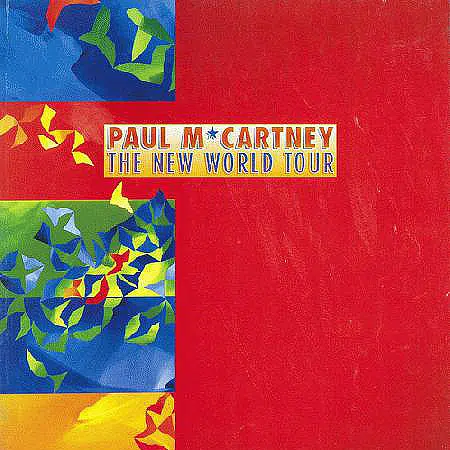
In 1993, Paul asked Clarke once again to design the stage sets for his New World Tour.
From Work | Brian Clarke: architectural artist, stained glass artist and painter:
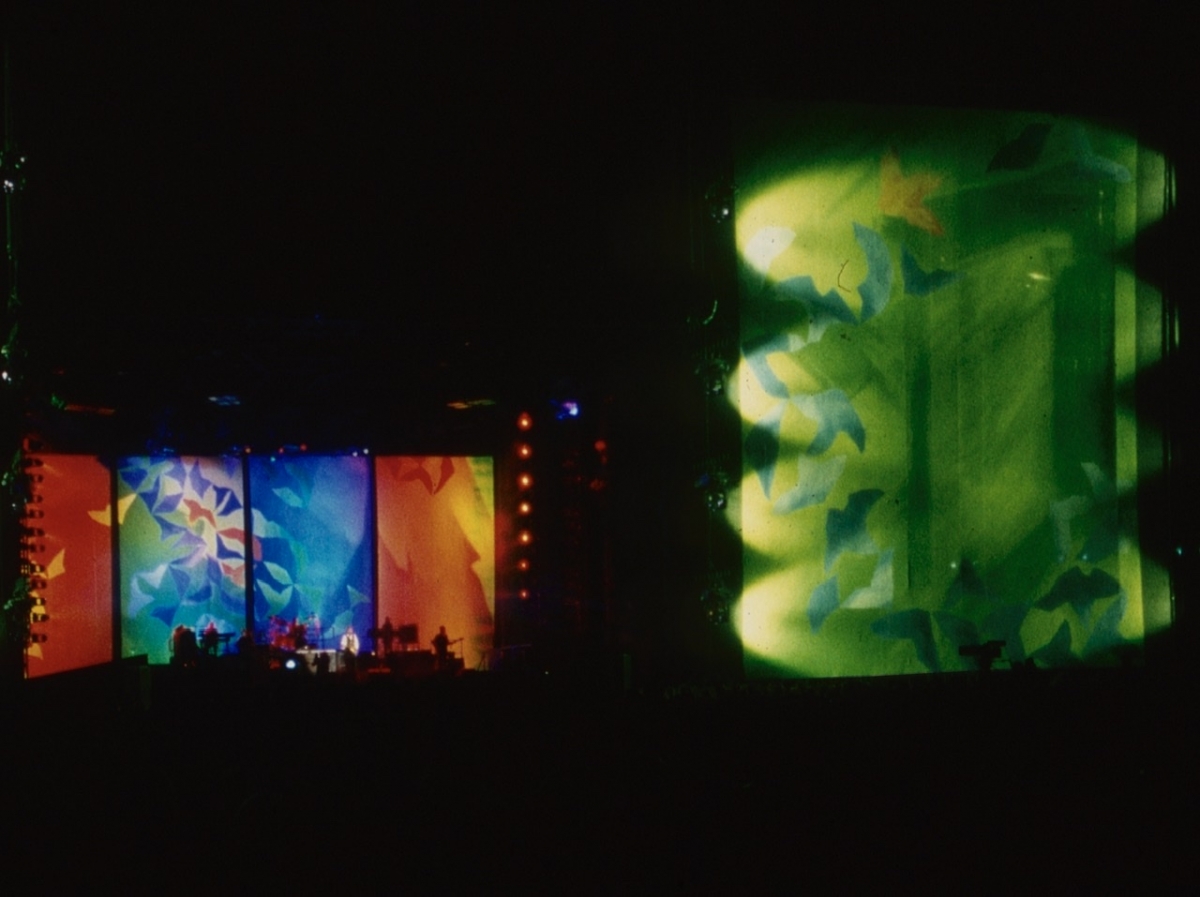
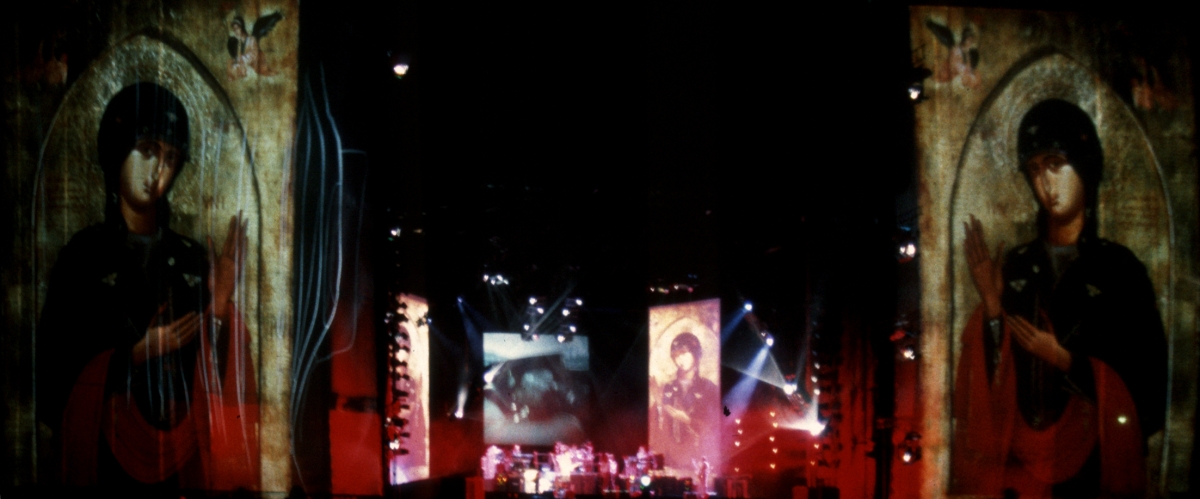
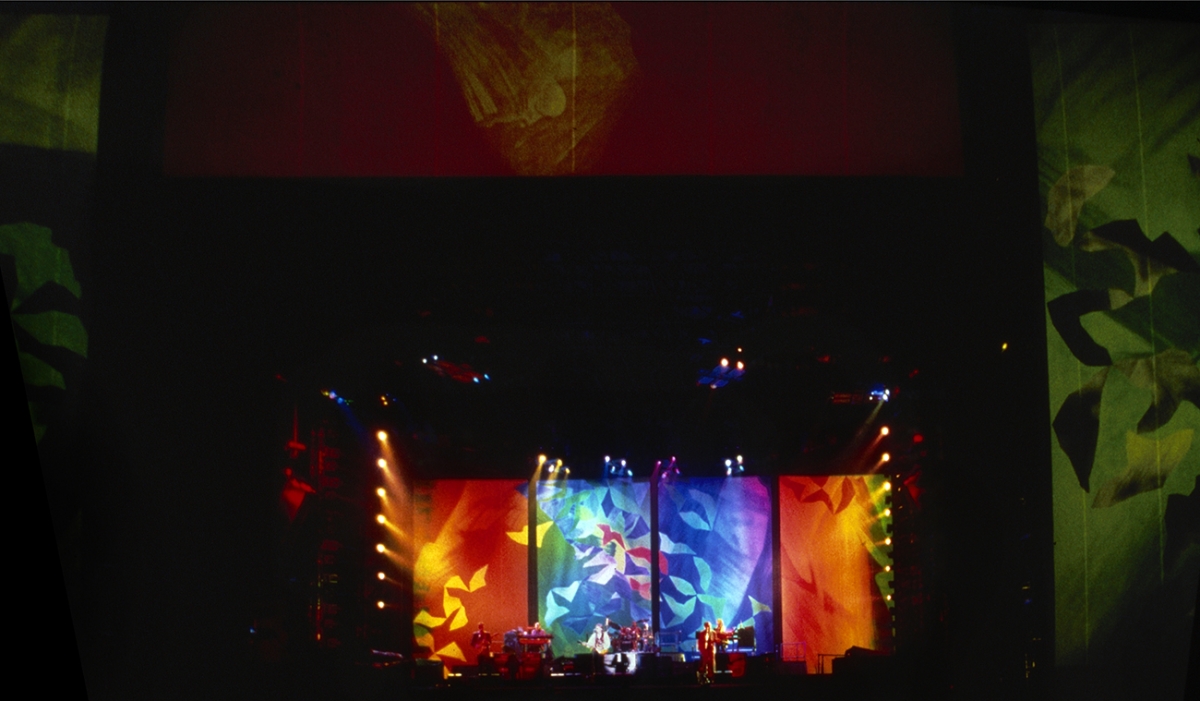
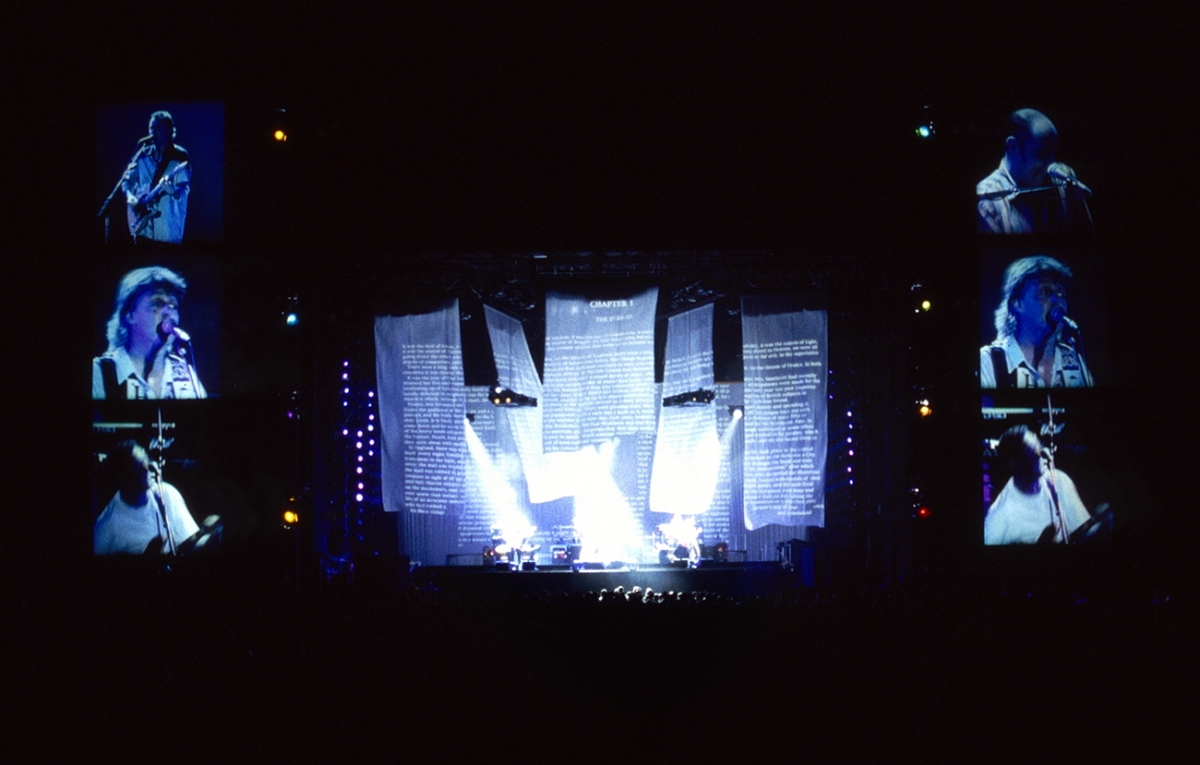
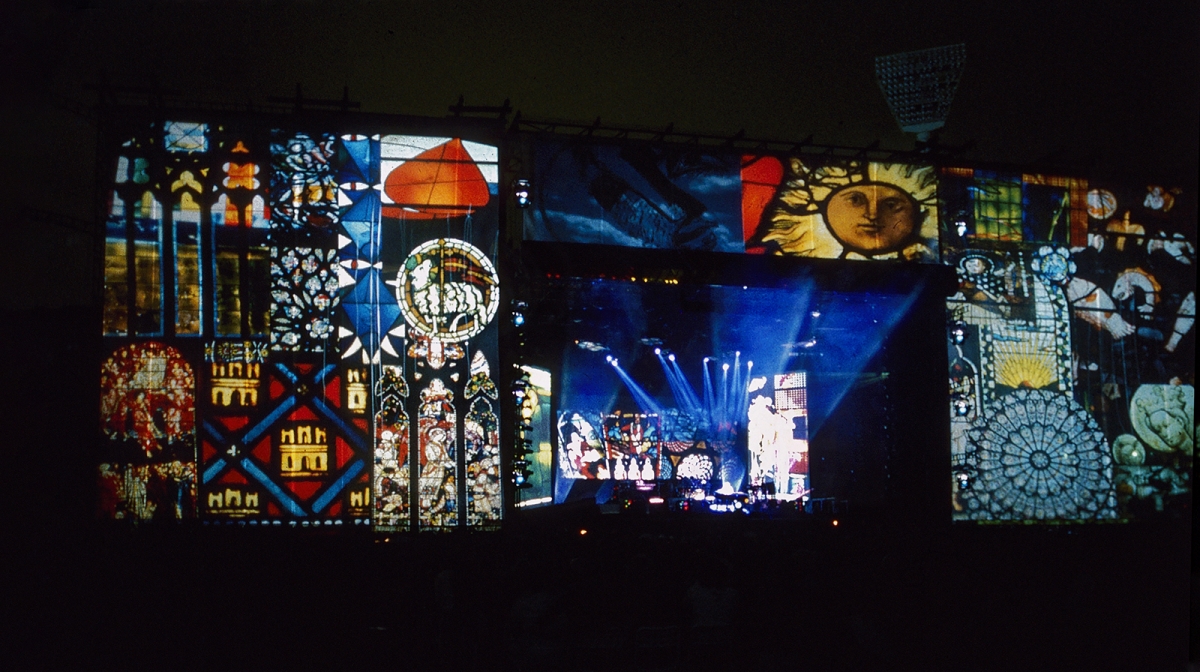
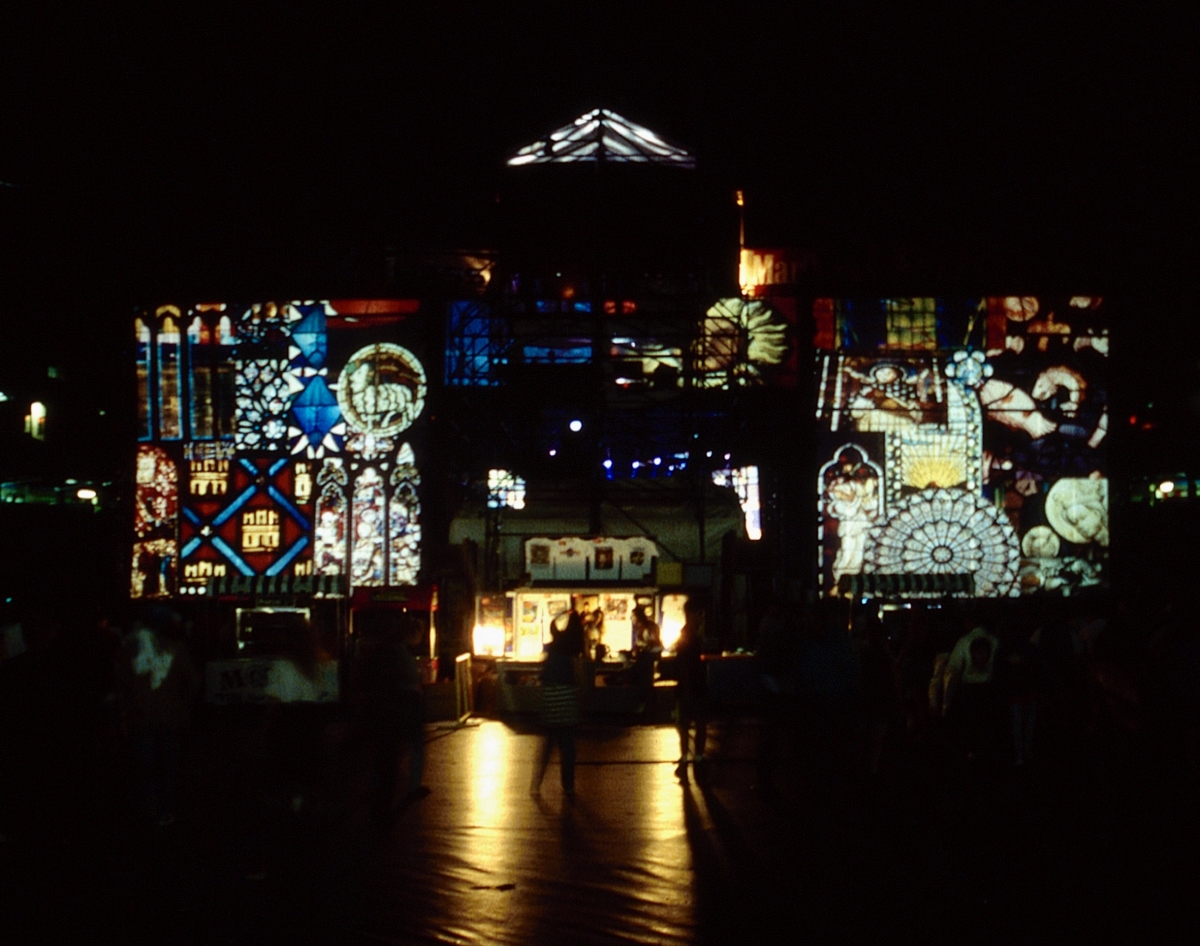
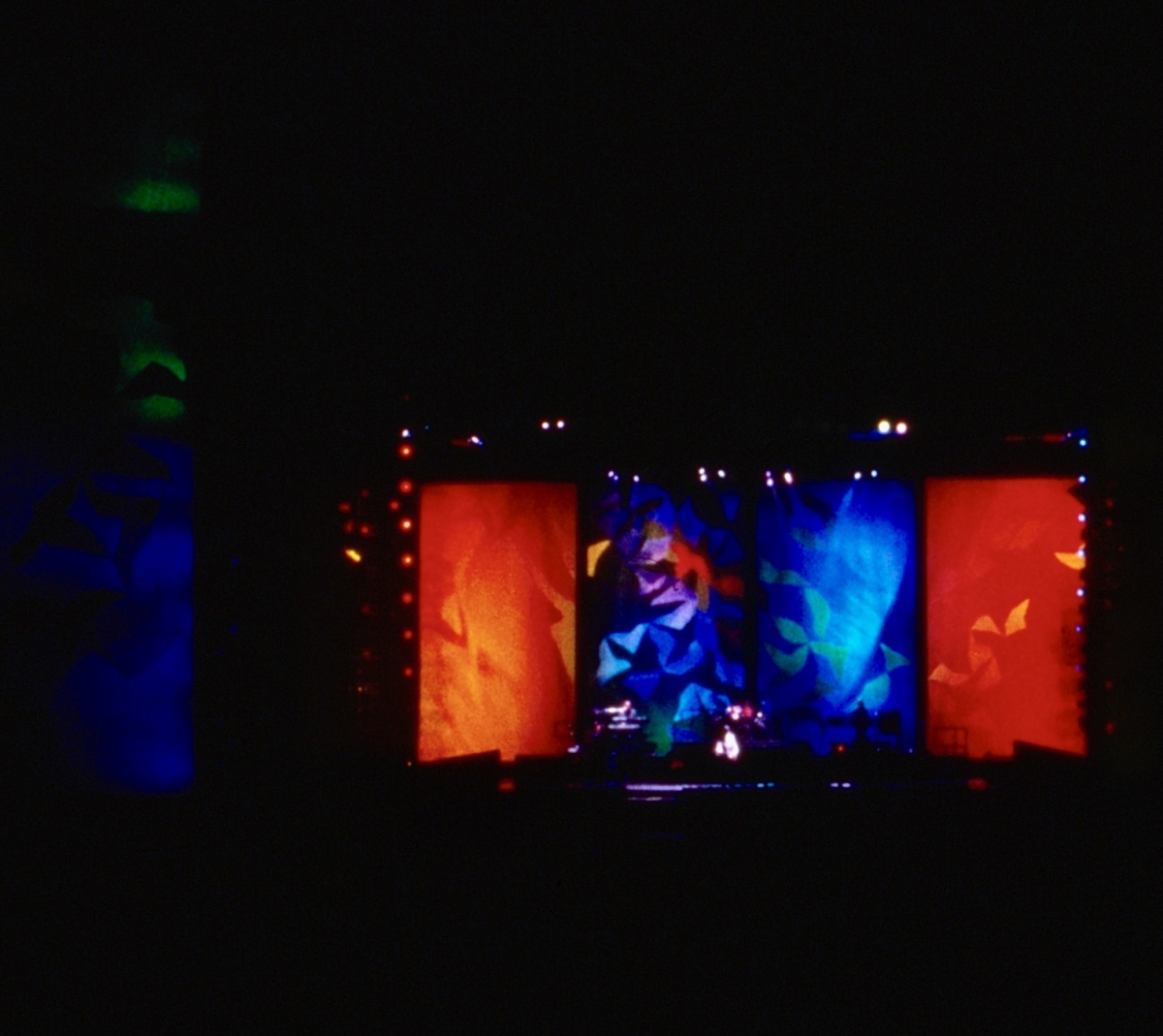
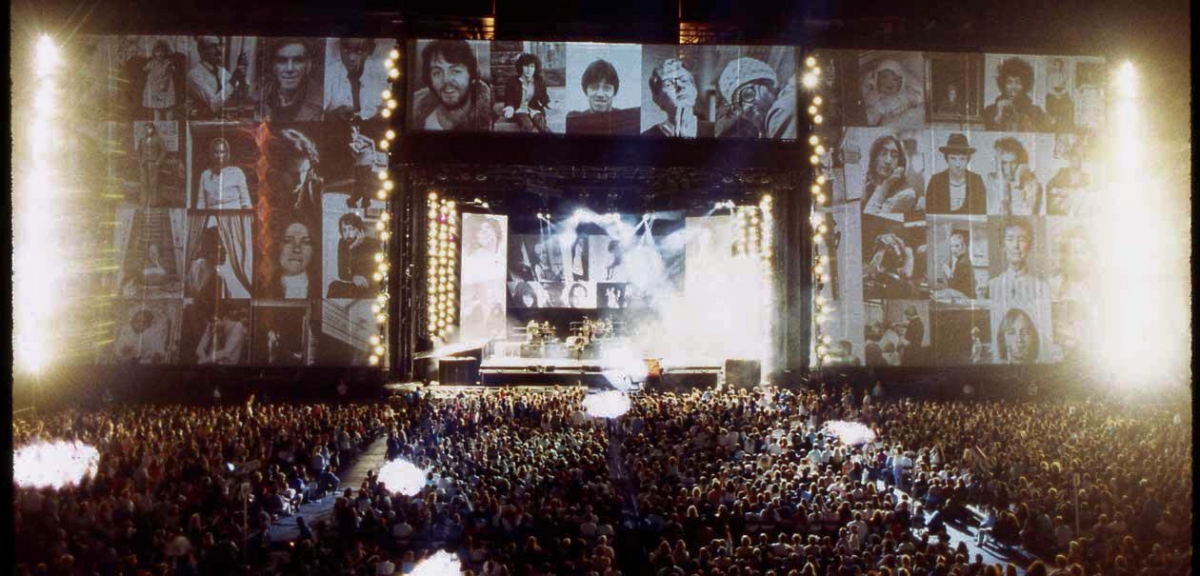
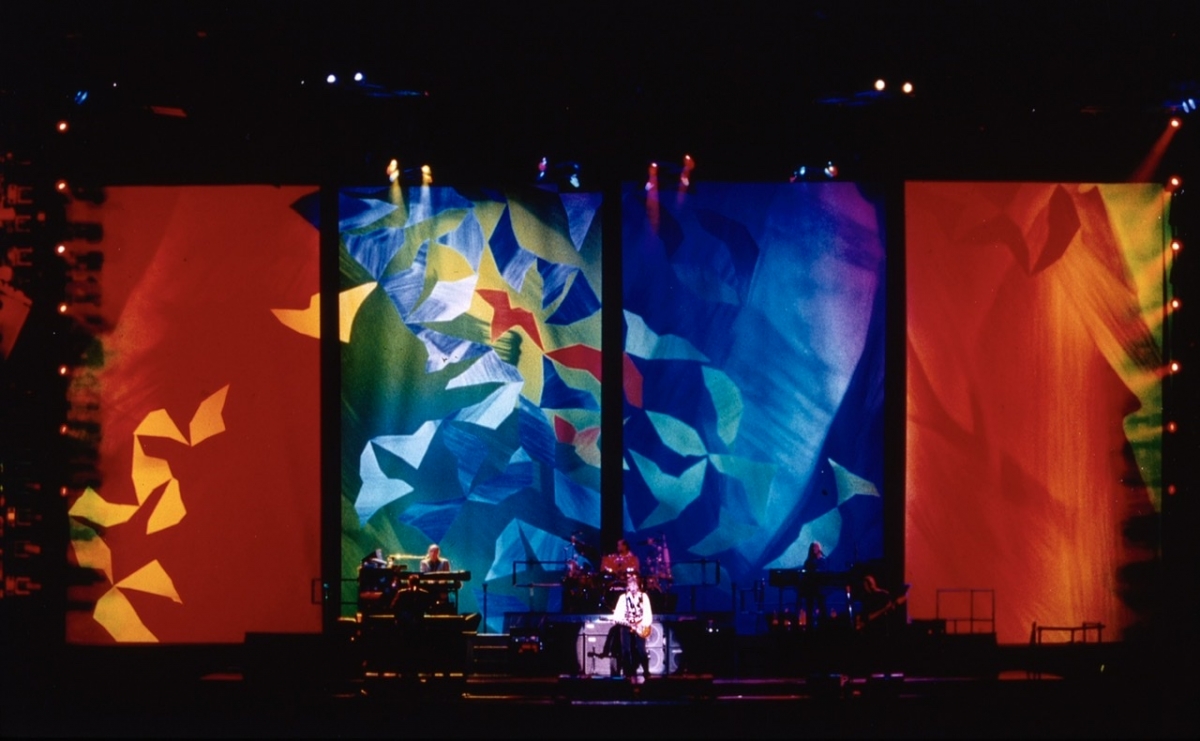
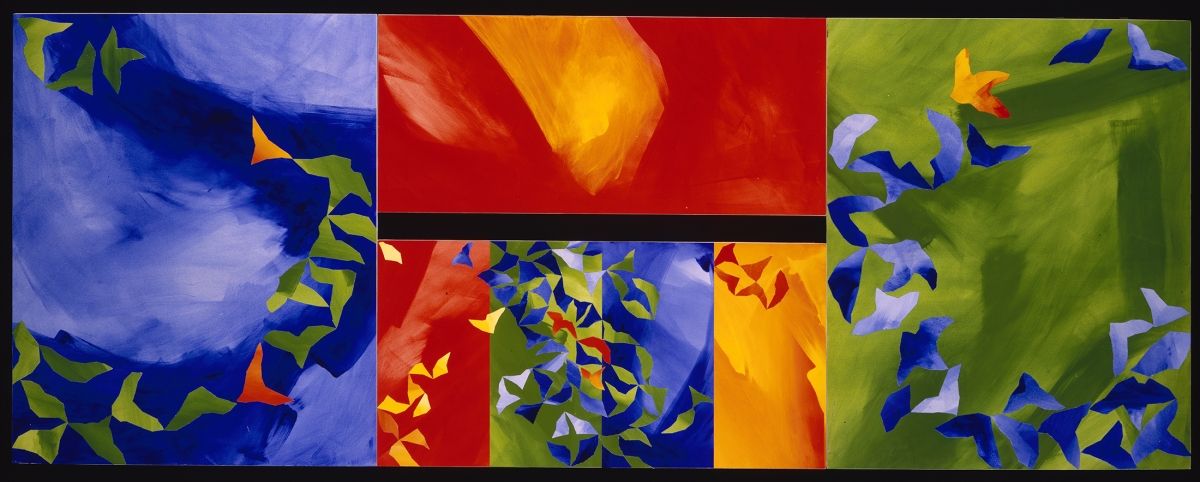
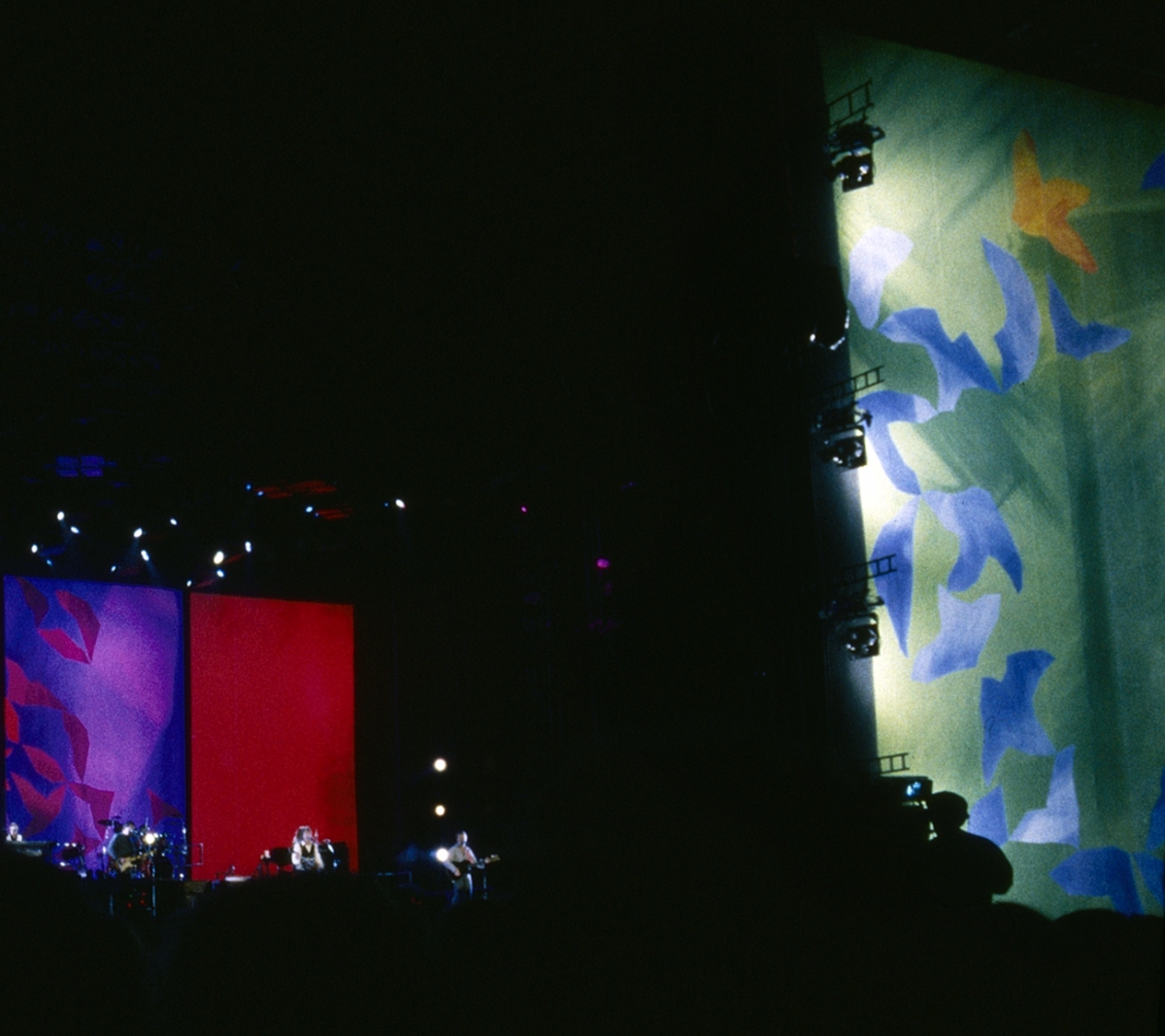
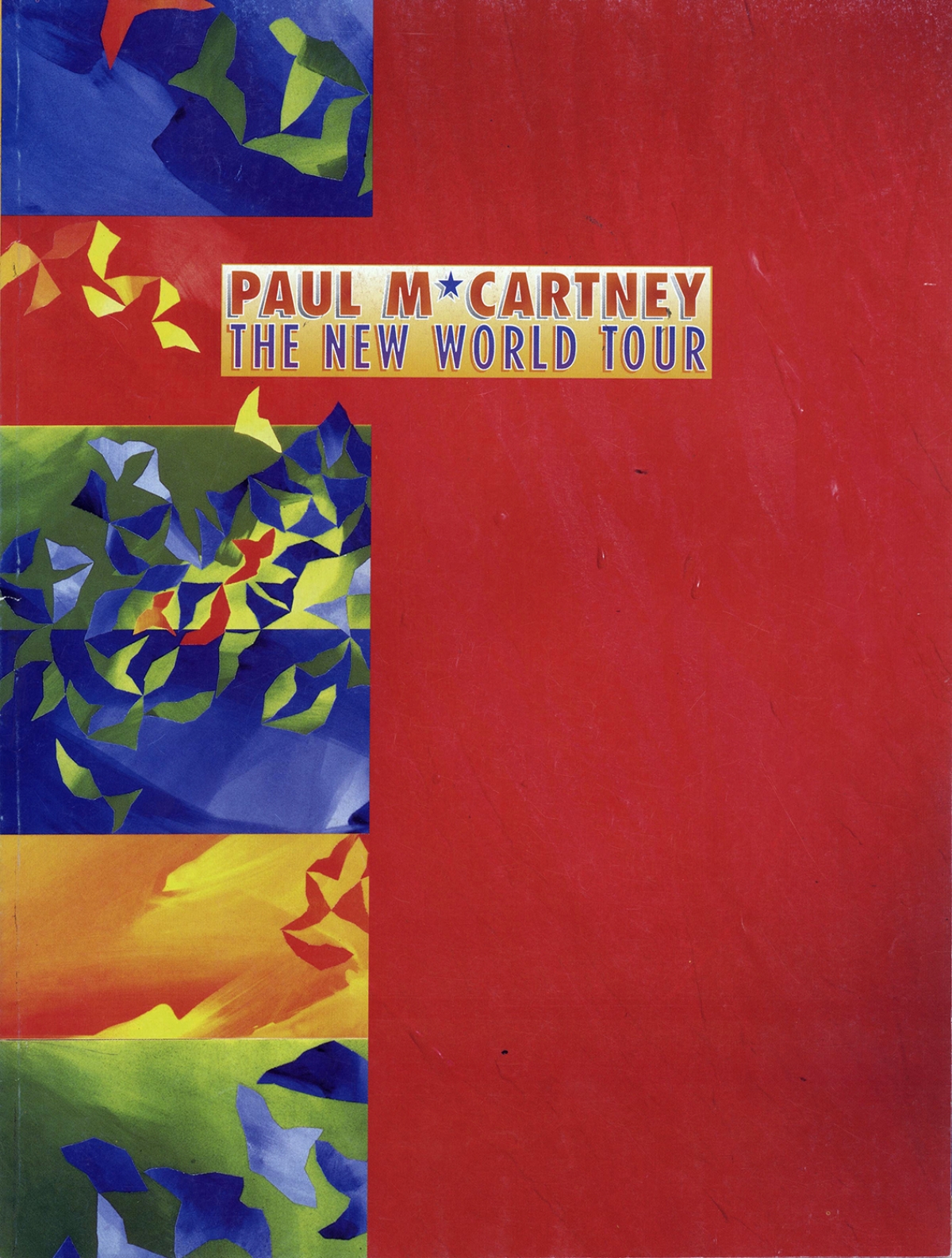
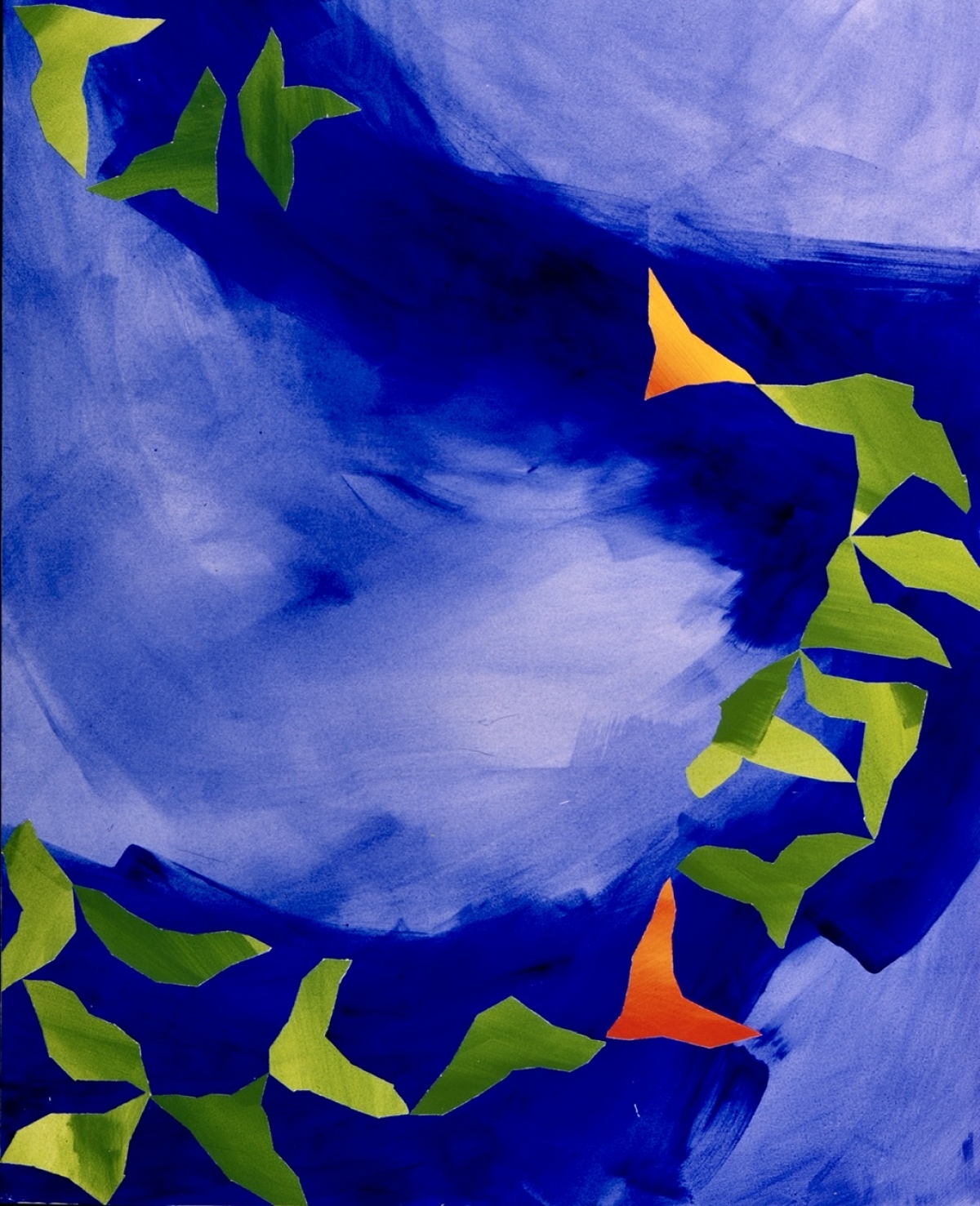
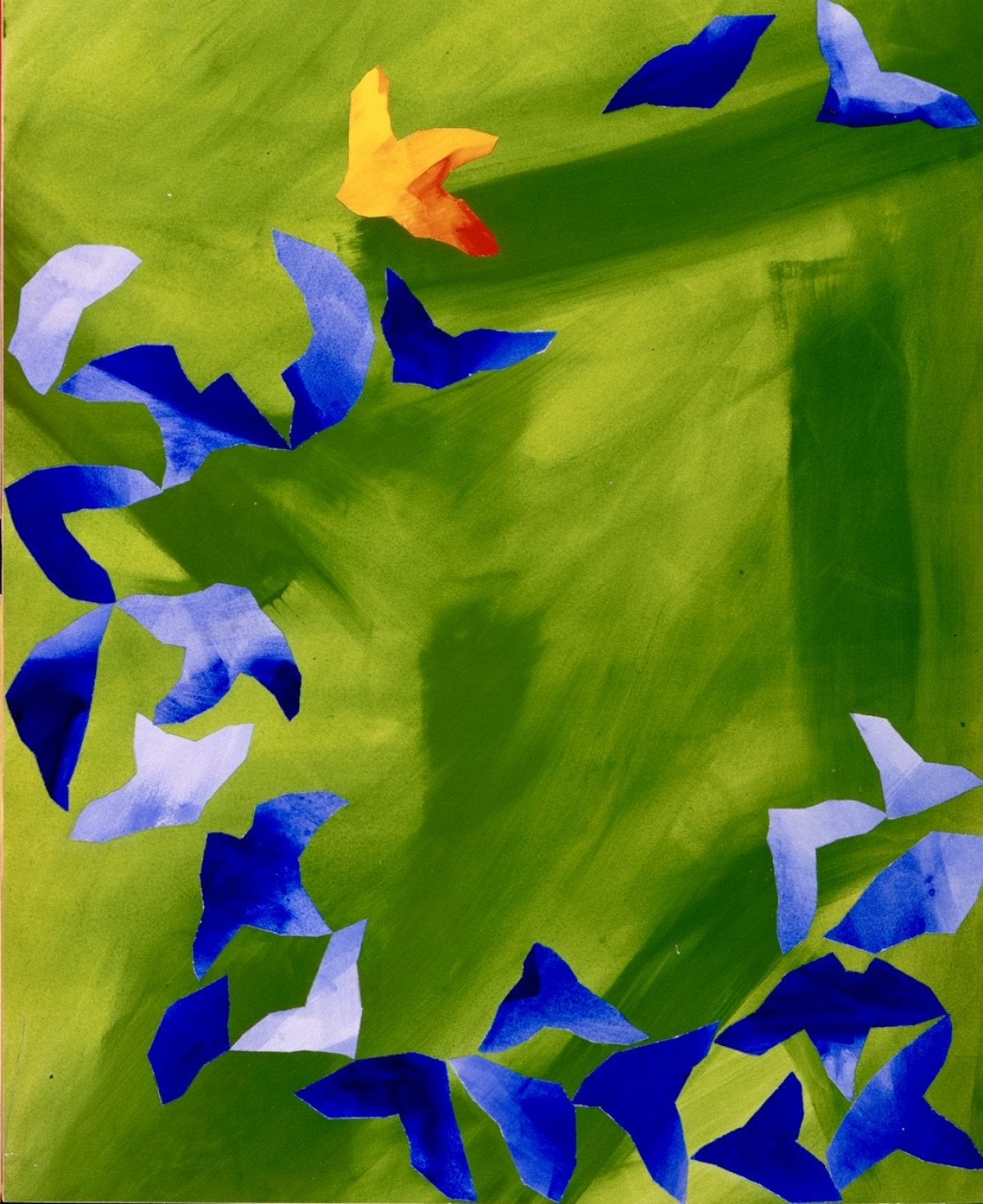
Brian Clarke’s painted stage sets and projections – including collaged biographical pictures by Linda McCartney, and a photographic history of stained glass – and promotional material designed for Paul McCartney’s New World Tour in 1992 and 1993. The hand-painted sets, on canvas and on acoustically transparent scrims, were the world’s largest-ever stage sets, and are Clarke’s largest ever paintings, covering an area of 1,524 square metres (16,400 sq ft) altogether. […]
“The interactive relationship between art and music is one that has fascinated and influenced the work of Brian Clarke since his formative years at Oldham School of Arts and Crafts in the mid-sixties. A painter with an international reputation for architectural art, his work has found a new audience among rock music aficionados. In particular, Paul McCartney’s universal following which, over the last five years, has seen Clarke’s boundary-defying stage backdrops enhance the ex-Beatles’ live performances with spectacular effect. The artist continued his key part in the visualisation of McCartney’s work with the set designs for two recent world tours, heralding somewhat of an artistic renaissance for the musical icon.“
These are some of the many stage sets I designed for Paul McCartney’s New World Tour in 1992/3. The main sets were painted, and the projections included a collage I made of photographs of my favourite works in stained glass from the 11th century to the present day, used by Paul as the backdrop to ‘Let It Be’. Somehow the imagery and the rolling depth of colour across the enormous stage morphed perfectly with the religious mood that is always provoked when one listens to that remarkable song – it includes works from Chartres, from Canterbury, by Burne-Jones and the Post-War German school, and my own works from All Saints Habergham (1976) and 100 New Bridge Street (1991). I remember one night hearing 70,000 people gasp as these came up and that’s a hell of a sound, overwhelming and incredibly rewarding. I remember Paul saying in that very particular Liverpool humour “I’ll be proud to turn my back on them”. Several other sets were collaged images of Linda’s photos. We spent many joyous nights putting them together. The designs for ‘Let It Be’ were an opportunity to propagate the cause of stained glass in a unique way, to a huge number of people. I think it was really cool of Paul to support it.
Brian Clarke – 2020 – From Work | Brian Clarke: architectural artist, stained glass artist and painter

The Beatles Diary Volume 2: After The Break-Up 1970-2001
An updated edition of the best-seller. The story of what happened to the band members, their families and friends after the 1970 break-up is brought right up to date. A fascinating and meticulous piece of Beatles scholarship.

Notice any inaccuracies on this page? Have additional insights or ideas for new content? Or just want to share your thoughts? We value your feedback! Please use the form below to get in touch with us.

