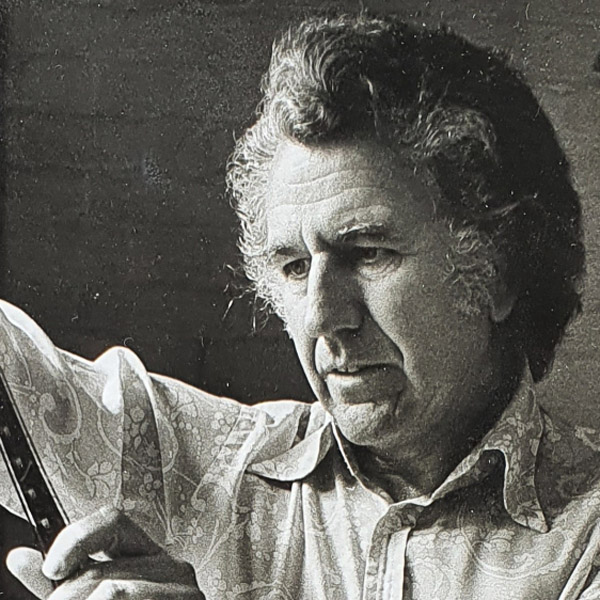
Born May 02, 1923 • Died Dec 30, 2021
Denis O'Dell
Photo: From https://variety.com/2021/film/obituaries-people-news/denis-odell-dead-beatles-movies-producer-1235145248/ - Denis Pedregosa
Last updated on August 30, 2025
Born May 02, 1923 • Died Dec 30, 2021
Photo: From https://variety.com/2021/film/obituaries-people-news/denis-odell-dead-beatles-movies-producer-1235145248/ - Denis Pedregosa
Last updated on August 30, 2025

The Beatles consider a Lord of the Rings film adaptation
February - March 1968

Mar 24, 1968

Paul and John meet Ron Kass in New York
May 12, 1968
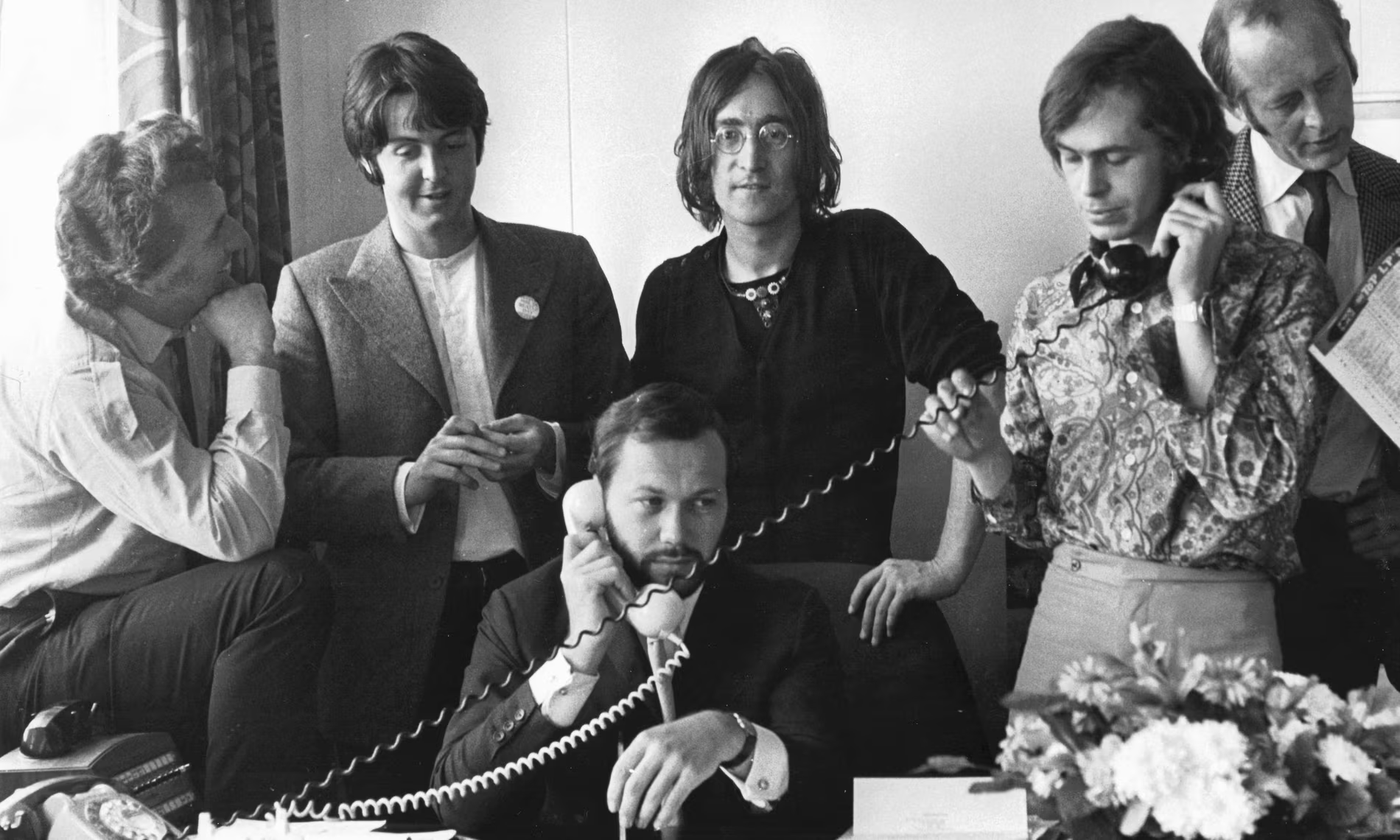
The Beatles promote Apple Corps in New York
May 14, 1968

Alexis “Magic Alex” Marda gets married
Jul 11, 1968
Paul McCartney attends Neil Aspinall’s wedding
Aug 30, 1968
Throughout his career in filmmaking, Denis O’Dell was known for his ability to keep productions on track and within budget, often receiving credit as an associate producer or assistant director. He is best remembered for his work on films featuring The Beatles, including “A Hard Day’s Night” and the television film “Magical Mystery Tour.” He later became a director of the Beatles newly founded Apple Corps and served as Head of Apple Films. O’Dell retired in 1980, and passed away in 2021 at the age of 98.
His first connection with the Beatles came when he was appointed producer of their debut feature film, “A Hard Day’s Night,” directed by Richard Lester.
[In December 1963,] Bud Ornstein, head of the European branch of United Artists films, called me two days after I got home with an offer to associate-produce a low-budget musical, as yet untitled, starring a pop group from Liverpool called the Beatles. Having been out of England for some considerable time I was one of a very small minority who was unfamiliar with the Beatles. I had heard of them of course, but I had been abroad much of the year and had missed [their] phenomenal rise in popularity. […] So I thanked Bud and told him that I would have to decline his offer as I needed a break.
If it had not been for a tiny twist of fate, that would have been the beginning, middle and end of my association with the Beatles. By pure chance, the phone call happened to come at a weekend when my teenage children, Denise, Shaun and Kevan, were visiting from the country. When they heard that I had turned down a film starring the Beatles they went berserk. They simply could nor believe thar I had just turned down the opportunity to work with their idols. I was simultaneously shocked and fascinated by their reaction. […] So appalled were my children at my gaffe that I felt compelled to call Bud back and accept the offer.
Denis O’Dell – From “At the Apple’s Core: The Beatles from the Inside“, 2002
I met the Beatles for the first time on the set of the movie itself, on the first day of shooting at London’s Paddington Station, where we were on board the train to film the opening journey sequences. Having been working so intensively preparing the film’s shooting schedule and locations, there had been no previous opportunity to meet up, and prior to this all communications had taken place via Neil Aspinall, then the Beatles’ personal assistant and road manager. My first contact with them involved giving them the schedule and explaining in some detail how we were going to shoot the film. […]
The Beatles were, without question, some of the most charming people I ever met, as was Brian Epstein. While they exhibited the same rapier wit and laconic humour I had seen them demonstrate in television and newspaper interviews, I was genuinely taken aback by their detachment from their extraordinary celebrity. Considering their popularity, they were remarkably well adjusted, which endeared them not only to their fans but to all those who worked with them, making the atmosphere on the set immensely buoyant and good-humoured.
Denis O’Dell – From “At the Apple’s Core: The Beatles from the Inside“, 2002
An interesting anecdote from the filming of “A Hard Day’s Night” concerns Paul McCartney’s gift to his father, Jim. Denis O’Dell suggested to Paul that he buy a racehorse for his father’s birthday and arranged the purchase through his own connections. Paul chose to present the unusual gift at the London premiere of “A Hard Day’s Night” on July 6, 1964, when he informed his father about it.
Paul and I were chatting during a break in the shooting of the television concert finale. ‘It’s me dad’s birthday soon,’ he said. ‘Oh really?’ ‘Yeah, and I don’t know what to buy him.’
Now at that time I bred and raced thoroughbred horses. It so happened that the previous week, while watching some horse-racing, I had been approached by the International Racing Bureau to investigate the possibility of getting the Beatles to attend a race meeting for publicity purposes. I had told them that this was impossible since the Beatles had no interest whatsoever in horses. However, I had met Paul’s father on one or two occasions and suspected he liked the odd flutter.
‘Does he ever have a bet, Paul, your old man?’
‘Yeah, he sometimes used to have a bet, a shilling each way on whatever.’
‘Why don’t you buy him a racehorse?’
‘What?’
‘Why don’t you buy him a racehorse if he likes to bet?’
He paused for a moment, as the idea took hold. ‘How much are they?’
I laughed. ‘That depends on the horse. out a thousand pounds might get you something that could win a little race somewhere.’
‘It’s a great idea. Will you do it? Will you get one for me?’
And I did. The following week I acquired on Paul’s behalf a three-year-old bay gelding called Drake’s Drum. The problem was hiding the horse until Jim’s birthday. We obviously didn’t want any news getting out. I called an old friend of mine, Lieutenant Colonel Wilfred Lyde, one of the most respected trainers in the business who was training one of my horses. I said, ‘Wilfred, I’ve got an idea for something, but I can’t talk to you about it on the phone.’ There was a very real risk that any phone call one made involving the Beatles would get back to the press, and I required complete secrecy.
So the following week I went to see Wilfred, and it was all arranged. He had Drake’s Drum collected, taken to his training stables at Spigot Lodge in Yorkshire and hidden there until Jim’s birthday. We couldn’t start training him because news of Paul’s involvement might have leaked out. However, this didn’t stop him from asking me if it was possible for him and his girlfriend, actress Jane Asher, to visit Spigot Lodge to see the horse. Because it was impossible for them to stay in a hotel without major hassle I arranged for the couple to stay with the Lydes.
The Lydes, from a different generation and steeped in upper-class formality, knew very little about Paul or the Beatles. They lived in an entirely different world. […] Yet, as it turned out, everything was fine when I called the house shortly after Paul’s and Jane’s arrival. […] On the Sunday Paul phoned me to say that they had had a thoroughly enjoyable time racing with Wilfred. […]
After the visit to Yorkshire Paul asked me if I could get a portrait of the horse for him. He had realized that it would be impossible to take Jim to Yorkshire to see the horse on his actual birthday because of the group’s hectic work schedule, but he figured that a portrait would be an excellent way to introduce his father to his gift. I then contacted a man called Rouch, an extremely conservative character steeped in the hierarchical lore of the sport. To persuade him to make a study of ahorse without a fashionable pedigree wasn’t an easy task, but eventually he agreed. I gave it to Paul, who was thrilled.
Denis O’Dell – From “At the Apple’s Core: The Beatles from the Inside“, 2002
Jim’s sixty-second birthday fell on the day after the British premiere of A Hard Day’s Night, which took place amid incredible scenes of Beatlemania at the London Pavilion. Afterwards we made our way to the Dorchester Hotel for the party. I was discussing the film with Princess Margaret and her husband Lord Snowden when PauI signalled me over from the other side of the room. I politely excused myself and, leaving them talking to Walter, made my way over to Paul who was with his father. Taking me to one side, the Beatie whispered, ‘I’ve got the picture with me. Let’s give it to him now.’
Wishing him a happy birthday, Paul gave the framed and wrapped portrait to Jim, who opened it, examined it and then looked at Paul.
‘It’s very nice. Thanks.’
‘Happy birthday, Dad. Do you like it?’
‘Very nice.’
There was a rather empty silence.
I whispered to Paul, ‘Did you tell your dad we actually got him the horse?’
‘Oh no! Dad, we got you the horse!’
‘What do you mean?’
‘We got you the horse.’
Jim was incredulous and delighted.
Shortly afterwards I arranged for Jim to visit Spigot’s Lodge to see Drake’s Drum. Thrilled by the success of his present, Paul called me to ask if we could have the horse entered in a race.
‘We can’t run him yet. He’s not done any serious work,’ I told him.
‘Let’s run him anyway.’
Despite my protests Paul insisted that we enter the horse in a race. Eventually I put it to Wilfred – who was also against the idea – that we could get the horse entered at Chester. He began to protest, but I told him Paul was adamant and the result didn’t matter: win, lose or draw. And – can you believe it? – he almost won, taking second place in a race he had no real right even to enter! In the event, Paul was away at the time, but Jim and Paul’s brother Michael were there for the first of many a good day’s racing, as Drake’s Drum went on to win several races during his career.
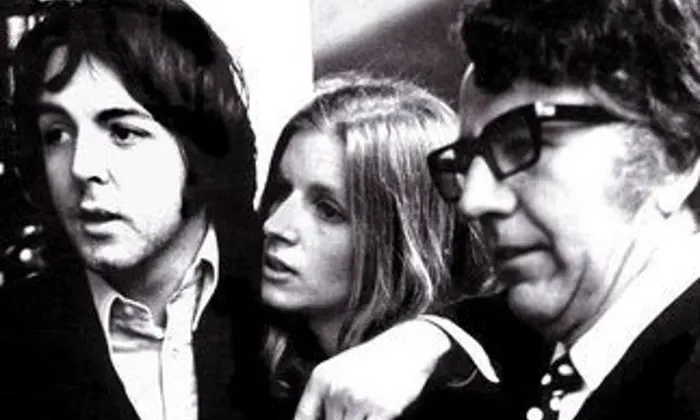
Many years later, in the early nineties, I was taking care of some business at Twickenham Studios when I happened to bump into Linda McCartney. She and Paul were there for a meeting about Paul’s Get Back ‘comeback’ concert film that Richard Lester had directed. We chatted like old friends for a few moments, and I asked after Paul, who was still in the throes of what sounded like some fairly heavy discussions.
‘Let me go and get him,’ she said.
‘Don’t worry,’ I told her. ‘Just give him my best.’
‘Are you kidding? He’d never forgive me if he knew you’d been here and hadn’t come and said hello.’
Off she went and, sure enough, she reappeared a couple of minutes later with Paul in tow. He seemed very happy to see me and, as we reminisced about the old days, the subject of Drake’s Drum came up.
‘We’ve still got that old horse that we gave my dad, you know,’ he told me. ‘Linda and I still ride him.’
I left Twickenham in good spirits that day. Ir was rather heartwarming to hear that the horse was still alive and that they still cared for it after all those years. Yet the memory is tinged with a certain sadness. It was the last time I saw Paul and Linda together.
Denis O’Dell – From “At the Apple’s Core: The Beatles from the Inside“, 2002
After “A Hard Day’s Night,” Denis O’Dell was unable to take part in the second Beatles film, “Help!,” which was filmed in the first half of 1965, due to other professional commitments. He did, however, cross paths with The Beatles again on July 2, 1965, in Madrid, where they performed live while O’Dell was working on a United Artists production in the city.
In 1967, O’Dell was involved in “How I Won the War,” directed by Richard Lester and starring John Lennon.
Following the death of Brian Epstein in August 1967, The Beatles invited O’Dell to join their newly formed company, Apple, as a director and head of Apple Films. He accepted, and his first assignment was to produce “Magical Mystery Tour.”
Shortly after Brian’s death I was having lunch with Richard Lester, […] when I received a telephone call that was to have an enormous impact on my life for the next three years. It was John and Paul.
‘Denis, it’s us! Can you come and meet us in the next few days?’
‘Sure. What about?’
‘We’ve been thinking. We want you to come and run us.’
I was elated and enormously flattered that they should turn to me for help.
Two days later I went along to NEMS and met up with John, Paul, Neil and, if memory serves, Peter Brown. It turned out that the Beatles were in the process of forming a new organization – Apple – and that they wanted me to be one of its directors. […]
The Beatles were to be the four main directors, Neil Aspinall would become the managing director, and I was to be made a director of Apple Corps as well as the film and publicity divisions. Although Apple Corps was not formally established until January 1968, the first Apple company had been registered in May 1967, and the first major project credited to the company was the television film Magical Mystery Tour, which I was to produce.
Denis O’Dell – From “At the Apple’s Core: The Beatles from the Inside“, 2002
After “Magical Mystery Tour,” Denis O’Dell was involved in a wide range of projects at Apple. He organised the filming of promotional clips for “Lady Madonna” and “Hey Jude,” and searched for potential film projects to help The Beatles fulfil their contractual obligation to deliver a third film for United Artists. Among his ideas was an ambitious proposal to adapt J.R.R. Tolkien’s “The Lord of the Rings” trilogy for the band.
O’Dell also initiated the creation of a film archive of all The Beatles’ filmed appearances. This archive later became the basis for Neil Aspinall’s unreleased 1970 documentary “The Long and Winding Road,” and would be an essential resource for “The Beatles Anthology” in the 1990s.
In 1969, O’Dell served as supervising producer on the “Get Back / Let It Be” project, and he also produced “The Magic Christian,” starring Ringo Starr alongside Peter Sellers. Shortly after completing work on “The Magic Christian,” he left Apple. By then, Allen Klein had taken control of the company and was implementing a strict cost-cutting programme.
In 2002, O’Dell published his memoir, “At the Apple’s Core: The Beatles from the Inside,” recounting his time working with the band.
He is also referenced in The Beatles’ song “You Know My Name (Look Up the Number)”, where John Lennon introduces Paul McCartney as a lounge singer under the playful name “Denis O’Bell”.
I think I brought in Denis O’Dell, because I’d seen his work on How I Won The War, and he was pretty good on that, because he had got everything free, the army things.
John Lennon – From “The Beatles: Off the Record” by Keith Badman, 2008
Denis O’Dell was the associate producer of How I Won The War and, when I went off to do Petulia with Julie Christie, he was asked to take over and become the head of Apple Films. And that’s when they decided they would do Magical Mystery Tour. I would hear Denis on the phone to Paul or whoever, saying, ‘I’ve found a great place… we’re going to film it all in an old off-shore military fortification tower.’ Then it would be, ‘We’re going to Egypt to shoot in the pyramids? Then, the next day, they would change their minds. He went crazy. From the moment that they finally decided to make it till the time that the first shots were made was only two weeks. It went off totally unprepared and half-cooked.
Richard Lester – Film director – From “The Beatles: Off the Record” by Keith Badman, 2008
Our thoughts are with the family and friends of Denis O’Dell, who has passed away. Denis first worked with The Beatles on the film A Hard Day’s Night as associate producer, but he continued to work with the band as producer of Magical Mystery Tour, How I Won The War (with John), and became Head of Apple Films in 1968. Denis was the supervising producer of the 3 week shoot in January 1969 which became the source material for the recent Get Back trilogy.
From The Beatles on Twitter, January 3, 2021

The "Get Back / Let It Be" sessions • Day 1
Jan 02, 1969 • Songs recorded during this session appear on Let It Be... Naked

The "Get Back / Let It Be" sessions
January 2-31, 1969 • Songs recorded during this session appear on Let It Be (UK - 1st pressing with "Get Back" book)
The "Get Back / Let It Be" sessions • Day 5
Jan 08, 1969 • Songs recorded during this session appear on Let It Be (UK - 1st pressing with "Get Back" book)
The "Get Back / Let It Be" sessions • Day 12
Jan 21, 1969 • Songs recorded during this session appear on Let It Be (UK - 1st pressing with "Get Back" book)
The "Get Back / Let It Be" sessions • Day 14
Jan 23, 1969

Notice any inaccuracies on this page? Have additional insights or ideas for new content? Or just want to share your thoughts? We value your feedback! Please use the form below to get in touch with us.

