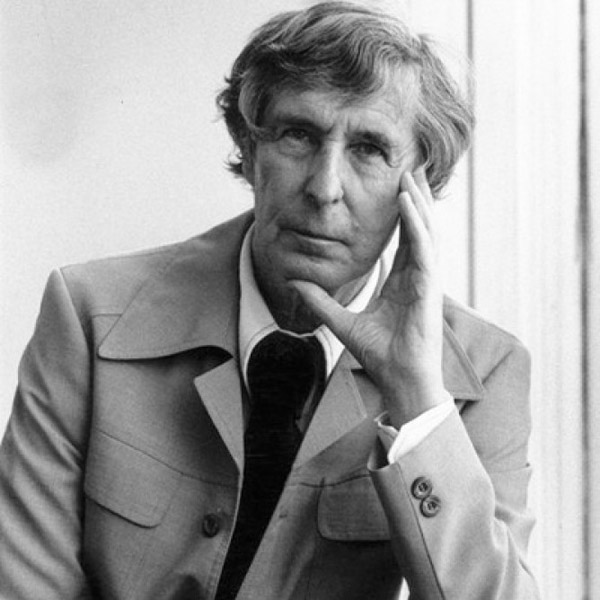
Born Jan 02, 1905 • Died Jan 08, 1998
Michael Tippett
Photo: From https://www.nmcrec.co.uk/composers/michael-tippett
Last updated on August 23, 2025
Born Jan 02, 1905 • Died Jan 08, 1998
Photo: From https://www.nmcrec.co.uk/composers/michael-tippett
Last updated on August 23, 2025
From Wikipedia:
Sir Michael Kemp Tippett CH CBE (2 January 1905 – 8 January 1998) was an English composer who rose to prominence during and immediately after the Second World War. In his lifetime he was sometimes ranked with his contemporary Benjamin Britten as one of the leading British composers of the 20th century. Among his best-known works are the oratorio A Child of Our Time, the orchestral Fantasia Concertante on a Theme of Corelli, and the opera The Midsummer Marriage.
Tippett’s talent developed slowly. He withdrew or destroyed his earliest compositions, and was 30 before any of his works were published. Until the mid-to-late 1950s his music was broadly lyrical in character, before changing to a more astringent and experimental style. New influences—including those of jazz and blues after his first visit to America in 1965—became increasingly evident in his compositions. While Tippett’s stature with the public continued to grow, not all critics approved of these changes in style, some believing that the quality of his work suffered as a consequence. From around 1976 his late works began to reflect the works of his youth through a return to lyricism. Although he was much honoured in his lifetime, critical judgement on Tippett’s legacy has been uneven, the greatest praise generally reserved for his earlier works. His centenary in 2005 was a muted affair; apart from the few best-known works, his music has not been performed frequently in the 21st century.
Having briefly embraced communism in the 1930s, Tippett avoided identifying with any political party. A pacifist after 1940, he was imprisoned in 1943 for refusing to carry out war-related duties required by his military exemption. His initial difficulties in accepting his homosexuality led him in 1939 to Jungian psychoanalysis; the Jungian dichotomy of “shadow” and “light” remained a recurring factor in his music. He was a strong advocate of music education, and was active for much of his life as a radio broadcaster and writer on music. […]
Michael Tippett wrote his last opera, “New Year,” in his final active years. It premiered in Houston, Texas, on October 17, 1989, and was introduced to Britain in the Glyndebourne Festival of 1990.
[Paul McCartney was in the] attendance at a production of Michael Tippett’s last opera, New Year, whose music incorporated rap and reggae, reduced the strings in the orchestra, and included saxophones, percussion and electronic space music. McCartney was so fascinated that he requested a meeting with the composer, which I arranged. The octogenarian Tippett and the young McCartney got on like a house on fire.
Meirion Bowen – From When Paul McCartney met Michael Tippett at the opera | Paul McCartney | The Guardian, August 21, 2025

Notice any inaccuracies on this page? Have additional insights or ideas for new content? Or just want to share your thoughts? We value your feedback! Please use the form below to get in touch with us.