Sunday, July 6, 1980
Interview for The Boston Globe
Paul, the Beatles who goes on
Press interview • Interview of Paul McCartney
Last updated on June 1, 2025
Sunday, July 6, 1980
Press interview • Interview of Paul McCartney
Last updated on June 1, 2025
Interview July 1980 • Paul McCartney interview for The Beatles Monthly Book
Session Jul 04, 1980 • Rehearsal session
Interview Jul 06, 1980 • Paul McCartney interview for The Boston Globe
Session July 11st-21st, 1980 • "Can't Fight Lightning" / "Stop And Smell The Roses" sessions
Single Jul 18, 1980 • "Seaside Woman / B-Side To Seaside" by Suzy and the Red Stripes released in the UK
Next interview August 1980 • Paul McCartney interview for Musician
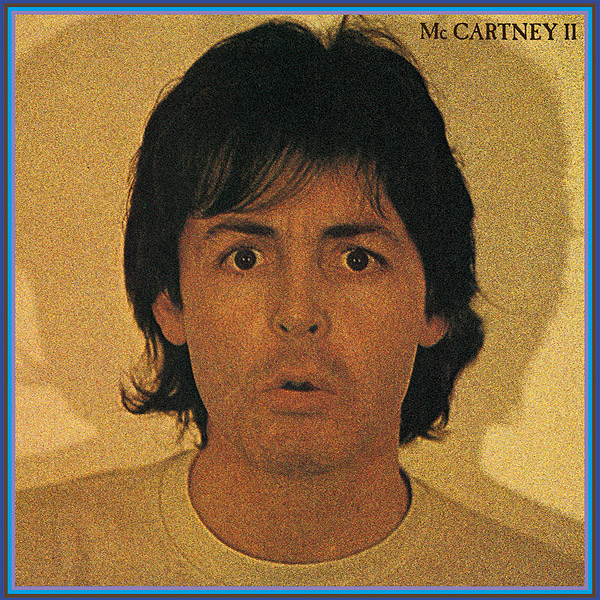
AlbumThis interview was made to promote the "McCartney II" Official album.
Feb 08, 1990 • From The Boston Globe
The act you've known for all these years: McCartney today
Dec 03, 2000 • From The Boston Globe
Jul 04, 2013 • From The Boston Globe
This interview remains the property of the respective copyright owner, and no implication of ownership by us is intended or should be inferred. Any copyright owner who wants something removed should contact us and we will do so immediately.
Multimillionaire McCartney prefers sheep-shearing to being in the public eye
Paul McCartney used to have a secret dream that his partnership with John Lennon would establish them as the new Rodgers and Hammerstein. Instead, more than a decade after the split of the Beatles, McCartney has emerged alone as one of the world’s most successful songwriters, a Cole Porter of the ’80s, while Lennon’s contribution has become almost a melodic memory.
A shrewd businessman as well as a songwriter, McCartney has eclipsed all his contemporaries. Now a multimillionaire and probably Britain’s biggest single earner last year (making a reputed $52 million) he remains self-effacing, planning his life carefully to retain a simple style.
It is difficult to reconcile this McCartney — who prefers Jeeps and jeans to Rolls-Royces and Savile Row — with the drug taker who spent nine days in a Tokyo jail for bringing marijuana into Japan at the start of his scheduled tour with his pop group Wings, in February.
“We’d gone to Tokyo from America,” he said, in his first interview since his return. “I had the choice of throwing it away or being silly and packing it in my suitcase in the States. But, for some reason I didn’t register that it wasn’t so easy to go into Japan with it. Different cultures. This is what I told the Japanese officials.
“It was,” he says, “a stupid goof,” which he regrets, not least for the thousands of Japanese fans missed hearing Wings with McCartney — who hit the headlines in 1966 when he confessed to taking the drug LSD — believes that marijuana is less harmful than smoking cigarettes, but concedes that he has to abide by the law.
His nine days in jail, with only a straw mat and a lavatory in his cell, made a strong impression on him.
“Guilt — that was the one thing that affected me for the first few days. Because even though I don’t believe marijuana is as harmful as some do, I knew it was illegal and I’d been caught.”
He said he did not feel that he was “above the law” as an artist, and that his incarceration was not a publicity stunt, as some commentators have alleged.
In prison, McCartney was fearful when told the maximum sentence on conviction for drug possession was seven years. He feared missing seven years with his children as they grew up: he had visions of his wife Linda and his family getting a house and living in Japan.
“I was sweating all the time for the first few days, worrying about what might happen. But eventually you just become institutionalized like any prisoner.”
As therapy, he has now written down all his experiences and thoughts in jail for a book and is adamant that he has nothing against Japan or its people. He would like to rearrange a concert tour of Japan “for the fans’ sake.”
He feels strongly that more research into marijuana might result in allowing its use in the privacy of one’s home, and he feels that the banning of it might have fanned the resurgence of heavy alcohol consumption among young people. McCartney advocates unbiased new research into drugs to establish the harmful levels of each one.
“But really,” he says, closing the subject, “I don’t want to be a preacher for pot.”
McCartney says that drugs “don’t mean a lot” to him, and describes himself as “rather an undruggy person.” He and Linda, he says, are vegetarians; he has never been one even to take aspirin and they carefully watch what they eat. Moreover, he rejects the theory that as a public figure he should be careful not to be seen to be fallible.
“Once you start to feel responsible, you’re establishment, you’re kind of gone. When I became an MBE (member of the Order of the British Empire), I could have become a hugely charitable figure and gone to see the duke of Edinburgh about his awards scheme and done road safety campaigns.
“But I’m just me, and I’m also trying to work out my life. So if I get involved in something I don’t particularly want to preach about, and I become conscious of being responsible for this and that, I can’t be myself. That attitude just shuts you down. I’ve never been a lover of authority. You make your own judgments. I don’t want to be responsible or feel responsible. I got into this whole thing to do music, not to be a public figure.”
McCartney retains a real affection for the Beatles’ days, although he does not have a complete collection of their records — “I must get them one day,” he says.
“The Beatles had the chances to be totally irresponsible and be little Hitlers, but you look at what we preached. It was basically love and peace, man. It was never the opposite. We kept trying to say what we thought was right but occasionally it comes up against a borderline case. You’re asked your opinions and your views on, say, marijuana. I could pretend … but then I’d be a hypocrite. My judgment’s always been: Well, I’ve come this far doing it on my own thoughts. If I’d thought too scientifically originally I might never have gone into music. I may have weighed up that it was more worthwhile to go and teach.”
Married to successful photographer Linda Eastman, the daughter of a prominent New York lawyer who is now McCartney’s business manager, McCartney has three children: Mary, 10, Stella, 8, and 2-year-old James, as well as 17-year-old Heather from his wife’s previous marriage. Linda, who is not related to the Eastman-Kodak photographic family as commonly thought, plays keyboards and sings for Wings.
McCartney isn’t fond of the excesses of the show business world. He now has three homes in London. He lives frugally: his two farms, in Scotland and Sussex, have only two bedrooms each to keep his family unit close together. He shears sheep, is an avid ecologist and land conservationist, and is currently enjoying the challenge of building chicken coops. He is very nervous about acknowledging his fame and fortune.
McCartney has deliberately shied away from the social ladder. His instinct for the country life — “any place I stow my wellies (rubber boots called wellingtons) is home,” he says, parodying a pop song — is equaled by his music making.
“McCartney II” his second solo album, and the first such he has produced for 10 years, was released last month. It is a rather homemade, unsophisticated affair, recorded in his Sussex farmhouse and featuring him alone on guitar, synthesizer and vocals.
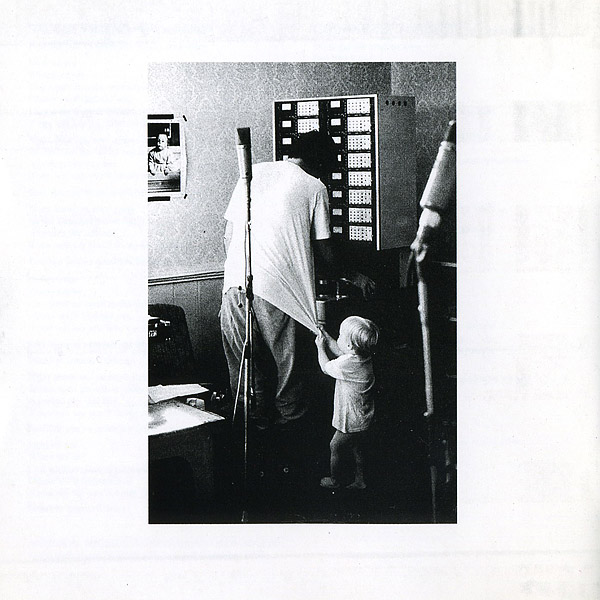
After the Beatles’ “Sergeant Pepper” album, which pushed studio techniques to the limit, McCartney now enjoys the simple pleasure of using only the bare bones of recording equipment stuck on the walls of his farmhouse. Linda took him cups of tea and added an occasional vocal on the single from the LP — “Coming Up,” currently on the best-seller charts with more than a quarter-million sales.
His commercial empire and love of public performances is different from the post-Beatles activities of John Lennon, George Harrison and Ringo Starr. Paul is in regular touch with John and George, but less with Ringo. Still McCartney says he first took off in 1971 on a concert tour, and they’ve since enjoyed spectacular success around the world.
Having refreshed himself by listening recently to old Beatles songs, he now “loves the whole thing” anew. Lennon’s bitter salvos against McCartney for alleged selfishness in the early ’70s surprised and hurt him. But he blames it all on business tension and the mess brought about by the collapse of their ill-fated record and publishing company, Apple. Lennon had also criticized the Beatles’ phenomenon and their music:
“I didn’t agree with that,” says Paul. “We wanted to do a lot and we were very, very keen. It was a case of ‘be careful what your dream is… it might come true!’ Our dream was to absolutely get right up to the top and do more than anyone else had ever done. And we pretty well did it.
“We had a good collection of musicians, the times were right, and it was a great thing. There was great lunacy. EMI (the Beatles’ record company) certainly got helped out by it.”
Characteristically anti-establishment, they had always fought the giant machine of their record company, and felt confident because their combination of musicianship and songwriting ability gave them a good case to push their luck.
It was not just rock ’n’ roll that pulled McCartney into music as a teenager. He wanted to be a craftsman who could score a film, write a jingle or knock out a melody.
“I suppose I like being a bit of a hack who can write commercially when it’s needed,” he says.
It was McCartney’s powerfully romantic streak that produced songs like “Yesterday,” “And I Love Her” and his own favorite “Here, There and Everywhere.” Balanced with the fierce rock ’n’ roll stance of Lennon, the partnership gave the Beatles wide appeal. As the individual Beatles grew older and split in 1969 amid a business debacle, Lennon did not relish becoming an establishment figure in music, and is now content to live a family life in the United States.
But McCartney, at 37, now continues to build — certainly did not set out to try to eclipse the Beatles’ achievements, or even erase them from his memory when he created Wings.
“Wings only came about because at the time of the Beatles’ breakup I sat around wondering what I was going to do, and whether I was just going to be an ex-legend. I asked George and Ringo if they thought we might get back together again and they said we might, but we’d have to give John a bit more time. The time kept passing and I decided I wasn’t going to sit around and do nothing.
“I decided I liked the idea of singing occasionally and if I wanted to do that I’d have to get a back-up band. Denny Laine was my first thought, then I roped Linda in. Craziest thought, but it hasn’t worked out badly. So it wasn’t to get rid of any memory of the Beatles, but just something to carry on with when the whole thing went empty.”
Wings on his astonishing solo success with songs like “Mull of Kintyre” and is putting the Beatle years far behind him.


Notice any inaccuracies on this page? Have additional insights or ideas for new content? Or just want to share your thoughts? We value your feedback! Please use the form below to get in touch with us.