Friday, October 16, 1970
Recording "3 Legs", "Eat At Home"
Last updated on September 21, 2025
Friday, October 16, 1970
Last updated on September 21, 2025

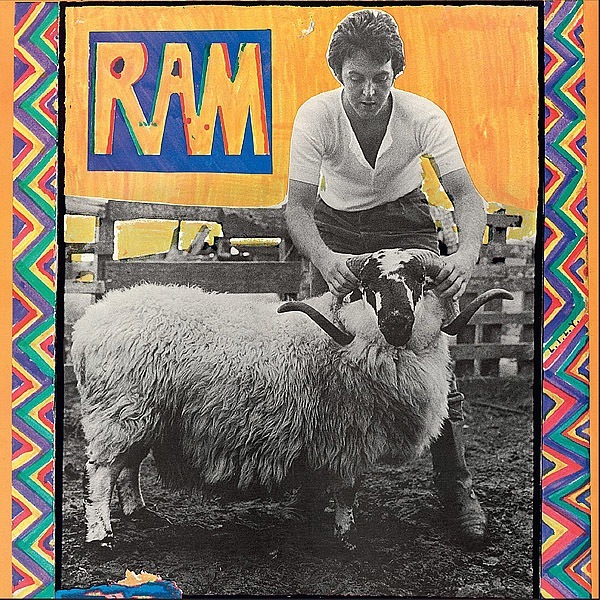
"Ram" sessions (CBS Studios, New York City)
Oct 12 to Nov 20, 1970 • Songs recorded during this session appear on Ram
Recording studio: CBS Studios • New York City • USA
Session Oct 12, 1970 • Recording "Another Day"
Session Oct 14, 1970 • Recording "Get On The Right Thing"
Session Oct 16, 1970 • Recording "3 Legs", "Eat At Home"
Session Oct 19, 1970 • Recording "I Lie Around"
Session Oct 20, 1970 • Recording "The Back Seat Of My Car," "When The Wind Is Blowing"
AlbumSome of the songs worked on during this session were first released on the "Ram" LP
This was the end of the first week of recording the “Ram” album, but only the third session overall, as Paul McCartney had cancelled the Tuesday and Thursday sessions at the last minute — a situation that frustrated session guitarist David Spinozza, who was in high demand and had to turn down other engagements.
On this day, Paul, Spinozza, and drummer Denny Seiwell began work on two new tracks: “Eat At Home” (under the working title “Come On Little Lady”) and “3 Legs.”
In the morning, they recorded the basic track of “Eat At Home,” with Paul on acoustic guitar, Spinozza on electric guitar, and Seiwell on drums.
After lunch, the focus shifted to “3 Legs.” Paul sang a rough guide vocal, accompanied by Spinozza on acoustic guitar and Seiwell on drums.
At the close of the session, Paul informed Spinozza and Seiwell that they would probably not be needed the following week, as he planned to concentrate on overdubs by himself. However, on Sunday he changed his mind, and Linda called the two musicians to return on Monday, October 19. By that time, Spinozza had already committed to other sessions from Wednesday onward.
On Friday, the last day of the first week you recorded 3 Legs. What do you remember about that track?
The end. It just went into a whole different bah. It was so much fun to play on. Paul’s songs were like pieces of music. It wasn’t just one song, all the same vibe to it. Then we got to the end and it got really funky. And we got a chance to cut loose a little bit and have some fun. After being kind of restraint because of the lyric and all, but when we got to the end we got to have a little fun with it.
Denny Seiwell – Interview with Edward Eikelenboom, August 2013 – From Maccazine Volume 40, Issue 3
There’s one track which is a cute thing, a blues tune, which I think has a pretty unique sound on and I had fun doing “3 Legs.”
Paul likes to double-track a lot of things. We both played acoustic on some tracks, and then tripled. Denny Seiwell was on drums, myself and Paul on guitars. Sometimes Paul played piano, but he never played bass while we were there. He overdubbed the bass. It was a little weird, because bass, drums and guitar would have been more comfortable, but that’s the way he works.
David Spinozza – Interview with Vicky Wickham – From Hit Parader, November 1971
The date started out going really smoothly, but then what was happening was that although originally they had told me they wanted me for four whole weeks, days were getting cancelled out and they weren’t booking definite dates. So I had to keep asking, not to be a drag, but to keep my book straight and to know what other work I could take. I kept asking but I wasn’t getting a straight answer.
David Spinozza – Interview with Vicky Wickham – From Hit Parader, November 1971
Written by Paul McCartney
Recording
Written by Paul McCartney, Linda Eastman / McCartney
Recording
Paul McCartney: Music Is Ideas. The Stories Behind the Songs (Vol. 1) 1970-1989
With 25 albums of pop music, 5 of classical – a total of around 500 songs – released over the course of more than half a century, Paul McCartney's career, on his own and with Wings, boasts an incredible catalogue that's always striving to free itself from the shadow of The Beatles. The stories behind the songs, demos and studio recordings, unreleased tracks, recording dates, musicians, live performances and tours, covers, events: Music Is Ideas Volume 1 traces McCartney's post-Beatles output from 1970 to 1989 in the form of 346 song sheets, filled with details of the recordings and stories behind the sessions. Accompanied by photos, and drawing on interviews and contemporary reviews, this reference book draws the portrait of a musical craftsman who has elevated popular song to an art-form.
The McCartney Legacy: Volume 1: 1969 – 73

In this first of a groundbreaking multivolume set, THE MCCARTNEY LEGACY, VOL 1: 1969-73 captures the life of Paul McCartney in the years immediately following the dissolution of the Beatles, a period in which McCartney recreated himself as both a man and a musician. Informed by hundreds of interviews, extensive ground up research, and thousands of never-before-seen documents THE MCCARTNEY LEGACY, VOL 1 is an in depth, revealing exploration of McCartney’s creative and personal lives beyond the Beatles.
Eight Arms to Hold You: The Solo Beatles Compendium
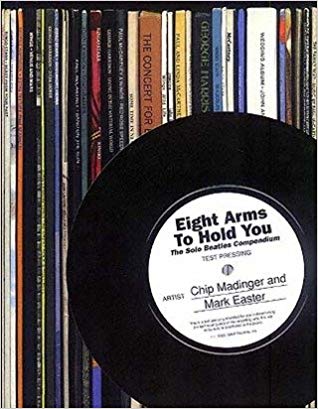
Eight Arms To Hold You: The Solo Beatles Compendium is the ultimate look at the careers of John Lennon, Paul McCartney, George Harrison and Ringo Starr beyond the Beatles. Every aspect of their professional careers as solo artists is explored, from recording sessions, record releases and tours, to television, film and music videos, including everything in between. From their early film soundtrack work to the officially released retrospectives, all solo efforts by the four men are exhaustively examined.
Maccazine - Volume 40, Issue 3 - RAM Part 1 - Timeline

This very special RAM special is the first in a series. This is a Timeline for 1970 – 1971 when McCartney started writing and planning RAM in the summer of 1970 and ending with the release of the first Wings album WILD LIFE in December 1971. [...] One thing I noted when exploring the material inside the deluxe RAM remaster is that the book contains many mistakes. A couple of dates are completely inaccurate and the story is far from complete. For this reason, I started to compile a Timeline for the 1970/1971 period filling the gaps and correcting the mistakes. The result is this Maccazine special. As the Timeline was way too long for one special, we decided to do a double issue (issue 3, 2012 and issue 1, 2013).

Notice any inaccuracies on this page? Have additional insights or ideas for new content? Or just want to share your thoughts? We value your feedback! Please use the form below to get in touch with us.