
The Moody Blues
Photo: From the Beatles’ 1965 UK Tour Programme
Last updated on November 23, 2025
Photo: From the Beatles’ 1965 UK Tour Programme
Last updated on November 23, 2025
From Wikipedia:
The Moody Blues were an English rock band formed in Birmingham in May 1964. The band initially consisted of Graeme Edge (drums), Denny Laine (guitar/vocals), Mike Pinder (keyboards/vocals), Ray Thomas (multi-instrumentalist/vocals) and Clint Warwick (bass/vocals). Originally part of the British beat and R&B scene of the early–mid 1960s, the band came to prominence with the UK No. 1 and US Top 10 single “Go Now” in late 1964/early 1965. Laine and Warwick both left the band in 1966, with Edge, Pinder and Thomas recruiting new members Justin Hayward (guitar/vocals) and John Lodge (bass/vocals). They embraced the psychedelic rock movement of the late 1960s, with their second album, Days of Future Passed (1967), a fusion of rock with classical music (performed with the London Festival Orchestra) that established the band as pioneers in the development of art rock and progressive rock. It has been described as a “landmark” and “one of the first successful concept albums”.
The group released six more albums – In Search of the Lost Chord (1968), On the Threshold of a Dream (1969), To Our Children’s Children’s Children (1969), A Question of Balance (1970), Every Good Boy Deserves Favour (1971) and Seventh Sojourn (1972) – and toured extensively until they went on hiatus in 1974. Their records from this period were among the most successful in the progressive rock genre and produced FM radio hits such as “Nights in White Satin” (1967; charting again in 1972, and 1979), “Tuesday Afternoon” (1968), “Question” (1970), “The Story in Your Eyes” (1971), “Isn’t Life Strange” (1972) and “I’m Just a Singer (In a Rock and Roll Band)” (1973). After resuming activities in 1977, Pinder left the following year and was replaced by former Yes keyboardist Patrick Moraz. In the 1980s they took on a more synth-pop sound, having hits with “Gemini Dream” (1981), “The Voice” (1981), “Your Wildest Dreams” (1986) and “I Know You’re Out There Somewhere” (1988). “Your Wildest Dreams” made the Moody Blues the first act to earn each of its first three Top 10 singles in the United States in three different decades. Moraz departed in 1991, followed by Thomas in 2002. Though the band stopped releasing albums after December (2003), they continued to tour throughout the 2000s and later reunited periodically for events, one-off concerts, short tours and cruises, until Graeme Edge, the last remaining original member, retired in 2018.
The Moody Blues sold 70 million albums worldwide, including 18 platinum and gold LPs. They produced 16 studio albums, six of which made the US Top 20 (with two reaching No. 1) and eight of which made the UK Top 20 (with three reaching No. 1). They were inducted into the Rock and Roll Hall of Fame in 2018. […]
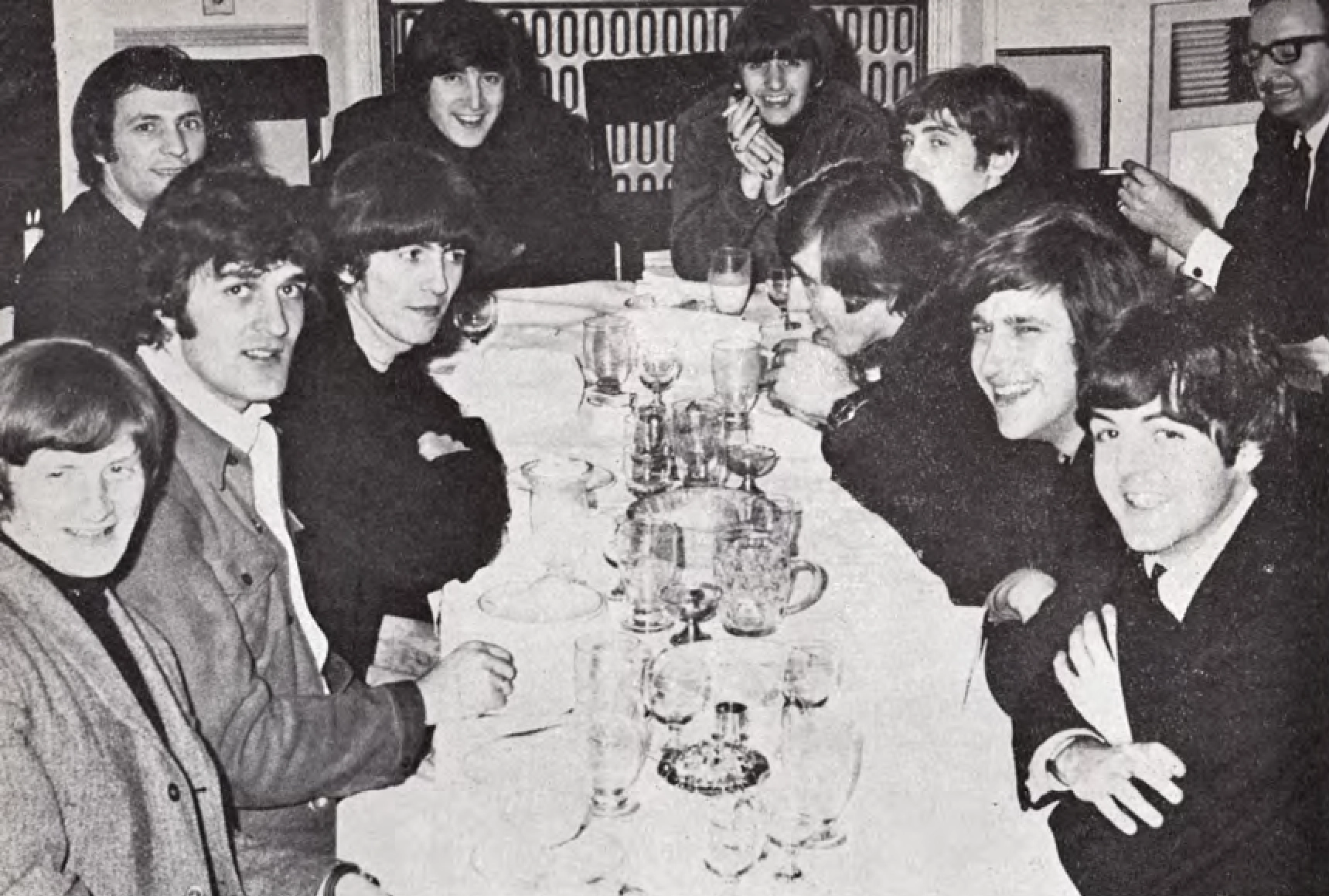
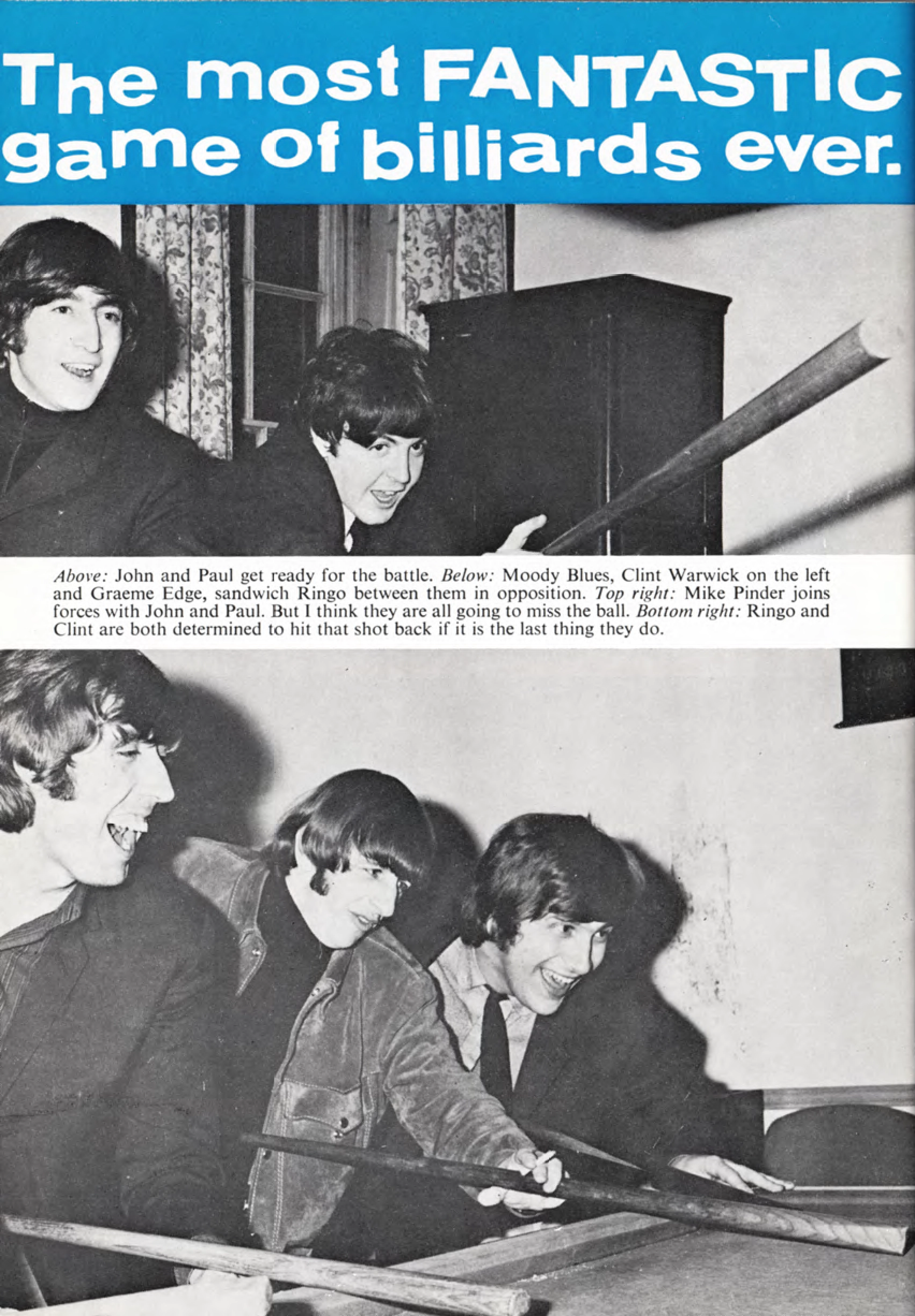
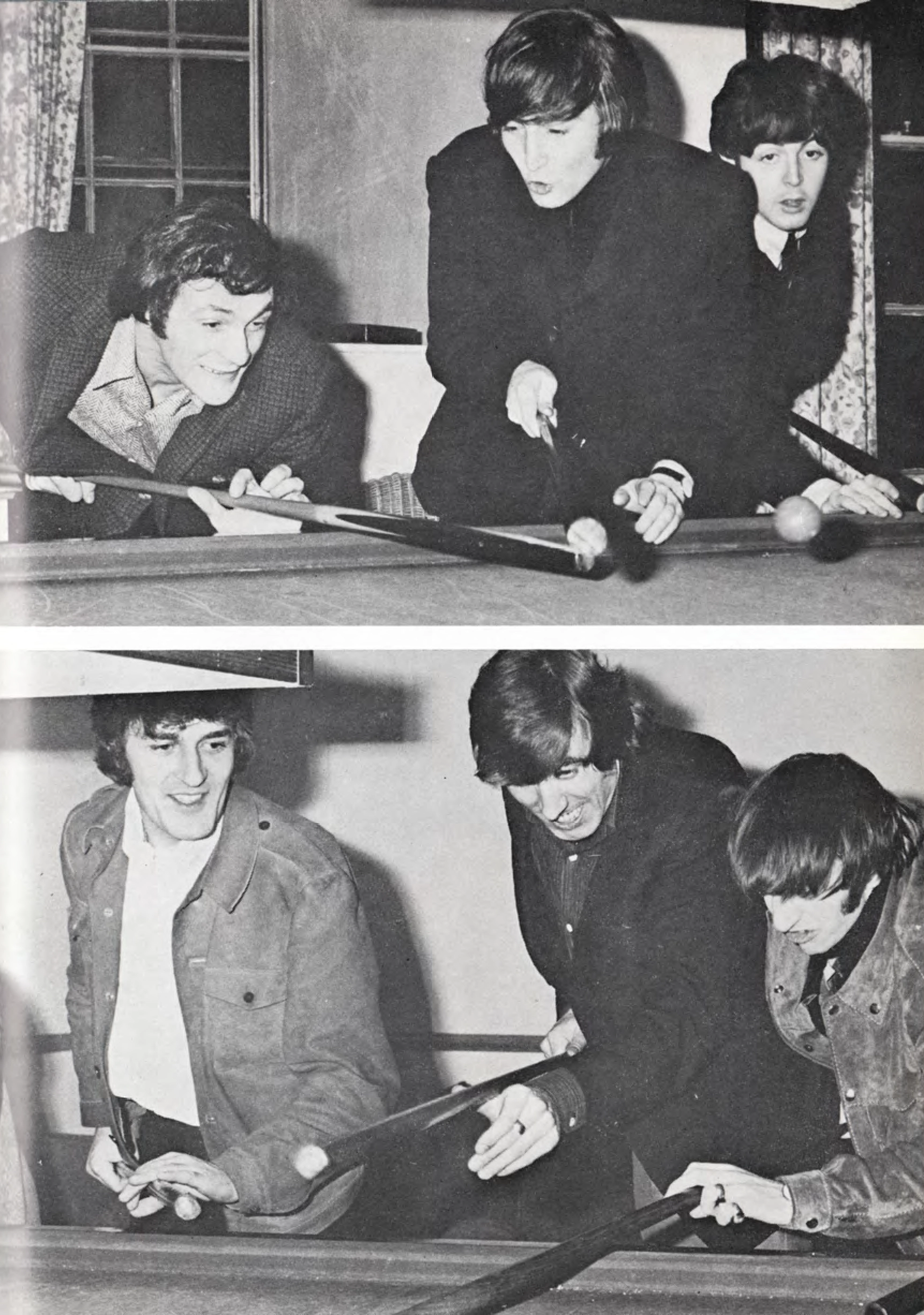
The Moody Blues were among the support acts for The Beatles’ 1965 UK Tour, sharing the bill with the Paramounts, Beryl Marsden, Steve Aldo, the Koobas, and the Marionettes. Denny Laine, the band’s guitarist and vocalist at the time, left the group in 1966. Five years later, Paul McCartney invited him to join his new band, Wings, which he was part of until its dissolution in 1981.
moody blues – RHYTHM, BLUES, SOUL
Everyone who has seen The Moody Blues perform will agree that they are aptly named. In the crazy world of beat their style of music — a moody mixture of rhythm, blues and soul — stands alone. Each musician is an individualist, each has a goodly share of personality, but as a group their efforts are neatly integrated, and they possess a terrific sense of “togetherness” which erupts on stage to produce one of the finest group acts in this country.
As recording artistes, The Moody Blues take endless trouble to perfect everything they do. Their material is offbeat, and to suit their own musical style Denny Laine and Mike Pinder have now taken to writing a good deal of the group’s material. Their vocal harmonies are intricate and precise, and they never cease to astonish audiences with their ability to recreate on stage, all the vocal and instrumental effects they achieve in a recording studio.
The origin of The Moody Blues can be traced back to Birmingham in the early part of 1964. At that time Denny Laine and The Diplomats were one of the top groups in that area, but Denny broke away from them after a disagreement over their musical policy. Graeme Edge and Clint Warwick were in similar situations with their respective groups and eventually the three of them, plus a fourth musician, teamed up as The Preachers for a few weeks.
On 1st May, 1964, Ray Thomas and Mike Pinder, who had just returned from an engagement in Germany with The Crewkats, joined forces with Denny, Clint and Graeme. On 2nd May, The Moody Blues played their first date at the Colton Ballroom, Birmingham, and after only a few weeks became one of the biggest attractions in that area.
In July they decided to expand their field of operation and moved south to London. They soon established themselves on the music scene, becoming firm favourites at The Crawdaddy Club in Richmond and at London’s famous Marquee Club.
The Moody Blues first single release for Decca was a comparative flop, but their second disc, “Go Now”, released at Christmas, slammed its way up to the number one chart spot.
In January, 1965, they undertook their first major theatre tour with American rhythm and blues star Chuck Berry. They have performed in France, Germany and Spain, have appeared on America’s top pop television programme “Shindig”, and played at the Richmond Jazz Festival in August.
Later discs released were “I Don’t Want to go on Without You” and “From the Bottom of My Heart”. The latter was a composition by Denny Laine and Mike Pinder and was an entry in the British Song Contest held in Brighton last May.
The Moody Blues came under the management/direction of Brian Epstein’s Nems Enterprises in September and on the 21st of that month appeared in “An Evening of Popular British Music” presented by Brian Epstein at the Royal Festival Hall as part of the Commonwealth Arts Festival.
Their first disc release under Nems Enterprises contains two Pinder-Laine numbers. Top side “Every Day” features Denny’s soulful voice backed by a three-part harmony from Mike, Clint and Ray, and the up-tempo “You Don’t” on the flipside romps along in tremendous style.
From the Beatles’ 1965 UK Tour Programme



Shows: 18 • Countries: 1

Notice any inaccuracies on this page? Have additional insights or ideas for new content? Or just want to share your thoughts? We value your feedback! Please use the form below to get in touch with us.


