Thursday, July 10, 1969
Recording and mixing "Maxwell's Silver Hammer"
For The Beatles
Last updated on April 5, 2025
Thursday, July 10, 1969
For The Beatles
Last updated on April 5, 2025

Feb 22 - Aug 25, 1969 • Songs recorded during this session appear on Abbey Road
Recording studio: EMI Studios, Studio Two, Abbey Road • London • UK
Session Jul 08, 1969 • Recording and mixing "Here Comes The Sun"
Session Jul 09, 1969 • Recording "Maxwell's Silver Hammer"
Session Jul 10, 1969 • Recording and mixing "Maxwell's Silver Hammer"
Session July 6 or 13, 1969 ? • Recording "Que Sera Sera", "Fields of St. Etienne" #2
AlbumSome of the songs worked on during this session were first released on the "Abbey Road" LP
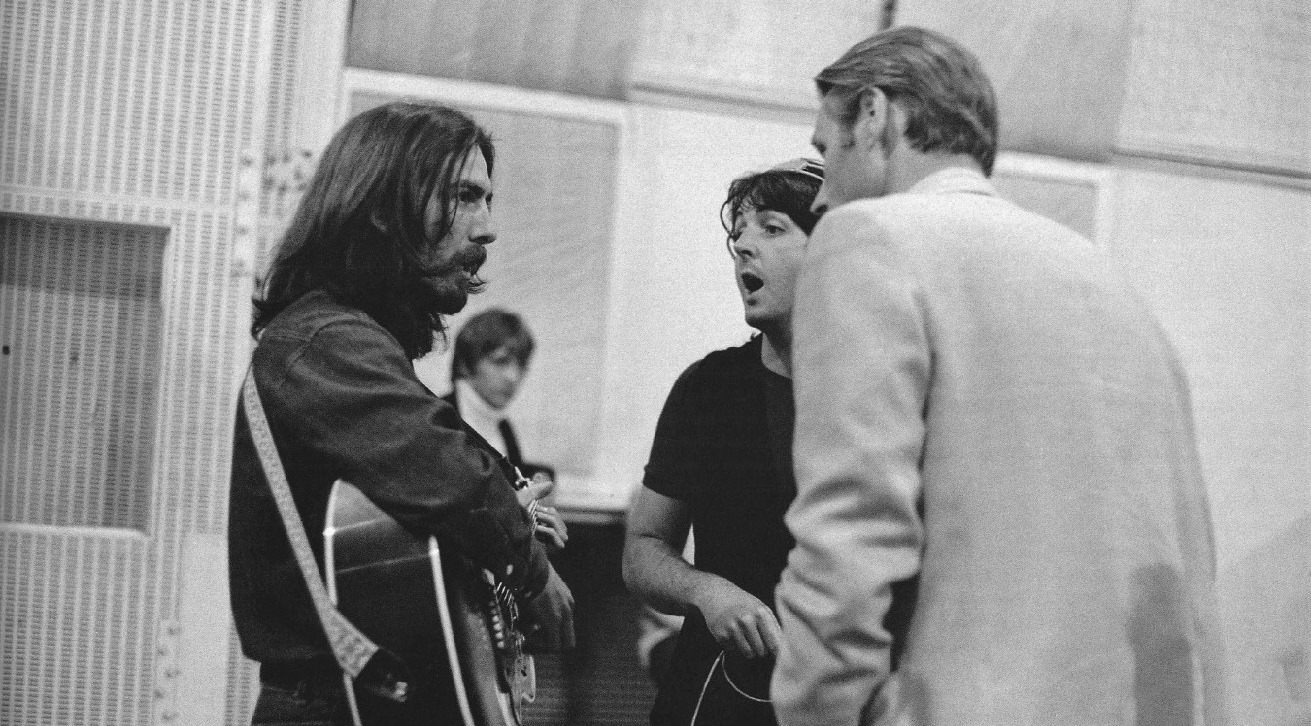
On the previous day, Paul McCartney, George Harrison and Ringo Starr had begun recording Paul’s “Maxwell’s Silver Hammer“. John Lennon was present but did not contribute.
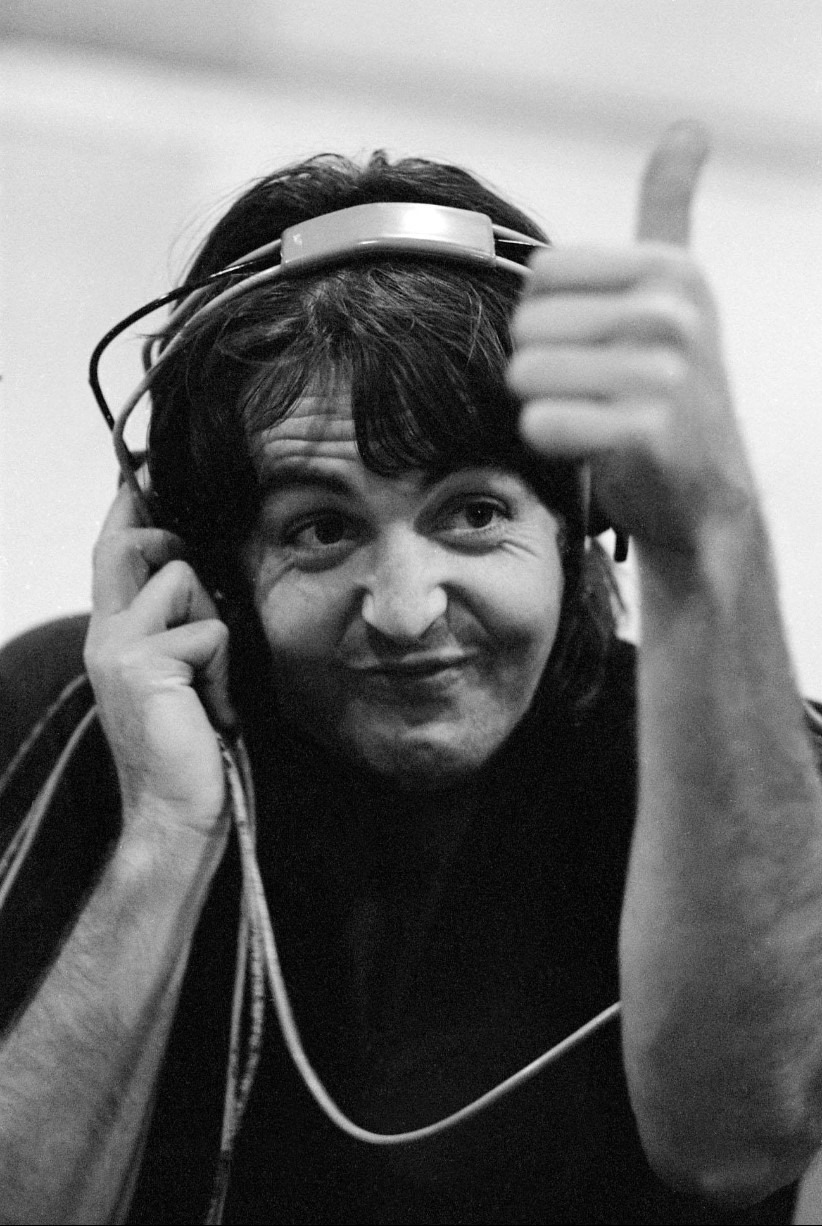
On this day, the work continued during a 2:30 pm to 11:30 pm session, with further overdubs added onto take 21:
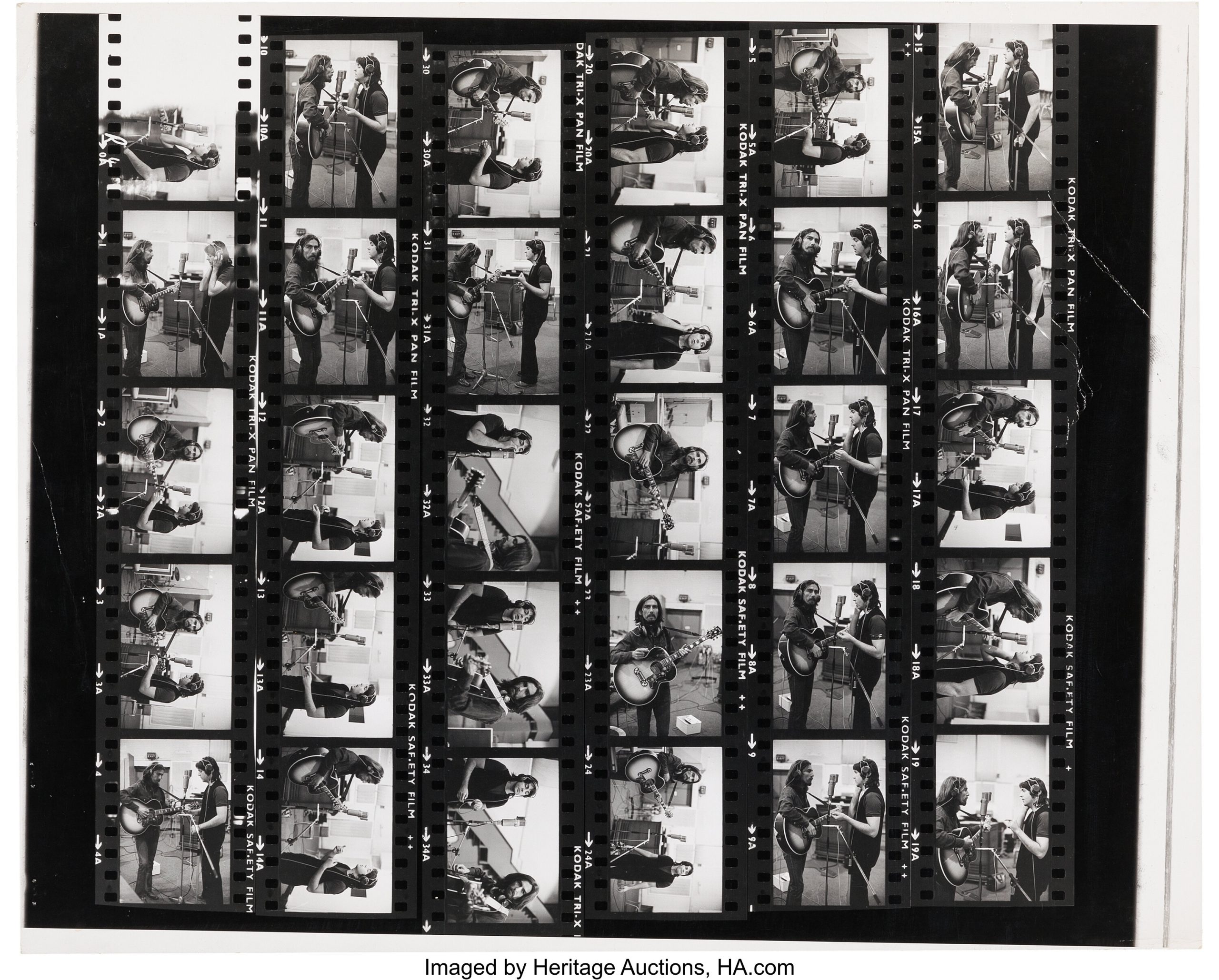
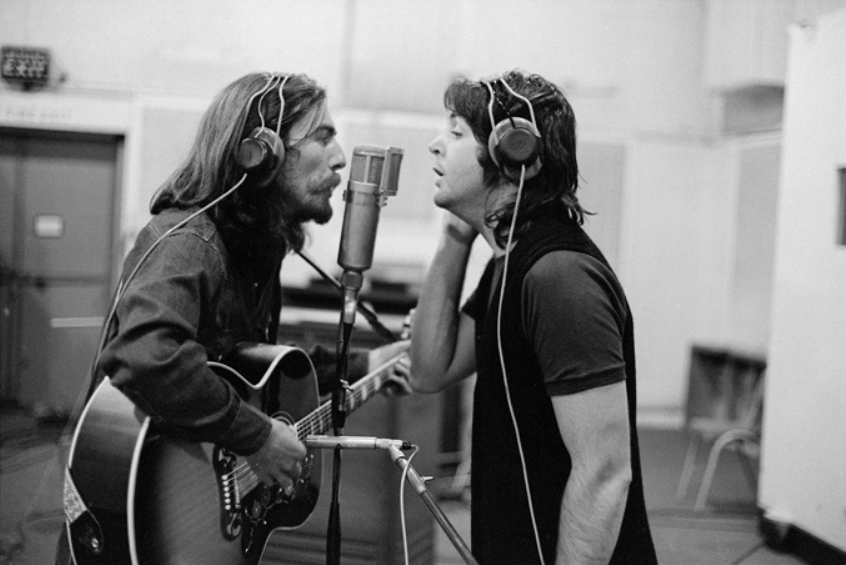
Paul’s original lead vocal recorded on track eight was used for all the song, except the third verse, which had to be overdubbed once he had finalised the words. Track six has anvil strikes in the first chorus, Paul singing in all the choruses while playing acoustic guitar, extra piano arpeggios, ‘do-do-do-do-do’ harmonies, and Paul and George singing ‘Maxwell must go free’; an organ, anvil strikes for the second and third choruses, more singing from Paul and his harmonies in the choruses are on seven; and the lead vocal is on eight. The choral singing of ‘Silver hammer man’ by Paul, George and Ringo was recorded with the higher notes on six, lower notes on seven, and a combination of low and high on height.
From “Abbey Road” Super Deluxe edition book, 2019
Regarding the piano arpeggios, Paul mentioned the following in the 2021 “McCartney 3,2,1” documentary series:
I was wondering about the arpeggios because that’s a little bit flash for me. Makes me think that was George Martin because, y’know, I can play piano but not that good. If we wanted anything a little bit difficult, George Martin was like our teacher.
Paul McCartney – From the “McCartney 3,2,1” documentary series, 2021 – Quoted in beatlesebooks.com
Various sources — including Mark Lewisohn in “The Complete Beatles Recording Sessions” — indicate that George Martin contributed on Hammond organ, a detail not mentioned in the “Abbey Road” Super Deluxe edition book.
George Harrison had played the bass when recording the backing track on the previous day. But Geoff Emerick relates that Paul may have replaced George’s contribution by his own:
There was a good deal of discussion about Paul wanting the bass on ‘Maxwell’s Silver Hammer’ to sound like a tuba, to make the recording sound old-fashioned. We accomplished that by having him articulate the bass like a tuba by sliding into the notes instead of hitting them spot on. A fair amount of time was expended on getting that sound, but Ringo and George Harrison made a point of absenting themselves, so there was no one to raise an objection. At this late stage of the Beatles’ career, it seemed that the best way for them to approach making a record – perhaps the only way – was for each band member to work on his own.
Geoff Emerick – From “Here, There and Everywhere: My Life Recording the Music of The Beatles“, 2006
Paul corroborated this in the 2021 “McCartney 3,2,1” documentary series:
I think I was trying to get that effect. You play it very short, y’know, don’t let the bass ring on…the character of the song is a parody, y’know.
Paul McCartney – From the “McCartney 3,2,1” documentary series, 2021 – Quoted in beatlesebooks.com
During the January 1969 rehearsals of “Maxwell’s Silver Hammer,” Paul had the idea to use an anvil as a percussive instrument. Mal Evans was tasked with bringing an anvil and hammer into the studio and striking it — which he did on January 7.
Paul brought back the idea on this day, and according to Geoff Emerick, Mal Evans again contributed:
[Paul] did spend a lot of time working on “Maxwell,” which irritated George Harrison a bit. One afternoon, they got into a heated argument about it and I started to think, Uh-oh, here we go again. But it died down relatively quickly, and the tension was broken when it came time to do the anvil overdub on the choruses. There was no thought given to finding a way to approximate the effect. Paul wanted the sound of an anvil being struck, so Mal (Evans) was dispatched to track one down…There was a proper blacksmith’s anvil brought to the studio for Ringo to hit. They had it rented from a theatrical agency…I have a clear memory of him dragging it into the studio, struggling under its weight as the rest of us laughed our heads off. Both he and Ringo had a go at hitting it. Ringo simply didn’t have the strength to lift the hammer, so Mal ended up playing the part, but he didn’t have a drummer’s sense of timing, so it took a while to get a successful take.
Geoff Emerick – From “Here, There and Everywhere: My Life Recording the Music of The Beatles“, 2006
This statement is however contradicted by Kevin Howlett in the “Abbey Road” Super Deluxe edition book (2019):
The Beatles’ trusted friend and assistant Mal Evans had bashed the anvil in January, but missed the opportunity to repeat his cameo at Abbey Road. He was on holiday at the time.
From “Abbey Road” Super Deluxe edition book, 2019
We, therefore, assume that Ringo Starr played the anvil overdubs recorded on this day.
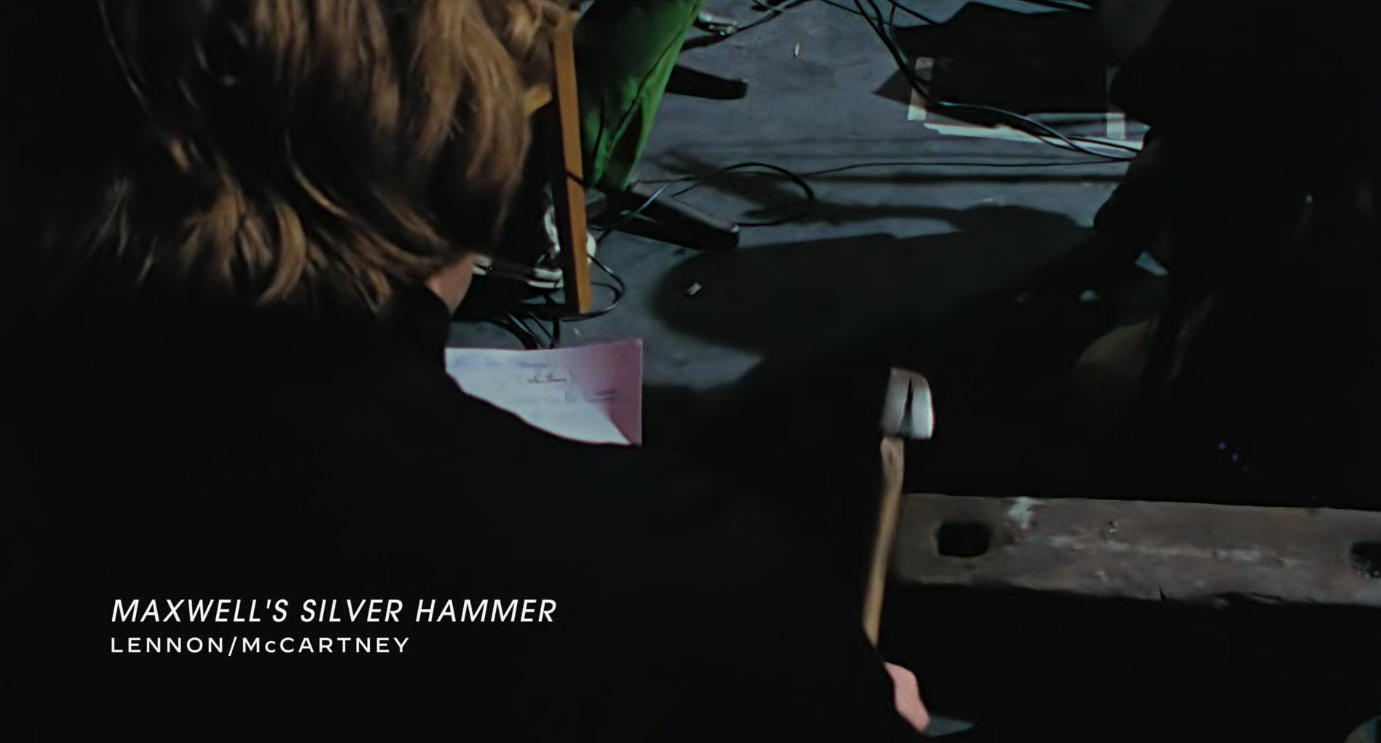
John Lennon was present on this day but didn’t contribute to “Maxwell’s Silver Hammer” and left before the end of the session according to Geoff Emerick:
The day after John arrived, the group were recording the backing vocals for the song, with both George Harrison and Ringo joining Paul at the mic as an impassive John simply sat in the back of the studio and watched them. After a few uncomfortable moments, Paul strode over and invited his old friend and collaborator to join in. I thought it was a nice gesture, an olive branch. But an expressionless Lennon simply said no, I don’t think so. A few minutes later, he and Yoko got up and went home. With nothing to contribute, John just didn’t want to be there.
Geoff Emerick – From “Here, There and Everywhere: My Life Recording the Music of The Beatles“, 2006
Towards the end of the session, thirteen stereo remixes were made, but those mixes would remain unused, as more overdubs would be added the next day.
Recording • SI onto take 21
Mixing • Stereo mixing - Remix 1 from take 21
Mixing • Stereo mixing - Remix 2 from take 21
Mixing • Stereo mixing - Remix 3 from take 21
Mixing • Stereo mixing - Remix 4 from take 21
Mixing • Stereo mixing - Remix 5 from take 21
Mixing • Stereo mixing - Remix 6 from take 21
Mixing • Stereo mixing - Remix 7 from take 21
Mixing • Stereo mixing - Remix 8 from take 21
Mixing • Stereo mixing - Remix 9 from take 21
Mixing • Stereo mixing - Remix 10 from take 21
Mixing • Stereo mixing - Remix 11 from take 21
Mixing • Stereo mixing - Remix 12 from take 21
Mixing • Stereo mixing - Remix 13 from take 21
The Complete Beatles Recording Sessions • Mark Lewisohn
The definitive guide for every Beatles recording sessions from 1962 to 1970. We owe a lot to Mark Lewisohn for the creation of those session pages, but you really have to buy this book to get all the details - the number of takes for each song, who contributed what, a description of the context and how each session went, various photographies... And an introductory interview with Paul McCartney!
The Beatles Recording Reference Manual: Volume 5: Let It Be through Abbey Road (1969 - 1970)

The fifth and final book of this critically acclaimed series, "The Beatles Recording Reference Manual: Volume 5: Let It Be through Abbey Road (1969 - 1970)" follows The Beatles as they "get back to where they once belonged...". Not once, but twice. With "Let It Be", they attempted to recapture the spontaneity of their early years and recordings, while "Abbey Road" was a different kind of return - to the complexity, finish and polish that they had applied to their work beginning with "Revolver" and through to "The Beatles".
Solid State: The Story of "Abbey Road" and the End of the Beatles
Acclaimed Beatles historian Kenneth Womack offers the most definitive account yet of the writing, recording, mixing, and reception of Abbey Road. In February 1969, the Beatles began working on what became their final album together. Abbey Road introduced a number of new techniques and technologies to the Beatles' sound, and included "Come Together," "Something," and "Here Comes the Sun," which all emerged as classics.
If we modestly consider the Paul McCartney Project to be the premier online resource for all things Paul McCartney, it is undeniable that The Beatles Bible stands as the definitive online site dedicated to the Beatles. While there is some overlap in content between the two sites, they differ significantly in their approach.

Notice any inaccuracies on this page? Have additional insights or ideas for new content? Or just want to share your thoughts? We value your feedback! Please use the form below to get in touch with us.


