Tuesday, July 1, 1969
Recording "You Never Give Me Your Money"
For The Beatles
Last updated on April 4, 2025
Tuesday, July 1, 1969
For The Beatles
Last updated on April 4, 2025

Feb 22 - Aug 25, 1969 • Songs recorded during this session appear on Abbey Road
Recording studio: EMI Studios, Studio Two, Abbey Road • London • UK
Previous session May 28, 1969 • Mixing the "Get Back" album (3rd compilation)
Single Jun 27, 1969 • "Charity Bubbles / Goose" by The Scaffold released in the UK
Article July 1969 - March 1970 ? • Designing the packaging for "Let It Be"
Session Jul 01, 1969 • Recording "You Never Give Me Your Money"
Album Jul 01, 1969 • "Battersea Rain Dance" by The Chris Barber Band released in the UK
Session Jul 02, 1969 • Recording "Her Majesty", "Golden Slumbers / Carry That Weight"
AlbumSome of the songs worked on during this session were first released on the "Abbey Road" LP
The last time all four Beatles had been in the recording studio together was on May 9, 1969 — a session that ended on a sour note when business matters came to the fore. John Lennon, George Harrison and Ringo Starr urged Paul McCartney to sign a contract officially appointing Allen Klein as Apple’s financial manager, granting him a 20% share of their earnings. Paul refused, prompting the three others — along with Klein, who was present — to storm out of the studio.
In the second half of June, after returning from a holiday in Corfu, Paul contacted producer George Martin to say The Beatles were ready to record again. Martin then booked time at EMI Studios for July and August.
“Let It Be” was a miserable experience and I never thought that we would get back together again. So I was very surprised when Paul rang me up and said ‘We want to make another record. Will you produce it for us, really produce it?’ I said ‘Yes, if I am really allowed to produce it. If I have to go back and accept a lot of instructions which I don’t like I won’t do it.’ It was really good, even though the boys tended to do their own items, sometimes in different studios at the same time and I had to be dashing from one place to another.
George Martin – From “The Complete Beatles Recording Sessions” by Mark Lewisohn, 1988
Paul persuaded me to come back and do another album really like I’d always wanted to make. Without being pretentious, I thought we were making a king of art form and I wanted them to think symphonically. I wanted them, when writing their songs to think in terms of first and second subjects, and symphony form and sonata form. In fact, it was a very happy time.
George Martin – From “Abbey Road” Super Deluxe edition book, 2019
But Paul was the only Beatle present in the studio on this day, in a session that lasted from 3 pm to 7:30 pm.
John Lennon was on holiday in Scotland when he was involved in a car accident along with his wife Yoko, his son Julian, and Yoko’s daughter, Kyoko. He was hospitalized on this day and would remain there until July 6, rejoining The Beatles’ sessions on July 9 — missing five days of work.
Alone in the studio, Paul continued work on “You Never Give Me Your Money,” picking up where the band had left off on May 6. He recorded a new lead vocal onto take 30, replacing the original guide vocal for the first part of the song. However, the “One sweet dream…” section retained the original vocal performance from May 6.
Work on the track would resume on July 11.
Recording • SI onto take 30
The Complete Beatles Recording Sessions • Mark Lewisohn
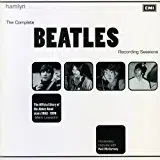
The definitive guide for every Beatles recording sessions from 1962 to 1970. We owe a lot to Mark Lewisohn for the creation of those session pages, but you really have to buy this book to get all the details - the number of takes for each song, who contributed what, a description of the context and how each session went, various photographies... And an introductory interview with Paul McCartney!
The Beatles Recording Reference Manual: Volume 5: Let It Be through Abbey Road (1969 - 1970)

The fifth and final book of this critically acclaimed series, "The Beatles Recording Reference Manual: Volume 5: Let It Be through Abbey Road (1969 - 1970)" follows The Beatles as they "get back to where they once belonged...". Not once, but twice. With "Let It Be", they attempted to recapture the spontaneity of their early years and recordings, while "Abbey Road" was a different kind of return - to the complexity, finish and polish that they had applied to their work beginning with "Revolver" and through to "The Beatles".
Solid State: The Story of "Abbey Road" and the End of the Beatles
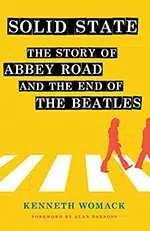
Acclaimed Beatles historian Kenneth Womack offers the most definitive account yet of the writing, recording, mixing, and reception of Abbey Road. In February 1969, the Beatles began working on what became their final album together. Abbey Road introduced a number of new techniques and technologies to the Beatles' sound, and included "Come Together," "Something," and "Here Comes the Sun," which all emerged as classics.
If we modestly consider the Paul McCartney Project to be the premier online resource for all things Paul McCartney, it is undeniable that The Beatles Bible stands as the definitive online site dedicated to the Beatles. While there is some overlap in content between the two sites, they differ significantly in their approach.

Notice any inaccuracies on this page? Have additional insights or ideas for new content? Or just want to share your thoughts? We value your feedback! Please use the form below to get in touch with us.


