Released in 1996
12-Bar Original
Written by Paul McCartney • Ringo Starr • John Lennon • George Harrison • Instrumental
Last updated on December 3, 2025
Released in 1996
Written by Paul McCartney • Ringo Starr • John Lennon • George Harrison • Instrumental
Last updated on December 3, 2025
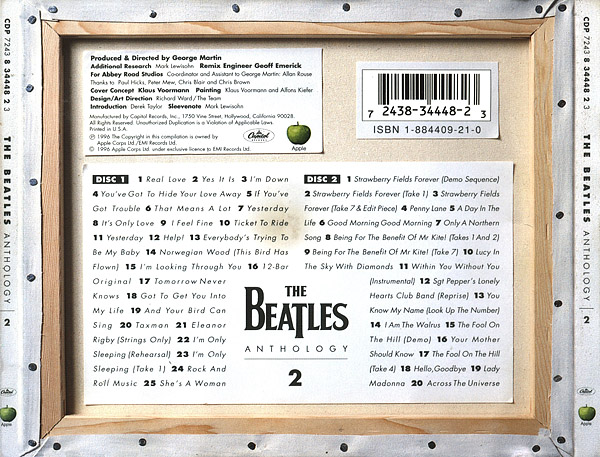
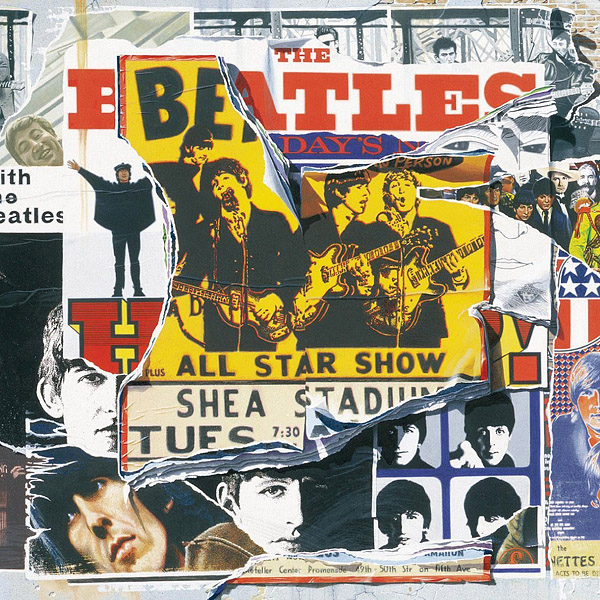
Album This song officially appears on the Anthology 2 Official album.
Timeline This song was officially released in 1996
Timeline This song was written, or began to be written, in 1965, when Paul McCartney was 23 years old)
This song was recorded during the following studio sessions:
Recording "What Goes On", "12-Bar Original"
Nov 04, 1965
Nov 30, 1965

Officially appears on Let It Be (UK - 1st pressing with "Get Back" book)

Officially appears on Magical Mystery Tour (US LP - Mono)

Christmas Time (Is Here Again)
Officially appears on Christmas Time Is Here Again!
From Wikipedia:
“12-Bar Original” is an instrumental 12-bar blues by the Beatles. It was recorded in 1965, but was not commercially available until 1996 when an edited version of take 2 of the song was included on the Anthology 2 album. Prior to editing, the length of take 2 was 6:36.
It is one of the few songs credited to Lennon/McCartney/Harrison/Starkey and published by Lenono Music, Inc., MPL Communications Ltd, Harrisongs Ltd., and Startling Music Ltd. Other songs credited to all four Beatles include “Flying” from Magical Mystery Tour, “Dig It” from Let It Be, “Christmas Time (Is Here Again)“, the B-side to the 1995 single “Free as a Bird” and Now and Then.
Of the Beatles, only John Lennon and Ringo Starr ever commented on the song. During some US radio interviews, Lennon was asked if there were any unissued Beatles recordings. He replied that all he could recall was “some lousy 12 bar”. Starr told journalist Peter Palmiere: “We all wrote the track and I have an acetate of one of the versions“. The quote was later used by Palmiere in a Ringo Starr cover interview/story in DISCoveries magazine in 1993 and by Jim Berkenstadt and Belmo in their book Black Market Beatles.
“12-Bar Original” was the Beatles’ first instrumental after signing for EMI, and was produced by George Martin at EMI’s Abbey Road Studios, London. Four other instrumentals by the group are the aforementioned “Flying“, an outtake version of that song called “Aerial Tour Instrumental“, “Cayenne” and “Cry for a Shadow“.
Composition and recording
“12-Bar Original” was recorded on 4 November 1965, the same day as “What Goes On“. Beginning with a count-in by McCartney, the track consists of 17 twelve-bar choruses in the key of E major, recorded without overdubs, with drums, bass, guitar and harmonium, clocking in at 6:42. For the track’s release on Anthology 2, Martin edited together certain choruses: #1–2 (0:00–0:46), #9–10 (3:04–3:50),#14 (4:59–5:22) and #16–17 (5:46–6:38). The track was the first instrumental the group recorded since “Cry for a Shadow”. […]
An instrumental recording by The Beatles, their first since signing with EMI in 1962, featuring drums, bass, two electric guitars (with George Harrison adding tone-pedal effects) and a harmonium (played by George Martin). Two takes were attempted, the first breaking down, the second complete at a lengthy 6.36 and from which this 2.54 Anthology edit has been produced. It is not clear if 12-Bar Original was intended for Rubber Soul but, certainly, the song was not mixed until the album was being pressed so it was never a serious contender. Indeed, the recording has remained unissued until now.
From Anthology 2 liner notes

Official album • Released in 1996
2:54 • Outtake • B • Stereo • Part of take 2
Paul McCartney : Bass Ringo Starr : Drums John Lennon : Electric guitar, Lead guitar George Harrison : Electric guitar, Lead guitar George Martin : Harmonium, Producer Norman Smith : Recording engineer
SessionRecording : Nov 04, 1965 • Studio : EMI Studios, Studio Two, Abbey Road

Official album • Released in 2016
2:54 • Outtake • B2016 • Stereo • Part of take 2
Paul McCartney : Bass Ringo Starr : Drums John Lennon : Electric guitar George Harrison : Electric guitar George Martin : Harmonium, Producer Norman Smith : Recording engineer
SessionRecording : Nov 04, 1965 • Studio : EMI Studios, Studio Two, Abbey Road

The Beatles Anthology Collection (2025)
Official album • Released in 2025
2:54 • Outtake • B • Stereo • Part of take 2
Paul McCartney : Bass Ringo Starr : Drums John Lennon : Electric guitar, Lead guitar George Harrison : Electric guitar, Lead guitar George Martin : Harmonium, Producer Norman Smith : Recording engineer
SessionRecording : Nov 04, 1965 • Studio : EMI Studios, Studio Two, Abbey Road

Unsurpassed Masters Vol. 2 (1964-1965)
Bootleg • Released in 1989
6:43 • Outtake • A • Take 2
Paul McCartney : Bass Ringo Starr : Drums John Lennon : Lead guitar George Harrison : Lead guitar George Martin : Harmonium, Producer Norman Smith : Recording engineer
SessionRecording : Nov 04, 1965 • Studio : EMI Studios, Studio Two, Abbey Road

Rubber Soul - Studio Sessions - Back To Basics
Bootleg • Released in 2012
1:55 • Alternate take • Stereo • Pre-Take 1 - Jam
SessionRecording : Nov 04, 1965 • Studio : EMI Studios, Studio Two, Abbey Road
Rubber Soul - Studio Sessions - Back To Basics
Bootleg • Released in 2012
0:33 • Alternate take • Stereo • Take 1
SessionRecording : Nov 04, 1965 • Studio : EMI Studios, Studio Two, Abbey Road
Rubber Soul - Studio Sessions - Back To Basics
Bootleg • Released in 2012
6:50 • Alternate take • A • Stereo • Take 2
Paul McCartney : Bass Ringo Starr : Drums John Lennon : Lead guitar George Harrison : Lead guitar George Martin : Harmonium, Producer Norman Smith : Recording engineer
SessionRecording : Nov 04, 1965 • Studio : EMI Studios, Studio Two, Abbey Road
Rubber Soul - Studio Sessions - Back To Basics
Bootleg • Released in 2012
6:46 • Alternate take • Mono • RM1 from Take 2
Norman Smith : Recording engineer Ron Pender : Second engineer
SessionRecording : Nov 30, 1965 • Studio : EMI Studios, Room 65, Abbey Road
Paul McCartney: Music Is Ideas. The Stories Behind the Songs (Vol. 2) 1990-2012
This new book by Luca Perasi traces Paul McCartney's post-Beatles output from 1990 to 2012 in the form of 250 song entries, filled with details about the recordings, stories behind the sessions and musical analysis. His pop albums, his forays into classical and avant-garde music, his penchant for covering old standards: a complete book to discover how these languages cross-pollinate and influence each other.The second volume in a series that has established itself as a unique guide to take the reader on a journey into the astonishing creativity of Paul McCartney.Read our exclusive interview with Luca Perasi

Notice any inaccuracies on this page? Have additional insights or ideas for new content? Or just want to share your thoughts? We value your feedback! Please use the form below to get in touch with us.