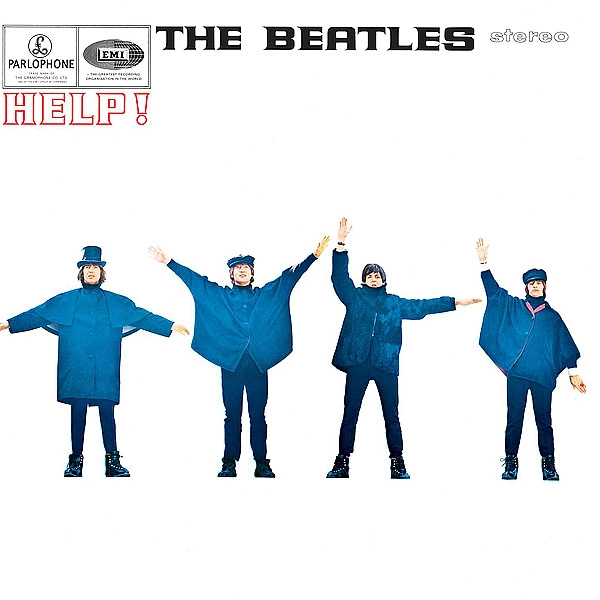
Mid June 1965, or 1966 ?
Paul McCartney considers an experimental approach for the arrangement of “Yesterday”
Last updated on July 22, 2026
Mid June 1965, or 1966 ?
Last updated on July 22, 2026
Previous article Jun 11, 1965 • The Beatles to receive MBEs - announcement
Album Jun 14, 1965 • "Beatles VI (Mono)" by The Beatles released in the US
Album Jun 14, 1965 • "Beatles VI (Stereo)" by The Beatles released in the US
Article Mid June 1965, or 1966 ? • Paul McCartney considers an experimental approach for the arrangement of "Yesterday"

By The Beatles • 7" Single

Officially appears on Help! (UK - Mono)
On June 14, 1965, Paul McCartney recorded the backing track of “Yesterday“, singing while playing acoustic guitar. Producer George Martin suggested completing the recording with a string quartet. Martin spent the following days writing the arrangement, with input from Paul, and the quartet was recorded on June 17.
Paul went down to No. 2 Studio at EMI, sat on a high stool with his acoustic guitar and sang ‘Yesterday’. That was the master to begin with. Then I said, ‘Well, what we can do with it? The only thing I can think of is adding strings, but I know what you think about that.’ And Paul said, ‘I don’t want Mantovani.’ I said, ‘What about a very small number of string players, a quartet?’ He thought that was interesting, and I went and worked on it with him and made suggestions for the score. He had ideas too, and we booked a string quartet and overdubbed the strings – and that was the record.
George Martin – From “The Beatles Anthology” book, 2000
However, Paul did briefly consider a more experimental approach to the arrangement. At one point, although it is unclear whether this idea dates from the original 1965 recording of “Yesterday” or from a 1966 plan to remake the song, he contemplated asking the BBC Radiophonic Workshop — renowned for its pioneering work in electronic music and home to Delia Derbyshire — to create the backing track instead.
In addition to the string-quartet idea, Paul devised a plan to have the arrangement for ‘Yesterday’ written out and taken to the BBC Radiophonic Workshop, the experimental facility specialising in electronic music for radio and television, which was then run by Delia Derbyshire. […]
PAUL: It occurred to me to have the BBC Radiophonic Workshop do the backing track to it and me just sing over an electronic quartet. I went down to see them: I found the number, said, ‘Do you mind if I come down and see you? Six o’clock’s good,’ wandered down. They were in Maida Vale, Little Venice somewhere, near me, so it was very simple for me to just hop in the car, have a look around. The woman who ran it was very nice and they had a little shed at the bottom of the garden where most of the work was done. I said, ‘I’m into this sort of stuff.’ ’’d heard a lot about the BBC Radiophonic Workshop, we’d all heard a lot about it. It would have been very interesting to do, but I never followed it up.
Paul McCartney – From “Paul McCartney: Many Years from Now” by Barry Miles, 1997
[Paul] never came to the workshop. I always did work outside and he came to (Peter) Zinovieff’s studio and I played him some of my stuff – that’s all… but it was the phrase length he was interested in. I’ve always been non-conformist: I don’t like the 8 bar or the 12 bar standard thing. They’re all beautiful in their own way, but why not explore different phrase lengths? (Paul) never came to the workshop… Brian Jones did – golly! There we were with our hand tuned oscillators and he went into it with his frilly cuffs and things as though he could play it as a musical instrument! He died very young and I cried buckets. Pink Floyd (came to the workshop) and I took them down to Zinovieff’s place.
Delia Derbyshire – Interview by John Cavanagh for Boazine 7 – From Delia Derbyshire: On Our Wavelength – WikiDelia
I even found out where Miss Derbyshire lived, and went round to visit her. We even went into the hut at the bottom of her garden. It was full of tape machines and funny instruments. My plan in meeting her was to do an electronic backing for my song Yesterday. We’d already recorded it with a string quartet, but I wanted to give the arrangement electronic backing.
Paul McCartney – Interview with Q Magazine, May 2013
I was very intrigued by the work of Delia Derbyshire. She was a pioneer of electronic music, who worked for the BBC Radiophonic Workshop and is probably best known for her work on Doctor Who. I went to see Delia and she took me to a hut she had in the garden. A sort of laboratory. And we talked about how she worked.
Paul McCartney – From “Paul McCartney: Inside The Songs“, BBC Radio 4, October 2021
There is a sense of “what if” with Derbyshire’s life and one incident in particular has gained momentum with the publication of Paul McCartney’s 1997 biography, “Many Years from Now” written by Barry Miles. According to Miles, McCartney had listened to a lot of electronic music, and “loved” it.) The book states that McCartney said “it occurred to me to have the BBC Radiophonic Workshop do the backing track to [“Yesterday”] and me just sing over an electronic quartet. I went down to see them. The woman who ran it was very nice and they had a shed at the bottom of the garden where most of the work was done…It would have been very interesting to do, but I never followed it up”. As outlined clearly by Mark Brend though, while Derbyshire and McCartney DID meet, given the location McCartney speaks of, the meeting was after the release of “Yesterday”. The “shed at the bottom of the garden” refers to the studio in Peter Zinovieff’s house in Putney, home to Unit Delta Plus – Derbyshire, Hodgson and Zinovieff – who formed in 1966, a year after the release of “Yesterday”. So at most, McCartney could only have been talking about a re-release of the song. Derbyshire herself confirms that they met at Zinovieff’s and that she played him some of her music, “he never did come to the Workshop, he came to Zinovieff’s studio and I played him some of my stuff, that’s all”. Derbyshire and McCartney met again, at the “Million Volt Light and Sound Rave” at Chalk Farm in 1967. On this occasion, McCartney sent a tape to Brian Hodgson, a sound collage called “Carnival of Light”, a 14-minute experimental exercise in overlaying sounds, music, and shouting, for inclusion in the concert.
From Breege Brennan’s thesis – WikiDelia
The Beatles Diary Volume 1: The Beatles Years
With greatly expanded text, this is the most revealing and frank personal 30-year chronicle of the group ever written. Insider Barry Miles covers the Beatles story from childhood to the break-up of the group.

Notice any inaccuracies on this page? Have additional insights or ideas for new content? Or just want to share your thoughts? We value your feedback! Please use the form below to get in touch with us.