Monday, June 14, 1965
Recording "I've Just Seen A Face", "I'm Down", "Yesterday"
For The Beatles
Last updated on July 22, 2026
Monday, June 14, 1965
For The Beatles
Last updated on July 22, 2026

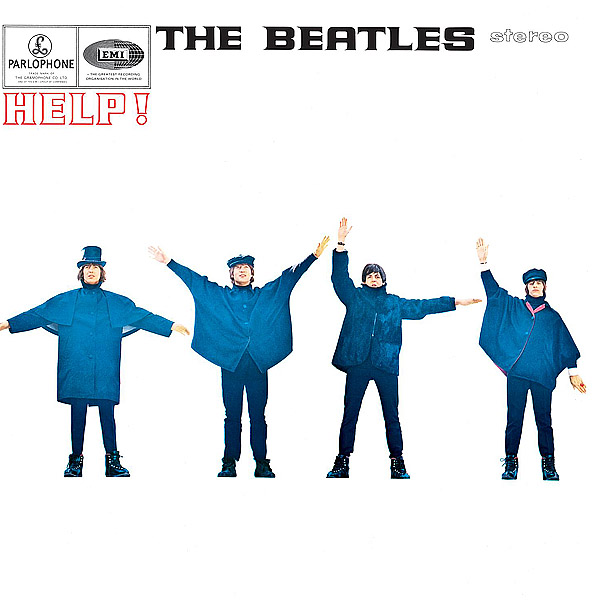
Feb 15 - Jun 18, 1965 • Songs recorded during this session appear on Help! (UK - Mono)
Recording studio: EMI Studios, Studio Two, Abbey Road • London • UK
Previous session Jun 08, 1965 • Mixing "I Want To Hold Your Hand"
Interview Jun 11, 1965 • Paul McCartney interview for BBC Radio
Interview Jun 12, 1965 • Press conference to comment the MBE announcement
Session Jun 14, 1965 • Recording "I've Just Seen A Face", "I'm Down", "Yesterday"
Album Jun 14, 1965 • "Beatles VI (Mono)" by The Beatles released in the US
Album Jun 14, 1965 • "Beatles VI (Stereo)" by The Beatles released in the US
Next session Jun 15, 1965 • Recording "It's Only Love"
AlbumSome of the songs worked on during this session were first released on the "Help! (UK - Mono)" LP

By The Beatles
Paul McCartney had written all three songs recorded during this session, each in a distinctly different style. It was The Beatles’ first recording session since May 10, 1965. In the intervening weeks, they had been busy completing the filming of “Help!” and making a number of television and radio appearances ; Paul also went on holidays in Portugal. Across two sessions on this day, they began recording “I’ve Just Seen A Face” and “I’m Down” (from 2:30pm to 5:30pm) and “Yesterday” (from 7pm to 10pm).
The backing track of “I’ve Just Seen A Face” featured Paul McCartney on acoustic guitar and lead vocals, George Harrison on acoustic guitar, and Ringo Starr on drums. All instruments were recorded onto track one of the four-track tape, while Paul’s lead vocal was recorded on track three.
Six takes of the backing track were recorded, with Take 6 selected as the best. Overdubs then followed. Paul added the introductory acoustic guitar part, while George recorded the acoustic guitar solo, both onto track four. On the remaining track two, Paul recorded backing vocals and Ringo added maracas, completing the recording of the song.
From Wikipedia:
The band taped the basic track [of “I’ve Just Seen A Face“] in six takes, overdubbing new parts onto take six. McCartney played a higher section in the intro with his Epiphone Texan and added a descant vocal, providing a contrapuntal backing during the refrains in a nasally country and western tone, similar to his backing vocal on another Help! track, “Act Naturally“. Adding texture normally achieved with a tambourine, Starr overdubbed maracas on the choruses, while Harrison added a twelve-string acoustic guitar solo.
Employing a technique used extensively during the Help! sessions, another guitar plays simultaneously during the guitar solo to provide a contrasting sound. Gould writes that, in shifting from cut time to common time during the solo, Harrison’s playing is reminiscent of both jazz guitarist Django Reinhardt and the French jazz organisation Le Hot Club. Pollack characterises the solo as a “‘countrified’, rhythmically flat rendering”, and O’Grady writes it “approximates Bluegrass style in rhythmic regularity”. “I’ve Just Seen a Face” features no bass guitar part. Music critic Tim Riley suggests the instrument’s absence, together with the guitar solo being played on the low-end of the guitar, keeps the song rooted in the country genre.
The track was mixed in both mono and stereo on June 18.
For “I’m Down“, the backing track featured Paul on bass and lead vocals, George on electric guitar, Ringo on drums, and John Lennon on organ. As with “I’ve Just Seen A Face“, all instruments were recorded onto track one of the four-track tape, while Paul’s lead vocal was recorded on track three.
Seven takes were needed before a satisfactory performance was achieved. Take 1 was later released on “Anthology 2” in 1996. At the end of the take, Paul can be heard saying “plastic soul, man“, referring to Mick Jagger. The phrase later inspired the title of The Beatles’ second album released in 1965, “Rubber Soul“.
Issued here for the first time is Take 1, played live in the studio and, as Paul had wished turning out “pretty darn good”. Listen closely at the end for Paul’s comment “Plastic soul man, plastic soul”, a phrase which, when slightly altered, became the title of the Beatles’ sixth album, issued in December 1965.
From the liner notes of “Anthology 2“
I think the title Rubber Soul came from a comment an old blues guy had said of Jagger. I’ve heard some out-takes of us doing “I’m Down” and at the front of it I’m chatting on about Mick. I’m saying how I’d just read about an old bloke in the States who said, ‘Mick Jagger, man. Well you know they’re good – but it’s plastic soul.’ So ‘plastic soul’ was the germ of the Rubber Soul idea.
Paul McCartney – From “The Beatles Anthology” book, 2000
Overdubs were then added to Take 7.
The first series of overdubs was recorded onto track two and featured Ringo on bongos, John on additional organ, and Paul, John and George on backing vocals. A second series of overdubs followed, consisting of a new lead guitar part by George that ultimately went unused, together with additional backing vocals recorded onto track four, completing the tape.
The track was mixed in both mono and stereo on June 18.
The final song recorded that day was “Yesterday“, which featured Paul alone.
The backing track consisted of Paul’s acoustic guitar, recorded onto track two of the four-track tape, and his lead vocal, recorded onto track three. Only two takes were required. Take 1 was released on “Anthology 2” in 1996. Take 2 would receive string overdubs on June 17, after George Martin had completed his arrangement for a string quartet.
Once the recording session ended at 10:00 pm, Paul and Jane Asher went to the Cromwellian Club.
I brought the song into the studio for the first time and played it on the guitar, but soon Ringo said, ‘I can’t really put any drums on — it wouldn’t make sense.’ And John and George said, ‘There’s no point in having another guitar.’ So George Martin suggested, ‘Why don’t you just try it by yourself and see how it works?’ I looked at all the others: ‘Oops. You mean a solo record?’ They said, ‘Yeah, it doesn’t matter, there’s nothing we can add to it — do it.’
Paul McCartney – From “The Beatles Anthology” book, 2000
Paul went down to No. 2 Studio at EMI, sat on a high stool with his acoustic guitar and sang ‘Yesterday’. That was the master to begin with. Then I said, ‘Well, what we can do with it? The only thing I can think of is adding strings, but I know what you think about that.’ And Paul said, ‘I don’t want Mantovani.’ I said, ‘What about a very small number of string players, a quartet?’ He thought that was interesting, and I went and worked on it with him and made suggestions for the score. He had ideas too, and we booked a string quartet and overdubbed the strings – and that was the record.
George Martin – From “The Beatles Anthology” book, 2000
Writing a song out with George Martin was nearly always the same process. For ‘Yesterday’ he had said, ‘Look, why don’t you come round to my house tomorrow? I’ve got a piano, and I’ve got the manuscript paper. We’ll sit down for an hour or so, and you can let me know what you’re looking for.’ We’d sit down and it would be quite straightforward because I’d have a good idea of how I wanted to voice it. Or George would show me possibilities: very wide apart or very gungy and very close, and we’d choose. He would say, ‘This is the way to do the harmony, technically.’ And I’d often try to go against that. I’d think, ‘Well, why should there be a proper way to do it?’
‘Yesterday’ was typical. I remember suggesting the 7th that appears on the cello. George said, ‘You definitely wouldn’t have that in there. That would be very un-string-quartet.’ I said, ‘Well? Whack it in, George, I’ve got to have it.’
That was the way the process worked. He’d show me how to write the song ‘correctly’ and I’d try to sabotage the correct method and move towards the way I like music; make it original. I still think that’s a good way to work.
Paul McCartney – From “The Beatles Anthology” book, 2000
Paul worked with me on the score, putting the cello here and the violin there. There is one particular bit which is very much his – and I wish I’d thought of it! — where the cello groans onto the seventh the second time around. He also liked the idea of holding the very high note on the first [upper] violin in the last section. To be honest, I thought that was a hit boring, but I acceded to his request. The rest of the arrangement was pretty much mine.
George Martin – From “The Complete Beatles Recording Sessions” by Mark Lewisohn, 1988
On the day, I recorded Paul singing and playing guitar simultaneously. Then we overdubbed the strings while Paul had another go at the vocal. But because we didn’t use headphones there was leakage from the studio speaker into his microphone, giving the impression of two voices or double-tracking.
George Martin – From “The Complete Beatles Recording Sessions” by Mark Lewisohn, 1988 – According to this quote, the string quartet was recorded on June 14, but it is believed it was recorded on June 17, giving a few days for George Martin to write the arrangement after the backing track was recorded.
Recording • Take 1
Recording • Take 2
Recording • Take 3
Recording • Take 4
Recording • Take 5
Recording • Take 6
Recording • SI onto take 6
Recording • Take 1
AlbumOfficially released on Anthology 2
Recording • Take 2
Recording • Take 3
Recording • Take 4
Recording • Take 5
Recording • Take 6
Recording • Take 7
Recording • Take 1
AlbumOfficially released on Anthology 2
Recording • Take 2
The Complete Beatles Recording Sessions • Mark Lewisohn
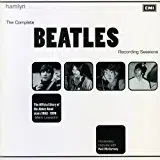
The definitive guide for every Beatles recording sessions from 1962 to 1970. We owe a lot to Mark Lewisohn for the creation of those session pages, but you really have to buy this book to get all the details - the number of takes for each song, who contributed what, a description of the context and how each session went, various photographies... And an introductory interview with Paul McCartney!
The Beatles Recording Reference Manual - Volume 2 - Help! through Revolver (1965-1966)
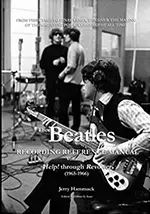
The second book of the Association for Recorded Sound Collections (ARSC)-nominated series, "The Beatles Recording Reference Manual: Volume 2: Help! through Revolver (1965-1966)" follows the evolution of the band from the end of Beatlemania with "Help!" through the introspection of "Rubber Soul" up to the sonic revolution of "Revolver". From the first take to the final remix, discover the making of the greatest recordings of all time.Through extensive, fully-documented research, these books fill an important gap left by all other Beatles books published to date and provide a unique view into the recordings of the world's most successful pop music act.

Notice any inaccuracies on this page? Have additional insights or ideas for new content? Or just want to share your thoughts? We value your feedback! Please use the form below to get in touch with us.


