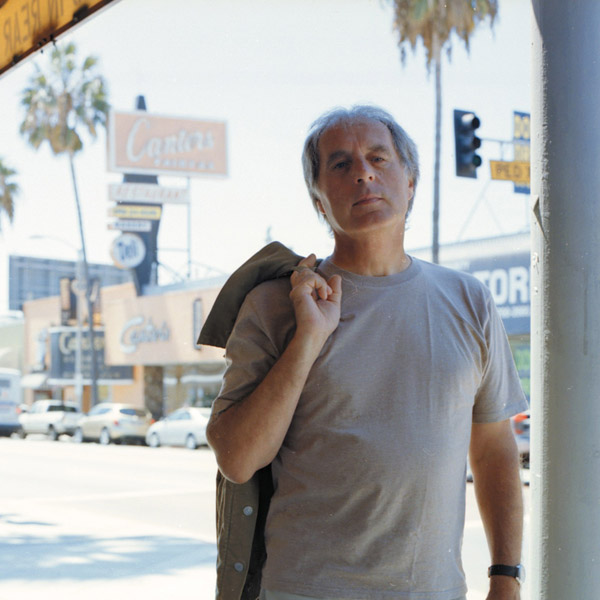
Born Oct 23, 1949
John Leckie
Studio engineer
Photo: Photograph by Jeff Gros - From https://tapeop.com/interviews/42/john-leckie
Last updated on August 9, 2025
Born Oct 23, 1949
Studio engineer
Photo: Photograph by Jeff Gros - From https://tapeop.com/interviews/42/john-leckie
Last updated on August 9, 2025
From Wikipedia:
John William Leckie (born 23 October 1949) is an English record producer and recording engineer. His credits include Magazine’s Real Life (1978); XTC’s White Music (1978); Dukes of Stratosphear’s 25 O’Clock and the Fall’s This Nation’s Saving Grace (both 1985); the Stone Roses’ The Stone Roses (1989); the Verve’s A Storm in Heaven (1993); Radiohead’s The Bends (1995); Cast’s All Change (1995); Muse’s Showbiz (1999) and Origin of Symmetry (2001); and the Levellers’ We the Collective (2018). […]
John Leckie began working at Abbey Road Studios on February 15, 1970, as a tape operator, later progressing to balance engineer and record producer. Just nine days into his tenure, on February 24, he assisted engineer John Kurlander in mixing tracks for Paul McCartney’s debut solo album, McCartney.
In 1972, Leckie contributed as balance engineer to Paul McCartney and Wings’ Red Rose Speedway and the single “Hi, Hi, Hi.”
You landed a job at Abbey Road?
My life changed of course, once I got the job at Abbey Road, because it was full-on seven days a week. Total commitment to the work, where everything else just faded away or stopped for the next seven or eight years. A tape op’s job in those days — it was 8-track.
They were Studer machines?
One-inch 3M 8-track. There were dual Studer J-37 4-tracks going, all 1″. The desks were TG 1234 desks, which were the EMI built-desks. The modules were called cassettes. It was 8-track for the first two or three years, I think. 16-track didn’t really come until the beginning of ’73, I think. The first thing you do at the job is they tell you, “Okay, you just sit there and just watch. Don’t touch anything. Just watch, listen and see what’s going on.” The other thing at Abbey Road is you don’t make the tea, because there’s a tea lady who comes around with coffee in the morning and tea in the afternoon! So after a few days of sitting and watching, you’d be running tape. The thing with the tape op or button pusher in those days was there was no remote control for the tape machine. So the tape machine was at the back of the room, or even in the other room with a little glass window. One time at Abbey Road, the tape ops for all three studios, which might be a classical session or pop session, all sat in the same central room. It was all done by intercom, so you never actually saw the people you were working with. “Okay, run track four, go back, drop in second verse,” all on intercom.
I can’t imagine how you worked with no visual communication.
That’s how it was just before I joined. I started about 1970, after the Beatles had split up, after the recording of Let It Be. I started in February. By March/April, they were mixing Let It Be in room four with Phil Spector and a guy called Peter Bown who recorded all the overdubs, the orchestra and the choir and everything. I was around in the corridor, but I don’t think I saw any of The Beatles at all, until George Harrison, which was I guess in April/May of that year, the All Things Must Pass album.
John Leckie – From John Leckie: Producer Behind Radiohead & Stone Roses | Tape Op Magazine, July 2004
This would have been my second week [at Abbey Road], and I was straight in at the deep end with Paul. I always remember, Paul and Linda were making tea down in the studio. This was in the big room at Abbey Road, where the control room is upstairs. Paul looked up and said to me, ‘Would you like a cup of tea?’ and I said ‘Yes, please.’ And he said, ‘It’s orange pekoe, is that okay? Come and get it then.’ And he had a teapot and a proper China cup.
John Leckie – Email exchange with Adrian Sinclair, July 2017 – From “The McCartney Legacy: Volume 1: 1969 – 73” by Allan Kozinn and Adrian Sinclair, 2022

By Wings • 7" Single

Mary Had A Little Lamb / Little Woman Love (UK)
By Wings • 7" Single

Mary Had A Little Lamb / Little Woman Love (France)
By Wings • 7" Single

Wild Life - Archive Collection
By Wings • Official album

Officially appears on McCartney - Ultimate Archive Collection
Officially appears on Wild Life - Archive Collection
Officially appears on Hi, Hi, Hi / C Moon

Officially appears on Red Rose Speedway

Officially appears on Red Rose Speedway - Ultimate Archive Collection
Officially appears on Red Rose Speedway

December 23, 1969 - March 1970 • Songs recorded during this session appear on McCartney
Mixing "Hot As Sun", "Every Night", "Don't Cry Baby"
Feb 24, 1970 • Songs recorded during this session appear on McCartney
Sep 15, 1972 • Songs recorded during this session appear on Red Rose Speedway
Sep 16, 1972 • Songs recorded during this session appear on Red Rose Speedway
Sep 18 - Sep 20, 1972 • Songs recorded during this session appear on Hi, Hi, Hi / C Moon

Jan 20, 1973

Notice any inaccuracies on this page? Have additional insights or ideas for new content? Or just want to share your thoughts? We value your feedback! Please use the form below to get in touch with us.