November 1971
Interview for Hit Parader
Working with Paul - A Session Musician Speaks!
Press interview • Interview of David Spinozza
Last updated on September 13, 2025
November 1971
Press interview • Interview of David Spinozza
Last updated on September 13, 2025
Previous interview Aug 21, 1971 • George Martin interview for Melody Maker
Article Oct 23, 1971 • Wings' first LP release is announced in the press
Session Oct 26, 1971 • Mixing "Strawberry Fields Forever"
Interview November 1971 • David Spinozza interview for Hit Parader
Interview November 1971 • Allen Klein interview for Playboy
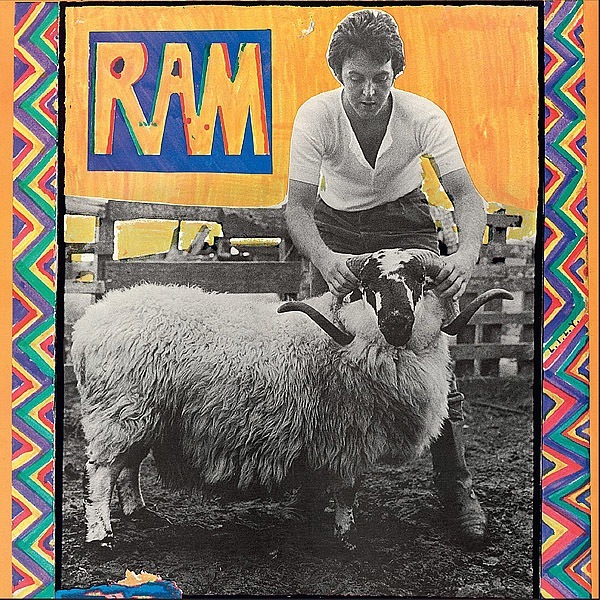
AlbumThis interview was made to promote the "Ram" LP.
May 29, 1971 • From Melody Maker
Paul: Why The Beatles Wanted Out?
May 1967 • From Hit Parader
This interview remains the property of the respective copyright owner, and no implication of ownership by us is intended or should be inferred. Any copyright owner who wants something removed should contact us and we will do so immediately.
A shorter version of this interview with David Spinozza was published in Melody Maker in May 1971.
That was the start, for David Spinozza, of his association with Paul McCartney in New York when they recorded Paul and Linda’s album, “Ram.” David, aged 21, is a studio musician.
He’s been a session musician since he was 17. In an average week, without even trying, he can make $1500 and a lot more if he does more sessions (the union rate for a musician in New York is $90 per three hour session). He’s rated as the top session guy, but not only that, he’s rated as being the most original, exciting, imaginative and broadest guitarist in the business, alongside Hendrix, B. B. King, Clapton and every heavy you can think of. He can play anything, but whatever it is, it’s David Spinozza. He started out in the Black scene, learning from an upright bass player who taught guitar in music stores. He had a guitar when he was 6, played through school and is now studying the classical guitar. He’s the guitarist on Freda Payne’s “Band of Gold”, in fact he’s on just about everyone’s record.
When he and Linda got it together on the phone he took down an address.
“So I went to this place on 45th Street, some dirty loft, and they must have been there for three days auditioning people. I’d heard that some of the studio guys had given them a hard time, which I really didn’t want to do because I wanted to work with him. So when I get there, there’s 3 guitar players, but you had to be called, like you couldn’t walk in off the street with your guitar. He introduced himself to me, with a three-day old beard and we’re alone in this gigantic room, and there’s nothing but amplifiers, piano, drums – and Linda. He wanted me to play something. He played a blues, and a solo and some folk and said he wanted me to do that. I played it and then he just said ‘Sorry I couldn’t spend more time but I have a lot of people to see… blah blah’, so I said ‘Fine’. As soon as I got home the phone rang and Linda wanted me to do the sessions the following week.
“The date started out going really smoothly, but then what was happening was that although originally they had told me they wanted me for four whole weeks, days were getting cancelled out and they weren’t booking definite dates. So I had to keep asking, not to be a drag, but to keep my book straight and to know what other work I could take. I kept asking but I wasn’t getting a straight answer. Finally, after I hadn’t heard from them, Linda rang me up, on, I guess, a Sunday night and wanted me to do all the following week just like that. I couldn’t, because I’d asked if we’d be working and they had said probably not so I’d taken other dates. I’d told them that I couldn’t keep every week open because when McCartney goes back to England there are other people that call me all year, and they are going to keep me eating, not him, although I’d love to do his sessions. So she calls me the Sunday evening, and I said I could make two of the days but not all five, and she got very indignant, I guess. That’s the vibrations I got. I got vibrations like ‘It’s Paul McCartney’s session you’re supposed to keep your life open indefinitely’. Now evidently they’re not hip to the New York scene. Maybe in England it’s looser kind of studio scene. In N.Y. you take dates, you do them and you don’t cancel out on other people and you don’t keep weeks open not knowing. It’s a business as well as an art. So finally I just did those two days and the next week I still couldn’t get a straight answer, and it seemed I was dealing with Linda not with Paul. She just really speaks for him and handles the business and wouldn’t let me talk direct to him to sort out what he wanted.
“Then she called me one day, having told me the night before we’d be working and just cancelled out the day after I had turned down work. She said they were going to do over-dubs. So I guess they got bugged at me trying to find out how I stood.
“The studio was fine, Paul knew what he wanted. I think the whole album was done in the same form as the McCartney album, only we played the parts for him. It was done in the way there was no freedom. We were told exactly what to play, he knew what he wanted and he just used us to do it. He just sang us the parts he wanted and the tune developed as we went along. We added things, we made suggestions, but I would say that two out of 10 times he took one of our suggestions or at least if he did, he modified it and made it into a Paul McCartney sounding thing. It always came out Paul McCartney regardless of the suggestion.
“Linda didn’t have much to do in the studio, she just took care of the kids. You know the kids were there all the time. Every day. They brought the whole family every day to the studio, and they just stayed no matter how long Paul stayed. If he was there to 4:00 in the morning, everybody stayed. I thought to a certain degree it was distracting. It was a nice, loose atmosphere but distracting. Linda, I really don’t know what she did in the studio aside from sit there and make her comments on what she thought was good and what she thought was bad.
“My personal opinion is that everybody, especially in the music business, when they finally find an old lady that they really dig, they try to get her into everything, which I don’t believe in. It just didn’t make sense to me. She sang alright – I heard some of the things she sang on the album. She can sing fine – like any girl that worked in a high-school glee club. She can hold a note and sing background. So Paul gives her the note and says ‘Here, Linda, you sing this and I’m going to sing this’ and she does it.
“But it’s all McCartney – Paul McCartney. I mean. I played acoustic. There’s one track which is a cute thing, a blues tune, which I think has a pretty unique sound on and I had fun doing “3 Legs.”
“Paul likes to double-track a lot of things. We both played acoustic on some tracks, and then tripled. Denny Seiwell was on drums, myself and Paul on guitars. Sometimes Paul played piano, but he never played bass while we were there. He overdubbed the bass. It was a little weird, because bass, drums and guitar would have been more comfortable, but that’s the way he works.
“It seemed weird for him to come to town and audition the heaviest musicians in the business. Cats who had been in music for 15 years and played with just everyone and who, as musicians, the Beatles just couldn’t stand next to as instrumentalists. You don’t have to audition these cats, they can play anything under the sun. We asked him once, and he said he was only in town for two days to check out the musicians and it turned out that he couldn’t go out and buy all the different albums to find out which cats were into what music and so he just called an audition to try to hear everyone. I can understand his point, because people sound good on records and then their attitudes are bad or something, so you have to meet them and get involved personally. Paul doesn’t like to have to answer to anyone, and I think he personally liked us. He doesn’t like having to say, “Well I don’t like this playing because of this,” he’s just going to tell you he doesn’t like it and change it. He really doesn’t want to have to argue with you because he knows what he wants.”
“The Beatles as writers are definitely innovators, but as players… there’s just a minimum amount of playing on their albums. Their music at that time was bad – it was juvenile. I was listening to James Brown, Muddy Waters, people like that.
“Working with Paul was fun, in as much as it was good to see how he works and where he’s coming from. But as a musician it wasn’t fun because it wasn’t challenging or anything like that. But it was very good. McCartney is definitely a song-writer, not a musician, but he writes beautiful songs. In the studio he’s incredibly prompt and business like. No smoking pot, no drinks or carrying on, nothing. Just straight ahead. He came in at 9:00 a.m. in the morning. We were all there and we’d listen to what we’d done the day before so that it would get us psyched ready to do the day’s work, then we went into the studio and it was 8 hrs. of just playing. He’s not a very loose cat, not eccentric in any way at all. Very much of a family man. He just wants to make good music.


Notice any inaccuracies on this page? Have additional insights or ideas for new content? Or just want to share your thoughts? We value your feedback! Please use the form below to get in touch with us.