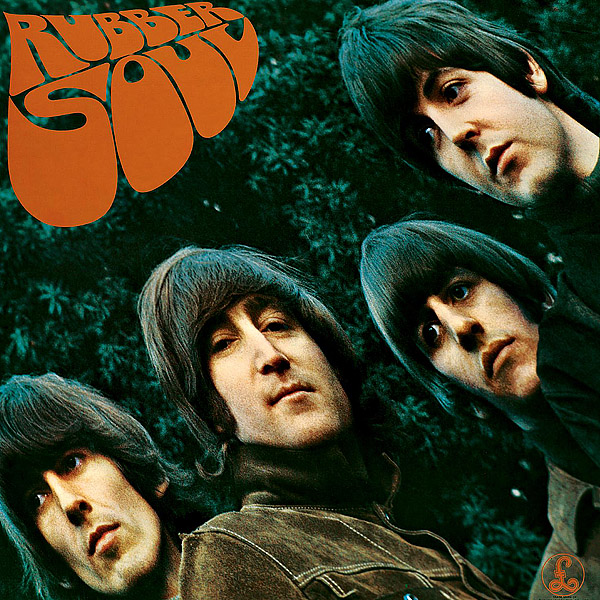
Thursday, October 21, 1965
Recording "Norwegian Wood (This Bird Has Flown)", "Nowhere Man"
For The Beatles
Last updated on December 30, 2025
Thursday, October 21, 1965
For The Beatles
Last updated on December 30, 2025

Oct 12 - Nov 30, 1965 • Songs recorded during this session appear on Rubber Soul (UK Mono)
Recording studio: EMI Studios, Studio Two, Abbey Road • London • UK
Session Oct 19, 1965 • Recording Christmas fan club messages
Session Oct 20, 1965 • Recording "We Can Work It Out"
Session Oct 21, 1965 • Recording "Norwegian Wood (This Bird Has Flown)", "Nowhere Man"
Session Oct 22, 1965 • Recording "In My Life", "Nowhere Man"
Interview Oct 22, 1965 • Paul McCartney interview for New Musical Express
AlbumSome of the songs worked on during this session were first released on the "Rubber Soul (UK Mono)" LP
This was the sixth day of work on The Beatles’ new album “Rubber Soul.”
On October 12, the first day of recording “Rubber Soul“, The Beatles began work on John Lennon’s track “Norwegian Wood (This Bird Has Flown).” They recorded one take with overdubs and left the song in that state until this day. From 2:30 pm to 7 pm, they decided to abandon the earlier recording and start again with a remake.
Three new takes of the backing track were recorded, numbered Take 2 to Take 4, each featuring slightly different instrumentation. Take 2 had John on acoustic guitar and lead vocals, Paul McCartney on bass and backing vocals, George Harrison on sitar, and Ringo Starr on drums. Take 3 used a similar lineup, except George replaced his sitar with an acoustic guitar.
Take 4 had John’s acoustic guitar and lead vocals, along with Paul’s backing vocals, recorded on track three of the four-track tape. George’s acoustic guitar and Paul’s bass were placed on track one. Take 4 was judged the best and received overdubs, although Take 2 also had an overdub added, with George double-tracking his sitar part.
For Take 4, Ringo added his drums on track four, while an unknown Beatle contributed tambourine and additional percussion. George added his sitar part on track two, completing the recording of the track. The mono mix was prepared on October 25, followed by the stereo mix on October 26.
George had just got the sitar and I said, ‘Could you play this piece?’ We went through many different sort of versions of the song, it was never right and I was getting very angry about it, it wasn’t coming out like I said. They said, ‘Just do it how you want to do it,’ and I said, ‘I just want to do it like this.’ They let me go and I did the guitar very loudly into the mike and sang it at the same time, and then George had the sitar and I asked him could he play the piece that I’d written, dee diddley dee diddley dee, that bit – and he was not sure whether he could play it yet because he hadn’t done much on the sitar but he was willing to have a go, as is his wont, and he learnt the bit and dubbed it on after. I think we did it in sections.
John Lennon – 1970 interview – From “Lennon Remembers” by Jann S. Wenner
‘Norwegian Wood’ was the first use of sitar on one of our records, though during the filming of Help! there were some Indian musicians in a restaurant scene and I first messed around with one of them.
Towards the end of the year I’d kept hearing the name of Ravi Shankar. I heard it several times, and about the third time it was a friend of mine who said, ‘Have you heard this person Ravi Shankar? You may like his music.’ So I went out and bought a record and that was it: I thought it was incredible. […]
So I went and bought a sitar from a little shop at the top of Oxford Street called Indiacraft – it stocked little carvings, and incense. It was a real crummy-quality one, actually, but I bought it and mucked about with it a bit. Anyway, we were at the point where we’d recorded the ‘Norwegian Wood’ backing track (twelve-string and six-string acoustic, bass and drums) and it needed something. We would usually start looking through the cupboard to see if we could come up with something, a new sound, and I picked the sitar up – it was just lying around, I hadn’t really figured out what to do with it. It was quite spontaneous: I found the notes that played the lick. It fitted and it worked.
George Harrison – From “The Beatles Anthology” book, 2000
It was such a mind-blower that we had this strange instrument on a record. We were all open to anything when George introduced the sitar: you could walk in with an elephant, as long as it was going to make a musical note. Anything was viable. Our whole attitude was changing. We’d grown up a little, I think.
Ringo Starr – From “The Beatles Anthology” book, 2000
[The sitar] is very hard to record because it has a lot of nasty peaks and a very complex wave form. My meter would be going right over into the red, into distortion, without us getting audible value for money. I could have used a limiter but that would have meant losing the sonorous quality.
Norman Smith – Recording engineer – From “The Complete Beatles Recording Sessions” by Mark Lewisohn, 1988
From 7 pm to 12 am, The Beatles began work on a new song, “Nowhere Man“. After a period of rehearsals, they recorded two formal takes: the first was a false start, and the second was complete. This take featured John on acoustic guitar, Paul on bass, George on electric guitar and Ringo on drums, with a three-part harmony vocal by John, Paul and George. It was released on “Anthology 4” in 2025.
They then worked on ‘Nowhere Man’ from 7 pm to midnight. Two takes were recorded of the rhythm backing on track one of the four-track tape with John playing acoustic guitar, Paul on bass, Ringo’s drums and George playing chords on an electric guitar in a style similar to The Byrds. That group’s music had impressed The Beatles during 1965; Derek Taylor wrote in his LP liner notes for Turn! Turn! Turn! by The Byrds that ‘The Beatles publicly named [them] as their fab gear fave rave American group.’ Harmony vocals by John, Paul and George were recorded on track three, although only the unaccompanied opening chorus was sung. The group returned the following day and spent nine hours perfecting a remake of ‘Nowhere Man’.
From the liner notes of “Anthology 4“
The work completed on this day was ultimately not used, and The Beatles resumed work on the track the following day.
Norwegian Wood (This Bird Has Flown)
Recording • Take 2
AlbumReleased on bootleg Rubber Soul - Studio Sessions - Back To Basics
Norwegian Wood (This Bird Has Flown)
Recording • Take 3
AlbumReleased on bootleg Rubber Soul - Studio Sessions - Back To Basics
Norwegian Wood (This Bird Has Flown)
Recording • Take 4
AlbumReleased on bootleg Rubber Soul - Studio Sessions - Back To Basics
Norwegian Wood (This Bird Has Flown)
Recording • SI onto take 2
Norwegian Wood (This Bird Has Flown)
Recording • SI onto take 4
Recording • Take 1
Recording • Take 2
AlbumOfficially released on Anthology 4
The Complete Beatles Recording Sessions • Mark Lewisohn
The definitive guide for every Beatles recording sessions from 1962 to 1970. We owe a lot to Mark Lewisohn for the creation of those session pages, but you really have to buy this book to get all the details - the number of takes for each song, who contributed what, a description of the context and how each session went, various photographies... And an introductory interview with Paul McCartney!
The Beatles Recording Reference Manual - Volume 2 - Help! through Revolver (1965-1966)
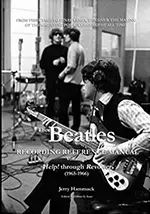
The second book of the Association for Recorded Sound Collections (ARSC)-nominated series, "The Beatles Recording Reference Manual: Volume 2: Help! through Revolver (1965-1966)" follows the evolution of the band from the end of Beatlemania with "Help!" through the introspection of "Rubber Soul" up to the sonic revolution of "Revolver". From the first take to the final remix, discover the making of the greatest recordings of all time.Through extensive, fully-documented research, these books fill an important gap left by all other Beatles books published to date and provide a unique view into the recordings of the world's most successful pop music act.
If we modestly consider the Paul McCartney Project to be the premier online resource for all things Paul McCartney, it is undeniable that The Beatles Bible stands as the definitive online site dedicated to the Beatles. While there is some overlap in content between the two sites, they differ significantly in their approach.

Notice any inaccuracies on this page? Have additional insights or ideas for new content? Or just want to share your thoughts? We value your feedback! Please use the form below to get in touch with us.


