
Wednesday, June 10, 2026
Interview for Song Exploder
Episode 315: Paul McCartney “Ripples in a Pond”
Podcast • Interview of Paul McCartney
Last updated on June 13, 2026
Wednesday, June 10, 2026
Podcast • Interview of Paul McCartney
Last updated on June 13, 2026
Interview Jun 08, 2026 • Paul McCartney interview for Clash
Interview Jun 10, 2026 • Paul McCartney - In Conversation at the Roundhouse NW1
Interview Jun 10, 2026 • Paul McCartney interview for Song Exploder
Album Jun 17, 2026 • "A Friend Like You (2026 remix)" by Brian Wilson released globally
Article Jun 25, 2026 • Apple endorses Global Beatles Day
Next interview July 2026 • Paul McCartney interview for MOJO
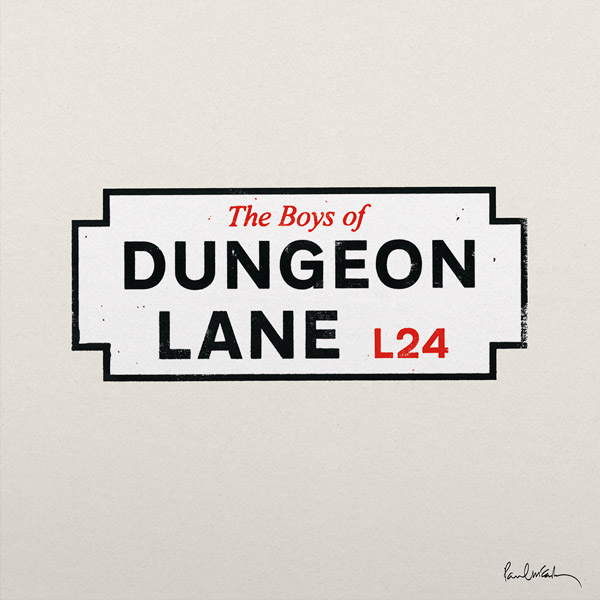
AlbumThis interview was made to promote the "The Boys Of Dungeon Lane" Official album.

Officially appears on The Boys Of Dungeon Lane

Officially appears on Blow Your Pants Off
The interview below has been reproduced from this page. This interview remains the property of the respective copyright owner, and no implication of ownership by us is intended or should be inferred. Any copyright owner who wants something removed should contact us and we will do so immediately.
Read interview on Song Exploder
Paul McCartney was interviewed by Song Exploder host Rishikesh Hirway for an episode dedicated to the making of “Ripples In A Pond”, a track from his 2026 album “The Boys Of Dungeon Lane.”
During the conversation, we learn that the song originated in 2015, when Paul recorded its first demo. The track was revisited and properly recorded in 2022, going through several changes during its development. Among the ideas considered was a trumpet solo, which was ultimately replaced by the guitar solo featured in the released version.
From Song Exploder – Paul McCartney:
Paul McCartney is a singer, songwriter, multi-instrumentalist, and producer whose career spans more than six decades. As a member of The Beatles and later Wings and then his own solo albums, he’s simply one of the most influential artists of all time. In May 2026, he released his twentieth solo album, The Boys of Dungeon Lane. He co-produced it with Andrew Watt, who won the 2021 Grammy for Producer of the Year, and whose credits include working with Lady Gaga, The Rolling Stones, Justin Bieber, and Elton John. For this episode, I spoke to Paul McCartney about how he wrote and recorded his song “Ripples in a Pond.”
Illustration by Carlos Lerma.
From Song Explorer on Instagram, June 10, 2026:
@paulmccartney is on Song Exploder today (!!!). He tells the story of writing and recording his song “Ripples in a Pond” from his new album. You can hear his original demos and how they evolved over the years, and some of the isolated tracks that he and co-producer @thisiswatt put together for the final recording. We spoke about his process, his inspiration, and his marriage. Needless to say, this was one of my all-time favorite conversations. You can listen to the episode at songexploder.net or on your podcast app.

RH: Where were you when the first bit of this idea for this song came to you?
PM: I was in East Sussex, England, on my farm where I live. I was sitting around enjoying a day off, and that’s normally when I write songs. If I’m lucky enough to know that I’ve got the next three or four hours, nobody’s going to interrupt me. And I was actually thinking about my missus, Nancy, and thinking, you know, how lucky I am to know and love someone like her. We’ve known each other quite a long time, and it’s a very interesting relationship. We’re nothing like each other.
RH: How so?
PM: I mean, I’m English, she’s American; she’s very practical, gets things done. I’m much more sort of whimsical. I will get things done, but in maybe not as practical a way. But we know each other, and we know how to be with each other. So I was just thinking about how blessed I am. You know, anyone who’s in a good relationship with someone is inevitably really blessed. And it’s nice when you’re thinking that to introduce that idea into a song.
And I’m often just sitting around with a guitar. If I find a couple of nice chords, then I’ll strum them and see if it leads me anywhere. That’s the process for me, is doing the chords. But then, like, almost immediately I will try and block it out with words. Even if it’s nonsense, it at least shows you where you want the song to go.
I mean, for instance, years and years ago with the Beatles, I had dreamed the melody to “Yesterday,” and I didn’t have any words to it. So I blocked it out by singing “Scrambled eggs, oh my baby, how I love your legs.” So we had scrambled eggs and legs, but at least it helped me remember it. So you sometimes do that. And so after I sort of found some chords on the guitar, I often then will see what happens when I put it on the piano. And this actually worked better on the piano. The way the chords seem to me to sing a bit more.
[Early piano demo plays]
PM: Yeah, it was a very early version. I didn’t have the lyrics. But I had the feeling.
[Demo continues]
PM: So that was what it was. I was now fishing around — I call it fishing. You know, just fishing around, see what might come. Because I don’t know — I don’t know this song. Nobody knows this song till I’ve written it. So it’s nice, it’s a sort of quest. It’s like following a trail of breadcrumbs in the woods: you’re not quite sure where it’s going to lead, but it’s fun just to see if it reaches a good place.
So that’s the process, really. I will do the little demo, and then if I’m at the studio I will then say to Steve [Orchard], my engineer, “I’ve got this song, let’s try and put it down.” So we’ll try and make something a bit more of it, but it’s still not concentrating on making the record.
RH: In this version, it sounded like it might be a live recording with other musicians. Is that right, or is this you playing everything?
PM: No, that was me. A lot of stuff on this album is me — piano, vocal and drums. I’m putting a bass in and enjoy myself.
RH: This is from 2015, and you’ve had albums come out since then. How come this song didn’t appear on those earlier records? Did it feel like it wasn’t finished yet?
PM: Yeah, I think that’s the thing. You sometimes will write a thing and be not entirely convinced. So you kind of put it a little bit on the back shelf. You know, songs can just lay around, and I mean to finish them, but I’m on tour somewhere, so I don’t really have the time to get to grips with it. But yeah, this one languished around a little bit.
RH: I can see that in these versions, you kind of go back and forth between whether you’re singing to her or whether you’re singing about her. Was that something you debated for a while?
PM: I debated it for a little while, because — you do, doing anything creative. You’re always thinking, “Do I do that? I’ll do this with it.” But I had to make the decision: am I going to tell this song directly to Nancy, or am I going to tell this to a friend and say, “You know, sometimes I think of her”? But pretty soon afterwards I thought, it’s not direct enough. I think I’d rather have it coming directly from me to her. So I changed all the “she”s and “her”s to “you” and “yours.”
RH: I was wondering where the phrase “ripples in a pond” came from — how that came to you, and what that means to you.
PM: I like the “ripples in a pond” idea because it’s a good image for me. For instance, if people pray, the idea is that you pray and it creates ripples, and it goes and it reaches the deity you’re praying to. I like the idea of saying something and it ripples out into the universe. And I like the idea, in a romance, of saying “Let’s see how far it goes,” because you can’t plan it. You can hope it’s going to work, and you can hope it’s going to work out well, but there is an element of guesswork where you’re just saying, you know, fingers crossed.
Hey, Rishi, I’ll tell you one thing: you’re making me think more about this song than I’ve ever thought about any song ever. My gosh. But anyway, it’s fun.
RH: So the next version of the song that I have is a recording from 2022 — seven years later.
PM: This is quite a stretched-out affair. I must say, I never realized that it’s been that long between, you know, attempts. But, you know, one of the nice things about this kind of recording, as opposed to in the old days — we pretty much had to just write the song, learn it, record it. “Thank you, good night.” But this way you can mess around and you can try various things. So I know there’s a trumpet solo.
[Trumpet solo plays]
PM: But I think we just decided to leave that off the record and just replace it with guitar.
RH: How did you first meet Andrew Watt, your co-producer on the album, before you started working together?
PM: Well, I met him in L.A. My manager said to me, “There’s this guy called Andrew Watt,” and I said, “Yeah, I’ve heard of him. I liked some of the music he’d done,” but I didn’t know him. “Did somebody like to meet him?” I said, “Oh yeah, sure, you know — I said, oh, just go and have a cup of tea or something.” But I didn’t particularly think we’ll work together. I thought, let’s just see if we like each other. So I went over to a studio, which was in the basement of Charlie Chaplin’s old house. And there we were, sitting around chatting, I started to show a couple of ideas, and just in general conversation he followed on. And so we just were sitting there throwing ideas around, and we were writing the first song on the album. That was it. We just met, cup of tea, and the song appeared. It was kind of lucky, really.
RH: I can’t imagine just the sheer number of people who want to collaborate with you in some kind of way, and have wanted to collaborate with you over the years. Is it complicated for you at all to let someone else in to your music?
PM: Yeah, I think so, because, you know, working with John Lennon was something that happened when we were kids. Neither of us really knew how to write songs, so it just grew organically. And because John and I had such a natural relationship, that had matured together, I’m inevitably comparing whoever the next person is I’m writing with. And as time went on and the Beatles broke up and I was no longer writing with John, I did try working with a couple of other people. But yeah — you’re right, having worked with John, and now for someone to just come into the room… we don’t necessarily know much about each other. That does make it a bit harder, I must admit.
RH: So was it hard to then go from that casual conversation with Andrew, and working on music with him, to formally ask him to work on the production of the album?
PM: I don’t think I ever did. I had enjoyed the experience of writing the first track, so I think it was just like, “Yeah, okay, what are you doing next Thursday?” We just kept on, got our diaries out and found the next date and picked it up.
I brought this song over and I said, “Let’s finish it up, because I think this could work on the album.” But on this track I sent to him in the studio, I said, “Andrew, look, one of the reasons I got with you is because you’re a pop producer, and I’m waiting for you to pop these songs up. What are you going to do with them? You know, are you going to —” and he said, “Well, no, I’m just letting you lead the song.” I said, “Well, you shouldn’t on this one particularly. I think that you should just do your thing on it.” And he said, “You sure?” I said, “Yeah, really, you know.” I thought the song could take that kind of treatment. “Produce, those who’s right in your face — do what you would do with this song, and don’t even think about what I would want from it.”
So he just started cooking. His engineer was called Paul, and of course, because I was called Paul, we had to call the other Paul “Billy.” So he ended up as Billy. But Andrew just started shouting out — he had to do that, “Take that out,” “No, need to lose that,” “Put that up” — and gave it, I think, a little bit more of a pop sensibility, which is kind of what I was looking for. We just put a couple of little things on it. There’s, like, a nice little harmony, I should have guessed, which I think really helped.
[Song excerpt — sung]
PM: We put those on in L.A. I would take a knife — say, a kitchen knife — and play it like it’s a drumstick, a note on one of the strings on the piano. I’ve never done that before, so for this it was new. And you get a different sound. I liked that, I like it. I think the textures, it adds to it.
RH: In the intro of the song, there’s a little thing that happens at the end of the lead guitar part that I wanted to ask you about.
PM: Ah, yeah.
RH: There’s something about that part that just feels — and I just get such a feeling from it, like, it feels joyful.
PM: Yeah, if I’m putting the first bit on, I know that I can mess around afterwards and just do something free, because if we don’t like it, we can just not use it, just cut it off. But if we do like it, it can find its way in there. It’s just a little something, a little tasty something. I’m glad that you get the idea that we’re having fun, because that is what it is. And it’s also a romantic song for my wife, so I can say to her, “This is about you.” In fact, it’s funny — I played it for her recently. I don’t think she knew that it was specifically about her. I don’t know who she thought it was about, but this was specifically about her. So I thought, you know, it’s about time that I finished it up, played it to her and told her, “This is about you.”
RH: And then what’s this sound?
PM: It’s a vocal.
RH: Really?
PM: Yeah. I’ve got a Vox amp that I use mainly for guitar, but it has a tremolo. So if you put the noise through it — a guitar thing is on, “jo-jo-jo-jo-jo.” So again, in the spirit of fishing around for interesting ideas, I said, “Let’s try putting the vocal through it.” So instead of it just going “nah, nah, nah, nah,” we put it through that — anyway, “nah-nah-nah-nah…”
You know, I’m glad that I haven’t reached the point where I’m so blasé that I just want to just get on, “Right, the song, record it, go home.” I like the process of discovering new sounds and new ideas. And sometimes you don’t hardly hear them till you’ve heard the song 20 times, and you go, “What is that little noise, you know?” But I think that’s the fun, that’s the fascination of it. We made this sound and had fun making it. That’s all I want in life.
RH: And now here’s “Ripples in a Pond” by Paul McCartney, in its entirety.
[Full song plays]

Notice any inaccuracies on this page? Have additional insights or ideas for new content? Or just want to share your thoughts? We value your feedback! Please use the form below to get in touch with us.