
Saturday, May 23, 1970
Interview for BBC Radio 1
Radio interview • Interview of The Beatles
Last updated on September 6, 2025
Saturday, May 23, 1970
Radio interview • Interview of The Beatles
Last updated on September 6, 2025
Previous interview May 02, 1970 • Paul McCartney interview for Melody Maker
Article May 20, 1970 • UK premiere of the “Let It Be” film
Article May 23, 1970 • US launch of the "Let It Be" film
Interview May 23, 1970 • The Beatles interview for BBC Radio 1
Article Jun 15, 1970 • Lee Eastman asks for The Beatles to be dissolved
Next interview Aug 15, 1970 • Peter Brown interview for Melody Maker
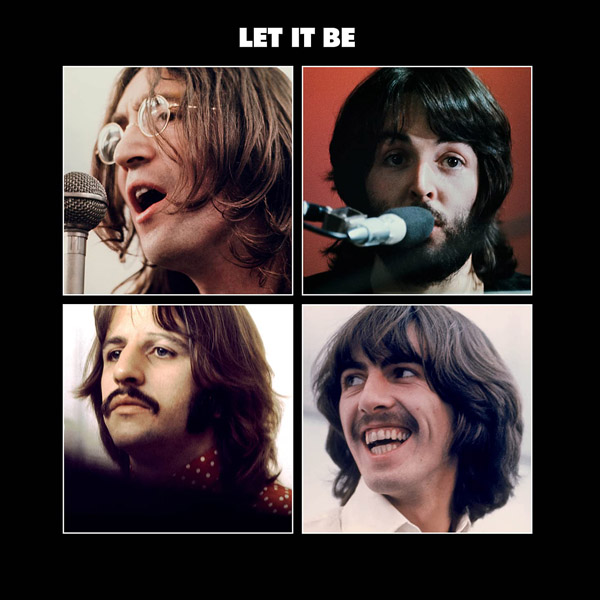
AlbumThis interview was made to promote the "Let It Be (UK - 1st pressing with "Get Back" book)" LP.

Officially appears on Abbey Road
This interview remains the property of the respective copyright owner, and no implication of ownership by us is intended or should be inferred. Any copyright owner who wants something removed should contact us and we will do so immediately.
On this day, BBC Radio 1 broadcast a 44-minute programme on The Beatles. Suitably titled “Let It Be” to coincide with the release of the album and film, it was narrated by Scene And Heard presenter Johnny Moran. For the programme, Moran spoke individually with Paul McCartney, John Lennon, George Harrison and Ringo Starr. Each Beatle reflected on his future, with particular focus on the possibility of them ever working together again. The interviews had been pre-recorded, although the exact dates of their recording remain uncertain.
The original unreleased version of “Dig It” was played on the programme, as well as other songs from “Let It Be,” “The Ballad Of John And Yoko,” “Golden Slumbers” from “Abbey Road,” “Instant Karma” from John, and a song from Ringo’s “Sentimental Journey.”
[…] This was “The Ballad Of John And Yoko.” But what does the other Beatles think of John and Yoko’s adventures, particularly Paul who, for so long, concerned himself with the public relations of the group. Does he have a fall-out with John?
Paul: I started to tell him about the “Two Virgins” cover, just because it shocked me, as just as it shocked him and it shocked anyone. I’d just say “You are going to be in trouble doing that.” And he said “I don’t mind. I’d rather do it and get into trouble. And I’m not even sure I will.” I finally come round to it and said “don’t get yourself into trouble, son, go ahead.” I thought it was a good thing. Now it was silly of me to try and protect John.
[..] But does Paul think the Beatles have remained close?
Paul: We are not as much in contact with each other as when we were on the road, every day, in the same van, in the same car, in the same dressing room. Obviously, we are not in that kind of contact. But we used to get together once a year and say “ok, we’ll go to Japan, New York this year,” because we’ve always fancied when we hadn’t gone before. These days, because we are not performing, we don’t have to do that. But we do get together and say “we’ll do an album and then we’ll do an album then and then we’ll do an album then.” Cause that’s mainly what we do.
The Beatles’ most successful album in recent times has been the LP “Abbey Road.” And Paul McCartney composed a new version of an old song, “Golden Slumbers.”
Paul: I was just playing the piano in Liverpool, in my Dad’s house. And my sister Ruth’s piano book was opened on the stand with all those words in it. So I was just looking to it and came to “Golden Slumbers,” you know. So I just started, because I can’t read music, I didn’t know the tune, I didn’t remember the old tune. So I started just playing my tune to it. And then I liked the words and I just kept that, you know. And then I just fit in a little bit of song I had, which is the verse in-between. All just because I was reading a book once…
There have even been suggestions that The Beatles may play live again at a concert, in Hyde Park or at the festival on the Isle of Wight, but Paul feels differently.
Paul: For me, what happens is that when we played the Cavern, when we played in the very early days, we really enjoyed performing. That was the fun, it was to perform. But since, things have gone more into records and songwriting, mainly because… If you start to perform, after say the Cavern, you start to perform at like […] Glasgow Empire, you get an act, and we never really used to vary act, occasionally we put a new song in, but you got various stereotypes, you know. You just got an act. For us, [inaudible] We can get bigger audiences, we can get bigger in quantity, but in quality of performance, it’s difficult, you know. I personally, if we are going to do anything, prefer to go and play some very small clubs.
Meanwhile we do have “Let It Be,” the album released earlier this month. The film had got a world-wide premiere in the last few days. Paul explains about how the film “Let It Be” came about.
Paul: We’ve done a film which is very different from anything we’ve done. Actually, we haven’t done it, the film was made during the time we were making “Get Back.” They did a film, here, in Apple, as in Twickenham, all over the places. It’s like a documentary, it’s like a film say of a painter who comes in and sets up a canvas, puts one brush mark on, then eventually you see him finish the painting. It’s all that he goes through to finish the painting. Well, with us, someone walks in, ‘Twang, G and C,’ and says ‘this is how the song goes’ and eventually you see us finish the record. It’s the stages, it’s a good film, it’s interesting.
[…]

Notice any inaccuracies on this page? Have additional insights or ideas for new content? Or just want to share your thoughts? We value your feedback! Please use the form below to get in touch with us.
