Wednesday, July 16, 1969
Recording "Here Comes The Sun", "Something"
For The Beatles
Last updated on April 23, 2025
Wednesday, July 16, 1969
For The Beatles
Last updated on April 23, 2025

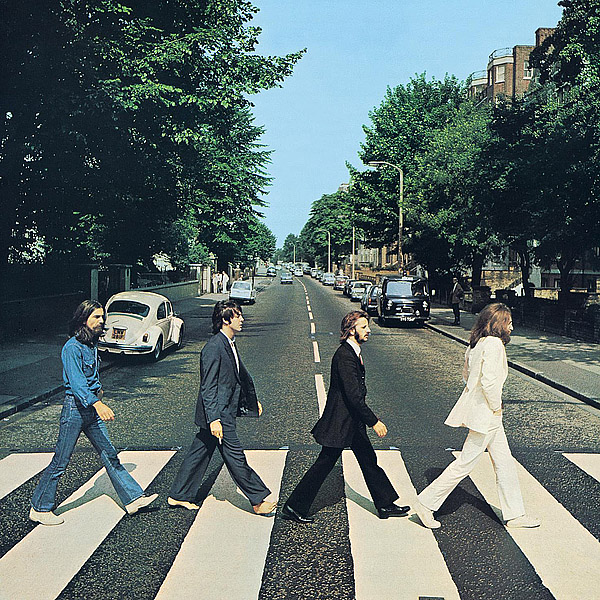
Feb 22 - Aug 25, 1969 • Songs recorded during this session appear on Abbey Road
Article Jul 14, 1969 • Paul and Linda McCartney at the UK premiere of “Alfred The Great”
Session Jul 15, 1969 • Recording and mixing "You Never Give Me Your Money"
Session Jul 16, 1969 • Recording "Here Comes The Sun", "Something"
Single Jul 16, 1969 • "My Dark Hour / Song For Our Ancestors" by The Steve Miller Band released in the US
Session Jul 17, 1969 • Recording "Oh! Darling", "Octopus's Garden"
AlbumSome of the songs worked on during this session were first released on the "Abbey Road" LP
On this day, The Beatles recorded overdubs for the two songs from George Harrison to be released on the “Abbey Road” album, “Here Comes The Sun” and “Something“.
The basic track of “Here Comes The Sun” was recorded on July 7, and the first overdubs were added on July 8. On this day, more overdubs were added onto take 15.
From 2:30 pm to 7 pm in Studio Three, George, Paul McCartney and Ringo Starr added handclaps (on track eight). George also recorded a harmonium track (on track five), which would later be erased.
“Here Comes The Sun” would receive more overdubs on August 6 and August 11.
From 7 pm to 12:30 am, The Beatles moved to Studio Two, to work on “Something” and added overdubs onto take 36 (discarding the tape reduction named take 37 done on July 11).
George re-recorded his lead vocals, replacing the ones recorded on July 11.
George was once again very nervous when it came time to do the vocal. No matter what we did to create a vibe – turning the lights down low, lighting incense – he just couldn’t get comfortable. It was a difficult song to sing, but in the end he did a magnificent job…It was interesting: George never seemed to get cold feet doing backing vocals, but whenever he had to do a lead vocal, he’d lose his confidence.
Geoff Emerick (who didn’t engineer this session, but seems to have been present) – From “Here, There and Everywhere: My Life Recording the Music of The Beatles“, 2006
Paul then added backing vocals; and Ringo some additional cymbals and handclaps onto track four, erasing John Lennon’s piano performance from the original rhythm track.
Lewisohn noted that Harrison, McCartney and Starr added handclaps to Something during this session, but audio evidence supports the addition of both drums (cymbals only) and handclaps to the track. As the parts do not overlap, it is likely that Starr performed both.
From “The Beatles Recording Reference Manual – Volume 5” by Jerry Hammack
Two reduction mixes – labelled Takes 38 and 39 – were then made, to end the day. “Something” would receive its final (orchestral) overdubs on August 15.
Written by George Harrison
Recording • SI onto take 15
Written by George Harrison
Recording • SI onto take 36
Written by George Harrison
Tape copying • Tape reduction take 36 into take 38
Written by George Harrison
Tape copying • Tape reduction take 36 into take 39
The Complete Beatles Recording Sessions • Mark Lewisohn
The definitive guide for every Beatles recording sessions from 1962 to 1970. We owe a lot to Mark Lewisohn for the creation of those session pages, but you really have to buy this book to get all the details - the number of takes for each song, who contributed what, a description of the context and how each session went, various photographies... And an introductory interview with Paul McCartney!
The Beatles Recording Reference Manual: Volume 5: Let It Be through Abbey Road (1969 - 1970)

The fifth and final book of this critically acclaimed series, "The Beatles Recording Reference Manual: Volume 5: Let It Be through Abbey Road (1969 - 1970)" follows The Beatles as they "get back to where they once belonged...". Not once, but twice. With "Let It Be", they attempted to recapture the spontaneity of their early years and recordings, while "Abbey Road" was a different kind of return - to the complexity, finish and polish that they had applied to their work beginning with "Revolver" and through to "The Beatles".
Solid State: The Story of "Abbey Road" and the End of the Beatles
Acclaimed Beatles historian Kenneth Womack offers the most definitive account yet of the writing, recording, mixing, and reception of Abbey Road. In February 1969, the Beatles began working on what became their final album together. Abbey Road introduced a number of new techniques and technologies to the Beatles' sound, and included "Come Together," "Something," and "Here Comes the Sun," which all emerged as classics.
If we modestly consider the Paul McCartney Project to be the premier online resource for all things Paul McCartney, it is undeniable that The Beatles Bible stands as the definitive online site dedicated to the Beatles. While there is some overlap in content between the two sites, they differ significantly in their approach.

Notice any inaccuracies on this page? Have additional insights or ideas for new content? Or just want to share your thoughts? We value your feedback! Please use the form below to get in touch with us.
