Thursday, November 11, 1965
Mixing "The Word", recording "You Won't See Me", "Girl", "Wait", "I'm Looking Through You"
For The Beatles
Last updated on December 21, 2025
Thursday, November 11, 1965
For The Beatles
Last updated on December 21, 2025

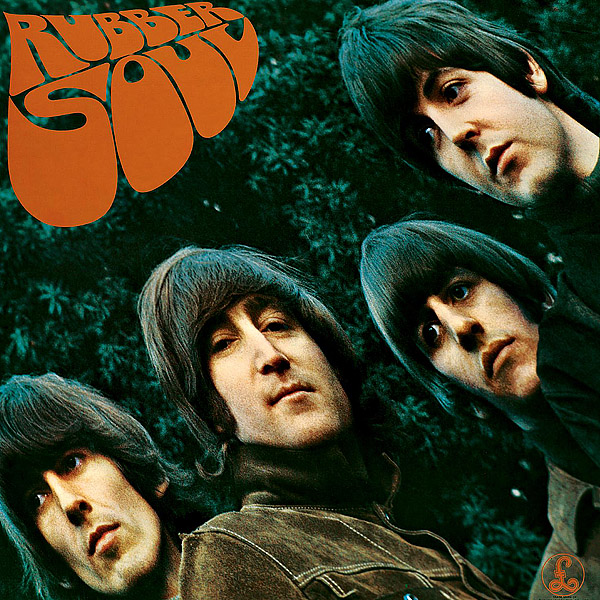
Oct 12 - Nov 30, 1965 • Songs recorded during this session appear on Rubber Soul (UK Mono)
Session Nov 11, 1965 • Mixing "The Word", recording "You Won't See Me", "Girl", "Wait", "I'm Looking Through You"
Article Nov 15, 1965 • Paul McCartney visits Jane Asher in Bristol
AlbumSome of the songs worked on during this session were first released on the "Rubber Soul (UK Mono)" LP
This was the eighteenth day of work on The Beatles’ new album “Rubber Soul,” and it comprised two separate sessions.
From 2:30 pm to 5:30 pm, the team prepared the mono and stereo mixes for “The Word,” recorded the previous day. Only one attempt was required for each: Remix Mono 1 and Remix Stereo 1 were both made from Take 3. RS1 was used for the US release of “Rubber Soul”, but a new stereo mix was created on November 15, and this later mix became the version released on the UK edition of “Rubber Soul.”
THE WORD
- [a] mono 11 Nov 1965.
UK: Parlophone PMC 1267 Rubber Soul 1965.
US: Capitol T 2442 Rubber Soul 1965.- [b] stereo 11 Nov 1965.
US: Capitol ST 2442 Rubber Soul 1965.- [c] stereo 15 Nov 1965.
UK: Parlophone PCS 3075 Rubber Soul 1965.- [d] stereo 1987.
CD: EMI CDP 7 46440 2 Rubber Soul 1987.[b] must be the rejected Nov 11 mix: not only does it not sound as good, but surely Parlophone uses the correct mix, and the new CD mix [d] was made to sound like [c]. The lead vocal is doubletracked in [b] but single in the other stereo versions and in mono. In all stereo versions, the main instrumental track is left and the first vocal track is right. In the rejected mix [b], the track with bass, maracas and falsetto harmony (last 2 refrains) is mixed left with the other instruments, while the track with the second vocal track is mixed right; in the later mixes [c] [d] those two tracks have been mixed to the opposite sides. [c] and [d] have extreme separation between the stereo channels.
From The Usenet Guide to Beatles Recording Variations
A marathon recording session followed, running from 6 pm to 7 am the next morning. With the deadline approaching, the final songs needed for the album were recorded.
For Paul McCartney’s “You Won’t See Me“, two takes of the backing track were recorded, with Paul on piano, John Lennon and George Harrison on electric guitars, and Ringo Starr on drums. All instruments were placed on track one of the four-track tape. Take 2 was judged the best.
Overdubs onto Take 2 followed. On track two, Paul added his bass part, Ringo contributed hi-hat, and an unidentified Beatle played tambourine. Mal Evans, the group’s assistant, also added a single organ note — his first musical contribution to a Beatles record.
On track three, Paul recorded his lead vocals while John and George added backing vocals and handclaps. These vocals were then double-tracked onto track four. The recording was then complete.
The next song to be recorded was John Lennon’s “Girl.” The backing track featured John on acoustic guitar, Paul on bass and Ringo on drums. All those instruments were recorded on track one of the four-track tape. Only two takes were needed, with Take 2 deemed the best.
Overdubs onto Take 2 followed. John’s lead vocals and Paul and George’s backing vocals were recorded on track three, and double tracked onto track four. George also recorded an acoustic guitar onto track two, completing the track’s recording.
“Wait” had originally been recorded on June 17, 1965, for the “Help!” album, but it was set aside at the time. With one more song needed for “Rubber Soul,” The Beatles returned to the track on this day and added overdubs to Take 4.
Track one already contained the June 1965 backing track, while track three held vocals recorded by John Lennon and Paul McCartney. During this session, John and Paul double-tracked their vocals onto track four, with Ringo Starr playing maracas. On track two, Ringo added tambourine, and George Harrison contributed an electric guitar part. These overdubs completed the recording.
The last song to be worked on was “I’m Looking Through You.” It had first been recorded on October 24, but The Beatles were dissatisfied and attempted a remake on November 6. Still unhappy, they recorded another remake on November 10. All instrumental parts had been completed, and on this day Paul recorded his double-tracked lead vocals onto tracks two and three of the four-track tape, completing the recording.
All tracks worked on during this long session were mixed on November 15.
Mixing • Mono mixing from take 3
AlbumOfficially released on Rubber Soul (UK Mono)
Mixing • Stereo mixing - Remix 1 from take 3
AlbumOfficially released on Rubber Soul (US Stereo)
Recording • Take 1
Recording • Take 2
Recording • SI onto take 2
Recording • Take 1
Recording • Take 2
Recording • SI onto take 2
Recording • SI onto take 4
Recording • SI onto take 4
The Complete Beatles Recording Sessions • Mark Lewisohn
The definitive guide for every Beatles recording sessions from 1962 to 1970. We owe a lot to Mark Lewisohn for the creation of those session pages, but you really have to buy this book to get all the details - the number of takes for each song, who contributed what, a description of the context and how each session went, various photographies... And an introductory interview with Paul McCartney!
The Beatles Recording Reference Manual - Volume 2 - Help! through Revolver (1965-1966)
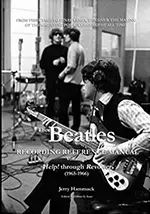
The second book of the Association for Recorded Sound Collections (ARSC)-nominated series, "The Beatles Recording Reference Manual: Volume 2: Help! through Revolver (1965-1966)" follows the evolution of the band from the end of Beatlemania with "Help!" through the introspection of "Rubber Soul" up to the sonic revolution of "Revolver". From the first take to the final remix, discover the making of the greatest recordings of all time.Through extensive, fully-documented research, these books fill an important gap left by all other Beatles books published to date and provide a unique view into the recordings of the world's most successful pop music act.
If we modestly consider the Paul McCartney Project to be the premier online resource for all things Paul McCartney, it is undeniable that The Beatles Bible stands as the definitive online site dedicated to the Beatles. While there is some overlap in content between the two sites, they differ significantly in their approach.

Notice any inaccuracies on this page? Have additional insights or ideas for new content? Or just want to share your thoughts? We value your feedback! Please use the form below to get in touch with us.


