Wednesday, October 13, 1965
Recording "Drive My Car"
For The Beatles
Last updated on December 30, 2025
Wednesday, October 13, 1965
For The Beatles
Last updated on December 30, 2025

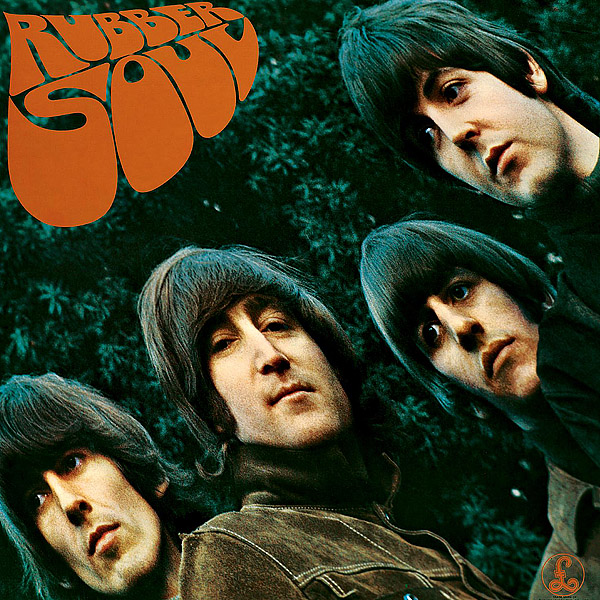
Oct 12 - Nov 30, 1965 • Songs recorded during this session appear on Rubber Soul (UK Mono)
Recording studio: EMI Studios, Studio Two, Abbey Road • London • UK
Session Oct 12, 1965 • Recording "Run For Your Life", "Norwegian Wood (This Bird Has Flown)"
Session Oct 12 - Nov 30, 1965 • Recording "Rubber Soul"
Session Oct 13, 1965 • Recording "Drive My Car"
Article Oct 15, 1965 • Paul and Jane attend Ben E. King concert at The Scotch of St James
Session Oct 16, 1965 • Recording "Day Tripper", "If I Needed Someone"
AlbumSome of the songs worked on during this session were first released on the "Rubber Soul (UK Mono)" LP
This was the second day of work on The Beatles’ new album, “Rubber Soul.” The previous day had been spent recording two songs written by John Lennon. On this day, from 7 pm to 12:15 am, they recorded, from start to finish, “Drive My Car,” a song written by Paul McCartney.
Working past midnight was a first for The Beatles, but it would soon become routine as they spent increasingly long hours in the studio.
The backing track for “Drive My Car” featured Paul on bass, George Harrison on electric guitar and Ringo Starr on drums. All instruments were recorded on track one of the four-track tape. Four takes of the backing track were taped, with Take 4 considered the best.
Overdubs followed. Some lead vocals by Paul and John and backing vocals by John, Paul and George were added onto track three, while Ringo added cowbell. John then added more backing vocals onto track two, while Ringo played tambourine. Paul recorded a solo lead guitar part while John played piano; these final overdubs were added to track four.
At this stage, the recording was complete. The mono mix was prepared on October 25, followed by the stereo mix on October 26.
‘Beep beep, beep beep, yeah’. There you go. It was always good to get nonsense lyrics in, and this song lent itself to ‘Beep beep, beep beep, yeah’. We did it in close harmony so it would sound a bit like a horn.
Then there’s staying with just two chords for the whole verse. Sometimes you don’t even need two; one would do. One of my favourite examples of using just one chord is ‘She’s Leaving Home’, where I fought the chord change. So, it goes ‘She’ – E major, I think it is. Stays on E – ‘is leaving’. Change? No. ‘Home’. Change? No. It stays on that E major for a long time. I felt proud of that, because the natural instinct is to change with the opening of every new line. The same is true of the verses of ‘Drive My Car’. Two chords are more than enough – maybe even one more than enough.
Paul McCartney – From “The Lyrics: 1956 to the Present“, 2021
We laid the track because, what Paul would do, if he had written a song, he’d learn all the parts for himself and then come in the studio and say, ‘Do this.’ He’d never give you the opportunity to come out with something. But, on ‘Drive My Car’, I just played the line, which is really like a lick off ‘Respect’, you know, the Otis Redding version. I played that line on the guitar and Paul laid that with me on bass. We laid the track down like that.
George Harrison – From “The Beatles: Off the Record” by Keith Badman, 2008
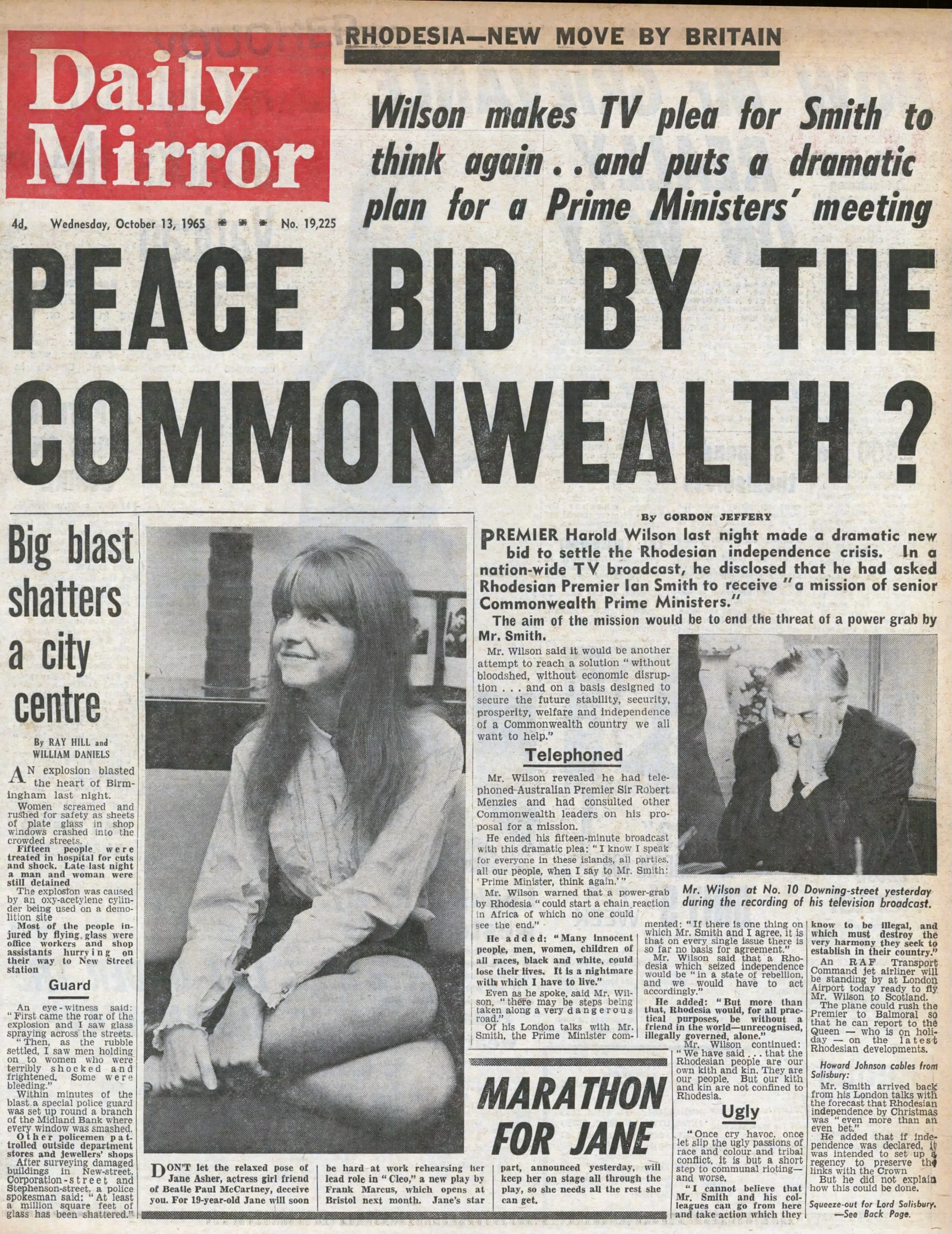
MARATHON FOR JANE
DON’T let the relaxed pose of Jane Asher, actress girl friend of Beatle Paul McCartney, deceive you. For 19-year-old Jane will soon be hard-at work rehearsing her lead role in “Cleo,” a new play by Frank Marcus, which opens at Bristol next month. Jane’s star part, announced yesterday, will keep her on stage all through the play, so she needs all the rest she can get.
From Daily Mirror – October 13, 1965
Recording • Take 1
Recording • Take 2
Recording • Take 3
Recording • Take 4
Recording • SI onto take 4
The Complete Beatles Recording Sessions • Mark Lewisohn
The definitive guide for every Beatles recording sessions from 1962 to 1970. We owe a lot to Mark Lewisohn for the creation of those session pages, but you really have to buy this book to get all the details - the number of takes for each song, who contributed what, a description of the context and how each session went, various photographies... And an introductory interview with Paul McCartney!
The Beatles Recording Reference Manual - Volume 2 - Help! through Revolver (1965-1966)
The second book of the Association for Recorded Sound Collections (ARSC)-nominated series, "The Beatles Recording Reference Manual: Volume 2: Help! through Revolver (1965-1966)" follows the evolution of the band from the end of Beatlemania with "Help!" through the introspection of "Rubber Soul" up to the sonic revolution of "Revolver". From the first take to the final remix, discover the making of the greatest recordings of all time.Through extensive, fully-documented research, these books fill an important gap left by all other Beatles books published to date and provide a unique view into the recordings of the world's most successful pop music act.
If we modestly consider the Paul McCartney Project to be the premier online resource for all things Paul McCartney, it is undeniable that The Beatles Bible stands as the definitive online site dedicated to the Beatles. While there is some overlap in content between the two sites, they differ significantly in their approach.

Notice any inaccuracies on this page? Have additional insights or ideas for new content? Or just want to share your thoughts? We value your feedback! Please use the form below to get in touch with us.


