Friday, October 22, 1965
Recording "In My Life", "Nowhere Man"
For The Beatles
Last updated on December 17, 2025
Friday, October 22, 1965
For The Beatles
Last updated on December 17, 2025

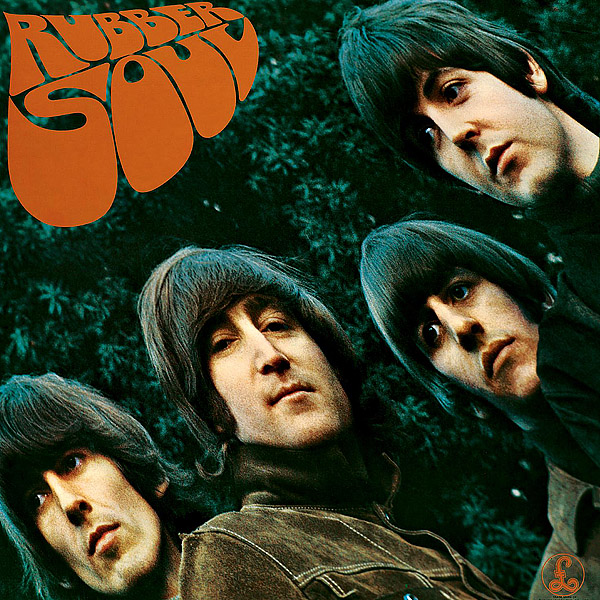
Oct 12 - Nov 30, 1965 • Songs recorded during this session appear on Rubber Soul (UK Mono)
Recording studio: EMI Studios, Studio Two, Abbey Road • London • UK
Session Oct 20, 1965 • Recording "We Can Work It Out"
Session Oct 21, 1965 • Recording "Norwegian Wood (This Bird Has Flown)", "Nowhere Man"
Session Oct 22, 1965 • Recording "In My Life", "Nowhere Man"
Interview Oct 22, 1965 • Paul McCartney interview for New Musical Express
Article October 23 - Mid November 1965 • Designing the "Rubber Soul" cover
Next session Oct 24, 1965 • Recording “I’m Looking Through You”
AlbumSome of the songs worked on during this session were first released on the "Rubber Soul (UK Mono)" LP
This was the seventh day of work on The Beatles’ new album “Rubber Soul.”
On October 18, they had recorded John Lennon’s autobiographical song “In My Life,” completing the backing track and overdubs. One of the overdubs added onto Take 3 was an organ part played by George Martin. On this day, in a session running from 10:30 am to 11:30 am and engineered by Stuart Eltham (with Mike Stone as second engineer), it was decided to remake this overdub, with George Martin choosing to replace the organ with a piano.
However, he faced a difficulty playing the solo at the tempo he imagined. The solution was to record the piano at half speed and then play back the tape at double speed, creating the distinctive sound heard on the final recording. This completed work on the track. The mono mix was prepared on October 25, followed by the stereo mix on October 26.
‘In My Life’ is one of my favourite songs because it is so much John. A super track and such a simple song. There’s a bit where John couldn’t decide what to do in the middle and, while they were having their tea break, I put down a baroque piano solo which John didn’t hear until he came back. What I wanted was too intricate for me to do live, so I did it with a half-speed piano, then sped it up, and he liked it.
George Martin – From “The Beatles Anthology” book, 2000
From 2:30 pm to 7 pm, The Beatles continued the work begun the previous day on “Nowhere Man.” They decided to remake the track and recorded three new takes of the backing track, labelled Takes 3 to 5, with John Lennon on acoustic guitar, Paul McCartney on bass and Ringo Starr on drums. All instruments were recorded on track one of the four-track tape.
Take 4 was judged the best and received overdubs. On track three, John and Paul recorded their lead vocals while George Harrison added backing vocals; the three Beatles then double-tracked their vocals onto track four. John and George subsequently recorded a dual lead guitar part onto track two, completing the recording. The mono mix was prepared on October 25, followed by the stereo mix on October 26.
Recording • SI onto take 3
Recording • Take 3
Recording • Take 4
Recording • Take 5
Recording • SI onto take 4
The Complete Beatles Recording Sessions • Mark Lewisohn
The definitive guide for every Beatles recording sessions from 1962 to 1970. We owe a lot to Mark Lewisohn for the creation of those session pages, but you really have to buy this book to get all the details - the number of takes for each song, who contributed what, a description of the context and how each session went, various photographies... And an introductory interview with Paul McCartney!
The Beatles Recording Reference Manual - Volume 2 - Help! through Revolver (1965-1966)
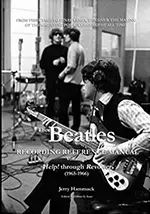
The second book of the Association for Recorded Sound Collections (ARSC)-nominated series, "The Beatles Recording Reference Manual: Volume 2: Help! through Revolver (1965-1966)" follows the evolution of the band from the end of Beatlemania with "Help!" through the introspection of "Rubber Soul" up to the sonic revolution of "Revolver". From the first take to the final remix, discover the making of the greatest recordings of all time.Through extensive, fully-documented research, these books fill an important gap left by all other Beatles books published to date and provide a unique view into the recordings of the world's most successful pop music act.
If we modestly consider the Paul McCartney Project to be the premier online resource for all things Paul McCartney, it is undeniable that The Beatles Bible stands as the definitive online site dedicated to the Beatles. While there is some overlap in content between the two sites, they differ significantly in their approach.

Notice any inaccuracies on this page? Have additional insights or ideas for new content? Or just want to share your thoughts? We value your feedback! Please use the form below to get in touch with us.


