Released in 1970
Fields Of St. Etienne
Written by Graham Lyle • Benny Gallagher
Last updated on April 27, 2025
Released in 1970
Written by Graham Lyle • Benny Gallagher
Last updated on April 27, 2025
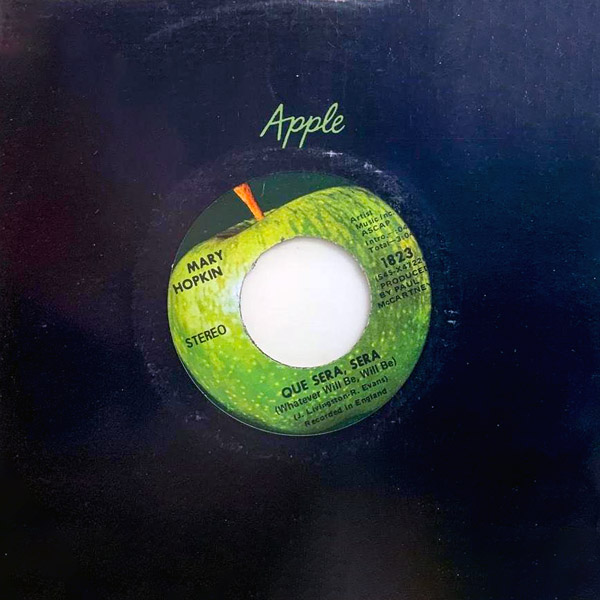
Album This song officially appears on the Que Sera, Sera (Whatever Will Be, Will Be) / Fields Of St Etienne (US) 7" Single.
Timeline This song was officially released in 1970
This song was recorded during the following studio sessions:
Recording "Que Sera Sera", "Fields of St. Etienne" #2
July 6 or 13, 1969 ?

"She's A Joan Baez Type, But We'll Soon Alter That"
Jan 01, 1992 • From Goldmine Magazine

Officially appears on Goodbye / Sparrow

Officially appears on Those Were The Days / Turn! Turn! Turn!
Officially appears on Goodbye / Sparrow

Officially appears on Quelli Erano Giorni (Those Were The Days) / Turn! Turn! Turn!

Officially appears on Que Tiempo Tan Feliz (Those Were The Days) / Turn! Turn! Turn!

Officially appears on An Jenem Tag (Those Were The Days) / Turn! Turn! Turn!

Officially appears on Le Temps Des Fleurs (Those Were The Days) / Turn! Turn! Turn!
Officially appears on Those Were The Days / Turn! Turn! Turn!

Officially appears on Lontano Dagli Occhi / The Game
“Fields Of St Etienne” is a song written by Graham Lyle and Benny Gallagher, two songwriters signed to Apple Publishing. Mary Hopkin recorded the song in 1969, in a version produced by Paul McCartney. It was the second song written by Lyle and Gallagher that she recorded that year, following “Sparrow.”
“Fields of St. Etienne” was released as the B-side of the US single “Que Sera, Sera (Whatever Will Be, Will Be).”
Before recording the version produced by Paul McCartney, Mary Hopkin had previously recorded “Fields of St. Etienne” in a version produced by Geoff Emerick. This earlier version remained unreleased until 2010.
That’s one of my all–time favorites. Beautiful song. Apparently, the first time it was released on an album, it was a different arrangement. It might’ve been the chap who did “Those Were The Days,” Richard something. Paul produced the other version, which was a bit over the top. And having been told that they were re–releasing it, I begged them to find the version I did with Benny and Graham. Which I think this is.
Mary Hopkin – Interview with Goldmine Magazine, 1992
‘Fields Of St. Etienne’ was intended as Mary’s third UK single, scheduled for September 1969. It was written, as was ‘Sparrow’, by Mary’s friends and Apple Publishing songwriters Gallagher & Lyle. Mary later re-recorded the track with Paul McCartney in a much simpler form. The recording included here is previously unissued. The arrangement is by Richard Hewson and the production by Geoff Emerick. Although Mary loved the song, she felt at the time that this version was not in keeping with her own musical vision and she asked Apple to cancel its release.
From the liner notes of “Post Card (2010 remaster)“
Through the fields of St Etienne
Amidst the corn I wonder
In my hand an ear of corn
The morning dew has kissed
Here beneath the skies
I lay with my lover
While the summer winds gathered clouds of war
Au revoir my love
Though the reasons pass me
Why we can't remain in the fields of St. Etienne
Weaving proudly, singing loudly
Being young and foolish
He was going never knowing
He would not return
Singing songs of war
Filled with God and country
Marching down the road with the boys that day
Au revoir my love
Though the reasons pass me
Why we can't remain in the fields of St. Etienne

Que Sera, Sera (Whatever Will Be, Will Be) / Fields Of St Etienne (US)
7" Single • Released in 1970
3:12 • Studio version • A
Paul McCartney : Acoustic guitar, Bass Ringo Starr : Drums Mary Hopkin : Acoustic guitar, Vocals Unknown : Backing vocals, Woodwind instruments
SessionRecording : July 6 or 13, 1969 ? • Studio : EMI Studios, Studio Two, Abbey Road • London • UK
SessionRecording : Aug 17, 1969 ? • Studio : EMI Studios, Abbey Road Studios • London • UK

LP • Released in 1972
3:12 • Studio version • A
Paul McCartney : Acoustic guitar, Bass Ringo Starr : Drums Mary Hopkin : Acoustic guitar, Vocals Unknown : Backing vocals, Woodwind instruments
SessionRecording : July 6 or 13, 1969 ? • Studio : EMI Studios, Studio Two, Abbey Road • London • UK
SessionRecording : Aug 17, 1969 ? • Studio : EMI Studios, Abbey Road Studios • London • UK

Official album • Released in 2010
3:47 • Studio version • B • Mary later re-recorded the track with Paul McCartney in a much simpler form. The recording included here is previously unissued. The arrangement is by Richard Hewson and the production by Geoff Emerick.
Geoff Emerick : Producer Richard Hewson : Arrangement Guy Massey : Remastering Steve Rooke : Remastering Alex Wharton : Remastering Allan Rouse : Project co-ordinator
Paul McCartney: Music Is Ideas. The Stories Behind the Songs (Vol. 1) 1970-1989
With 25 albums of pop music, 5 of classical – a total of around 500 songs – released over the course of more than half a century, Paul McCartney's career, on his own and with Wings, boasts an incredible catalogue that's always striving to free itself from the shadow of The Beatles. The stories behind the songs, demos and studio recordings, unreleased tracks, recording dates, musicians, live performances and tours, covers, events: Music Is Ideas Volume 1 traces McCartney's post-Beatles output from 1970 to 1989 in the form of 346 song sheets, filled with details of the recordings and stories behind the sessions. Accompanied by photos, and drawing on interviews and contemporary reviews, this reference book draws the portrait of a musical craftsman who has elevated popular song to an art-form.
The McCartney Legacy: Volume 1: 1969 – 73

In this first of a groundbreaking multivolume set, THE MCCARTNEY LEGACY, VOL 1: 1969-73 captures the life of Paul McCartney in the years immediately following the dissolution of the Beatles, a period in which McCartney recreated himself as both a man and a musician. Informed by hundreds of interviews, extensive ground up research, and thousands of never-before-seen documents THE MCCARTNEY LEGACY, VOL 1 is an in depth, revealing exploration of McCartney’s creative and personal lives beyond the Beatles.

Notice any inaccuracies on this page? Have additional insights or ideas for new content? Or just want to share your thoughts? We value your feedback! Please use the form below to get in touch with us.

GEOFFREY STOODLEY CLODE • Jan 26, 2019 • 7 years ago
On 2010 CD re release of POSTCARD it states Paul produced all titles except Fields of St Etienne.It gives Geoff Emerick title of producer.:1995 CD Those Were The Days states Paul was producer. What is correct?

The PaulMcCartney Project • Feb 02, 2019 • 7 years ago
Hi Geoffrey, thanks for this clue. I don't know what the truth and will have to dig more ! thanks !