
Circa March 1970
Designing the packaging for “McCartney”
Last updated on August 10, 2025
Circa March 1970
Last updated on August 10, 2025
Previous article Feb 28, 1970 • George Martin and Geoff Emerick win NME Awards
Session Feb 28, 1970 • Mixing "For You Blue"
Session Feb 28, 1970 • Mixing "Oo You"
Article Circa March 1970 • Designing the packaging for "McCartney"
Article March 1970 • Drake's Drum is retiring
Session Circa 1970 • Home recordings

Photo shoot for the “Beatles For Sale” cover
Oct 04, 1964

Designing the “Rubber Soul” cover
October 23 - Mid November 1965

The Beatles’ “butcher” photo session
Mar 25, 1966

Designing the “Revolver” cover
June - July 1966 ?

Designing the packaging for “Sgt. Pepper’s Lonely Hearts Club Band”
March - April 1967

Designing the packaging for the White Album
September - October 1968

Designing the packaging for “Let It Be”
July 1969 - March 1970 ?

Designing the packaging for “Abbey Road”
August 1969
Test shot for the “Abbey Road” album
August 3 or 7, 1969
The “Abbey Road” photo session
Aug 08, 1969

The Beatles’ last photo session
Aug 22, 1969

Designing the packaging for “Ram”
Early 1971 ?

Shooting of “Wild Life” cover photograph
Oct 01, 1971

Photo shoot of the “Band On The Run” cover
Oct 23, 1973
After the breakup of the Beatles, I was thinking of calling my first album ‘I’m the One It Hit the Most.’ Cause it really did hit me hard.
Paul McCartney – Interview with The Los Angeles Times, April 1974
In the Q&A included in the press release for the “McCartney” album in April 1970, Paul McCartney was asked about the theme of the record and replied, “Home, Family, Love.” This sentiment was reflected in the album’s artwork.
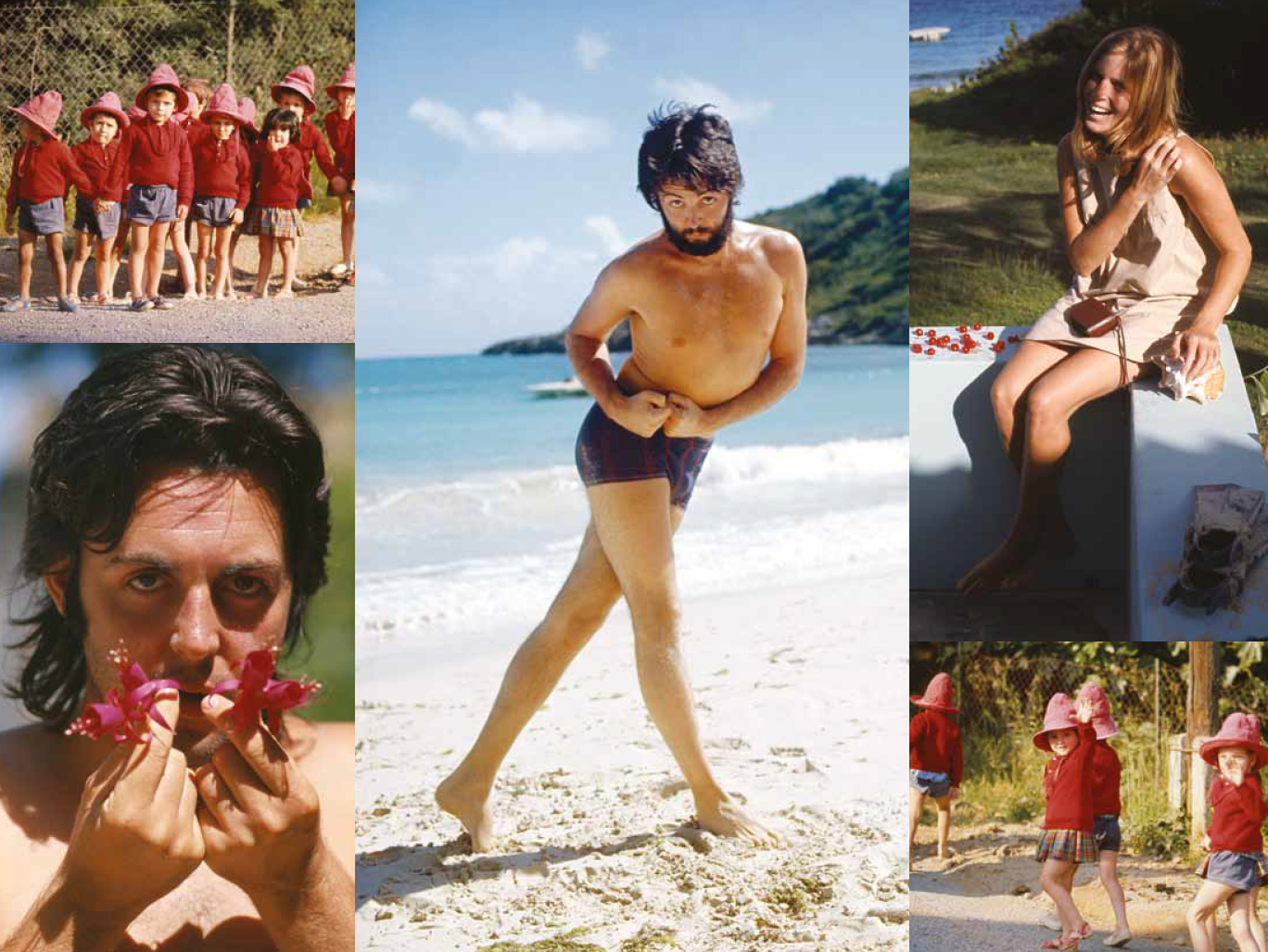
Paul and his wife Linda conceived the packaging concept, selecting Linda’s photographs from recent holidays and from their time at home, both in London and Scotland. Robin Black, the engineer for the Morgan Studios sessions, recalled that on March 11, 1970 — one of the final days of work on the album — Paul and Linda reviewed various photographs to decide which might be used.
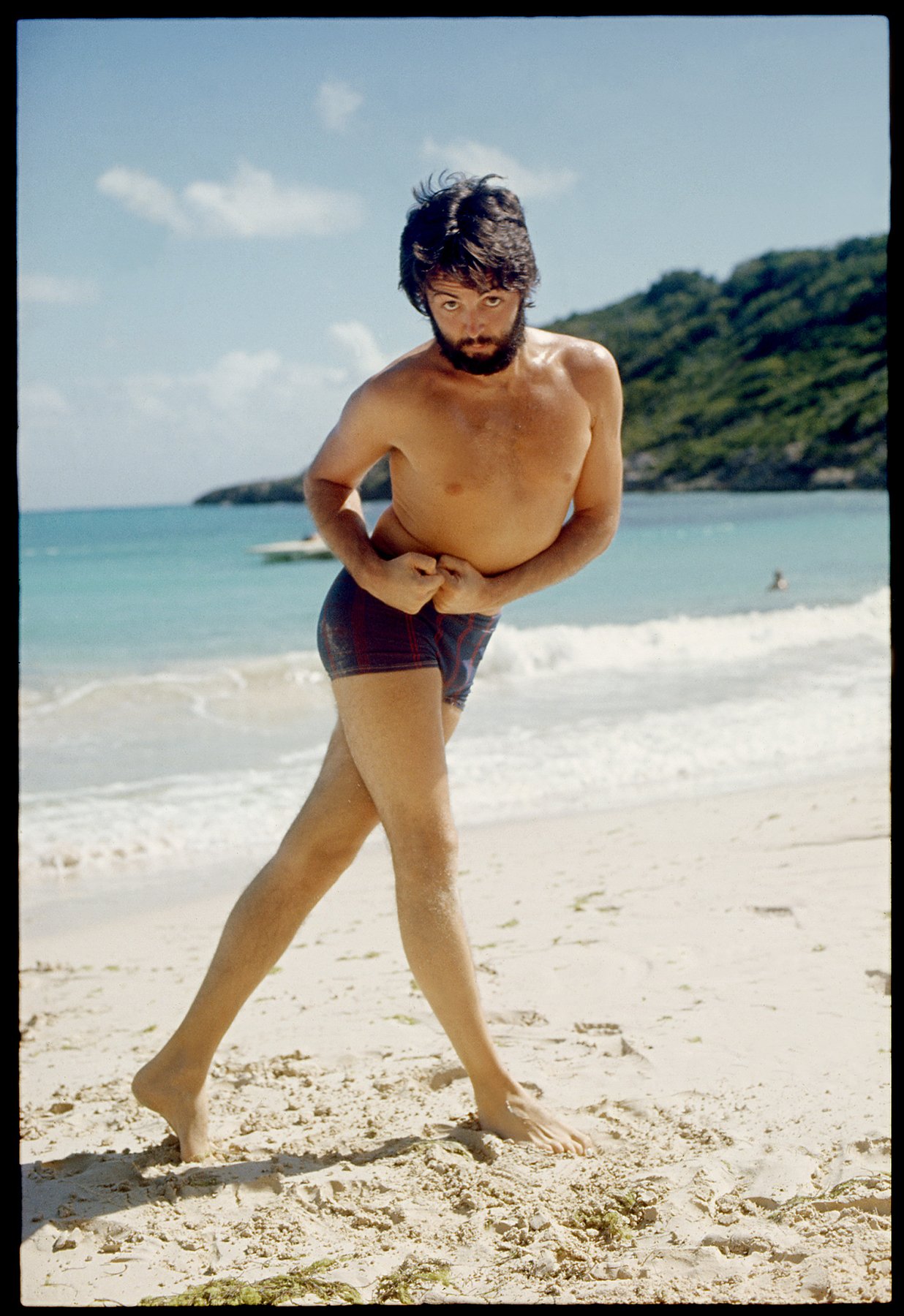
I remember [Linda] throwing down lots of photographs they’d taken on holiday, and I was asked to help point out any pictures I thought would look good on the album. There was one I laughed at, and he said, ‘What’s that?’ And it was a picture of Paul in his swimming costume doing the macho-man arms. And it just made me really laugh.
Robin Black – Interview with Adrian Sinclair, 2016 – From “The McCartney Legacy: Volume 1: 1969 – 73” by Allan Kozinn and Adrian Sinclair, 2022
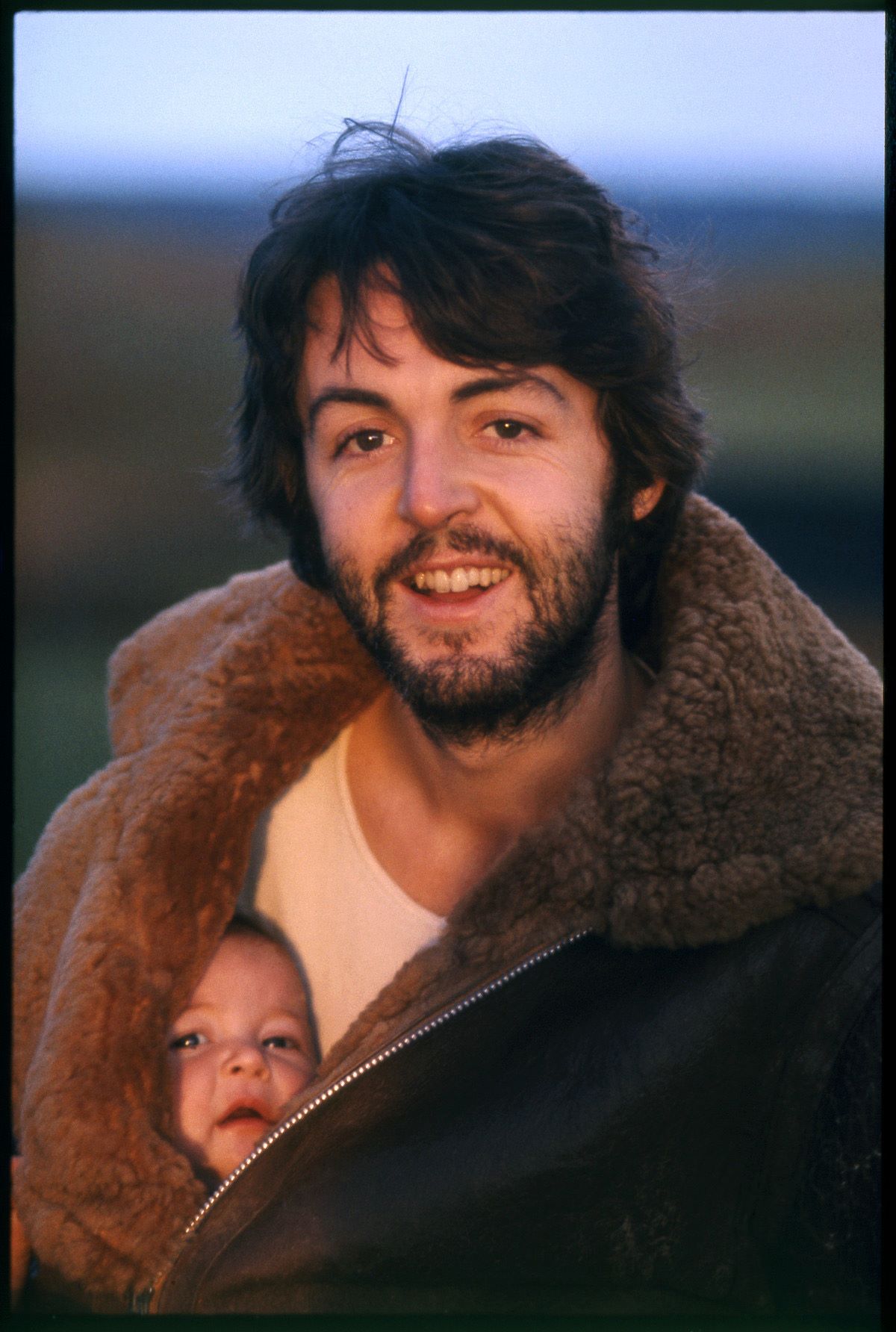
They also sought advice from David Puttnam, who worked in advertising for many years before turning film producer, and who felt there was only one image suitable for an album cover: a photograph taken in Scotland in the autumn of 1969 showing Paul with his daughter Mary tucked inside his fur-lined leather jacket. This image became one of Linda’s most beloved portraits of Paul and was later used as the cover of her 1976 photography book “Linda’s Pictures.”
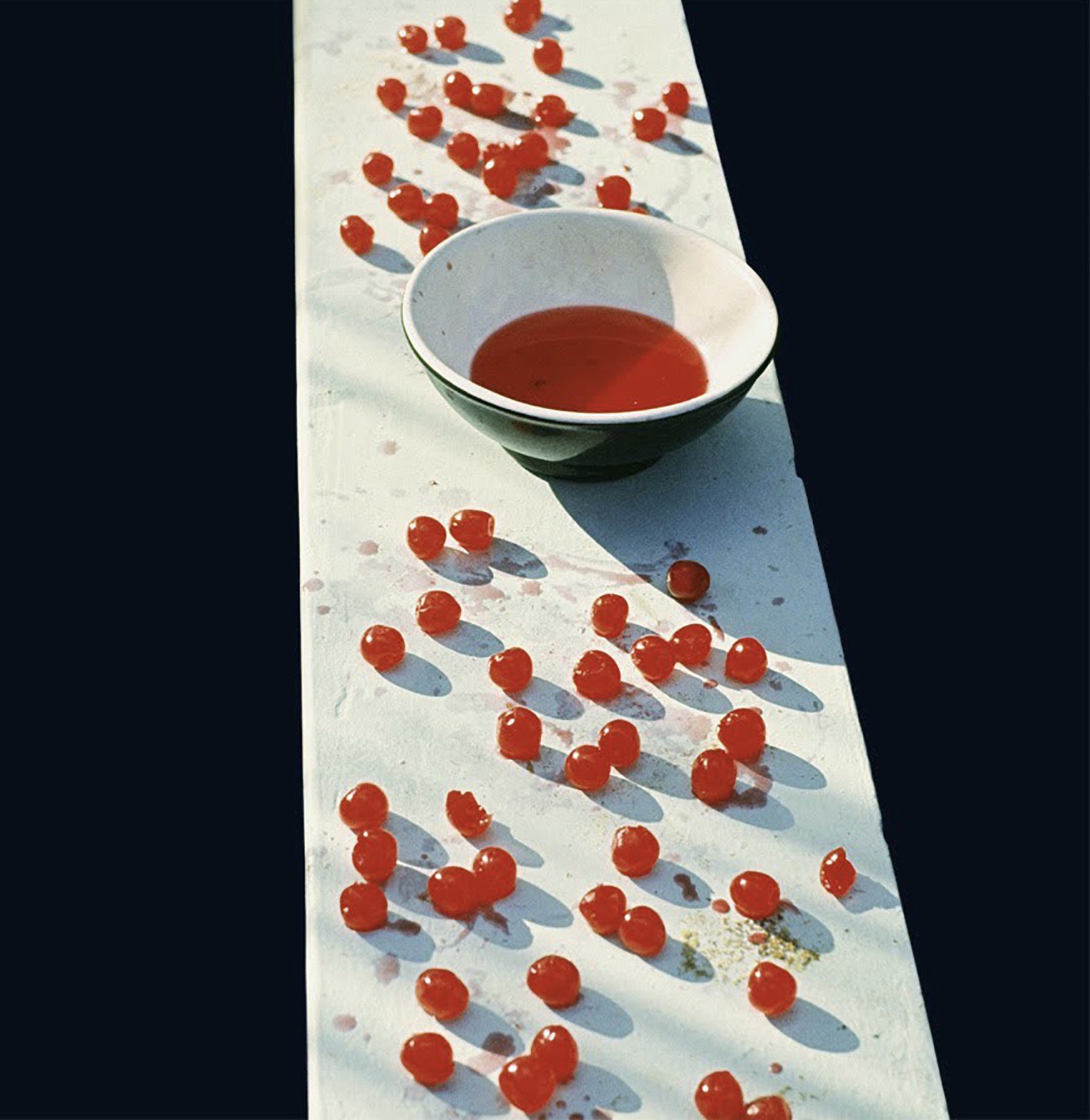
For the back cover, Paul and Linda initially chose a photograph of a bowl containing cherry-red liquid, placed against a cream-coloured wall and surrounded by loose red cherries, as if the fruit had been tipped from the bowl. Linda had taken this picture during the family’s holiday in Antigua in December 1969.
During the production process — overseen by artist Gordon House (who had contributed to the sleeves of “Sgt. Pepper’s Lonely Hearts Club Band” in 1967 and “The Beatles“, the “White Album”, in 1968) and designer Roger Huggett (who would work with Paul for many years) — the two images were swapped. The bowl of cherries became the front cover, and the portrait of Paul and Mary was placed on the back.
In keeping with the trend begun by The Beatles’ Abbey Road in 1969, the album’s title and artist’s name do not appear on the front cover, but only on the back alongside the track listing and the credit: “Instruments and voices by Paul, Photos and harmonies by Linda.”
UK copies featured a high-gloss finish due to full front-cover and back-cover lamination, which enhanced the richness of the colours. U.S. copies were generally unlaminated, printed on satin or matte cardstock.
The front cover is a picture of a bowl of cherries we got from the barman at the hotel we stayed at in Antigua and we laid them out on the wall in front of our cottage so that the lovely birds of the area could land amongst them, drink the juice, and eat the cherries. The back cover was taken in Scotland, on our farm.
Paul McCartney – From the “McCartney” press release, 1970
For the “McCartney” cover artwork we had a big wad of photos that Linda had taken, and the only one that wasn’t of me with a guitar was a photo with Mary, our new baby, inside my jacket. I used to carry her that way to keep her warm. Eventually, we had so many photos that we couldn’t see the woods for the trees, so we sent a pile of them to a friend – David Putnam, now Lord Putnam. He has a very good eye for an image and he called back and said, ‘There’s only one cover in this lot – the one with the baby in the jacket’. Just to be difficult, though, we put that on the back cover and put a photo of cherries on the front.
Paul McCartney – From “Wingspan: Paul McCartney’s Band on the Run“, 2002
We didn’t know what to use. Linda had taken a lot of pictures of me, sort of holding the guitar, doing a pose, against the wall and stuff, we had about 30 or 40 pictures, and we couldn’t decide. And one of them was the one with me with my baby [Mary] in the jacket. And we sent them round to David Puttnam, who was a mate in advertising, now Lord Puttnam. I knew him because he’d always got mistaken for ‘Paul’ when he went to America, he was a Paul lookalike. So Linda and I went out to dinner with him and his wife and left him with some images and said, “Just see if any of these are good for the cover”. And he got back the next day and said, “There’s only one”. Well, which one? “That one, you and the baby, in the jacket, that’s incredible”. So we went, Oh yeah! I like that, sometimes you need someone to show you.
And the cherries picture, there was a wall, when we were on holiday, a low wall outside the holiday villa, where we put these out for the birds. We’d get them from the bar, glacé cherries, and put them out so there’s pictures with loads of birds on there. And Linda took the other pictures which are largely of holidays and us getting together…
Paul McCartney – From “McCartney – Archive Collection“, 2011
Linda did the photography, and this was interesting because we didn’t know what we’d do as a cover. The cover became the back cover, like ‘The White Album’ is really called The Beatles. That would happen, people would make their own decision, which I always liked. So the cherries picture has become the cover but it’s actually the back cover.
Paul McCartney – From “McCartney – Archive Collection“, 2011


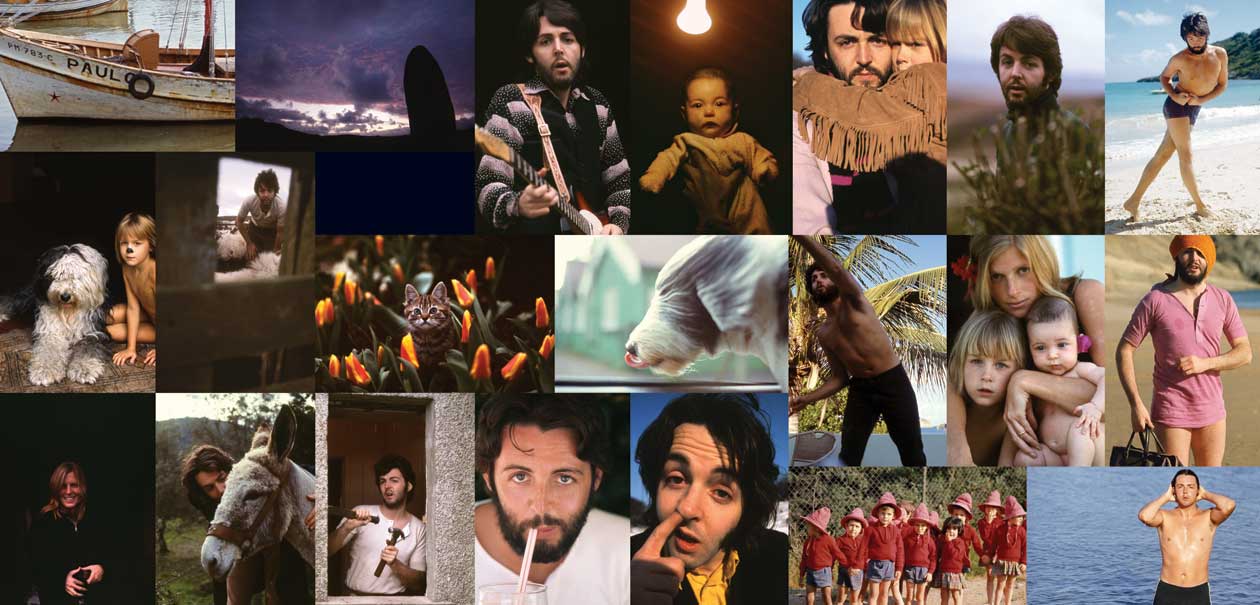
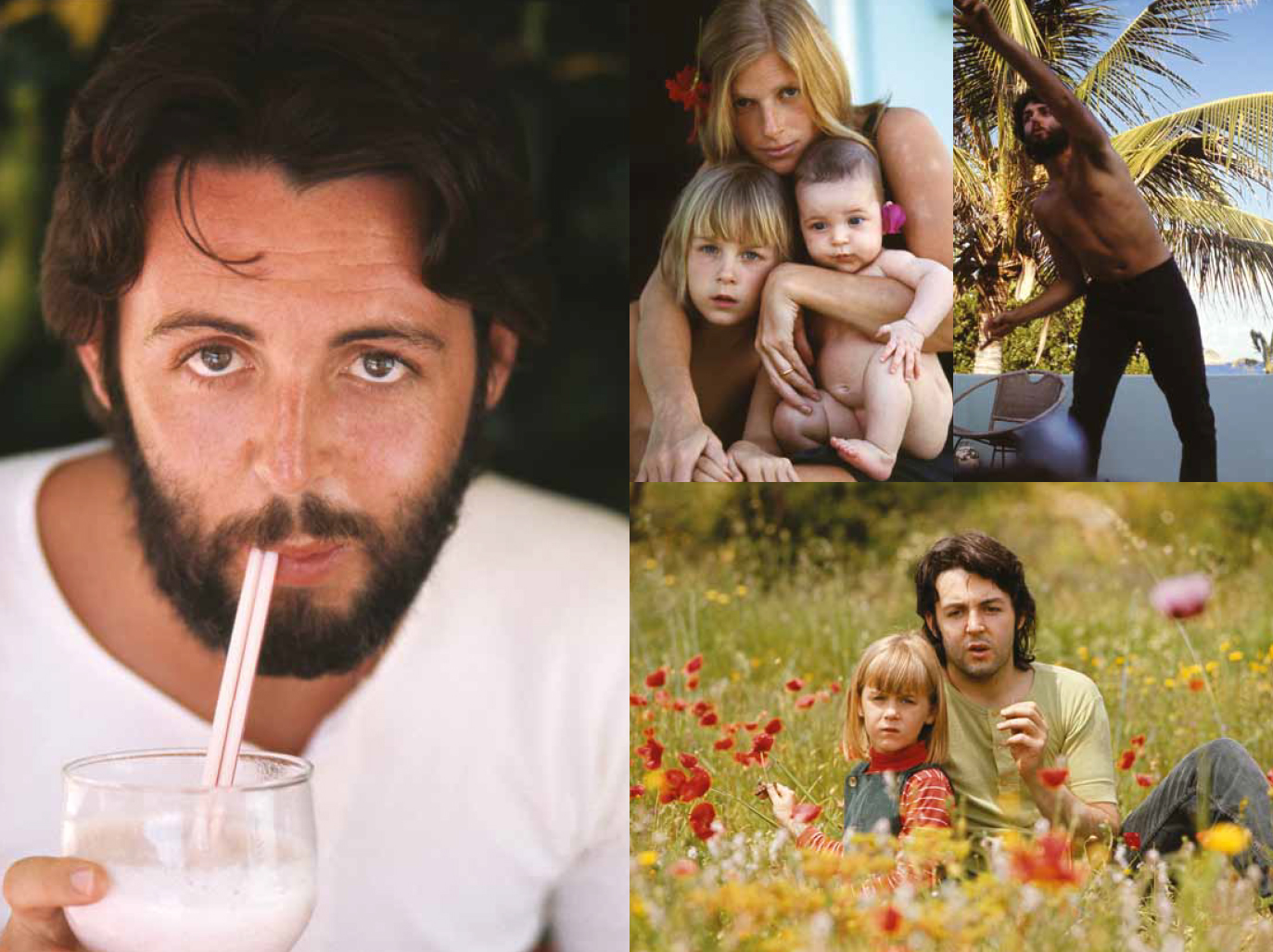
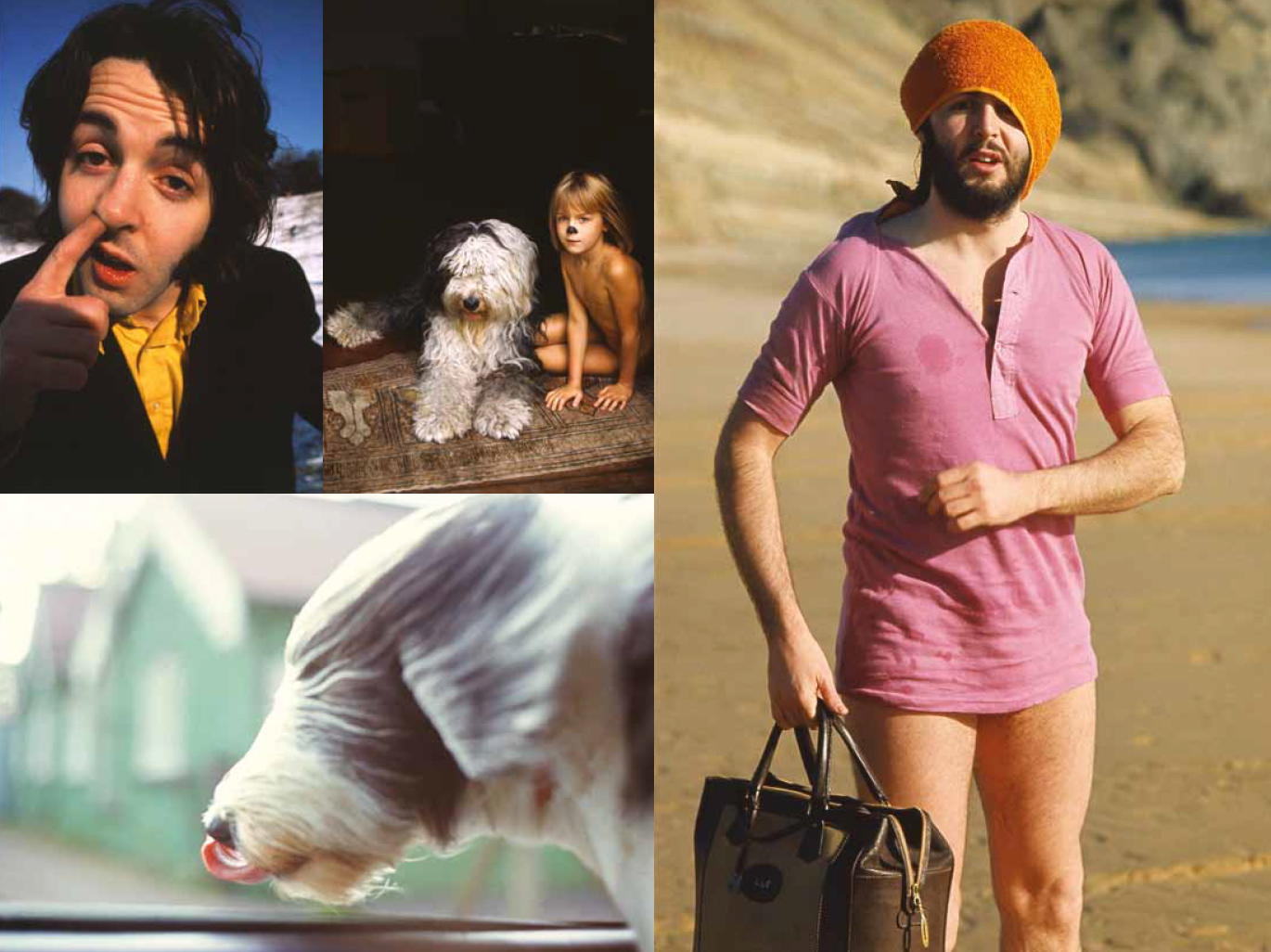
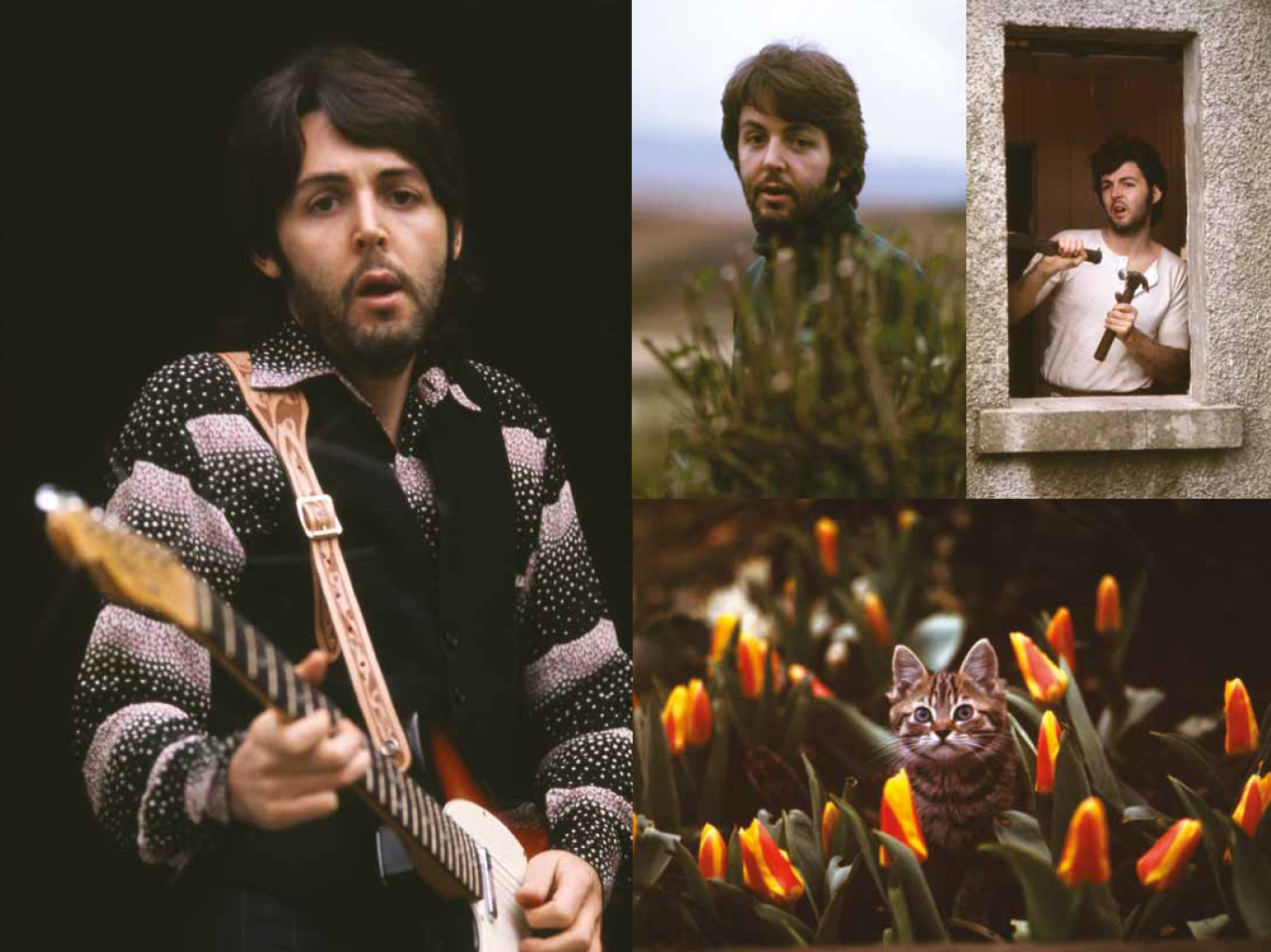
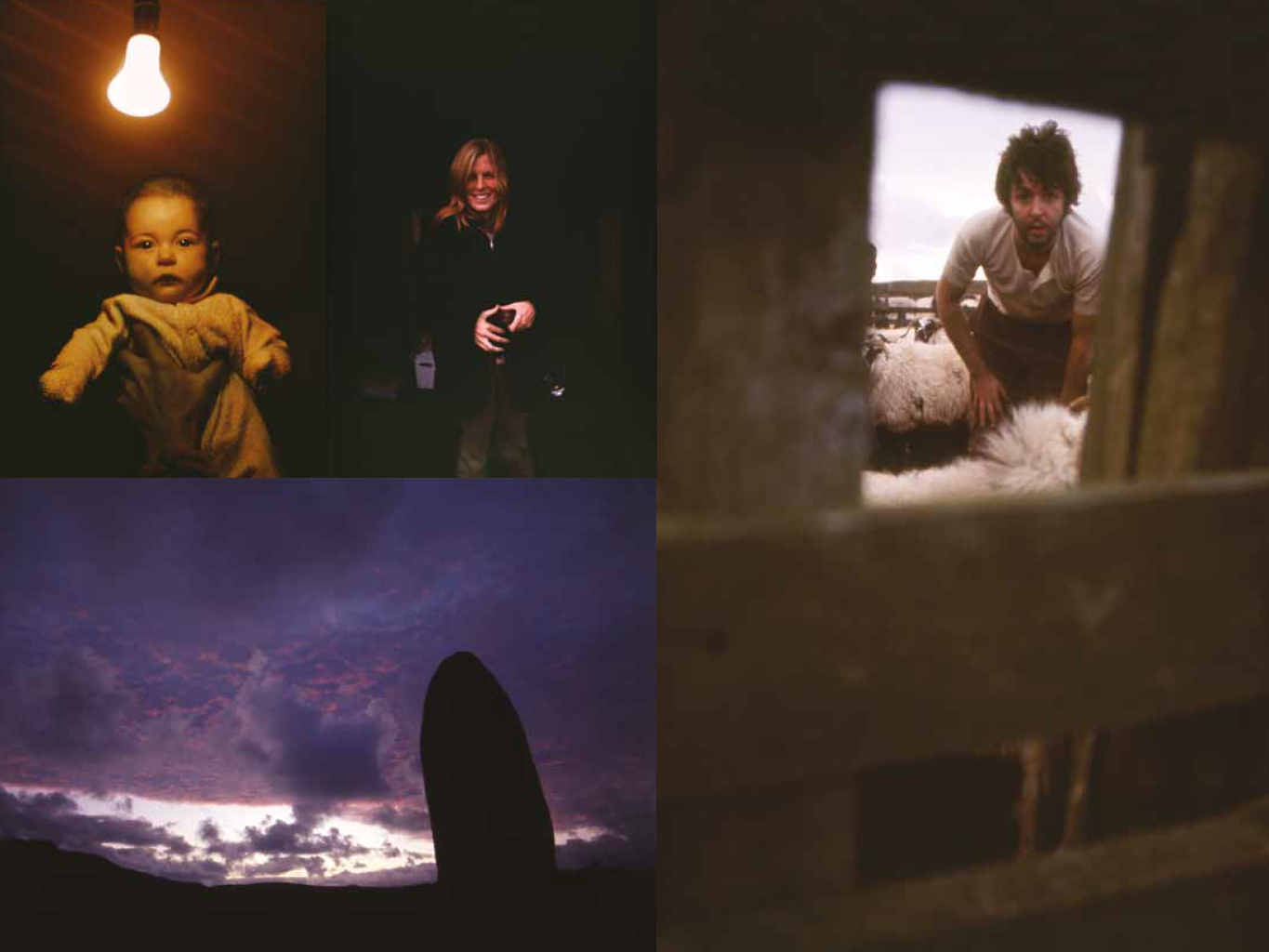
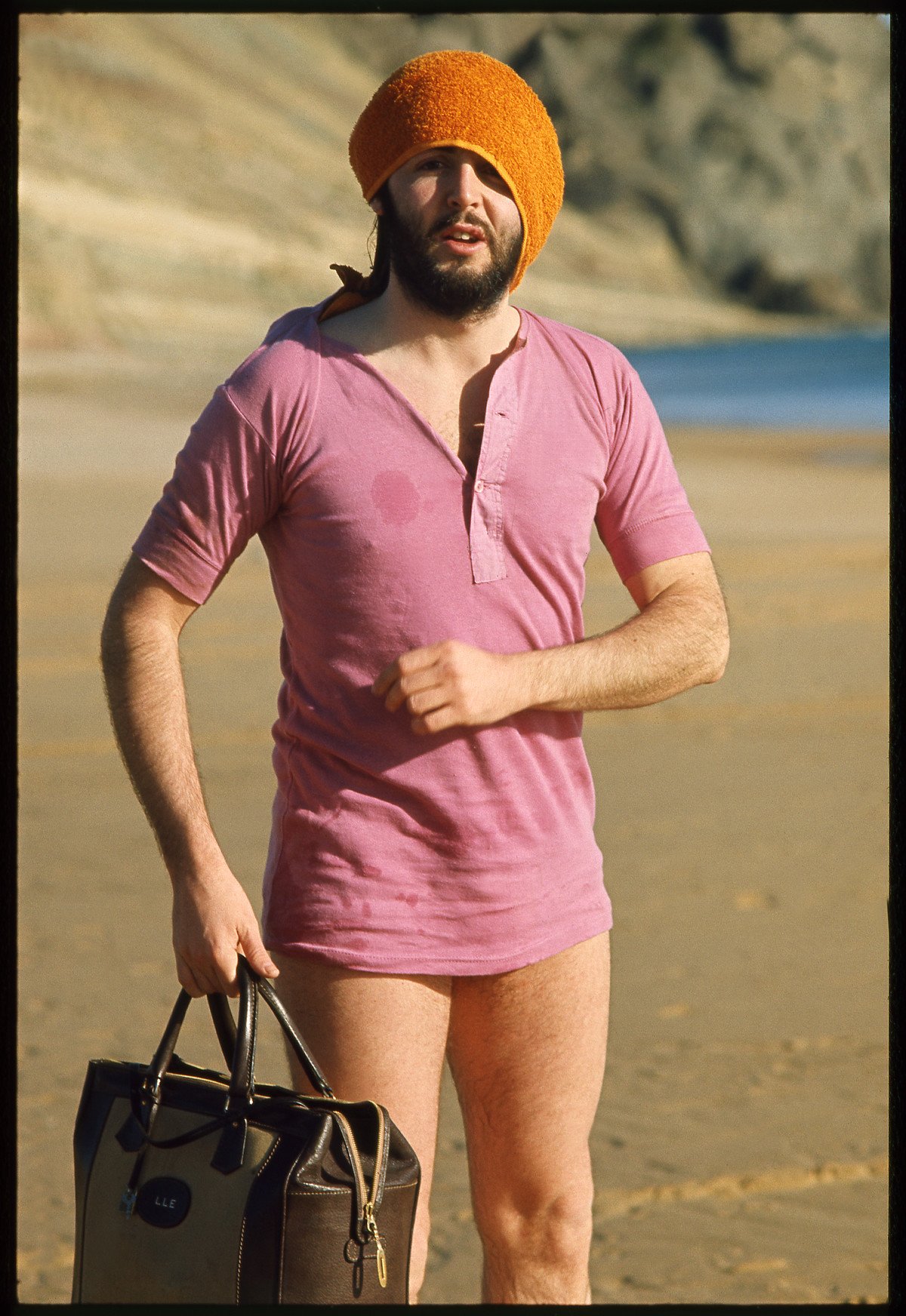
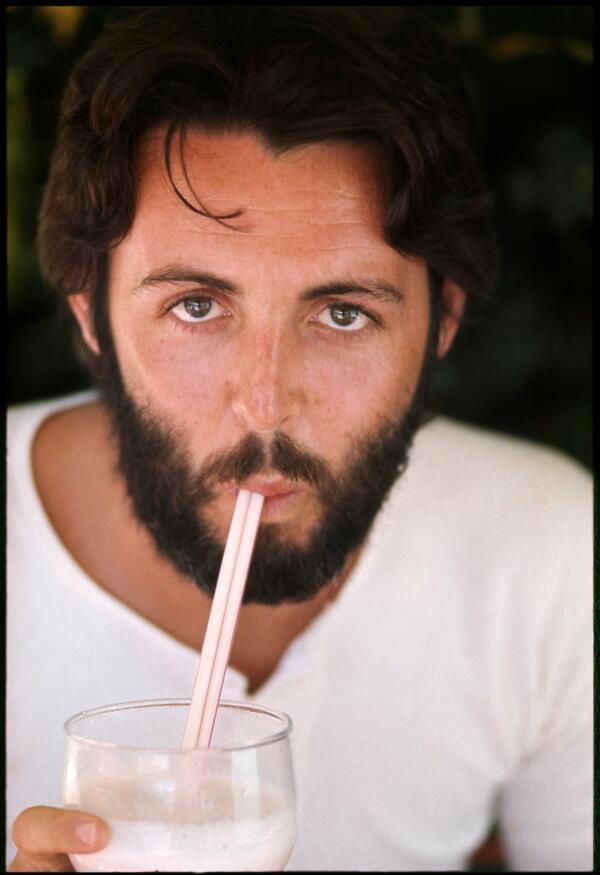
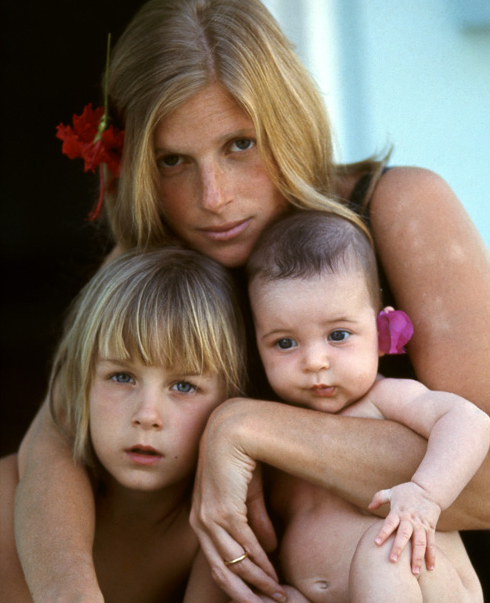
The original “McCartney” album was issued in a gatefold sleeve, despite being a single LP. Opening the gatefold reveals a collage of 21 candid family photographs taken by Linda McCartney between late 1968 and March 1970, in Portugal, Scotland, Antigua and London. The images depict the private life of the McCartney family, including Paul, Linda, Linda’s 7-year-old daughter Heather, baby Mary, and the family sheepdog Martha. Casual, home-life scenes from their farm and home reinforce the album’s DIY, intimate atmosphere – as if inviting the listener into Paul and Linda’s personal photo album.
Printed in full colour across the inner panels, the collage is the sole artwork inside the gatefold. One of these photographs would be reused decades later as the cover of Paul’s 1997 classical album “Standing Stone.”
On UK pressings, while the outer sleeve was laminated, the inner gatefold was generally printed on uncoated or lightly coated stock, giving a softer, more natural look to the images.
The LP was housed in a plain white paper inner sleeve in the UK (the standard EMI sleeve, with “Made in Great Britain” patent text at the bottom). No lyrics or graphics were included. In the US, Apple typically used a plain white sleeve as well, though some pressings came with a generic Apple Records advertising sleeve. The gatefold’s interior photo montage remained the central piece of inside artwork, serving as a warm visual counterpart to the album’s down-to-earth music.
The cover was worked out as we went along and the photos inside and out are Linda’s, all of them taken on our travels to Scotland, Portugal, Antigua, France, Greece, or Great Britain. […]
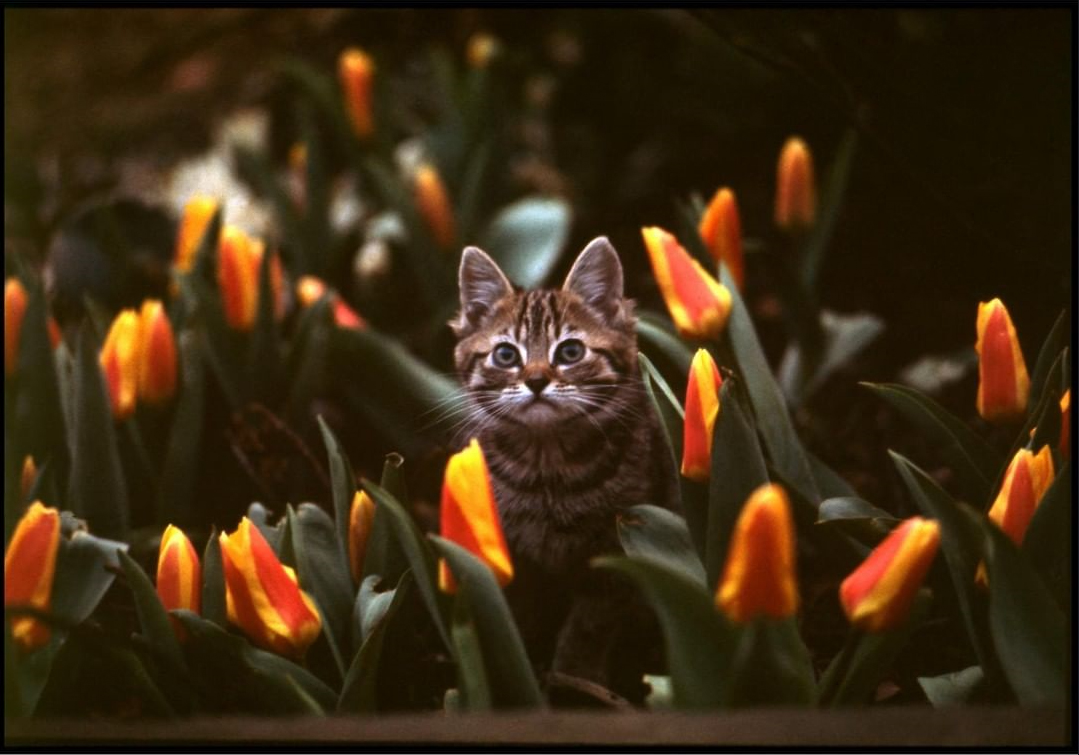
The various animals inside are Martha (our dog), a Portugese donkey, and Tiger, a kitten who died young. (There are also a couple of Scottish sheep.) The schoolchildren dressed like pixies are from the South of France.
Paul McCartney – From the “McCartney” press release, 1970



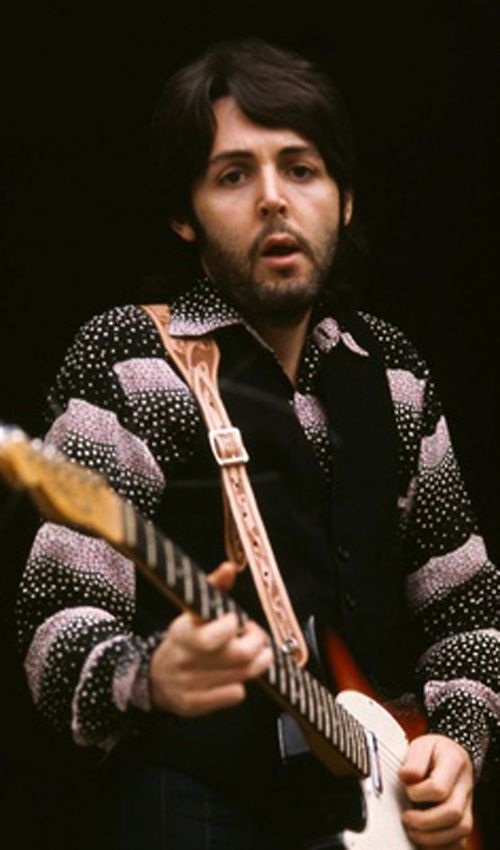
The McCartney Legacy: Volume 1: 1969 – 73

In this first of a groundbreaking multivolume set, THE MCCARTNEY LEGACY, VOL 1: 1969-73 captures the life of Paul McCartney in the years immediately following the dissolution of the Beatles, a period in which McCartney recreated himself as both a man and a musician. Informed by hundreds of interviews, extensive ground up research, and thousands of never-before-seen documents THE MCCARTNEY LEGACY, VOL 1 is an in depth, revealing exploration of McCartney’s creative and personal lives beyond the Beatles.
The Beatles Diary Volume 1: The Beatles Years
With greatly expanded text, this is the most revealing and frank personal 30-year chronicle of the group ever written. Insider Barry Miles covers the Beatles story from childhood to the break-up of the group.
The Beatles Diary Volume 2: After The Break-Up 1970-2001
An updated edition of the best-seller. The story of what happened to the band members, their families and friends after the 1970 break-up is brought right up to date. A fascinating and meticulous piece of Beatles scholarship.

Notice any inaccuracies on this page? Have additional insights or ideas for new content? Or just want to share your thoughts? We value your feedback! Please use the form below to get in touch with us.


