
Tuesday, April 14, 1970
Paul McCartney writes to Allen Klein about “The Long And Winding Road”
Last updated on August 22, 2025
Tuesday, April 14, 1970
Last updated on August 22, 2025
Article April 10 - End of April 1970 • Dispute over the release of "Let It Be"
Article Apr 10, 1970 • “Paul is quitting The Beatles” — UK newspapers break the story
Article Apr 14, 1970 • Paul McCartney writes to Allen Klein about "The Long And Winding Road"
Article Late April / early May 1970 • Paul McCartney complains about "McCartney" ads with mentions of ABKCO
Album Apr 17, 1970 • "McCartney" by Paul McCartney released in the UK

Officially appears on Let It Be (UK - 1st pressing with "Get Back" book)

The “McCartney” press kit is sent to UK press
Apr 09, 1970

Dispute over the release of “Let It Be”
April 10 - End of April 1970

Lee Eastman asks for The Beatles to be dissolved
Jun 15, 1970
John Eastman visits Paul and Linda in Scotland
July 11-20, 1970
In March 1970, tensions arose between Paul McCartney and the other Beatles over the release date of Paul’s first solo album, “McCartney“. The dispute was settled on April 2, when Ringo Starr phoned Paul to confirm that Apple had agreed to release the album on April 17, while postponing the release of the “Let It Be” soundtrack from late April to May 8, 1970.
Soon after, on April 10, another conflict emerged about the release of the “Let It Be” film. Within days, Paul shifted the dispute to the soundtrack album.
On April 1, 1970, Phil Spector had supervised the recording of orchestral and choral overdubs for three songs to be released on “Let It Be“: “Across The Universe,” “The Long And Winding Road,” and “I Me Mine.” Although Paul had briefly considered adding strings to “The Long And Winding Road” during the original January 1969 sessions, he was dismayed by Spector’s heavily orchestrated final mix.
On April 14, Paul wrote a letter to manager Allen Klein, requesting that the mix be altered to reduce the volume of the orchestration. Klein considered that there was either insufficient time to make changes before release, or simply declined to accommodate Paul’s wishes. To make matters worse, Klein chose “The Long And Winding Road” as the A-side of the single taken from the “Let It Be” album.
Paul’s relationship with Spector’s treatment of the song remained ambiguous. In 1984, he re-recorded “The Long And Winding Road” for the soundtrack of his film “Give My Regards to Broad Street,” featuring the London Philharmonic Orchestra and The London Community Gospel Choir, in a version that echoed the grand, orchestrated style.
In 2003, however, Paul spearheaded the “Let It Be… Naked” project, which presented a stripped-down version of the album. This edition included “The Long And Winding Road” in a more natural form, closer to the arrangement Paul had originally envisioned, free of Spector’s embellishments.
A few weeks ago, I was sent a remixed version of my song ‘The Long And Winding Road’ with harps, horns, an orchestra, and a women’s choir added. No one had asked me what I thought. I couldn’t believe it. I would never have female voices on a Beatles record. The record came with a note from Allen Klein saying he thought the changes were necessary. I don’t blame Phil Spector for doing it, but it just goes to show that it’s no good me sitting here thinking I’m in control because obviously I’m not. Anyway, I’ve sent Klein a letter asking for some things to be altered, but I haven’t received an answer yet.
Paul McCartney – Interview with the Evening Standard, April 21, 1970 – Recorded April 16.
Allen Klein decided – possibly having consulted the others, but certainly not me – that Let It Be would be re-produced for disc by Phil Spector.
So now we were getting a ‘re-producer’ instead of just a producer, and he added on all sorts of stuff – singing ladies on The Long And Winding Road – backing that I perhaps wouldn’t have put on. I mean, I don’t think it made it the worst record ever, but the fact that now people were putting stuff on our records that certainly one of us didn’t know about was wrong. I’m not sure whether the others knew about it. It was just, ‘Oh, get it finished up. Go on – do whatever you want.’ We were all getting fed up.
From “The Beatles Anthology” book, 2000
I sent a telegram to the effect that I did not understand his letter, and asking him to call me or Phil Spector direct. I added a postscript that Mr Starkey wanted his telephone number. The following day a message was relayed to me that the letter spoke for itself. By this time it was too late to do anything about altering the record, in view of the time required for its production before release.
Allen Klein – From “You Never Give Me Your Money: The Beatles After the Breakup” by Peter Doggett, 2010
Even at the beginning, Paul said, ‘Yes,’ and then he heard it. I spoke to him on the phone and said, ‘Do you like it?’ And he said, ‘Yeah, it’s okay.’ He didn’t put it down, and then, suddenly, he didn’t want it to go out. It was two weeks after that that he wanted to cancel it.
Ringo Starr – From “The Beatles: Off the Record” by Keith Badman, 2008
I only ever listened to the Let It Be album once. I never got into it, but I thought that it was great. I thought that all those ordinary tracks, the rocky ones, were all saved well. Just a bit fruity on ‘Let It Be’, but nothing to scream about… he was just having some fun, I think, because he’d had such a shitty job, with no help really. And ‘The Long And Winding Road. I think was … good.
John Lennon – From “Phil Spector: Out Of His Head” by Richard Williams, 2009
[Paul] took the Grammy for it, though. He went and picked the Grammy up [in 1971], for the album that he didn’t want out, supposedly that we used to ruin him artistically… what did he pick the Grammy up for? Silly. And in many respects it ended the Beatle Era really good, because ‘The Long and Winding Road’ is a good way for the Beatles to go out, you know what I mean? It all made sense… ‘The Long and Winding Road’ … it was sort of what they’d lived through. It was a typical Paul song, that’s the way I heard it and that’s the way I did it, and they gave me freedom to do what I wanted. As far as I’m concerned, George and John and Ringo have just as much say as Paul does, and Paul was asked a hundred times if he wanted to become more involved in it, and he said ‘No’. I think he just used it as an argument. I guess if I were his attorneys, I’d tell him the same thing: ‘Look what they’ve done, they’ve taken it out on your songs.’ It didn’t matter that he refused to work on it, and that the album never would have come out. A lot of people could say, ‘So what if it never came out?’ but in the end the Beatles said okay, they wanted the album out that way. They listened, and they could have said, ‘No, we don’t want our name on it.’ It’s their name. And I didn’t need all of what happened after that. … I mean, Time magazine called it The Spectre of The Beatles. It was a field day.
Phil Spector – From “Phil Spector: Out Of His Head” by Richard Williams, 2009
When Paul heard [the “Let It Be” album mixed by Phil Spector], particularly what he referred to as Spector’s sickly sweet version of “The Long and Winding Road,” he was furious. He rushed straight into Apple and berated Klein so loudly you could hear him throughout the building. “It’s not us anymore!” he shouted.
Klein’s rude comment was, “Your original material sucked. It was unusable. John thinks Phil is a genius and I agree with him.”
Tony Bramwell – From “Magical Mystery Tours: My Life with the Beatles“, 2014 – It’s dubious Paul ever went to Apple to discuss with Klein.
Dear Sir,
In future, no one will be allowed to add to or subtract from a recording of one of my songs without my permission.
I had considered orchestrating ‘The Long And Winding Road’ but I had decided against it. I, therefore, want it altered to these specifications:
1. Strings, horns, voices and all added noises to be reduced in volume.
2. Vocal and Beatle instrumentation to be brought up in volume.
3. Harp to be removed completely at the end of the song and original piano notes to be substituted.
4. Don’t ever do it again.Signed
Paul McCartney
c.c. Phil Spector
John Eastman

On January 26, 1969, during the “Get Back” sessions, Paul McCartney mentioned that he was considering adding strings to “The Long And Winding Road“:
George Martin: Paul’s thinking of having strings anyway.
George Harrison: Paul, are you gonna have strings?
Paul McCartney: Dunno
George Martin: George was saying that the piano and the electric piano tends to be doing the same thing.
Paul McCartney: Yeah.
George Harrison: Well, it’s like – There’s only parts where you can hear the electric piano properly, or the piano properly.
Paul McCartney: Yes.
George Harrison: Most of the time, you know, like, they mix together.
George Martin: Like your Leslie guitar contributes too. I mean, it is a bit in the same range as the electric piano with that vibrato on.
Paul McCartney: Yeah. I think it needs, like, a lot of, uh…
Ringo Starr: Cleaning.
Paul McCartney: Cleaning, yeah.
George Martin: Actually, the thing is, it’s a nice feel to it, but it’s rather like everything else we’ve done. And this particular song doesn’t need that. It needs something a little more clinical.
Paul McCartney: See, the only way I’ve ever heard it is, like, in my head, is, like, Ray Charles’s band. I haven’t really even listened to them.
George Harrison: It would be nice with some brass just doing the sustaining chord thing.
Paul McCartney: Yeah.
George Martin: It’s hardly Beatles mode… […]
Paul McCartney: We were planning to do it anyway for a couple of numbers, just to have a bit of brass and bit of strings.
From Peter Jackson’s film “The Beatles: Get Back“, 2021
The McCartney Legacy: Volume 1: 1969 – 73

In this first of a groundbreaking multivolume set, THE MCCARTNEY LEGACY, VOL 1: 1969-73 captures the life of Paul McCartney in the years immediately following the dissolution of the Beatles, a period in which McCartney recreated himself as both a man and a musician. Informed by hundreds of interviews, extensive ground up research, and thousands of never-before-seen documents THE MCCARTNEY LEGACY, VOL 1 is an in depth, revealing exploration of McCartney’s creative and personal lives beyond the Beatles.
The Beatles Diary Volume 1: The Beatles Years
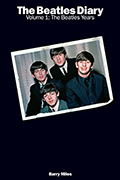
With greatly expanded text, this is the most revealing and frank personal 30-year chronicle of the group ever written. Insider Barry Miles covers the Beatles story from childhood to the break-up of the group.
The Beatles Diary Volume 2: After The Break-Up 1970-2001
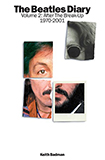
An updated edition of the best-seller. The story of what happened to the band members, their families and friends after the 1970 break-up is brought right up to date. A fascinating and meticulous piece of Beatles scholarship.
Maccazine - Volume 40, Issue 3 - RAM Part 1 - Timeline

This very special RAM special is the first in a series. This is a Timeline for 1970 – 1971 when McCartney started writing and planning RAM in the summer of 1970 and ending with the release of the first Wings album WILD LIFE in December 1971. [...] One thing I noted when exploring the material inside the deluxe RAM remaster is that the book contains many mistakes. A couple of dates are completely inaccurate and the story is far from complete. For this reason, I started to compile a Timeline for the 1970/1971 period filling the gaps and correcting the mistakes. The result is this Maccazine special. As the Timeline was way too long for one special, we decided to do a double issue (issue 3, 2012 and issue 1, 2013).

Notice any inaccuracies on this page? Have additional insights or ideas for new content? Or just want to share your thoughts? We value your feedback! Please use the form below to get in touch with us.

John Lapierre • Jan 31, 2023 • 3 years ago
The song will never be fully enjoyed with this in the back round. I want to know if I have ever heard the Paul version of winding road

P N Gwynn • Feb 22, 2023 • 3 years ago
This is one of those songs that hits me differently at different hearings. Sometimes I want to listen again immediately, another time I can't wait for it to finish. Sometimes it gets stuck in my head for hours or days.

Sean McNally • Apr 18, 2025 • 1 year ago
The "Paul Version" appears on Let it Be...Naked

The PaulMcCartney Project • Apr 21, 2025 • 1 year ago
Hi Sean, you're right, I should make a reference to it in the article - thanks !


