
Thursday, May 14, 2026
Interview for The Rest Is Entertainment
Interview for The Rest Is Entertainment podcast
Podcast • Interview of Paul McCartney
Last updated on May 24, 2026
Thursday, May 14, 2026
Podcast • Interview of Paul McCartney
Last updated on May 24, 2026
Interview location: EMI Studios, Studio Two, Abbey Road • London • UK
Previous interview Apr 10, 2026 • Keith Smith interview for paulmccartney.com
Album May 08, 2026 • "Home To Us" by Paul McCartney released globally
Article May 11, 2026 • A new Beatles experience announced for 2027 at 3 Savile Row
Interview May 14, 2026 • Paul McCartney interview for The Rest Is Entertainment
Article May 15, 2026 - ? • “Paul McCartney and Wings” exhibition at the Rock & Roll Hall of Fame
Interview May 15, 2026 • Paul McCartney interview for The Rest Is History
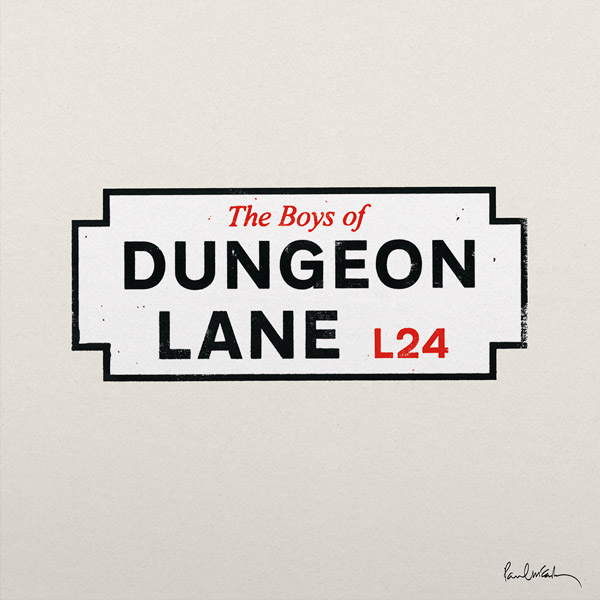
AlbumThis interview was made to promote the "The Boys Of Dungeon Lane" Official album.
This interview remains the property of the respective copyright owner, and no implication of ownership by us is intended or should be inferred. Any copyright owner who wants something removed should contact us and we will do so immediately.
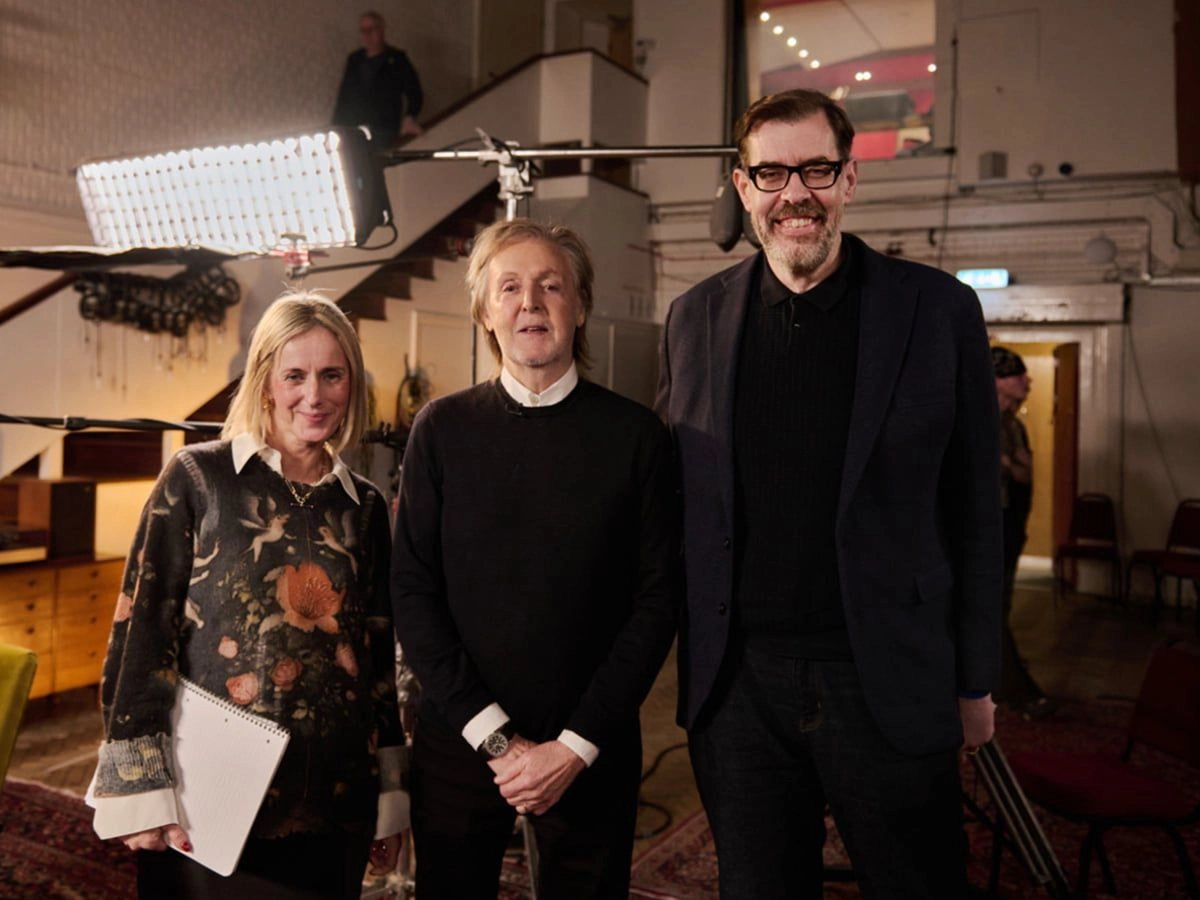
On May 5, 2026, Paul McCartney was interviewed by Richard Osman and Marina Hyde, co-hosts of the podcast “The Rest Is Entertainment”, as part of the promotional campaign for his forthcoming album “The Boys Of Dungeon Lane“. The interview was recorded at Abbey Road Studios, on the same day as a listening session for the album. It was broadcast on May 14.
Paul McCartney had also recorded a separate interview with the related podcast “The Rest Is History“, which was broadcast the following day, on May 15.
From Wikipedia:
The Rest Is Entertainment is a British podcast hosted by the television producer and author Richard Osman and the journalist and writer Marina Hyde.
It launched in November 2023 and is produced by Goalhanger Podcasts. Osman and Hyde generally discuss contemporary entertainment stories in the world of film, television, stage, books and other entertainment arenas. By June 2024 the show had reached 2 million monthly downloads.
Format
The podcast normally releases two episodes every week: a “main” episode and a “questions and answers” episode. The main episodes last around 30 to 50 minutes and involve Osman and Hyde discussing contemporary events and news stories, mostly from the United Kingdom. During the question time episodes they answer questions from listeners. The questions are not limited to topics formerly discussed on the podcast and include news stories not discussed on the main episodes as well as the hosts’ entertainment careers.
The episodes are also filmed and uploaded to YouTube. […]
Paul McCartney: I think a lot of this influencer stuff – I just don’t really get it, because I’m not that generation. But you can’t help seeing it. My wife will be looking at Instagram and showing me something, and then one of those will come on. I think it’s funny – and I suppose it always happened – but people who don’t seem to be particularly talented are incredibly famous. Billions of hits and views.” You’ve got to be careful about saying that, because it makes you sound very old-fashioned. Which I am. […]
Think about it. What were we doing when we started? We’re at school, you go to the careers master and he tells you you’re hopeless – there’s nothing out there for you. And then you get in a group and start to do well. What is it you’re looking for? Approval. Money. To get out of your circumstances and rise in the world. I don’t think there’s any point being shy about that. I think everyone knows. If you’re in a job, you want a promotion. If you’ve got a show on television, you want ratings. […]
People put it another way – they’ll say: ‘How have you stayed so normal, through the Beatles, Wings, all of it?’ And I think the truth is my family. I was very lucky – I came from a very loving family of very smart working-class people. And I always say to people: don’t underestimate the working class. I know there’s this idea of, ‘Oh, the plumber – what does he know?’ But from my family I know that, for instance, my cousin Bert compiled crosswords for the Guardian and for the Times. To do that, you have to be a pretty smart guy. And he was just one of us. So we had that kind of depth going on. […]
I think my shield against that is to try not to think about it too much. Because I often think – wait a minute, I’m looking for just one little success. Great. But then I’ve got a few. I got that song, and that song. If I really sat and thought about it – my head would explode. So I try to dampen it down and just think: yeah, that was okay. That was a good one. And I don’t really feel like him. He’s the famous one. I’m the guy who just has to go up and have breakfast. […]
The first time we came into this studio – Abbey Road – we were barely out of our teenage years, and we were writing songs directly to the fans. ‘Love Me Do’, ‘Please Please Me’, ‘From Me to You’, ‘She Loves You’ – it’s all ‘me’ or ‘you’, directly to the people listening. Then we started to evolve. So I kind of do know who those guys were: kids from Liverpool writing to the fans, first phase – then maturing a little and getting a bit more artistic. I think I do remember who I was. […]
I do think the character of Liverpool is a very strong one. I think with the Irish influence and then coming through the war, and having to be happy when bombs were falling, there was a lot of music when I was a kid. My dad played the piano at home. There were a lot of jokes. And so they kept their heads above water by laughing at the whole thing. And I think that was something that found its way into the Beatles. I think it gave us a good sense of humour – that no matter what we were going to do, like arrive in America and have the New York press ready to make fun of us, we gave as good as we got. And that was because of our Liverpool upbringing.
RICHARD OSMAN: Are there songs though that you have to play that you sometimes think, “Oh, I really rather not play that one today,” because of the amount of times you played some of the songs.
PAUL MCCARTNEY: I’m kind of lucky, because I don’t get that. And you’d think I would with “Hey Jude,” “Let It Be”….
RICHARD OSMAN: But then the audience sings all of that, don’t they?
PAUL MCCARTNEY: The thing is again, what is it you’re trying to achieve? If you’re going out to make — do a show, I know who’s in my audience, most of the time. And it’s kind of families. So it can be granddads sort of my age, or it can be their kids. Um, and then it could be their kids. So, it’s quite a spread. So, I think: Well, we could do songs they don’t know — have a lot of black holes*.
*[TRANSCRIBER NOTE: McCartney has referenced how when he plays a favorite in concert, everyone’s holding up their lit up cell phones (like how we all used to hold up cigarette lighters), and when they do an unknown song or unfavored one, there are just a bunch of black holes.]
PAUL MCCARTNEY: But they’ve paid a lot of money. And I remember as a kid, I used to go to shows, you know, and save up. Um, I went to a Bill Haley concert. There’s a name to conjure with. But I’d saved for months and done a paper round and done everything, you know, and I knew what I wanted. I wanted him to do his hits, and if he got all clever on me, I would’ve been like, “Okay.” I’d let him indulge himself.
In fact, talking about Mr. Dylan. Bob — I’ve been to see a couple of shows of Bob’s and you really — I couldn’t tell what the song was that he was doing. Now, that’s a bit much because, I mean, I know his stuff. And you know, I get it if he doesn’t want to do “Mr. Tambourine Man.” You know, maybe he’s fed up with that, but I would like to hear it. And I’ve paid.
MARINA HYDE: You could do a request. I’m sure he’d like to oblige. Did you ever go backstage and say, “Mmm you missed a couple there.”
RICHARD OSMAN: So, if you had to just have one word to describe yourself out of the two I’m about to give you because I get the feeling of — and they’re not mutually exclusive of course, but would you say you’re an entertainer or an artist?
PAUL MCCARTNEY: Ugh. I’d have to say an entertaining artist.
RICHARD OSMAN: Yes, entertainer first, but then yeah, you entertain by being an artist.
PAUL MCCARTNEY: I suppose. You know, um I’d like to think I was an artist, but then you do shows and you get these families and they’ve all paid to come in and they’re not necessarily all rich. So, I think, why wouldn’t I give them what they want? We put in a few songs that they don’t particularly like, but we enjoy playing those.
RICHARD OSMAN: The band just looking at each other going, “Yeah, this one.”
PAUL MCCARTNEY (exaggerated growl): “Yeah, we love this one.” Uh but you know I like — I mean particularly these days too, you do something like “Hey Jude” and you see this whole audience singing together. And in Trump’s America, and the Republicans and Democrats all at each other’s throats. When we do that song, they’re not. They’re all — they’re all loving it, and they’re all…. It’s like, wow, this is pretty amazing, you know, that suddenly this room has forgotten all of that, and it’s not, you know, going to argue with each other. We’re all just going to sing together. So those kind of things I think are valuable. I like that, and I also like it for them, I think.

Notice any inaccuracies on this page? Have additional insights or ideas for new content? Or just want to share your thoughts? We value your feedback! Please use the form below to get in touch with us.
