
Thursday, May 28, 2026
Interview for The New York Times
Paul McCartney Doesn’t Need to Make Music Anymore. He Just Loves To.
Press interview • Interview of Paul McCartney
Last updated on May 30, 2026
Thursday, May 28, 2026
Press interview • Interview of Paul McCartney
Last updated on May 30, 2026
Interview location: Boulevard Carroll • New York • USA
Interview May 27, 2026 • Paul McCartney interview for BBC News
Interview May 28, 2026 • Paul McCartney interview for Apple Music
Interview May 28, 2026 • Paul McCartney interview for The New York Times
Interview May 28, 2026 • Paul McCartney interview for Sunrise
Article May 29-31, 2026 • Record Stores organize release party for "The Boys Of Dungeon Lane"
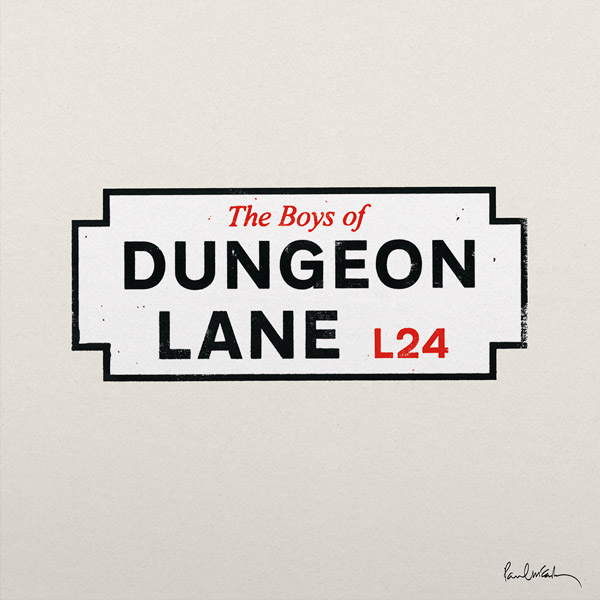
AlbumThis interview was made to promote the "The Boys Of Dungeon Lane" Official album.

Officially appears on Days We Left Behind

Officially appears on Unplugged (The Official Bootleg)

Officially appears on The Boys Of Dungeon Lane
Interview for The New York Times
January 1974 • From The New York Times
McCartney On Life In Fast Forward
Nov 11, 1990 • From The New York Times
Still Needing, Still Feeding the Muse at 64
Jun 03, 2007 • From The New York Times
Sir Paul on Fans, the Beatles and Himself
Aug 10, 2016 • From The New York Times
Paul McCartney Is Still Trying to Figure Out Love
Nov 29, 2020 • From The New York Times
The interview below has been reproduced from this page. This interview remains the property of the respective copyright owner, and no implication of ownership by us is intended or should be inferred. Any copyright owner who wants something removed should contact us and we will do so immediately.
Read interview on The New York Times
During a break in rehearsals for the Season 51 finale of Saturday Night Live, Paul McCartney gave an interview to the New York Times as part of the promotional campaign for his forthcoming album “The Boys Of Dungeon Lane“.
“People say, ‘Well, why do you still write songs?’ And it’s just because I love it. I’m addicted,”
he said in an interview at Boulevard Carroll, a warren of recording and rehearsal studios on Manhattan’s Far West Side, where McCartney, 83, had just wrapped up an afternoon of band practice for the season finale of “Saturday Night Live.”
“Out of a black hole comes forth milk and honey. And it’s so great, the feeling.”
Prolific as he has been — through the Beatles, Wings and solo albums — McCartney doesn’t follow any songwriting discipline or routine.
“I’ll just be somewhere, and with some time to spare, and my guitar will be there, or I’ll be near a piano. And the urge will take me,” he said. “Whenever I’ve hit something, it’s just like, ooh, wow. It’s a great feeling. You know, the whole creative thing is a great thing. I say it beats working.”
Even for a rehearsal, McCartney was nattily dressed. […] A few days afterward, McCartney would perform on “S.N.L.,” playing old and new songs, including “Days We Left Behind” from his new album, “The Boys of Dungeon Lane.” […]
In person, McCartney carries his six decades of fame with extraordinary grace. He’s genial and unpretentious, proud but not arrogant and still amazed and delighted at his life as a musician.
“I wonder these days at how I ended up as a songwriter,” he mused. “Because, you know, I’m just some kid who went to school, went to the careers master who said to me, you know, ‘You haven’t got qualifications and, there’s not … I don’t see a great future for you.’ So I had to take that and just sort of think, ‘Sod you — I’m gonna do something.’ And it made me work for success harder, because I wasn’t supposed to be successful. So writing songs was one of the great things about my growing up.”
The first song he wrote was a rockabilly-flavored tune, “I Lost My Little Girl.” McCartney recalled,
“Someone pointed out to me later, ‘That was about you losing your mum.’ I wrote it at about 14, 15 years old, and she had died quite recently.”
Although the Beatles didn’t record the song, McCartney would later unveil it in the 1970s with Wings.
“This is an interesting thing about songs,” he said. “Without knowing it, you’re delving into stuff that maybe would be difficult to talk about.”
[…] McCartney made [“The Boys of Dungeon Lane”] with Andrew Watt, a Grammy-winning producer who has recorded with the Rolling Stones, Miley Cyrus, Lady Gaga, Iggy Pop and Pearl Jam.
“It’s incredible to watch Paul work,” Watt said in a phone interview. “You talk about your 10,000 hours — he’s got a million hours of making records and recording. So his ability to understand microphones and how to arrange, how to write, how to play every single instrument is just incredible. And he has so much fun when he plays. He’s bouncing around the room, bouncing between each instrument, dancing, laughing. It’s a really joyous experience working with him.”
Chad Smith, the Red Hot Chili Peppers drummer who was a late fill-in for the “S.N.L.” performance, was similarly effusive.
“I don’t have enough adjectives to tell you how incredible it was,” Smith said in a telephone interview. “He kept saying, ‘Just make it fun.’ You know, he doesn’t have to play any more if he didn’t want to, and he doesn’t have to make records. It is so inspiring to see the energy. He truly loves it.”
For McCartney, collaborating with Watt opened up memories.
“When you’re working with a younger producer, it encourages me to unpack all my stories,” McCartney said. “Mainly the Beatles, because that was the first thing when we were kids. And those kinds of memories, I think for most people, are the most precious.”
[…] Dungeon Lane, which is mentioned in “Days We Left Behind,” is a road in Liverpool that leads to the shore of the Mersey River, where McCartney enjoyed bird-watching. It was also where local toughs lurked, and one day robbed him of his watch.
“When you write things, you write something and it becomes a metaphor for more than you’re putting down,” he said, and quoted the song’s lyrics. “‘Some of them will feel the pain, but some were meant for more.’ ‘Some were meant for more’ is us — the guys who got out.”
However, he continued, “I know loads of boys of Dungeon Lane who didn’t make it. You know, a lot of my friends are the ones who didn’t make a great success of careers.”
The song also mentions 20 Forthlin Road in Liverpool, the house — now a property of Britain’s National Trust — where McCartney and Lennon began their writing partnership.
“We nearly always sat together on two acoustic guitars and just threw ideas at each other and bounced off each other,” McCartney said. “Looking back on it, I couldn’t have looked for a better partner.”
He added, “John had a much harder edge, which I liked a lot. When we were working together, it was very inspiring, very useful to have that kind of edge. And I think possibly it was good for him to have something less hard, something maybe a little bit more romantic. It’s just my way, you know. I’m that kind of person. I like certain things that some people might just sniff at and say, ‘Oh my God, that is so corny.’”
But at times, he has also felt misunderstood. “It’s funny how you get stereotyped,” he said. “Being called the cute one in the Beatles — that was like the worst insult you could give me. I really didn’t like that. It’s like, ‘No, no no, I’m more than that.’ But it also is true that if I’m writing a song, I do like it to have that sort of loving element. But to offset that, I often find that something a bit more realistic creeps in. I like the mix of the two.”
[…] [Paul] still uses the vintage gear. One new track, “We Two” — a fond song about love, partnership and mutual support and respect — was entirely recorded to tape on the Studer. Current computer technology offers an infinite number of tracks that can be tweaked at any time. But when making “Sgt. Pepper,” the Beatles had to mix down multiple instruments into one unchangeable track, again and again. “We really used the process that he used in the Beatles, like 100 percent,” Watt said — down to a final edit cutting the tape with a razor blade.
“We Two” ends with the sound of a tape rewinding — a vanished sound in the digital era.
“We just stuck that on because no one hears that,” McCartney said. “You used to hear it, every record you ever made.”
When McCartney began writing with Lennon, they had no way to record songs in progress. But they reasoned, “If you can’t remember it, how do you expect people to remember it?” McCartney said. “So we let that be our rule.”
Now, of course, he can capture musical ideas on a cellphone. He pulled out his iPhone and scrolled through All Recordings, dozens of pages of possibilities. “‘L.A. Melody,’ what was this?” he said, as stately piano chords came out of the tiny speaker.
He played another: a lurching Mellotron loop with reverb-laden guitar chords and the beginnings of a lyric. It was one of what he called his “green songs” — which may one day populate an album.
“When we were doing the album we separated things into three categories,” he said. “One were the red songs, and these were songs that we were going to use, and those are pretty much the ones that made the album. Then the blue songs, which are ones that could have made the album, but just got pushed aside. And then there’s the green ones, and that is these ones that are experimental. I’ve got complete freedom, and I end up really liking those songs.”
McCartney is no longer concerned with making hits.
“In attempting to be creative, it’s good if a lot of people like it,” he said. “But it’s not the be-all and end-all. It’s nowhere near as important to me as it is to some people. I like freedom. And if the freedom leads to a hit, great. If the freedom leads to just me enjoying it, probably even greater.”
What matters for him now is simply making music.
“It’s a magical world, music,” McCartney said. “Scientifically, even, it is just a bunch of frequencies. So how can these frequencies affect your heart? I get it, if it’s got a lyric, sometimes you go, oh yeah. But if it’s just a melody — how can that make you cry? That’s magic. I love it.”
As the interview ended, McCartney stood in the doorway, watching as two studio employees bustled in opposite directions. He smiled. “Hello goodbye,” he said.

Notice any inaccuracies on this page? Have additional insights or ideas for new content? Or just want to share your thoughts? We value your feedback! Please use the form below to get in touch with us.