
Wednesday, May 27, 2026
Interview for The Interview
Paul McCartney on playing guitar with Paul Mescal: 'He knew it better than I did!'
Press interview • Interview of Paul McCartney
Last updated on June 24, 2026
Wednesday, May 27, 2026
Press interview • Interview of Paul McCartney
Last updated on June 24, 2026
Interview location: MPL Communications, 1 Soho Square • London • UK
Interview May 25, 2026 • Paul McCartney interview for BBC Radio 2
Interview May 27, 2026 • Paul McCartney interview for TikTok
Interview May 27, 2026 • Paul McCartney interview for BBC News
Interview May 28, 2026 • Paul McCartney interview for Apple Music
Interview May 28, 2026 • Paul McCartney interview for The New York Times
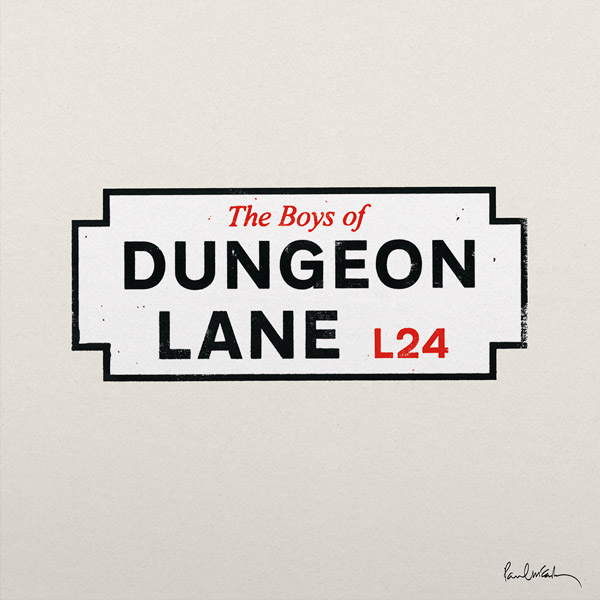
AlbumThis interview was made to promote the "The Boys Of Dungeon Lane" Official album.

Officially appears on The Boys Of Dungeon Lane

Officially appears on The Beatles (Mono)
Officially appears on The Boys Of Dungeon Lane

Officially appears on Hello, Goodbye / I Am The Walrus (UK version)
Officially appears on The Boys Of Dungeon Lane

Officially appears on Sgt. Pepper's Lonely Hearts Club Band (UK Mono)
The interview below has been reproduced from this page. This interview remains the property of the respective copyright owner, and no implication of ownership by us is intended or should be inferred. Any copyright owner who wants something removed should contact us and we will do so immediately.
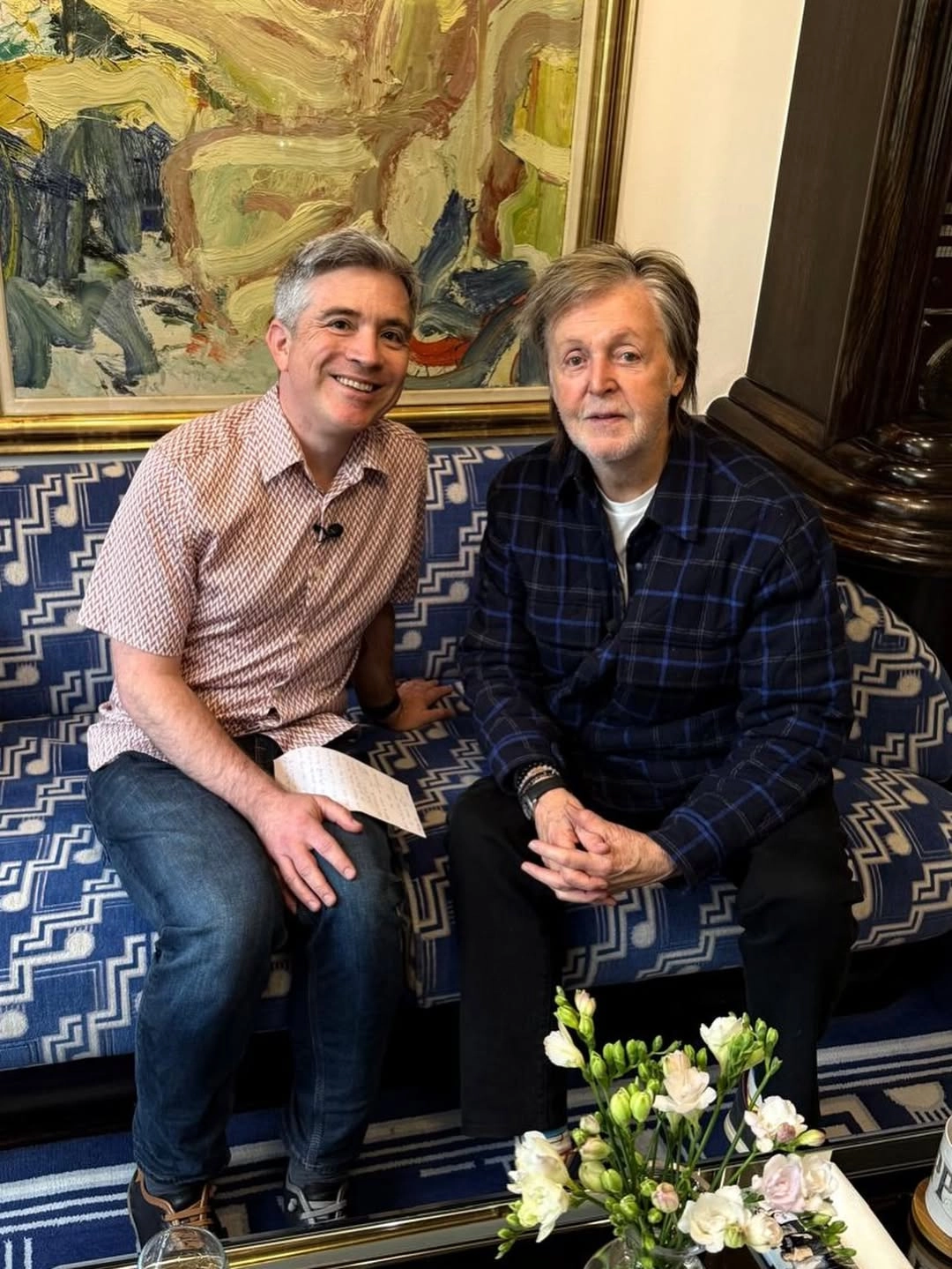
As part of the promotional campaign for his forthcoming album “The Boys Of Dungeon Lane“, Paul McCartney was interviewed by BBC music correspondent Mark Savage. An article based on the interview was published on the BBC News website, while a longer version was released as an episode of the BBC World Service podcast “The Interview”.
You’re listening to The Interview, from the BBC World Service. I’ve met Paul McCartney a couple of times over the course of my career, and one thing that always strikes me is his ability to put people at ease. He knows how overwhelming it can be to meet a Beatle — the man that wrote She Loves You and Penny Lane and Let It Be — so he has a way of disarming all of the tension in the room. On this occasion, he walked straight over to me and gripped my hand and said, “Oh, I know you.” And instantly it was like we were picking up a conversation that we’d started six years ago, when I interviewed him for a previous album. But even with the ice broken, there are moments when he picks up a guitar and strums it where your brain is just going, “This is Paul McCartney.” But you’re also aware that you’re there to do a job — that you have to try and get some insight into the man who’s been the soundtrack to our lives for seven decades. And hopefully, over the course of this conversation, you do get a little glimpse of McCartney’s inner life. Okay — let’s return to my conversation with Paul McCartney.
Mark Savage – From BBC Audio | The Interview | Paul McCartney, musician: I often think about the past, June 12, 2026
“Hey, I know you!” exclaims Paul McCartney, gripping my hand as we walk into his office in central London.
I’m instantly disarmed. All my nerves evaporate. And while I’m realistic enough to know he doesn’t really hold treasured memories of our previous encounters, I’m impressed by his ability to defuse the tension of Meeting A Beatle.
We gather in Soho at lunchtime. Instead of Wild Honey Pie or Savoy Truffle, McCartney has opted for a simple bagel (topping: a terrifying blend of Marmite and hummus), which he prepared in a kitchenette next to his assistant’s desk. As he eats, he scans a printed list of film titles – mainly vintage comedies – looking for something to play at his family movie night.
“It’s hard to find something I haven’t seen,” he laments.
Lunch finished, we settle next to a Wurlitzer jukebox in the corner of the room. McCartney places his phone face down on the table – revealing a case printed with a colourful holiday photo.
“Is that the family?” I ask.
“Yeah, that’s my grandkids. Four of Stella’s and four of Mary’s. They’re all very bright,” he beams, pointing to each one in turn and listing their Ivy League achievements. “Yale, Brown, Brown, NYU, Yale again.“
“Are you an indulgent granddad?”
“Yeppp!” he confirms. “They’re very lovely. I love them.” […]
MARK: I’ll start with the really hard questions.
PAUL: Oh, good.
MARK: I heard this album began over a cup of tea. How do you take your tea?
PAUL: It was a green tea, actually. I was in LA, so I thought, well, they’re not going to be able to make a sort of good builders’. So I said, yeah — do you have any green tea? And Andrew Watt, who’s the producer I was coming to see, is very resourceful. So: “You want a green tea? You got it.” And if he can’t get it, he knows someone who can. So, yeah, it was a green tea.
MARK: And you start off — like, instantly the first track on the album comes to you – “As you lie there.”
PAUL: Yeah, we were just talking. And I said to him — you know, we were talking about how you write songs, because he writes songs as well. I said, well, sometimes one of my recent tricks is to… find any weird chord — just one that I don’t even know what it is. And then that may intrigue me, and I go, oh, well, maybe that could go there, and there. So I picked up the guitar — which he very resourcefully had a left-handed acoustic ready for me.
MARK: He knew you were coming.
PAUL: He did. He saw me coming. So anyway, I just went [plays]. I said, that’s a weird chord. And then, because I was talking about it — starting something — I changed the top note, that note, put it there. I’d made a kind of more reasonable chord, and then… so we had a three-chord sequence. And so that started the whole thing. He joined in on his guitar.
MARK: And that’s the seed of the album. But how great that, you know — after all the songs you’ve written, you can still surprise yourself with a new chord, or the instrument you’ve played for 60 years.
PAUL: Yeah. No, I think that’s why I thought, let’s just do anything weird, kind of thing. But I got lucky, because I don’t know what that chord is. Somebody classically trained will be able to tell me it’s a “G demented.” But yeah, so that’s a trick I sometimes do on the piano, just… And it’s interesting, and you can follow it from there. It just gets you going.
MARK: And when people hear it, I guess they’re going to be hit by the fact it’s quite nostalgic.
PAUL: Yeah, I think that’s going to be a little bit of a sort of misunderstanding. Because there are quite a few nostalgic things on it, but there are also a few that aren’t — “Ripples on the Pond,” “Lost Horizon.” It’s probably about half and half. But those are the ones that I’ve been talking about — the nostalgic ones — because they’re interesting stories, and I like to have memories. I like to go over memories, because it brings me back to the time, it brings me back to the people. So I think it’s a great way to visit your past — you know, just remembering. It’s just like sitting around talking to people. My old Uncle Jack — now Nancy, my wife, if we’re at a dinner party with guests and stuff, she will stop me the minute I get to Uncle Jack. She’s, “No, no — Uncle Jack.”
MARK: What did Uncle Jack do?
PAUL: He was great. He was a great kind of tall guy — he’s going to get a raspy voice — and he used to tell jokes. He was like the joke teller in the family. So I’m getting round to him, she knows I’m going deep, and she says, “Maybe — no, let me just stick to sort of what you’re doing now, Paul.”
MARK: But it’s interesting, because obviously there’s a great oral tradition in your family. Your dad told a lot of stories, and I’ve heard you say he had a very colourful turn of phrase. Do you think that has influenced your lyrics as a writer?
PAUL: Yeah, I think so. He loved words. He loved to do crosswords. And he would be very keen for me to know certain words that you wouldn’t otherwise have known. So I was the only kid in the class who could spell “phlegm.”
MARK: Right.
PAUL: And what he used to do — which I think is a really good trick — was he would sound it out, so that it became “pe-he-leg-em.” So I knew it was P-H-L-E-G-M. And now your listeners know.
MARK: Yeah.
PAUL: But that was the kind of guy he was. He loved words. And so I think I picked up a lot of words. And picked up that — and my cousin Bert. Again, Nancy would probably have stopped me — “No, no Jack, or no Bert.” But I loved my cousin Bert. And he used to compile crosswords for the Guardian, Daily Mail. For one of them, he was “Mr. Thursday.” But he was really good — it’s not anyone can do that.
MARK: And can you complete a crossword?
PAUL: I have got out of the habit. I used to do a lot, yeah.
MARK: You must have been a crossword clue at some point as well.
PAUL: Yeah, I think that’s true, yeah. Now, my dad would say, you know, you’d sound out a word and so on — it’s this and that, you look for this and that. So I became very keen on that. And cousin Bert was so good that he used to go on cruises as the crossword guy. And in fact, Linda took a photo of him to put outside the room — the cabin — where he would invite people in, and he would talk to you about crosswords.
MARK: Yeah, I think it’s all-consuming, isn’t it? Once you get into that world, particularly with cryptic crosswords.
PAUL: Yeah, and it was all that. But — so there was a lot of that in my family. So I got a lot of it from that.
MARK: Yeah. Well, tell me about Liverpool, and growing up in the 1950s. Like, you sing about what it was like — you know, to go down to the shores and birdwatch — but also the kind of deprivation that was there, because this is post-war, and the city is experiencing a boom, but it’s also rebuilding itself. What are your memories of that time?
PAUL: They were pretty good, actually. I think because the war had ended, all my uncles and aunties and my parents were so relieved that Hitler wasn’t sending these bombers anymore. And my dad had been a fireman, so he was putting out the incendiary bombs. You didn’t talk much about it — you heard just the odd thing. But then, once that had finished, it was piano, it was music, it was jokes. And that was really good. So it didn’t matter that you weren’t that well off. It was okay — they made it okay. And they visited a lot — uncles and aunties would come to visit, we’d go and visit them. That was basically the social thing that happened. But I found it fascinating, just hearing them just talk about ordinary things. I mean, one thing just goes to mind now — one of them sort of saying to the other, “Do you have a pension with your job? Have you got a pension?” “Oh, yeah.” That was, like — that was really something very special.
MARK: And brand new, I imagine.
PAUL: Probably.
MARK: “Do you have a pension?”
PAUL: I managed to scrape one together now. It’s funny — my grandson was at college, and he was doing a thesis. And we’d been talking so much about Liverpool and all my old family — his family, you know, when it goes back. And he was fascinated to hear the story of post-war Liverpool. He said he was going to make it his thesis. And because it was his thesis, he researched it very well — more than I would have ever done. So it turns out that two key things happened when we were kids — all of us in the Beatles, and all the kids in Liverpool. Transport — that was the Transport Act. So we had buses to everywhere. Literally, there wasn’t anywhere you couldn’t get to. So you think about it — that’s pretty amazing.
MARK: It opens the world up.
PAUL: Yeah. And for people who don’t have that much money — I could just hop on a bus, change at Penny Lane, go up, see John. So it opened up the world — the city, in our case. And the other thing was the Education Act. So it meant, to kids like me — my parents couldn’t afford it, to go to a posh school, or, you know, a good school — suddenly you could get a scholarship. The 11-plus, it was. And so there’s people like Alan Bennett — you know, I read some of Alan’s stuff and it’s very similar to my upbringing. His is just more “eee, lad,” or “aye, lad,” you know, whereas mine’s Liverpool kind of thing. But a lot of the stories, a lot of the people he writes about and talks about, are very similar. So it was okay. It was good growing up, really.
MARK: There’s a song on the album called “Down South,” about hitchhiking away from Chester.
PAUL: Yeah, it just happened that Chester was the place where all the lorries loaded up. And I’d found that out from somewhere — I’m not sure how — but someone had said, yeah, you know, Chester’s the best place if you want a lift. So we’d go over there, take the ferry across the Mersey, and hitch a ride. We got some great rides, because often these guys were going down to maybe Birmingham or somewhere, you know. So you got some long-haul things. And George and I had a couple of great hitchhiking trips. One was down to Harlech, in North Wales, and the other one was down to Exeter — “Down South.” And we just had loads of experiences, you know. You didn’t have an awful lot of money, but you had just enough to buy a tin of Ambrosia creamed rice. And you could have that on your little Bunsen burner, on your little camp stove. The point about all that, though, is that it bonds you.
MARK: Yes.
PAUL: If you’re doing that with a mate, you’ve got all these stories, and you understand each other very well. “Oh my God, where are we going to sleep tonight?” “I don’t know — let’s knock on this door.” “Do you know of any bed and breakfasts?” It also makes you not shy. It kind of gives you a little bit of sort of outgoingness. So we did that, and I did it with John later. He’d just had an incredible birthday — 21st birthday gift, from his uncle in Scotland, who to us was rich, because he was a dentist. And he sent John 100 pounds. Which, to this day, I say — that’s not a bad birthday present.
MARK: It’s not. And in the ’60s, that’s a lot of money, right?
PAUL: Yeah, that’s what I mean. So it was a fortune — 100 pounds. So we hatched this plan to hitch — that we would go down south, take the ferry, go down to Spain. We were going to go to Spain with this 100 pounds. We got as far as Paris. We liked Paris a lot… so we stayed there and spent it all in Paris.
MARK: And these aren’t musical trips. You’re just hanging out — you’re friends.
PAUL: Yeah. Well, they kind of were musical, because we always took our guitars. So we were hitching at the side of the road. And I think we decided that you need a gimmick. So our gimmick was bowler hats — for me and John — in leather jackets, bowler hat and a guitar each slung over the shoulder. And yeah, so we got quite a few lifts, and we got as far as Paris, as I’m saying. Again, though, it was a really bonding thing. So when I came to write with him, we had all these experiences, and we talked about things, found out about each other, as you do on those kind of trips. I found out that he loved Jabberwocky — Lewis Carroll — and I did too. I was just singing it this morning, actually — I saw it in Poetry Please, the BBC programme. And it reminded me that my German teacher in school — in the Liverpool Institute High School for Boys — he could do Jabberwocky in Latin.
MARK: What?
PAUL: “What” is right. Why bother? Why would you want to show off? That’s what he did. So I was looking through everything — how could he? Because it’s all strange words. The other thing I discovered is — I thought that maybe that word John got, “goo goo g’joob,” is from “jubjub” — the jubjub bird. So it was that kind of language, that kind of humour, that kind of stuff that we realized we both loved. It helped with our bond of friendship. And when we came to write some of the more kind of surrealistic things later on — like Lucy in the Sky with Diamonds, and I Am the Walrus, things like that — that’s what we were drawing from. Walrus — I Am the Walrus — that’s Lewis Carroll.
MARK: Yes, exactly. I wanted to ask about “Lost Horizon,” because that’s a song that you’d forgotten you had, and that came out of the archives. How many of those are there?
PAUL: I don’t know — hopefully there’s no more. But I had this lovely engineer, and he was arranging the tapes — from cassette tapes to then the latest thing, which was DAT, D-A-T things. And that came and went quite quickly. But that was his job at that time — to put these onto a more reliable medium.
MARK: Archive, yeah.
PAUL: Yeah. And so we were in the studio, and he said, “Have you heard ‘Lost Horizon’? Do you remember that?” I said, “No, what’s that?” He said, “Well, it’s one of your songs” — because he’s looking through, on the cassette. He said, “And I like it.” We played it, and there it was — it was very complete. Sometimes, if you’re working to a cassette, you’ll have half the lyrics, a little suggestion for the chorus maybe there. But there it was — complete. So I thanked him. And for this album — the new album — we really copied exactly what was on that cassette.
MARK: Same arrangement.
PAUL: Same arrangement, same lyrics, same melody, same everything. I just added a little bit of electric guitar to it. But that’s pretty much what he discovered. So — thank you, Eddie.
MARK: But there must be — like you said, you hope there’s not that many of those songs, but I imagine there are tapes, and hours and hours of material. What are your plans for what happens to that, you know — 50 years from now, 100 years from now? Have you thought about that?
PAUL: Yeah, you know, you do think about it. John and I used to really think about outtakes. We used to say we should just delete them all. But in actual fact, it’s kind of a good thing we didn’t, because they’re now still being released. We thought they were bad at the time, but they’re quite good.
MARK: And they’re good to learn from — like, you hear the creative process in action.
PAUL: Yeah. A lot of people, when they saw the Get Back film — Peter Jackson’s film — said that to me. That was the thing that they thought was the best thing: as Americans said, they saw the process. Yeah, it was great to go back to that. I had a strange view of the period, because it was business hell, and it was a lot. And I was blamed for a lot of things. I was blamed for the breakup of the Beatles, and I had to sort of shoulder all of that stuff, even though I knew it wasn’t true. It’s like, you know, the headline on the front of a paper — “Paul breaks up the Beatles.” And then, you know, the denial is — once, later on, page 14.
MARK: Yes.
PAUL: So I went through a lot of that. But when I saw the film, I thought, “Oh no, I’m not like that at all. I’m trying to make a record. I’m trying to encourage these guys to be as great as they are.” It took a weight off my mind.
MARK: Well, isn’t it funny, though, how the press coverage kind of changed your own memories of the events?
PAUL: Yeah, it changed my attitude to me. I thought, “Okay, I’m overbearing — I can be like that.” But I remember one day in the studio, doing something, and I’m sort of saying, “We should do this,” or “Why— what— how about that? We could do that. How about this idea?” And someone sort of said, “Oh yeah, all right, all right” — you know, “Back off.” So I took that to mean, “Don’t ever suggest an idea ever again.” So I stopped, for about a week. And then one of the guys come up and said, “Come on — come on, what are you doing? You normally got suggestions.” I said, “Well, you told me to stop.” But that sort of stuff does affect you, I think. You have to bulldoze through it. I mean, I’m quite sort of brave, and sort of think, no, I’m all right.
MARK: And that takes us back to where we started. You know, you have to go into every project with a fresh sheet of paper. You can’t think about the past. You’ve got to live in the moment. And you actually sing that on the album?
PAUL: That’s right. Well, it’s “Lost Horizon” — there’s that in the lyric, yeah. Which I think is very true, you know. And so I do live here now, but I often think about the past. But then again, I think a lot of people do. So — writers, what are they going to draw on? Well, you know — the past, often. So, you know, Charles Dickens — he’s not going to write about, you know, “I got in a carriage this morning and went and got a bun.” He’s going to write about — oh, he won’t say it, but — his father being in jail for debt. He’s going to write that as a character. And so we’re all drawing on— I’m not likening myself to Charles, but — we’re all drawing on that. Like I mentioned Alan Bennett — he’s always, often, drawing on that. Even if it’s contemporary, it’s coloured by the past. And I love that. I think it’s a great thing. There’s so much rich material in the past — so many memories — that if you’re looking for something to talk about or write about, it’s a rich source.
MARK: And it’s instantly authentic, which is the key.
PAUL: That’s true.
MARK: There’s a big film coming out, not long from now — four films, in fact. Paul Mescal is playing you. He’s going to do all his own singing. What tips have you given him to recreate the Paul McCartney voice?
PAUL: None.
MARK: None?
PAUL: None. He’s a really good actor. I mean, he came into this office where we’re recording — I’d not met him, so I thought it’d be good to meet him, you know, if he’s going to play me and everything. So he came in. Now, the thing about Paul — he’s got to learn guitar left-handed, which he isn’t; he’s right-handed. So I thought, “Okay, poor guy, I’ll help him out.” So I pick up this guitar, and I think, “I’ll do Blackbird — show him that left-handed.” So I start playing the song Blackbird.
MARK: A nice, easy one to start with. [Laugh]
PAUL: Well, I was going to show him it — I was going to teach him it. I thought… and he plays along exactly. You think about it, you know — that’s what actors do. They study for parts. And in his case, the musical side, he’s got a guitar tutor with the film, as they all have. You know, there’s a drum tutor for Ringo. So, yeah, it was amazing how studied — and how well-educated — he was about me. So, yeah, I thought, “Oh, well, okay, I’ll leave you to it. If I’m going to show you Blackbird, but you already know it better than me — go, play me.”
MARK: Bring him out on tour, and you can have a rest.
PAUL: Yeah, that’s a great idea. Not.

Notice any inaccuracies on this page? Have additional insights or ideas for new content? Or just want to share your thoughts? We value your feedback! Please use the form below to get in touch with us.