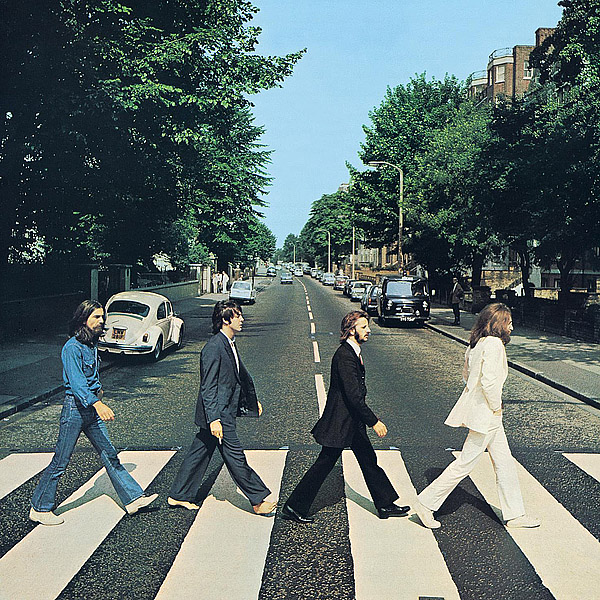

Feb 22 - Aug 25, 1969 • Songs recorded during this session appear on Abbey Road
Recording studio: EMI Studios, Studio Two, Abbey Road • London • UK
Session Jul 04, 1969 • Recording "Golden Slumbers / Carry That Weight"
Article Jul 05, 1969 • Paul McCartney attends The Rolling Stones' concert in Hyde Park
Session Jul 07, 1969 • Recording "Here Comes The Sun"
Session Jul 08, 1969 • Recording and mixing "Here Comes The Sun"
AlbumSome of the songs worked on during this session were first released on the "Abbey Road" LP
On July 1, 1969, John Lennon was on holiday in Scotland when he was involved in a car accident along with his wife Yoko, his son Julian, and Yoko’s daughter, Kyoko. He was hospitalized on this day and would remain there until July 6, rejoining The Beatles’ sessions on July 9 — missing five days of work.
On this day, the three other Beatles recorded the backing track for a new George Harrison composition, “Here Comes The Sun“. The session began with George teaching the new song to Paul McCartney and Ringo Starr.
Once familiar with the arrangement, they recorded 13 takes of the backing track. George played acoustic guitar (on track three) and provided guide vocals (on track eight), Paul played bass (track one), and Ringo contributed drums (track two).
Take 9 was released in the “Abbey Road (50th anniversary boxset)” in 2019.
Take 13 — humorously announced as “take 12 and a half” to avoid the number 13 — was selected as the best. In the final hour of the session, George recorded an additional acoustic guitar part onto track four of the tape.
The session, which began at 2:30 pm, concluded at 11:45 pm. Work on “Here Comes The Sun” continued the following day.
[George] said, ‘Oh, I’ve got this song. It’s like seven-and-a-half time.’ ‘Yeah, so?’ You know, he might as well have talked to me in Arabic, you know what I mean?… I had to find some way that I could physically do it and do it every time so it came off on the time. That’s one of those Indian tricks. I had no way of going, ‘one, two, three, four, five, six, seven…’ It’s not in my brain. So as long as I go (demonstrates), ‘OK, that’s seven. Got it!’
Ringo Starr – From the “Living In The Material World” documentary – Quoted from beatlesebooks.com
The original tapes reveal a lighthearted atmosphere. When take one broke down, George exclaimed, sadly, “One of me best beginnings, that!” And at the end of take four, Ringo…called up to the control room “Turn me down a little bit, if you don’t mind” – meaning, reduce the level of the drum sound in his headphones.
From “The Complete Beatles Recording Sessions” by Mark Lewisohn, 1988
Written by George Harrison
Recording • Take 1
Written by George Harrison
Recording • Take 2
Written by George Harrison
Recording • Take 3
Written by George Harrison
Recording • Take 4
Written by George Harrison
Recording • Take 5
Written by George Harrison
Recording • Take 6
Written by George Harrison
Recording • Take 7
Written by George Harrison
Recording • Take 8
Written by George Harrison
Recording • Take 9
AlbumOfficially released on Abbey Road (50th anniversary boxset)
Written by George Harrison
Recording • Take 10
Written by George Harrison
Recording • Take 11
Written by George Harrison
Recording • Take 12
Written by George Harrison
Recording • Take 13
The Complete Beatles Recording Sessions • Mark Lewisohn
The definitive guide for every Beatles recording sessions from 1962 to 1970. We owe a lot to Mark Lewisohn for the creation of those session pages, but you really have to buy this book to get all the details - the number of takes for each song, who contributed what, a description of the context and how each session went, various photographies... And an introductory interview with Paul McCartney!
The Beatles Recording Reference Manual: Volume 5: Let It Be through Abbey Road (1969 - 1970)

The fifth and final book of this critically acclaimed series, "The Beatles Recording Reference Manual: Volume 5: Let It Be through Abbey Road (1969 - 1970)" follows The Beatles as they "get back to where they once belonged...". Not once, but twice. With "Let It Be", they attempted to recapture the spontaneity of their early years and recordings, while "Abbey Road" was a different kind of return - to the complexity, finish and polish that they had applied to their work beginning with "Revolver" and through to "The Beatles".
Solid State: The Story of "Abbey Road" and the End of the Beatles
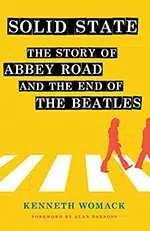
Acclaimed Beatles historian Kenneth Womack offers the most definitive account yet of the writing, recording, mixing, and reception of Abbey Road. In February 1969, the Beatles began working on what became their final album together. Abbey Road introduced a number of new techniques and technologies to the Beatles' sound, and included "Come Together," "Something," and "Here Comes the Sun," which all emerged as classics.
If we modestly consider the Paul McCartney Project to be the premier online resource for all things Paul McCartney, it is undeniable that The Beatles Bible stands as the definitive online site dedicated to the Beatles. While there is some overlap in content between the two sites, they differ significantly in their approach.

Notice any inaccuracies on this page? Have additional insights or ideas for new content? Or just want to share your thoughts? We value your feedback! Please use the form below to get in touch with us.


