Monday, August 11, 1969
Recording "I Want You (She's So Heavy)", "Oh! Darling", "Here Comes The Sun"
For The Beatles
Last updated on April 26, 2025
Monday, August 11, 1969
For The Beatles
Last updated on April 26, 2025

Feb 22 - Aug 25, 1969 • Songs recorded during this session appear on Abbey Road
Recording studio: EMI Studios, Studio Three, Abbey Road • London • UK
Session Aug 08, 1969 • Recording "The End", "I Want You (She's So Heavy)", "Oh! Darling"
Article August 9-10, 1969 • Members of the Manson Family kill five, including actress Sharon Tate
Session Aug 11, 1969 • Recording "I Want You (She's So Heavy)", "Oh! Darling", "Here Comes The Sun"
Session Aug 12, 1969 • Mixing "Oh! Darling", "Because", "Maxwell's Silver Hammer"
Session Aug 13, 1969 • Mixing "You Never Give Me Your Money"
AlbumSome of the songs worked on during this session were first released on the "Abbey Road" LP
The recording of “I Want You (She’s So Heavy)” and “Oh! Darling” was completed on this day. Time was also spent working on “Here Comes The Sun” during the session, which ran from 2:30 pm to 11:30 pm.
Before that, from 1 pm to 2 pm, engineer Phil McDonald prepared mono tape copies of “Dig It” and “Maxwell’s Silver Hammer“:
Neither Lewisohn nor Winn can provide any validation regarding this session. The stereo remix of Dig It is noted to have been from a session that is not among any of the dates Glyn Johns worked on the song and there is no entry in tape log from Barrett of it, or the copy of Maxwell’s Silver Hammer.
From “The Beatles Recording Reference Manual – Volume 5” by Jerry Hammack
On August 8, “I Want You (She’s So Heavy)” received some overdubs, added onto the master take recorded at Trident Studios on February 23, discarding the overdubs recorded on April 20, 1969.
On this day, John Lennon, Paul McCartney and George Harrison recorded harmony vocals, singing “She’s so heavy“. Those overdubs were added onto Take 1 from April 20 and were also edited into the original Trident Studios master.
The final released version would be made on August 20, combining and editing the Trident Studios master and Take 1.
Until then, the working title of the track had simply been “I Want You.” The addition of the “She’s so heavy” harmony vocals prompted John to rename the song to “I Want You (She’s So Heavy).”
John, Paul, George then recorded double-tracked backing vocals onto Take 26 of “Oh! Darling“. Notably, John’s harmony vocals on this song marked his final performance on any Beatles recording.
“Oh Darling” would be mixed on the following day.
To end the session, George returned to “Here Comes The Sun“, recording two electric guitar parts onto tracks six and seven of the eight-track tape. However, those additions would not be used in the final released version. The track would next receive orchestral overdubs on August 15.
Written by Paul McCartney, Ringo Starr, John Lennon, George Harrison
Tape copying • Mono tape copying of 13 March stereo mix
Tape copying • Tape copying of remix stereo 18
Recording • SI onto take 1
Recording • SI onto take 26
Written by George Harrison
Recording • SI onto take 15
Tape copying • Tape copying of take 1
Editing • Editing from take 1 into unnumbered Trident master
The Complete Beatles Recording Sessions • Mark Lewisohn
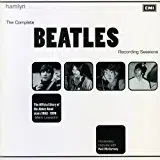
The definitive guide for every Beatles recording sessions from 1962 to 1970. We owe a lot to Mark Lewisohn for the creation of those session pages, but you really have to buy this book to get all the details - the number of takes for each song, who contributed what, a description of the context and how each session went, various photographies... And an introductory interview with Paul McCartney!
The Beatles Recording Reference Manual: Volume 5: Let It Be through Abbey Road (1969 - 1970)

The fifth and final book of this critically acclaimed series, "The Beatles Recording Reference Manual: Volume 5: Let It Be through Abbey Road (1969 - 1970)" follows The Beatles as they "get back to where they once belonged...". Not once, but twice. With "Let It Be", they attempted to recapture the spontaneity of their early years and recordings, while "Abbey Road" was a different kind of return - to the complexity, finish and polish that they had applied to their work beginning with "Revolver" and through to "The Beatles".
Solid State: The Story of "Abbey Road" and the End of the Beatles
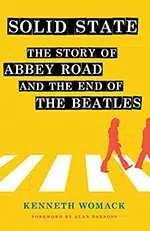
Acclaimed Beatles historian Kenneth Womack offers the most definitive account yet of the writing, recording, mixing, and reception of Abbey Road. In February 1969, the Beatles began working on what became their final album together. Abbey Road introduced a number of new techniques and technologies to the Beatles' sound, and included "Come Together," "Something," and "Here Comes the Sun," which all emerged as classics.
If we modestly consider the Paul McCartney Project to be the premier online resource for all things Paul McCartney, it is undeniable that The Beatles Bible stands as the definitive online site dedicated to the Beatles. While there is some overlap in content between the two sites, they differ significantly in their approach.

Notice any inaccuracies on this page? Have additional insights or ideas for new content? Or just want to share your thoughts? We value your feedback! Please use the form below to get in touch with us.