Timeline Albums, EPs & singles Songs Films Concerts Sessions People Interviews Articles

Tuesday, March 8, 1977

Recording "Suicide", "London Town"

For Paul McCartney

Last updated on July 23, 2025

A few days before this session, on March 4, 1977, Paul and Linda McCartney, along with George and Olivia Harrison, saw Frank Sinatra performing at the Royal Albert Hall.

Back in 1956, when Paul was just fourteen, he wrote one of his earliest songs, “Suicide,” in a cabaret style. As an aspiring songwriter, he imagined he was composing it for Frank Sinatra. Witnessing Sinatra live in 1977 reignited Paul’s interest in the song, which until then existed only as a single-verse sketch. Inspired by the performance, Paul completed the song, recorded a formal demo on this day, and arranged for it to be sent to Sinatra — who, at some earlier point, had expressed interest in receiving a composition from him.

However, Sinatra did not take the gesture well. Interpreting “Suicide” as a joke rather than a serious offering, he was reportedly offended and declined to record it.


I wrote it in bed at that moment when you’re just dropping off and all these things are coming to you, but you ought to go to sleep. I used to keep pencil and paper by my bed, and I’ve got the ability to write in the dark, though some of the lines cross each other. I wrote this song called ‘Suicide’ which was very cabaret, ‘If when she tries to run away and he calls her back she comes … it’s okay, because she’s under both his thumbs …’ all that kind of shit. Very Sinatra, I thought. ‘She’ll limp along to his side … I call it suicide!’ It was murder! Horrible song! But you had to go through all those styles to discover your own. I only had one verse, so I cobbled together another.

And the funny thing was, years and years later, he rang me at Abbey Road studio, and it was a great moment when one of the engineers said, “Paul, Sinatra’s on the phone.’ And I was able to go, “Oh. I’ll be there in a minute,’ touch a fader and then go off. And everyone would go, ‘Oooooo! Sinatra’s on the phone!’ How many people have that? He was asking for a song, so I found the song, made a demo and sent it to him. Apparently he thought it was an almighty piss-take. ‘No way!’ he’s supposed to have said to one of his people. ‘Is this guy having me on?’ So my career with Sinatra ended in terrible ignominy. I think he couldn’t grasp it was tongue in cheek. It was only supposed to be a play on the word ‘suicide’, not actual physical suicide. If a girl lets a guy trample all over her, she’s committing some sort of suicide. I think he sent the demo back. Looking back on it ’m quite relieved he did, actually, it wasn’t a good song, it was just a teenage thought.

Paul McCartney – From “Paul McCartney: Many Years from Now” by Barry Miles, 1997


Session activities

  1. Suicide

    Written by Paul McCartney

    Recording

  2. London Town

    Written by Paul McCartney, Denny Laine

    Recording


Going further

Paul McCartney: Music Is Ideas. The Stories Behind the Songs (Vol. 1) 1970-1989
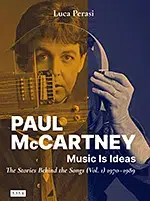
Paul McCartney: Music Is Ideas. The Stories Behind the Songs (Vol. 1) 1970-1989

With 25 albums of pop music, 5 of classical – a total of around 500 songs – released over the course of more than half a century, Paul McCartney's career, on his own and with Wings, boasts an incredible catalogue that's always striving to free itself from the shadow of The Beatles. The stories behind the songs, demos and studio recordings, unreleased tracks, recording dates, musicians, live performances and tours, covers, events: Music Is Ideas Volume 1 traces McCartney's post-Beatles output from 1970 to 1989 in the form of 346 song sheets, filled with details of the recordings and stories behind the sessions. Accompanied by photos, and drawing on interviews and contemporary reviews, this reference book draws the portrait of a musical craftsman who has elevated popular song to an art-form.

The McCartney Legacy: Volume 2: 1974 – 80

The McCartney Legacy: Volume 2: 1974 – 80

The follow-up to The McCartney Legacy, Volume 1, the most complete work on the life and work of Paul McCartney ever published. Volume 2 continues to paint the portrait of one of the world’s greatest musicians, his work post-Beatles, and his life from 1974 to 1980.

Eight Arms to Hold You: The Solo Beatles Compendium
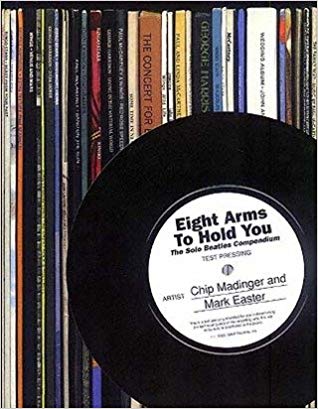
Eight Arms to Hold You: The Solo Beatles Compendium

Eight Arms To Hold You: The Solo Beatles Compendium is the ultimate look at the careers of John Lennon, Paul McCartney, George Harrison and Ringo Starr beyond the Beatles. Every aspect of their professional careers as solo artists is explored, from recording sessions, record releases and tours, to television, film and music videos, including everything in between. From their early film soundtrack work to the officially released retrospectives, all solo efforts by the four men are exhaustively examined.

Paul McCartney writing

Talk more talk, chat more chat

Notice any inaccuracies on this page? Have additional insights or ideas for new content? Or just want to share your thoughts? We value your feedback! Please use the form below to get in touch with us.

Your email address will not be published. Required fields are marked *

This site uses Akismet to reduce spam. Learn how your comment data is processed.

2026 • Please note this site is strictly non-commercial. All pictures, videos & quoted texts remain the property of the respective copyright owner, and no implication of ownership by us is intended or should be inferred. Any copyright owner who wants something removed should contact us and we will do so immediately. Alternatively, we would be delighted to provide credits.