Thursday, November 4, 1965
Recording "What Goes On", "12-Bar Original"
For The Beatles
Last updated on December 3, 2025
Thursday, November 4, 1965
For The Beatles
Last updated on December 3, 2025

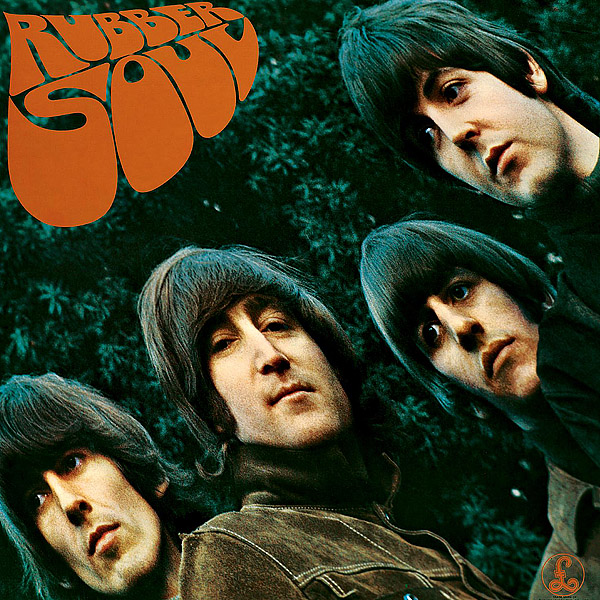
Oct 12 - Nov 30, 1965 • Songs recorded during this session appear on Rubber Soul (UK Mono)
Recording studio: EMI Studios, Studio Two, Abbey Road • London • UK
Article Oct 31, 1965 • Tickets for The Beatles' UK tour are on sale
Session Nov 03, 1965 • Recording "Michelle"
Session Nov 04, 1965 • Recording "What Goes On", "12-Bar Original"
Session Nov 06, 1965 • Recording “I’m Looking Through You“
Session Nov 08, 1965 • Recording "Think For Yourself", "The Beatles Third Christmas Record"
AlbumSome of the songs worked on during this session were first released on the "Rubber Soul (UK Mono)" LP
This was the thirteenth day of work on The Beatles’ new album “Rubber Soul.”
On March 5, 1963, during the session that produced “From Me To You” and “Thank You Girl“, The Beatles had hoped to record “What Goes On” and “One After 909” as well. With time left for only one more song, they opted for “One After 909“. More than two years later, they returned to “What Goes On“, choosing it as the song for Ringo Starr to sing on the new album.
This was a late session, beginning at 11 pm and finishing at 3:30 am.
The backing track for “What Goes On” featured Ringo on drums and guide vocals, Paul McCartney on bass, and John Lennon and George Harrison on electric guitars. The bass and drums were recorded on track one of the four-track tape, with the two guitars on track two.
Only one take was needed to secure a satisfactory basic track. Overdubs followed: Ringo recorded his lead vocals onto track three, while Paul and John added backing vocals onto track four. With this, the recording was complete and the track would be mixed in mono and stereo on November 9.
Once work on “What Goes On” was finished, The Beatles spent some time recording an instrumental piece that would simply be titled “12-Bar Original“. It was more than a casual jam: two formal takes were attempted, the first a false start and the second a complete performance. The line-up featured John on electric guitar, Paul on bass, George on electric guitar, Ringo on drums, and George Martin on harmonium.
The track would be mixed in mono on November 30 but remained unreleased until its inclusion on “Anthology 2” in 1996.
An instrumental recording by The Beatles, their first since signing with EMI in 1962, featuring drums, bass, two electric guitars (with George Harrison adding tone-pedal effects) and a harmonium (played by George Martin). Two takes were attempted, the first breaking down, the second complete at a lengthy 6.36 and from which this 2.54 Anthology edit has been produced. It is not clear if 12-Bar Original was intended for Rubber Soul but, certainly, the song was not mixed until the album was being pressed so it was never a serious contender. Indeed, the recording has remained unissued until now.
From Anthology 2 liner notes
Written by Paul McCartney, Ringo Starr, John Lennon
Recording • Take 1
Written by Paul McCartney, Ringo Starr, John Lennon
Recording • SI onto take 1
Written by Paul McCartney, Ringo Starr, John Lennon, George Harrison
Recording • Take 1
Written by Paul McCartney, Ringo Starr, John Lennon, George Harrison
Recording • Take 2
AlbumOfficially released on Anthology 2
The Complete Beatles Recording Sessions • Mark Lewisohn
The definitive guide for every Beatles recording sessions from 1962 to 1970. We owe a lot to Mark Lewisohn for the creation of those session pages, but you really have to buy this book to get all the details - the number of takes for each song, who contributed what, a description of the context and how each session went, various photographies... And an introductory interview with Paul McCartney!
The Beatles Recording Reference Manual - Volume 2 - Help! through Revolver (1965-1966)
The second book of the Association for Recorded Sound Collections (ARSC)-nominated series, "The Beatles Recording Reference Manual: Volume 2: Help! through Revolver (1965-1966)" follows the evolution of the band from the end of Beatlemania with "Help!" through the introspection of "Rubber Soul" up to the sonic revolution of "Revolver". From the first take to the final remix, discover the making of the greatest recordings of all time.Through extensive, fully-documented research, these books fill an important gap left by all other Beatles books published to date and provide a unique view into the recordings of the world's most successful pop music act.

Notice any inaccuracies on this page? Have additional insights or ideas for new content? Or just want to share your thoughts? We value your feedback! Please use the form below to get in touch with us.


