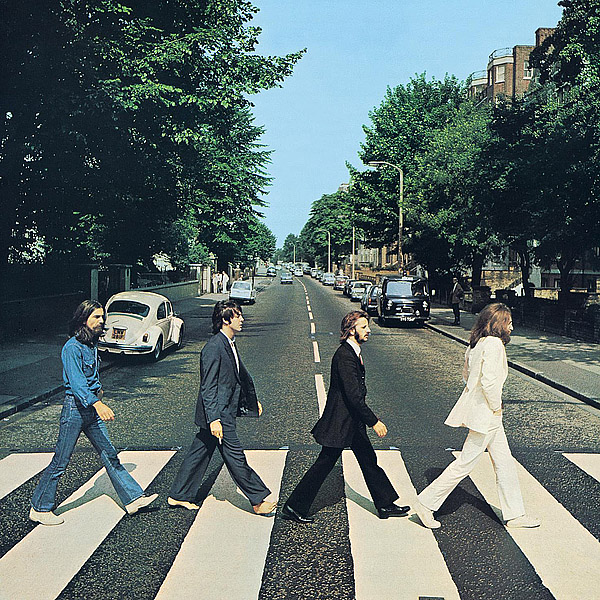
Album This song officially appears on the Abbey Road LP.
Timeline This song was officially released in 1969
Timeline This song was written, or began to be written, in 1968, when Paul McCartney was 26 years old)
This song was recorded during the following studio sessions:

Following their kerb drill in Abbey Road
Sep 20, 1969 • From Evening Standard

Paul McCartney: An Innocent Man?
October 1986 • From Q Magazine

March 2012 • From RollingStone
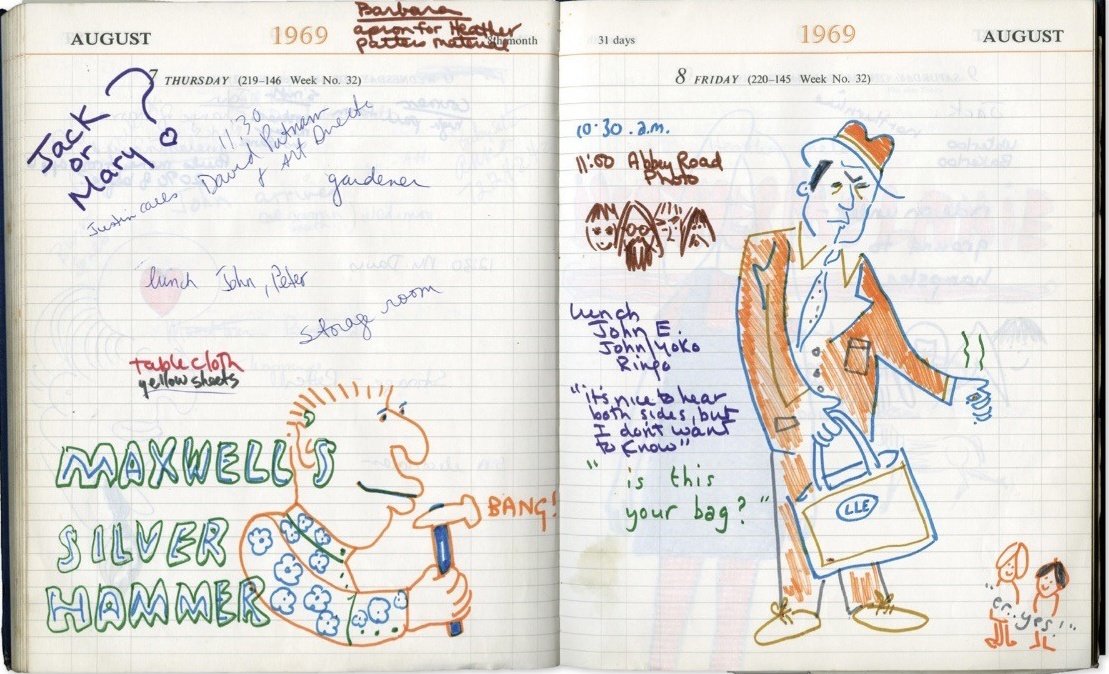
Maxwell’s Silver Hammer was my analogy for when something goes wrong out of the blue, as it so often does, as I was beginning to find out at that time in my life. I wanted something symbolic of that, so to me it was some fictitious character called Maxwell with a silver hammer. I don’t know why it was silver, it just sounded better than Maxwell’s hammer. It was needed for scanning. We still use that expression even now when something unexpected happens.
Paul McCartney – From “Paul McCartney: Many Years from Now” by Barry Miles, 1997
From Wikipedia:
“Maxwell’s Silver Hammer” is a song by the English rock band the Beatles from their 1969 album Abbey Road. It was written by Paul McCartney and credited to the Lennon–McCartney partnership. The song is about a student named Maxwell Edison who commits murders with a hammer, with the dark lyrics disguised by an upbeat sound. McCartney described the song as symbolic of the downfalls of life, being “my analogy for when something goes wrong out of the blue, as it so often does”.
The song was initially rehearsed during the Get Back sessions in January 1969. During the recording of Abbey Road in July and August, the band devoted four recording sessions to completing the track. These sessions were an acrimonious time for the Beatles, as McCartney pressured the group to work at length on the song. All three of his bandmates were vocal in their dislike of “Maxwell’s Silver Hammer”. In a 2008 interview, Ringo Starr remembered it as “the worst session ever” and “the worst track we ever had to record”.
Background
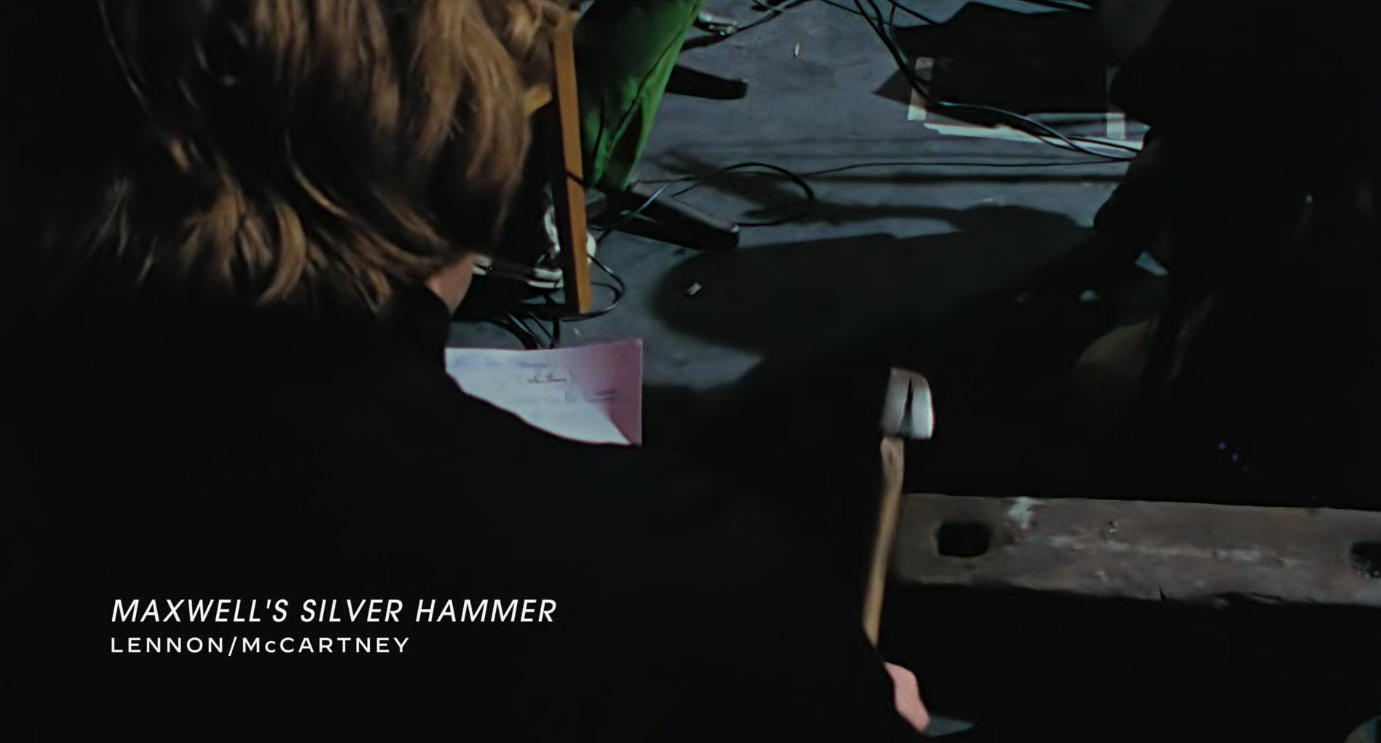
While in Rishikesh, India, in early 1968, McCartney began to write the first verse of the song. Having completed most of it by October that year, he intended for its inclusion on the album The Beatles, but it was never properly recorded during those sessions due to time constraints. It was rehearsed again three months later, in January 1969, at Twickenham film studios during the Get Back sessions but would not be recorded for another six months.
McCartney’s wife Linda said that he had become interested in avant-garde theatre and had immersed himself in the writings of the French symbolist writer Alfred Jarry. This influence is reflected in the story and tone of “Maxwell’s Silver Hammer”, and also explains how McCartney came across Jarry’s word “pataphysical”, which occurs in the lyrics. In 1994, McCartney said that the song epitomises the downfalls of life, being “my analogy for when something goes wrong out of the blue, as it so often does, as I was beginning to find out at that time in my life. I wanted something symbolic of that, so to me it was some fictitious character called Maxwell with a silver hammer. I don’t know why it was silver, it just sounded better than Maxwell’s hammer.”
Recording
The Beatles began recording the song at EMI Studios (later Abbey Road Studios) in London on 9 July 1969. John Lennon, who had been absent from recording sessions for the previous eight days after being injured in a car crash in Scotland, arrived to work on the song, accompanied by his wife, Yoko Ono. She was more badly hurt in the accident than Lennon, and lay on a large double-bed in the studio. Sixteen takes of the rhythm track were made, followed by a series of guitar overdubs. The unused fifth take can be heard on Anthology 3 (1996).[citation needed] Over the following two days the group overdubbed vocals, piano, Hammond organ, anvil and guitar. The song was completed on 6 August, when McCartney recorded a solo on a Moog synthesiser.
The recording process subsequently drew unfavourable comments from Lennon, George Harrison and Ringo Starr. Lennon said, “I was ill after the accident when they did most of that track, and it really ground George and Ringo into the ground recording it”, adding later: “I hate it, ‘cos all I remember is the track … [Paul] did everything to make it into a single, and it never was and it never could have been.” In the recollection of engineer Geoff Emerick, Lennon dismissed it as “more of Paul’s granny music”. Harrison recalled: “Sometimes Paul would make us do these really fruity songs. I mean, my God, ‘Maxwell’s Silver Hammer’ was so fruity. After a while we did a good job on it, but when Paul got an idea or an arrangement in his head …” Starr told Rolling Stone in 2008: “The worst session ever was ‘Maxwell’s Silver Hammer.’ It was the worst track we ever had to record. It went on for fucking weeks. I thought it was mad.” McCartney recalled: “The only arguments were about things like me spending three days on ‘Maxwell’s Silver Hammer.’ I remember George saying, ‘You’ve taken three days, it’s only a song.’ – ‘Yeah, but I want to get it right. I’ve got some thoughts on this one.'”[better source needed]
Contemporary reviews
In his 1969 review of Abbey Road for Rolling Stone, John Mendelsohn wrote: “Paul McCartney and Ray Davies are the only two writers in rock and roll who could have written ‘Maxwell’s Silver Hammer’, a jaunty vaudevillian/music-hallish celebration wherein Paul, in a rare naughty mood, celebrates the joys of being able to bash in the heads of anyone threatening to bring you down. Paul puts it across perfectly with the coyest imaginable choir-boy innocence.” Writing in Oz magazine, Barry Miles described the song as “a complex little piece” and said that, aside from McCartney’s casual interest in Jarry’s work, “The only British pop group holding any pataphysical honours are The Soft Machine”. Miles also said it was “a perfect example of Paul’s combination of American Rock with British brass band music”. Derek Jewell of The Sunday Times found the album “refreshingly terse and unpretentious”, but lamented the inclusion of “cod-1920s jokes (Maxwell’s Silver Hammer)”.
Retrospective assessments and legacy
Among Beatles biographers, Ian MacDonald said that “If any single recording shows why The Beatles broke up, it’s ‘Maxwell’s Silver Hammer’.” He continued:
This ghastly miscalculation – of which there are countless equivalents on [McCartney’s] garrulous sequence of solo albums – represents by far his worst lapse of taste under the auspices of The Beatles … Thus Abbey Road embraces both extremes of McCartney: the clear-minded, sensitive caretaker of The Beatles in ‘You Never Give Me Your Money‘ and the Long Medley – and the immature egotist who frittered away the group’s patience and solidarity on sniggering nonsense like this.
Author Jonathan Gould cites “Maxwell’s Silver Hammer” as an example of the selfishness inherent in the Beatles’ creative partnership, whereby a composition by McCartney or Lennon would be given preference over a more substantial song by Harrison. He also rues McCartney’s penchant for a light entertainment style that the Beatles had sought to render obsolete, and concludes:
The sorriest aspect of ‘Maxwell’s Silver Hammer’ is thus the way it demonstrates how Paul’s workmanlike tendency to build on his past successes had caused him to translate the genuinely charming novelty and subversive parody of ‘When I’m Sixty-Four‘ into a personal subgenre of glibly clever songs that had devolved in the two years since Sgt. Pepper into a form of musical schtick.
In 2009, PopMatters editor John Bergstrom concluded his list “the worst of the Beatles” with the song. He said that while McCartney had previously created “some borderline-schmaltzy, music hall-inspired songs”, “Maxwell’s Silver Hammer” was “where even the secret admirer of ‘Rocky Raccoon‘ must draw the line”. Bergstrom described it as “Unnervingly ‘cute’, unrelentingly obnoxious, too literal-minded by half” and “the single Beatles song out of nearly 200 that is basically unlistenable”. […]
We put together quite a nice album, and the only arguments were about things like me spending too long on a track: I spent three days on Maxwell s Silver Hammer’. I remember George saying, ‘You’ve taken three days, it’s only a song.’ — ‘Yeah, but I want to get it right. I’ve got some thoughts on this one.’ It was early-days Moog work and it did take a bit of time. (Although nowadays three days is just for switching the machine on!)
Paul McCartney – From “The Beatles Anthology” book, 2000
Some of my songs are based on personal experience, but my style is to veil it. A lot of them are made up, like ‘Maxwell’s Silver Hammer’ which is the kind of song I like to write. It’s just a silly story about all these people, I’d never met. It’s just like writing a play: you don’t have to know the people, you just make them up.
I remember George once saying to me, ‘I couldn’t write songs like that.’ He writes more from personal experience. John’s style was to show the naked truth. If I was a painter, I’d probably mask things a little bit more than some people.
The song epitomizes the downfalls of life. Just when everything is going smoothly – Bang! Bang! – down comes Maxwell’s silver hammer and ruins everything.
Paul McCartney – From “The Beatles Anthology” book, 2000
It’s a typical McCartney sing-a-long, or whatever you call them. He did quite a lot of work on it. I was ill after the accident when they did most of that track, and it really ground George and Ringo into the ground recording it, you know. I wasn’t on ‘Maxwell,’ but I think I was on everything else. I was just away for that.
John Lennon – 1969 interview
I hate it, ‘cos all I remember is the track. He made us do it a hundred million times. He did everything to make it into a single and it never was and it never could’ve been, but he put guitar licks on it and he had somebody hitting iron pieces and we spent more money on that song than any of them in the whole album.
John Lennon – Interview with Playboy, 1980
“Maxwell’s Silver Hammer is just something of Paul’s which we’ve been trying to record. We spent a hell of a lot of time on it. And it’s one of those instant sort of whistle-along tunes, which some people will hate, and some people will really love it. It’s more like Honey Pie, you know, a fun sort of song. But it’s pretty sick as well though, ‘cuz the guy keeps killing everybody. It’s good because I have this synthesiser and ‘Maxwell’s Silver Hammer’ was one of the things I used the synthesiser on, which is pretty effective.
George Harrison, 1969 – Quoted from Beatles Wiki
Paul would always help along when you had done his ten songs. Then, when he got round to doing one of my songs, he would help. It was silly. It was very selfish, actually. Sometimes, Paul would make us do these really fruity songs. I mean, my God, ‘Maxwell’s Silver Hammer’ was so fruity. After a while, we did a good job on it
George Harrison, 1969 – Quoted from Beatles Wiki
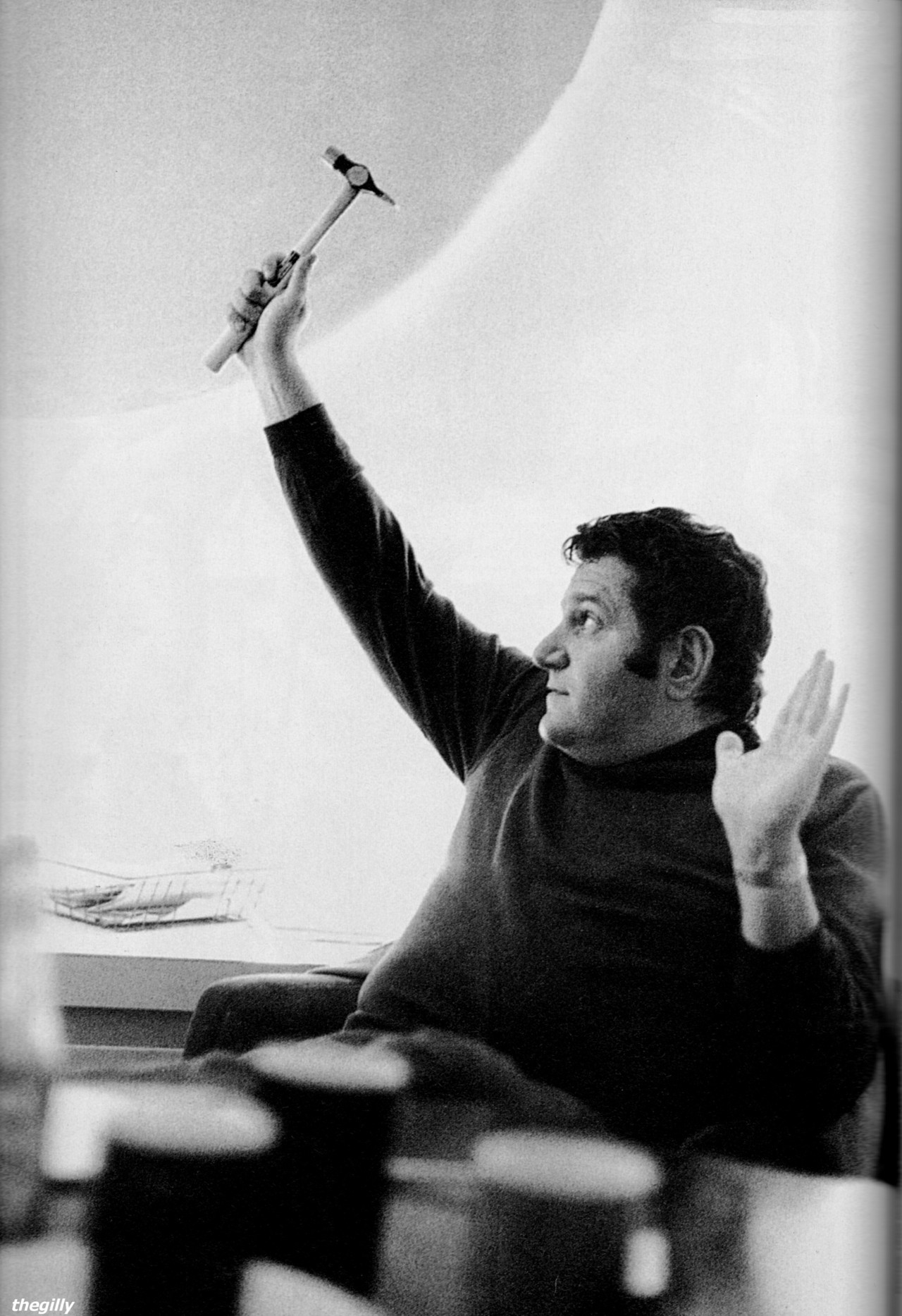
The business problems at Apple Records […] really were horrible. The business meetings were just soul-destroying. We’d sit around in an office, and it was a place you just didn’t want to be, with people you didn’t want to be with. There’s a great picture that Linda took of Allen Klein, in which he’s got a hammer like Maxwell’s silver hammer. It’s very symbolic. And that’s why we have the little nod and a wink in the middle section to “You Never Give Me Your Money”, in the lines “I never give you my pillow / I only send you my invitations”
Paul McCartney – From “The Lyrics: 1956 to the Present“, 2021

From The Usenet Guide to Beatles Recording Variations:
[a] stereo 12,14 Aug 1969. edited.
UK: Apple PCS 7088 Abbey Road 1969.
US: Apple SO-383 Abbey Road 1969.
CD: EMI CDP 7 46446 2 Abbey Road 1987.The edit added an edit piece, Aug 14, to the stereo master. A few seconds were edited out of the album master on Aug 25, so the master tape of the song differs from the album– check any future reissues.
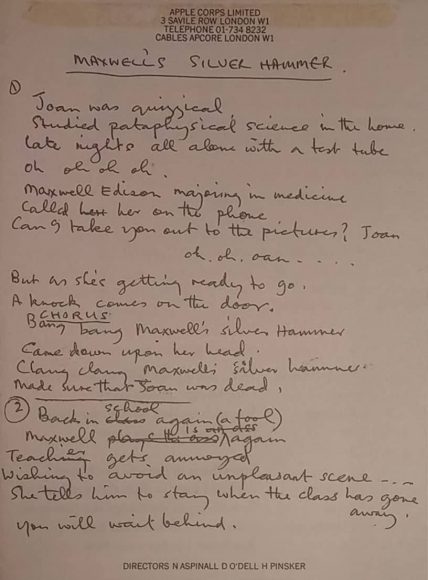
Joan was quizzical; studied pataphysical
Science in the home.
Late nights all alone with a test tube.
Oh, oh, oh, oh.
Maxwell Edison, majoring in medicine,
Calls her on the phone.
"Can I take you out to the pictures,
Joa, oa, oa, oan?"
But as she's getting ready to go,
A knock comes on the door.
Bang! Bang! Maxwell's silver hammer
Came down upon her head.
Bang! Bang! Maxwell's silver hammer
Made sure that she was dead.
Back in school again Maxwell plays the fool again.
Teacher gets annoyed.
Wishing to avoid and unpleasant
Sce, e, e, ene,
She tells Max to stay when the class has gone away,
So he waits behind
Writing fifty times "I must not be
So, o, o, o"
But when she turns her back on the boy,
He creeps up from behind.
Bang! Bang! Maxwell's silver hammer
Came down upon her head.
Bang! Bang! Maxwell's silver hammer
Made sure that she was dead.
P. C. Thirty-one said, "We caught a dirty one."
Maxwell stands alone
Painting testimonial pictures.
Oh, oh, oh, oh.
Rose and Valerie, screaming from the gallery
Say he must go free
(Maxwell must go free)
The judge does not agree and he tells them
So, o, o, o.
But as the words are leaving his lips,
A noise comes from behind.
Bang! Bang! Maxwell's silver hammer
Came down upon his head.
Bang! Bang! Maxwell's silver hammer
Made sure that he was dead.
Whoa, oh, oh, oh.
Silver hammer man
LP • Released in 1969
3:28 • Studio version • A • Stereo
Paul McCartney : Backing vocals, Guitar, Moog synthesiser, Piano, Vocals Ringo Starr : Anvil, Backing vocals, Drums George Harrison : Backing vocals, Bass, Lead guitar George Martin : Hammond organ, Producer Phil McDonald : Recording engineer
SessionRecording : Jul 09, 1969 • Studio : EMI Studios, Studio Two, Abbey Road
SessionOverdubs : 9, 10, 11 Jul, 6 Aug 1969 • Studio : EMI Studios, Abbey Road
SessionMixing : Aug 12, 1969 • Studio : EMI Studios, Studio Two, Abbey Road
SessionMixing : Aug 14, 1969 • Studio : EMI Studios, Studio Two, Abbey Road

Official album • Released in 1996
3:50 • Outtake • B • Stereo • Take 5 - Presented here is the previously unreleased Take 5, lacking the many overdubbed elements - the anvil for one - that would feature in the master.
Paul McCartney : Piano, Vocals Ringo Starr : Drums George Harrison : Bass George Martin : Producer Phil McDonald : Recording engineer
SessionRecording : Jul 09, 1969 • Studio : EMI Studios, Studio Two, Abbey Road

Abbey Road (Stereo - 2009 remaster)
Official album • Released in 2009
3:28 • Studio version • A2009 • Stereo • 2009 stereo remaster
Paul McCartney : Backing vocals, Guitar, Moog synthesiser, Piano, Vocals Ringo Starr : Anvil, Backing vocals, Drums George Harrison : Backing vocals, Bass, Lead guitar George Martin : Hammond organ, Producer Phil McDonald : Recording engineer Guy Massey : Remastering Steve Rooke : Remastering Allan Rouse : Project co-ordinator
SessionRecording : Jul 09, 1969 • Studio : EMI Studios, Studio Two, Abbey Road
SessionOverdubs : 9, 10, 11 Jul, 6 Aug 1969 • Studio : EMI Studios, Abbey Road
SessionMixing : Aug 12, 1969 • Studio : EMI Studios, Studio Two, Abbey Road
SessionMixing : Aug 14, 1969 • Studio : EMI Studios, Studio Two, Abbey Road

Official album • Released in 2016
3:50 • Outtake • B2016 • Stereo • Take 5 - Presented here is the previously unreleased Take 5, lacking the many overdubbed elements - the anvil for one - that would feature in the master.
Paul McCartney : Piano, Vocals Ringo Starr : Drums George Harrison : Bass George Martin : Producer Phil McDonald : Recording engineer
SessionRecording : Jul 09, 1969 • Studio : EMI Studios, Studio Two, Abbey Road

Abbey Road (Picture Disc - Limited Edition - 2019)
LP • Released in 2019
3:28 • Studio version • C • Stereo • 2019 Stereo Mix
Paul McCartney : Backing vocals, Guitar, Moog synthesiser, Piano, Vocals Ringo Starr : Anvil, Backing vocals, Drums George Harrison : Backing vocals, Bass, Lead guitar George Martin : Hammond organ, Producer Giles Martin : Producer Phil McDonald : Recording engineer Sam Okell : Mix engineer
SessionRecording : Jul 09, 1969 • Studio : EMI Studios, Studio Two, Abbey Road
SessionOverdubs : 9, 10, 11 Jul, 6 Aug 1969 • Studio : EMI Studios, Abbey Road
SessionMixing : Circa 2019 • Studio : EMI Studios, Abbey Road Studios • London • UK
SessionMixing : Aug 14, 1969 • Studio : EMI Studios, Studio Two, Abbey Road

Abbey Road (50th anniversary boxset)
Official album • Released in 2019
3:28 • Studio version • C • Stereo • 2019 Stereo Mix
Paul McCartney : Backing vocals, Guitar, Moog synthesiser, Piano, Vocals Ringo Starr : Anvil, Backing vocals, Drums George Harrison : Backing vocals, Bass, Lead guitar George Martin : Hammond organ, Producer Giles Martin : Producer Phil McDonald : Recording engineer Sam Okell : Mix engineer
SessionRecording : Jul 09, 1969 • Studio : EMI Studios, Studio Two, Abbey Road
SessionOverdubs : 9, 10, 11 Jul, 6 Aug 1969 • Studio : EMI Studios, Abbey Road
SessionMixing : Circa 2019 • Studio : EMI Studios, Abbey Road Studios • London • UK
SessionMixing : Aug 14, 1969 • Studio : EMI Studios, Studio Two, Abbey Road
Abbey Road (50th anniversary boxset)
Official album • Released in 2019
4:44 • Alternate take • D • Take 12
Paul McCartney : Piano, Vocals Ringo Starr : Drums George Harrison : Bass George Martin : Producer Giles Martin : Producer Phil McDonald : Engineer Sam Okell : Mix engineer
SessionRecording : Jul 09, 1969 • Studio : EMI Studios, Studio Two, Abbey Road
Abbey Road (50th anniversary boxset)
Official album • Released in 2019
3:28 • Studio version • E • Dolby Atmos • 2019 Dolby Atmos Mix
Paul McCartney : Backing vocals, Guitar, Moog synthesiser, Piano, Vocals Ringo Starr : Anvil, Backing vocals, Drums George Harrison : Backing vocals, Bass, Lead guitar George Martin : Hammond organ, Producer Phil McDonald : Recording engineer
SessionRecording : Jul 09, 1969 • Studio : EMI Studios, Studio Two, Abbey Road
SessionOverdubs : 9, 10, 11 Jul, 6 Aug 1969 • Studio : EMI Studios, Abbey Road
SessionMixing : Circa 2019 • Studio : EMI Studios, Abbey Road Studios • London • UK

Abbey Road (Green Vinyl - 2025)
LP • Released in 2025
3:28 • Studio version • C • Stereo • 2019 Stereo Mix
Paul McCartney : Backing vocals, Guitar, Moog synthesiser, Piano, Vocals Ringo Starr : Anvil, Backing vocals, Drums George Harrison : Backing vocals, Bass, Lead guitar George Martin : Hammond organ, Producer Giles Martin : Producer Phil McDonald : Recording engineer Sam Okell : Mix engineer
SessionRecording : Jul 09, 1969 • Studio : EMI Studios, Studio Two, Abbey Road
SessionOverdubs : 9, 10, 11 Jul, 6 Aug 1969 • Studio : EMI Studios, Abbey Road
SessionMixing : Circa 2019 • Studio : EMI Studios, Abbey Road Studios • London • UK
SessionMixing : Aug 14, 1969 • Studio : EMI Studios, Studio Two, Abbey Road

The Beatles Anthology Collection (2025)
Official album • Released in 2025
3:50 • Outtake • B • Stereo • Take 5 - Presented here is the previously unreleased Take 5, lacking the many overdubbed elements - the anvil for one - that would feature in the master.
Paul McCartney : Bass, Drums, Maracas, Piano, Vocals George Martin : Producer Phil McDonald : Recording engineer
SessionRecording : Jul 09, 1969 • Studio : EMI Studios, Studio Two, Abbey Road

A/B Road Complete Get Back Sessions - Jan 3rd 1969 - 1 & 2
Bootleg • Released in 2004
3:09 • Rehearsal • Jan.03 - D1-05 - Maxwell's Silver Hammer 3.05 - Paul McCartney only on piano
Paul McCartney : Piano, Vocals
SessionRecording : Jan 03, 1969 • Studio : Twickenham Film Studios, London, UK


A/B Road Complete Get Back Sessions - Jan 3rd 1969 - 3 & 4
Bootleg • Released in 2004
0:51 • Rehearsal • Jan.03 - D4-20 - Maxwell's Silver Hammer 3.141
SessionRecording : Jan 03, 1969 • Studio : Twickenham Film Studios, London, UK
A/B Road Complete Get Back Sessions - Jan 3rd 1969 - 3 & 4
Bootleg • Released in 2004
15:08 • Rehearsal • Jan.03 - D4-21 - Maxwell's Silver Hammer 3.142
SessionRecording : Jan 03, 1969 • Studio : Twickenham Film Studios, London, UK
A/B Road Complete Get Back Sessions - Jan 3rd 1969 - 3 & 4
Bootleg • Released in 2004
1:05 • Rehearsal • Jan.03 - D4-22 - Maxwell's Silver Hammer 3.143
SessionRecording : Jan 03, 1969 • Studio : Twickenham Film Studios, London, UK
The Lyrics: 1956 to the Present

"Maxwell's Silver Hammer" is one of the songs featured in the book "The Lyrics: 1956 to the Present," published in 2021. The book explores Paul McCartney's early Liverpool days, his time with the Beatles, Wings, and his solo career. It pairs the lyrics of 154 of his songs with his first-person commentary on the circumstances of their creation, the inspirations behind them, and his current thoughts on them.
Solid State: The Story of "Abbey Road" and the End of the Beatles
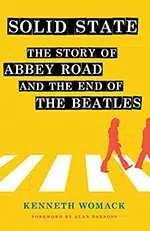
Acclaimed Beatles historian Kenneth Womack offers the most definitive account yet of the writing, recording, mixing, and reception of Abbey Road. In February 1969, the Beatles began working on what became their final album together. Abbey Road introduced a number of new techniques and technologies to the Beatles' sound, and included "Come Together," "Something," and "Here Comes the Sun," which all emerged as classics.

Notice any inaccuracies on this page? Have additional insights or ideas for new content? Or just want to share your thoughts? We value your feedback! Please use the form below to get in touch with us.