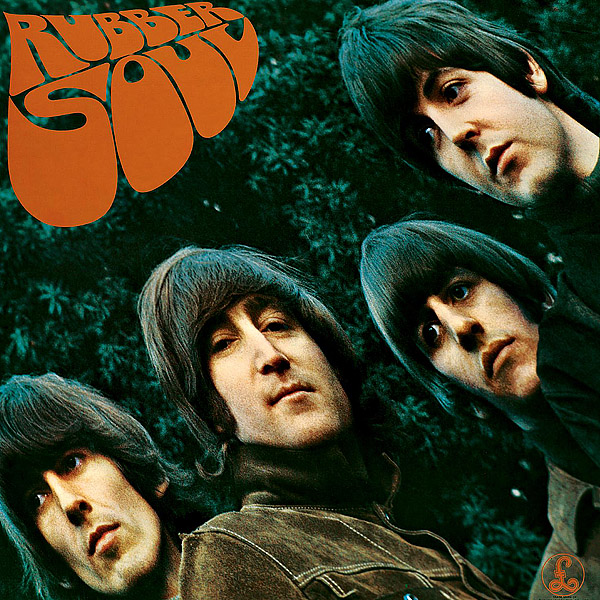
Album This song officially appears on the Rubber Soul (UK Mono) LP.
Timeline This song was officially released in 1965
This song was recorded during the following studio sessions:

December 1984 • From Playboy

Interview for BBC Radio Sheffield
2003 • From BBC Radio Sheffield

Paul McCartney: “I Still Feel the Thrill”
Dec 01, 2009 • From The Big Issue

Paul McCartney discusses songwriting and RAM with Mansun's Paul Draper
May 28, 2012 • From Drowned In Sound

Paul McCartney Is Esquire's August Cover Star
Jul 02, 2015 • From Esquire

Sir Paul McCartney on how he avoids being "big headed"
Jun 21, 2018 • From BBC Radio 6 Music
From Wikipedia:
“Nowhere Man” is a song by the English rock band the Beatles. It was released in December 1965 on their album Rubber Soul, except in the United States and Canada, where it was first issued as a single A-side in February 1966 before appearing on the album Yesterday and Today. The song was written by John Lennon and credited to the Lennon–McCartney partnership. In the US, the single peaked at number 3 on the Billboard Hot 100 and number 1 on the chart compiled by Record World magazine, as it did the RPM 100 chart in Canada and in Australia. The song was also released as a single in some countries where it had been included on Rubber Soul, including Australia, where it topped the singles chart.
Recorded on 21 and 22 October 1965, “Nowhere Man” describes a man with no direction in his life and with no genuine worldview. It is one of the first Beatles songs to be entirely unrelated to romance or love, and marks a notable example of Lennon’s philosophically oriented songwriting. Lennon, Paul McCartney and George Harrison sing the song in three-part harmony. The lead guitar solo was performed in unison by Harrison and Lennon. The pair played identical “sonic blue”-coloured Fender Stratocasters on the track. The song appears in the film Yellow Submarine, where the Beatles sing it about the character Jeremy Hillary Boob after meeting him in the “nowhere land”. The song was also played throughout the Beatles’ 1966 US tour and their 1966 tour of Germany, Japan and the Philippines.
Background
Towards the end of the production for Rubber Soul, John Lennon had difficulties in coming up with a new song. He spent over five hours trying to come up with another song, and eventually decided to “lay down”. During his idling, Lennon suddenly thought of himself as being a “Nowhere Man—sitting in his nowhere land”. The song is generally credited as being among the first Beatles’ songs not pertaining to themes of romance or love. Lennon reflected in a 1980 Playboy interview that:
I’d spent five hours that morning trying to write a song that was meaningful and good, and I finally gave up and lay down. Then ‘Nowhere Man’ came, words and music, the whole damn thing as I lay down.
McCartney said of the song:
That was John after a night out, with dawn coming up. I think at that point, he was a bit… wondering where he was going.
Reviewing the US single release, Record World called it a “meaningful song about what happens to a fellow afraid to be himself.”
Analysis
The song as a whole is a 32-bar form, following the standard model of the Tin Pan Alley chorus, with a repeating 8-bar primary statement outlining the E-major chord, a third phrase (bars 17–24) forming a musical question (concluding on the dominant B), and a fourth phrase recapitulating the initial statement in E major. The primary statement begins with the chord of E (I tonic) on “He’s a real” and then involves a 5–4–3–2–1 pitch descent between the B (V dominant) chord on “nowhere man” and A (IV subdominant) chord on “sitting in”; a twist comes where Am (iv minor) replaces A in the final line (“nowhere plans”) and the simultaneous G♯ note melody creates a dissonant AmM7. The bridge (a standard third-phrase “B” in the AABA form), which appears three times, seesaws on a G♯ minor/A major (iii–IV) sequence before falling back on an F♯ minor and leading back to the verse on a B7, as is typical of “Tin-pan alley” standard B sections.
Other recordings
A ukulele version of “Nowhere Man” by Tiny Tim was Harrison’s contribution to the Beatles’ 1968 Christmas record. Distributed to members of the Beatles’ fan club, the record differed from the band’s previous Christmas records by including separate contributions from the four bandmates, reflecting the disharmony within the group at the time. Beatles historian John Winn describes Tim’s version as the “highlight of the disc” and a “timeless” interpretation. […]
‘Nowhere Man’ was one of John’s, coming from a big night the night before and getting to bed about five in the morning. That was a great one. He said, ‘I started one last night.’ It turned out later that it was about me. ‘He’s a real nowhere man.’ I maybe helped him with a word here or there, but he’d already got most of it.
Nobody ever had any notes written down; we just used to sing a tune and it would come out good. Part of the secret collaboration was that we liked each other. We liked singing at each other. He’d sing something and I’d say, ‘Yeah,’ and trade off on that. He’d say, ‘Nowhere land,’ and I’d say, ‘For nobody.’ It was a two-way thing.
Paul McCartney – From “The Beatles Anthology” book, 2000
When I came out to write with him the next day, he was kipping on the couch, very bleary-eyed. It was really an anti-John song. He told me later, he didn’t tell me then, he said he’d written it about himself, feeling like he wasn’t going anywhere. I think it was actually about the state of his marriage. It was in a period where he was a bit dissatisfied with what was going on; however, it led to a very good song. He treated it as a third-person song, but he was clever enough to say, ‘Isn’t he a bit like you and me?’ – ‘Me’ being the final word.
Paul McCartney – From “Paul McCartney: Many Years from Now” by Barry Miles, 1997
I was just sitting trying to think of a song and I thought of myself sitting there doing nothing and going nowhere. Once I thought of that it was easy. It all came out. No, I remember now, I’d actually stopped trying to think of something. Nothing would come. I was cheesed off and went for a lie down having given up. Then, I thought of myself as nowhere man sitting in his nowhere land.
John Lennon – From “The Beatles: The Authorized Biography” by Hunter Davies, 1968
We were always forcing [the Abbey Road staff] into things they didn’t want to do. Nowhere Man was one. I remember we wanted very treble-y guitars, which they are, they’re among the most treble-y guitars I’ve ever heard on record. The engineer said, ‘All right, I’ll put full treble on it,’ and we said, ‘That’s not enough’, and he said, ‘But that’s all I’ve got, I’ve only got one pot and that’s it!’ And we replied, ‘Well, put that through another lot of faders and put full treble up on that. And if that’s not enough we’ll go through another lot of faders’…
Anyway you’d then find, ‘Oh, it worked!’ And they were secretly glad because they had been the engineer who’d put three times the allowed value of treble on a song. I think they were quietly proud of all those things.
Paul McCartney – From “The Complete Beatles Recording Sessions” by Mark Lewisohn, 1988
From The Usenet Guide to Beatles Recording Variations:
- [a] mono 25 Oct 1965.
UK: Parlophone PMC 1267 Rubber Soul 1965.
US: Capitol 5587 single 1966, Capitol T 2553 Yesterday & Today 1966.
CD: EP Box set 1991.- [b] stereo 26 Oct 1965.
UK: Parlophone PCS 3075 Rubber Soul 1965, Apple PCSP 717 The Beatles 1962-1966 1973.
US: Capitol ST 2553 Yesterday & Today 1966, Apple SKBO-3403 The Beatles 1962-1966 1973.- [c] stereo 1987.
CD: EMI CDP 7 46440 2 Rubber Soul 1987, EMI CDP 7 97036 2 The Beatles 1962-1966 1993..The original stereo mix [b] has all sound either far left or far right. The new CD mix [c] has rhythm (drums, bass, rhythm guitar) at left center and only lead guitar at far left; the lead guitar moves to far right for solo as in [b]. [c] has John’s lead vocal at right center and his second vocal with the others at far right.
Paul refers to the guitars as extremely trebly in the interview in Lewisohn’s Recording Sessions. The only release that seems to show this is the MFSL half-speed master cassette tape.
He's a real Nowhere Man
Sitting in his Nowhere Land
Making all his nowhere plans for nobody
Doesn't have a point of view
Knows not where he's going to
Isn't he a bit like you and me?
Nowhere Man, please listen
You don't know what you're missing
Nowhere Man, the world is at your command
He's as blind as he can be
Just sees what he wants to see
Nowhere Man, can you see me at all?
Nowhere Man, don't worry
Take your time, don't hurry
Leave it all 'til somebody else lends you a hand
Doesn't have a point of view
Knows not where he's going to
Isn't he a bit like you and me?
Nowhere Man, please listen
You don't know what you're missing
Nowhere Man, the world is at your command
He's a real Nowhere Man
Sitting in his Nowhere Land
Making all his nowhere plans for nobody
Making all his nowhere plans for nobody
Making all his nowhere plans for nobody

LP • Released in 1965
2:40 • Studio version • A • Mono
Paul McCartney : Bass, Lead vocals Ringo Starr : Drums John Lennon : Acoustic guitar, Lead guitar, Lead vocals George Harrison : Backing vocals, Lead guitar George Martin : Producer Norman Smith : Recording engineer
SessionRecording : Oct 22, 1965 • Studio : EMI Studios, Studio Two, Abbey Road • London • UK
SessionMixing : Oct 25, 1965 • Studio : EMI Studios, Studio Two, Abbey Road

LP • Released in 1965
2:40 • Studio version • B • Stereo
Paul McCartney : Bass, Lead vocals Ringo Starr : Drums John Lennon : Acoustic guitar, Lead guitar, Lead vocals George Harrison : Backing vocals, Lead guitar George Martin : Producer Norman Smith : Recording engineer
SessionRecording : Oct 22, 1965 • Studio : EMI Studios, Studio Two, Abbey Road • London • UK
SessionMixing : Oct 26, 1965 • Studio : EMI Studios, Studio Two, Abbey Road

7" Single • Released in 1966
2:40 • Studio version • A • Mono
Paul McCartney : Bass, Lead vocals Ringo Starr : Drums John Lennon : Acoustic guitar, Lead guitar, Lead vocals George Harrison : Backing vocals, Lead guitar George Martin : Producer Norman Smith : Recording engineer
SessionRecording : Oct 22, 1965 • Studio : EMI Studios, Studio Two, Abbey Road • London • UK
SessionMixing : Oct 25, 1965 • Studio : EMI Studios, Studio Two, Abbey Road

Yesterday and Today (Butcher cover - Stereo)
LP • Released in 1966
2:40 • Studio version • B • Stereo
Paul McCartney : Bass, Lead vocals Ringo Starr : Drums John Lennon : Acoustic guitar, Lead guitar, Lead vocals George Harrison : Backing vocals, Lead guitar George Martin : Producer Norman Smith : Recording engineer
SessionRecording : Oct 22, 1965 • Studio : EMI Studios, Studio Two, Abbey Road • London • UK
SessionMixing : Oct 26, 1965 • Studio : EMI Studios, Studio Two, Abbey Road

Yesterday and Today (Butcher cover - Mono)
LP • Released in 1966
2:40 • Studio version • A • Mono
Paul McCartney : Bass, Lead vocals Ringo Starr : Drums John Lennon : Acoustic guitar, Lead guitar, Lead vocals George Harrison : Backing vocals, Lead guitar George Martin : Producer Norman Smith : Recording engineer
SessionRecording : Oct 22, 1965 • Studio : EMI Studios, Studio Two, Abbey Road • London • UK
SessionMixing : Oct 25, 1965 • Studio : EMI Studios, Studio Two, Abbey Road

LP • Released in 1966
2:40 • Studio version • A • Mono
Paul McCartney : Bass, Lead vocals Ringo Starr : Drums John Lennon : Acoustic guitar, Lead guitar, Lead vocals George Harrison : Backing vocals, Lead guitar George Martin : Producer Norman Smith : Recording engineer
SessionRecording : Oct 22, 1965 • Studio : EMI Studios, Studio Two, Abbey Road • London • UK
SessionMixing : Oct 25, 1965 • Studio : EMI Studios, Studio Two, Abbey Road

LP • Released in 1966
2:40 • Studio version • B • Stereo
Paul McCartney : Bass, Lead vocals Ringo Starr : Drums John Lennon : Acoustic guitar, Lead guitar, Lead vocals George Harrison : Backing vocals, Lead guitar George Martin : Producer Norman Smith : Recording engineer
SessionRecording : Oct 22, 1965 • Studio : EMI Studios, Studio Two, Abbey Road • London • UK
SessionMixing : Oct 26, 1965 • Studio : EMI Studios, Studio Two, Abbey Road

EP • Released in 1966
2:40 • Studio version • A • Mono
Paul McCartney : Bass, Lead vocals Ringo Starr : Drums John Lennon : Acoustic guitar, Lead guitar, Lead vocals George Harrison : Backing vocals, Lead guitar George Martin : Producer Norman Smith : Recording engineer
SessionRecording : Oct 22, 1965 • Studio : EMI Studios, Studio Two, Abbey Road • London • UK
SessionMixing : Oct 25, 1965 • Studio : EMI Studios, Studio Two, Abbey Road

Official album • Released in 1973
2:40 • Studio version • B • Stereo
Paul McCartney : Bass, Lead vocals Ringo Starr : Drums John Lennon : Acoustic guitar, Lead guitar, Lead vocals George Harrison : Backing vocals, Lead guitar George Martin : Producer Norman Smith : Recording engineer
SessionRecording : Oct 22, 1965 • Studio : EMI Studios, Studio Two, Abbey Road • London • UK
SessionMixing : Oct 26, 1965 • Studio : EMI Studios, Studio Two, Abbey Road

Official album • Released in 1973
2:40 • Studio version • B • Stereo
Paul McCartney : Bass, Lead vocals Ringo Starr : Drums John Lennon : Acoustic guitar, Lead guitar, Lead vocals George Harrison : Backing vocals, Lead guitar George Martin : Producer Norman Smith : Recording engineer
SessionRecording : Oct 22, 1965 • Studio : EMI Studios, Studio Two, Abbey Road • London • UK
SessionMixing : Oct 26, 1965 • Studio : EMI Studios, Studio Two, Abbey Road


Rubber Soul - Studio Sessions - Back To Basics
Bootleg • Released in 2012
2:44 • Alternate take • (RS from Take 3 V1) Rough Movie Mix (stereo)
Rubber Soul - Studio Sessions - Back To Basics
Bootleg • Released in 2012
2:45 • Alternate take • (RS from Take 3 V2) YS Soundtrack (stereo)
Rubber Soul - Studio Sessions - Back To Basics
Bootleg • Released in 2012
0:19 • Alternate take • (RS from Take 3 V3) Anthology DVD (stereo)
“Nowhere Man” has been played in 52 concerts.

San Francisco • Candlestick Park • USA
Aug 29, 1966 • Part of Summer 1966 US tour
Los Angeles • Dodger Stadium • USA
Aug 28, 1966 • Part of Summer 1966 US tour
Seattle • Seattle Coliseum • USA
Aug 25, 1966 • 8pm show • Part of Summer 1966 US tour
Seattle • Seattle Coliseum • USA
Aug 25, 1966 • 3pm show • Part of Summer 1966 US tour
New York City • Shea Stadium • USA
Aug 23, 1966 • Part of Summer 1966 US tour

Notice any inaccuracies on this page? Have additional insights or ideas for new content? Or just want to share your thoughts? We value your feedback! Please use the form below to get in touch with us.