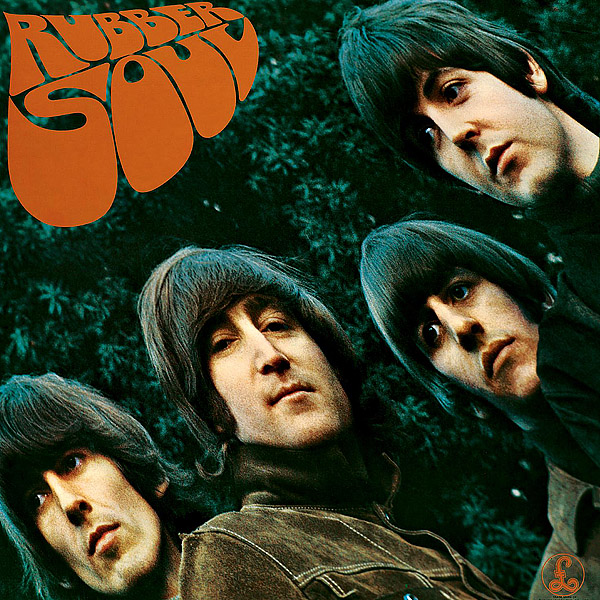
Album This song officially appears on the Rubber Soul (UK Mono) LP.
Timeline This song was officially released in 1965
Timeline This song was written, or began to be written, in 1965, when Paul McCartney was 23 years old)
This song was recorded during the following studio sessions:
Remixing "Help!", "Rubber Soul"
Circa December 1986 / January 1987
From Wikipedia:
“You Won’t See Me” is a song by the English rock band the Beatles from their 1965 album Rubber Soul. It was written by Paul McCartney and credited to Lennon–McCartney. The lyrics address McCartney’s troubled relationship with Jane Asher and her desire to pursue her career as a stage and film actress. The Beatles recorded the song during what Mark Lewisohn describes as a “marathon” final recording session for Rubber Soul, to ensure the album’s pre-Christmas release.
Background and inspiration
“You Won’t See Me” is about a crisis in McCartney’s relationship with girlfriend Jane Asher, who was refusing to comply with McCartney’s wishes that she stay at home and put his interests first. She had accepted an offer to appear in a stage production at the Bristol Old Vic theatre in 1965, while the Beatles were recording Rubber Soul. McCartney attempted to telephone her in Bristol, but she rejected him by not returning his calls. McCartney later said that it was “shattering to be without her”.
McCartney had lived in the Asher family home at Wimpole Street in central London since 1963. He recalled writing the song in the family music room in the basement of the house. His composition originated from “a two-note progression that I had very high on the first two strings of the guitar: the E and B strings”. He developed this by playing descending semitones on the B string while letting the top string ring out. He described the song as “very Motown-flavoured” with a “James Jamerson feel”. He drew musical inspiration for the composition from the Four Tops’ UK hit single “It’s the Same Old Song” (1965).
During this period, McCartney also wrote “We Can Work It Out” and “I’m Looking Through You” as commentaries on his relationship with Asher. The more biting tone of his lyrics marked a change from his typical love songs, in Howard Sounes’ interpretation, McCartney later said of the band’s approach to songwriting on Rubber Soul: “We’d had our cute period, and now it was time to expand.”
Recording
The Beatles recorded “You Won’t See Me” during the last day of recording for Rubber Soul – an all-night session that started at 6 pm on 11 November 1965. The deadline for completing the album was up, and the band needed to record three songs that night, in addition to finishing work on “I’m Looking Through You”. As a result, they cut the song in only two takes. At 3:22, it was the longest track the Beatles had recorded up until that point. The fadeout is slightly longer on the mono mix.
McCartney played piano on the basic track and then overdubbed his bass part. The tempo gradually slows down throughout the song, a point that music journalist Robert Fontenot attributes to McCartney leading the performance on piano, rather than Ringo Starr’s timekeeping abilities on the drums. In author Jonathan Gould’s description of the song, the tempo appears to “drag” due to McCartney’s “hyperactive Motown-style bass line”. Mal Evans, one of the Beatles’ roadies, is credited on the album sleeve as having played Hammond organ. His contribution consists solely of an A note held throughout the final verse and the coda. Gould also comments on the effect achieved by John Lennon and George Harrison’s wordless backing vocals over the verses, saying that their voices represent “a pair of deaf ears” by “embodying the girl’s indifference” to McCartney’s complaints. Starr augmented his drum part with a separate hi-hat overdub, adding rhythmic accents throughout the song.
Release and reception
Rubber Soul was released on 3 December 1965 on EMI’s Parlophone record label. “You Won’t See Me” was sequenced as the third track, between Lennon’s “Norwegian Wood” and “Nowhere Man“. While the album was an immediate commercial success, some reviewers in the UK were unprepared for the artistic progression the Beatles had made in their musical arrangements and as lyricists.
In his review for Record Mirror, Richard Green wrote: “It is possible to say that Lennon and McCartney are the great songwriting team of the day and that Beatles performances are spot-on, but this LP cannot support that statement.” He included “You Won’t See Me” among the tracks that were “dull and ordinary” with “none of the old Beatles excitement and compulsiveness about them”. Melody Maker said that the band’s sound had become “a little subdued” and that songs such as “You Won’t See Me” and “Nowhere Man” “almost get monotonous – an un-Beatle-like feature if ever there was one”. By contrast, Nikki Wine (aka Eden) of KRLA Beat found the album “unbelievably sensational” and described “You Won’t See Me” as “One of the greatest arrangements and blending of melodies by the Beatles … and it has to be one of the best cuts on the disc.”
Among more recent appraisals, Tim Riley says that the song’s “antagonism can’t help being tempered by [McCartney’s] melodic suavity, so he winds up sounding like an innocent victim rather than a co-conspirator in a love affair”; similarly, the arrangement and the position of McCartney’s vocal in the mix ensure that “the texture becomes more engaging than the emotion.” Riley nevertheless admires the complementary aspect of McCartney’s bass and piano contributions, adding of Rubber Soul as a whole: “without ever being intrusive, his bass emerges as an irreplaceable part of the overall texture. Because he virtually breathes melody, his bass lines begin to soar with inventive counterpoint to the band …” Ian MacDonald says the song, like “Nowhere Man”, “needed something to lift it” and rues the group’s use of the “irritating ‘ooh-la-la-la’ backing-vocal formula”. He concludes that, while it is “redeemed” by McCartney’s fluid bass playing, “‘You Won’t See Me’ soon founders under the weight of its own self-pity and expires long before struggling to the end of an unusually protracted fade.” In his song review for AllMusic, Richie Unterberger finds the buoyant melody at odds with the dejected lyrics, but he praises the vocal arrangement, particularly “the brilliant interaction of counterpoint melodies” through the addition of Lennon and Harrison’s harmonies. […]
This was written around two little notes, a very slim phrase, a two-note progression that I had very high on the first two strings of the guitar: the E and the B strings. I had it high up on the high E position, and I just let the note on the B string descend a semitone at a time, and kept the top note the same, and against that I was playing a descending chromatic scale. Then I wrote the tune for You Won’t See Me against it…
To me it was very Motown-flavoured. It’s got a James Jamerson feel. He was the Motown bass player, he was fabulous, the guy who did all those great melodic bass lines. It was him, me and Brian Wilson who were doing melodic bass lines at that time, all from completely different angles, LA, Detroit and London, all picking up on what each other did.
Paul McCartney – From “Paul McCartney: Many Years from Now” by Barry Miles, 1997
From The Usenet Guide to Beatles Recording Variations:
[a] mono 15 Nov 1965.
UK: Parlophone PMC 1267 Rubber Soul 1965.
US: Capitol T 2442 Rubber Soul 1965.
CD: EP Box set 1991.[b] stereo 15 Nov 1965.
UK: Parlophone PCS 3075 Rubber Soul 1965.
US: Capitol ST 2442 Rubber Soul 1965.[c] stereo 1987.
CD: EMI CDP 7 46440 2 Rubber Soul 1987.[b] fades slightly earlier than [a].
When I call you up
Your line's engaged
I have had enough
So act your age
We have lost the time
That was so hard to find
And I will lose my mind
If you won't see me
(You won't see me)
You won't see me
(You won't see me)
I don't know why you
Should want to hide
But I can't get through
My hands are tied
I won't want to stay
I don't have much to say
But I can't turn away
And you won't see me
(You won't see me)
You won't see me
(You won't see me)
Time after time
You refuse to even listen
I wouldn't mind
If I knew what I was missing
Though the days are few
They're filled with tears
And since I lost you
It feels like years
Yes, it seems so long
Girl, since you've been gone
And I just can't go on
If you won't see me
(You won't see me)
You won't see me
(You won't see me)
Time after time
You refuse to even listen
I wouldn't mind
If I knew what I was missing
Though the days are few
They're filled with tears
And since I lost you
It feels like years
Yes, it seems so long
Girl, since you've been gone
And I just can't go on
If you won't see me
(You won't see me)
You won't see me
(You won't see me)

LP • Released in 1965
3:18 • Studio version • A • Mono
Paul McCartney : Bass, Lead vocals, Piano Ringo Starr : Drums John Lennon : Backing vocals, Electric guitar, Handclaps George Harrison : Backing vocals, Electric guitar, Handclaps George Martin : Producer Norman Smith : Recording engineer Mal Evans : Hammond organ Unknown : Tambourine
SessionRecording : Nov 11, 1965 • Studio : EMI Studios, Studio Two, Abbey Road
SessionMixing : Nov 15, 1965 • Studio : EMI Studios, Studio One, Abbey Road

LP • Released in 1965
3:18 • Studio version • B • Stereo
Paul McCartney : Bass, Lead vocals, Piano Ringo Starr : Drums John Lennon : Backing vocals, Electric guitar, Handclaps George Harrison : Backing vocals, Electric guitar, Handclaps George Martin : Producer Norman Smith : Recording engineer Mal Evans : Hammond organ Unknown : Tambourine
SessionRecording : Nov 11, 1965 • Studio : EMI Studios, Studio Two, Abbey Road
SessionMixing : Nov 15, 1965 • Studio : EMI Studios, Studio One, Abbey Road

LP • Released in 1965
3:18 • Studio version • A • Mono
Paul McCartney : Bass, Lead vocals, Piano Ringo Starr : Drums John Lennon : Backing vocals, Electric guitar, Handclaps George Harrison : Backing vocals, Electric guitar, Handclaps George Martin : Producer Norman Smith : Recording engineer Mal Evans : Hammond organ Unknown : Tambourine
SessionRecording : Nov 11, 1965 • Studio : EMI Studios, Studio Two, Abbey Road
SessionMixing : Nov 15, 1965 • Studio : EMI Studios, Studio One, Abbey Road

LP • Released in 1965
3:18 • Studio version • B • Dolby Atmos
Paul McCartney : Bass, Lead vocals, Piano Ringo Starr : Drums John Lennon : Backing vocals, Electric guitar, Handclaps George Harrison : Backing vocals, Electric guitar, Handclaps George Martin : Producer Norman Smith : Recording engineer Mal Evans : Hammond organ Unknown : Tambourine
SessionRecording : Nov 11, 1965 • Studio : EMI Studios, Studio Two, Abbey Road
SessionMixing : Nov 15, 1965 • Studio : EMI Studios, Studio One, Abbey Road

EP • Released in 1966
3:18 • Studio version • A • Mono
Paul McCartney : Bass, Lead vocals, Piano Ringo Starr : Drums John Lennon : Backing vocals, Electric guitar, Handclaps George Harrison : Backing vocals, Electric guitar, Handclaps George Martin : Producer Norman Smith : Recording engineer Mal Evans : Hammond organ Unknown : Tambourine
SessionRecording : Nov 11, 1965 • Studio : EMI Studios, Studio Two, Abbey Road
SessionMixing : Nov 15, 1965 • Studio : EMI Studios, Studio One, Abbey Road

CD • Released in 1987
3:18 • Studio version • C • Stereo • 1987 mix
Paul McCartney : Bass, Lead vocals, Piano Ringo Starr : Drums John Lennon : Backing vocals, Electric guitar, Handclaps George Harrison : Backing vocals, Electric guitar, Handclaps George Martin : 1987 remixing, Producer Norman Smith : Recording engineer Mal Evans : Hammond organ Unknown : Tambourine
SessionRecording : Nov 11, 1965 • Studio : EMI Studios, Studio Two, Abbey Road
SessionMixing : Circa December 1986 / January 1987

Rubber Soul (US - 2006 remaster)
Official album • Released in 2006
3:21 • Studio version • B2006 • Stereo • 2006 remaster
Paul McCartney : Bass, Lead vocals, Piano Ringo Starr : Drums John Lennon : Backing vocals, Electric guitar, Handclaps George Harrison : Backing vocals, Electric guitar, Handclaps George Martin : Producer Norman Smith : Recording engineer Mal Evans : Hammond organ Unknown : Tambourine Ted Jensen : Remastering
SessionRecording : Nov 11, 1965 • Studio : EMI Studios, Studio Two, Abbey Road
SessionMixing : Nov 15, 1965 • Studio : EMI Studios, Studio One, Abbey Road
Rubber Soul (US - 2006 remaster)
Official album • Released in 2006
3:27 • Studio version • A2006 • Mono • 2006 remaster
Paul McCartney : Bass, Lead vocals, Piano Ringo Starr : Drums John Lennon : Backing vocals, Electric guitar, Handclaps George Harrison : Backing vocals, Electric guitar, Handclaps George Martin : Producer Norman Smith : Recording engineer Mal Evans : Hammond organ Unknown : Tambourine Ted Jensen : Remastering
SessionRecording : Nov 11, 1965 • Studio : EMI Studios, Studio Two, Abbey Road
SessionMixing : Nov 15, 1965 • Studio : EMI Studios, Studio One, Abbey Road

Rubber Soul (Mono - 2009 remaster)
Official album • Released in 2009
3:18 • Studio version • A2009 • Mono • 2009 mono remaster
Paul McCartney : Bass, Lead vocals, Piano Ringo Starr : Drums John Lennon : Backing vocals, Electric guitar, Handclaps George Harrison : Backing vocals, Electric guitar, Handclaps George Martin : Producer Norman Smith : Recording engineer Mal Evans : Hammond organ Paul Hicks : Remastering Guy Massey : Remastering Steve Rooke : Remastering Sean Magee : Remastering Allan Rouse : Project co-ordinator Unknown : Tambourine
SessionRecording : Nov 11, 1965 • Studio : EMI Studios, Studio Two, Abbey Road
SessionMixing : Nov 15, 1965 • Studio : EMI Studios, Studio One, Abbey Road
Rubber Soul (Mono - 2009 remaster)
Official album • Released in 2009
3:18 • Studio version • B • Stereo • Original 1965 stereo mix
Paul McCartney : Bass, Lead vocals, Piano Ringo Starr : Drums John Lennon : Backing vocals, Electric guitar, Handclaps George Harrison : Backing vocals, Electric guitar, Handclaps George Martin : Producer Norman Smith : Recording engineer Mal Evans : Hammond organ Unknown : Tambourine
SessionRecording : Nov 11, 1965 • Studio : EMI Studios, Studio Two, Abbey Road
SessionMixing : Nov 15, 1965 • Studio : EMI Studios, Studio One, Abbey Road

Live bootleg
4:03 • Live
Concert From the concert in Madrid, Spain on May 30, 2004

La Belle France - 24 June 2004
Live bootleg
4:08 • Live
Concert From the concert in Paris, France on Jun 24, 2004

Live bootleg
4:14 • Live
Concert From "Dress rehearsal" in Gijon, Spain on May 24, 2004

Rubber Soul - Studio Sessions - Back To Basics
Bootleg • Released in 2012
3:29 • Alternate take • (Rockband Mix) (stereo)

Live bootleg • Released in 2014
4:09 • Live
Concert From the concert in Madrid, Spain on May 30, 2004
“You Won't See Me” has been played in 84 concerts.

Auckland • Mt Smart Stadium • New Zealand
Dec 16, 2017 • Part of One On One Tour
Sydney • Qudos Bank Arena • Australia
Dec 12, 2017 • Part of One On One Tour
Sydney • Qudos Bank Arena • Australia
Dec 11, 2017 • Part of One On One Tour
Brisbane • Suncorp Stadium • Australia
Dec 09, 2017 • Part of One On One Tour
Melbourne • AAMI Park • Australia
Dec 06, 2017 • Part of One On One Tour

Notice any inaccuracies on this page? Have additional insights or ideas for new content? Or just want to share your thoughts? We value your feedback! Please use the form below to get in touch with us.

Jake Gerber • Sep 28, 2021 • 4 years ago
Lennon was NOT singing the high harmony ,and Paul the low. Listen to the bridge . That’s where the very high harmony is on the last couple of bars - I wouldn’t mind if I knew what I was missing - no way in hell could John get close to that note,and Paul sang it full voice, I sing that song, and that high harmony is at my breaking point, I couldn’t go a semitone higher in full voice,and it’s not falsetto.
If you’re referring to the back up vocals there is no way to interpret that as anything other than it is , a backup vocal that you can hit from many angles even falsetto on the higher part.
You should not headline this “ Paul sang the a lower harmony than John,and George “ hence you must be referring to the ooh la la etc. which is very simple yet effective. I notice Paul’s signature on title page. Did he authorize this ?

The PaulMcCartney Project • Sep 28, 2021 • 4 years ago
Hi Jake, thanks for your message. The sentence you are referring to was from the quoted Wikipedia page for "You Won't See Me". The page has changed since the time I had captured it. I'm now quoting the new page, which doesn't have this mention about high / low harmonies anymore. For your last question, this site not an official Paul McCartney website, and has no link with Paul McCartney or anyone from his staff.