Location
Location: Savoy Hotel • London • UK
Timeline
Previous article October 1969 • The "Paul Is Dead" conspiracy theory is growing
Single Oct 06, 1969 • "Something / Come Together" by The Beatles released in the US
Album Oct 10, 1969 • "Brave New World" by The Steve Miller Band released in the UK
Article Oct 13, 1969 • Paul and Linda attend the opening night of Mary Hopkin's cabaret season in London
Film Late October 1969 • Shooting of "Something" promo film
Interview Late October 1969 • Paul McCartney interview for CBS
Next article October 22 to November 17, 1969 • Paul and Linda McCartney retreat in Scotland
Related people


Related articles
-

The Beatles attend Bob Dylan’s concert in London
May 09, 1965
-

Paul McCartney visits Jane Asher in Bristol
Nov 15, 1965
-
Paul McCartney sees the Scaffold in concert
Nov 27, 1965
-

Paul McCartney meets Stevie Wonder
Feb 03, 1966
-

Paul McCartney attends a lecture by Luciano Berio
February 23 or 24, 1966
-

The Beatles attend the world premiere of “Alfie”
Mar 24, 1966


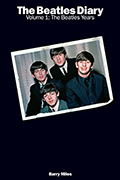
On this day, Paul and Linda McCartney, Ringo and Maureen Starr attended the opening night of Mary Hopkin’s cabaret season at the Savoy Hotel, in London.
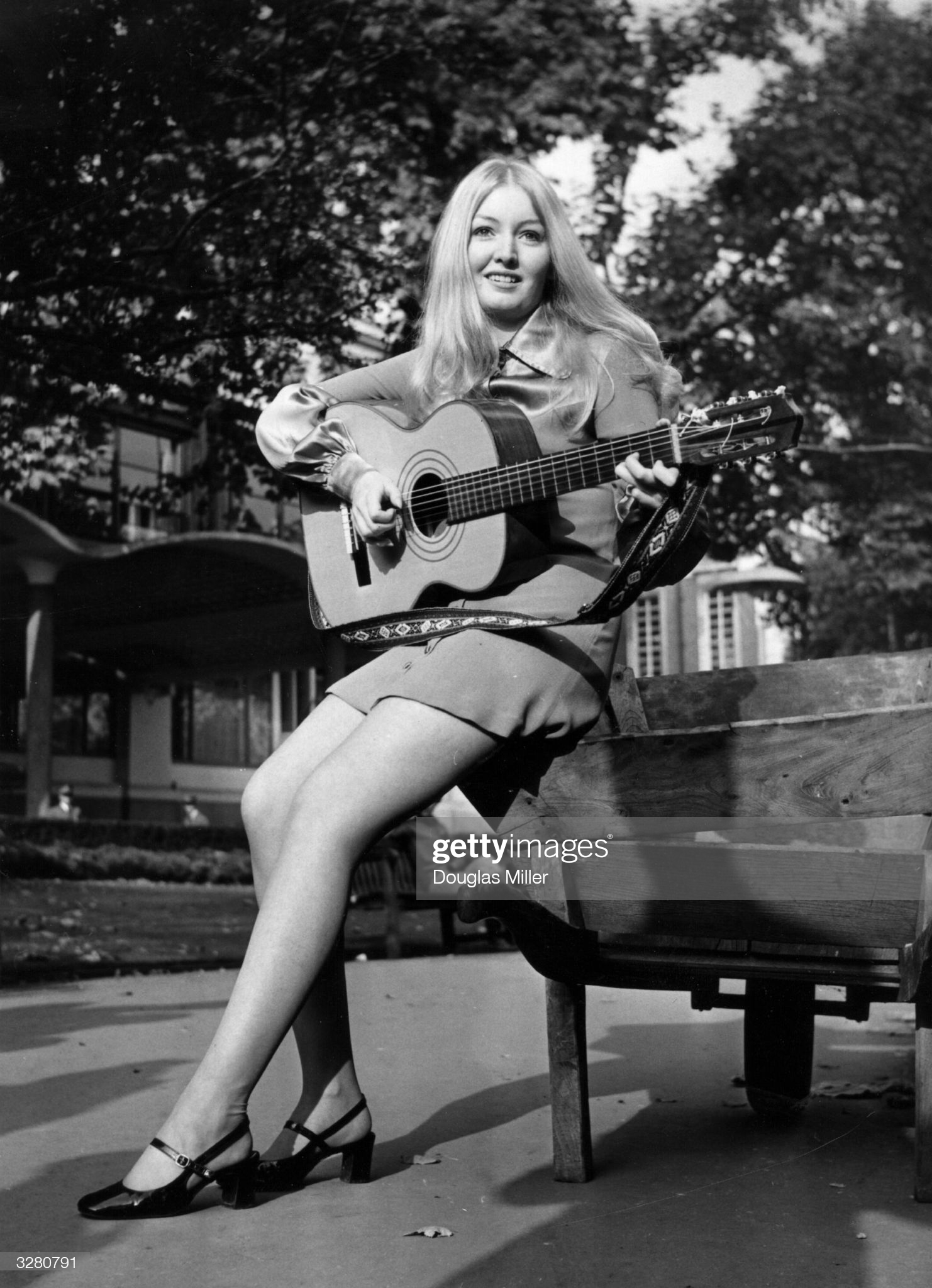
MARY TAKES HER FAME SO QUIETLY
There are cabaret spots and cabaret spots, and when somebody phones up of a Monday morning and suggests you appear at London’s Savoy Hotel for a week or three you have it made.
If Mary Hopkin had had a call to that effect less than 18 months ago she might have told the local GPO there was a crank on the line. Now she can open there this Monday night without batting a Welsh eyelid. The little lady from Pontardawe has hit the top of the cabaret tree in a year that reads like a chapter of Hans Christian Andersen.
A year that saw her with a number one record, a contract with the Beatles, an invitation to represent Britain at the Eurovision song contest in Holland next year and the offer of stardom in a £2 million movie. These are very much the days for Miss H. The three week spot at The Savoy comes after the most important TV date Mary’s had since happy Hughie Green let opportunity first knock.
For last weekend she recorded a guest spot for a new series of “Tom Jones Shows” which will be beamed to a massive audience tuning in from San Francisco to Stonehaven. With her was Tom’s other guests Shelley Berman and Jose Feliciano and little girls don’t keep that kind of company for very modest fees. During breaks in the recording Jose sat around strumming some of Mary’s numbers. Tom sat around watching Mary’s numbers. Mary, in a plain little dress and Welsh head-dress, carried complacently on.
Whoever first said to this quiet teenager “I can make you a star, baby” knew exactly what he was talking about.
From Daily Record – October 11, 1969
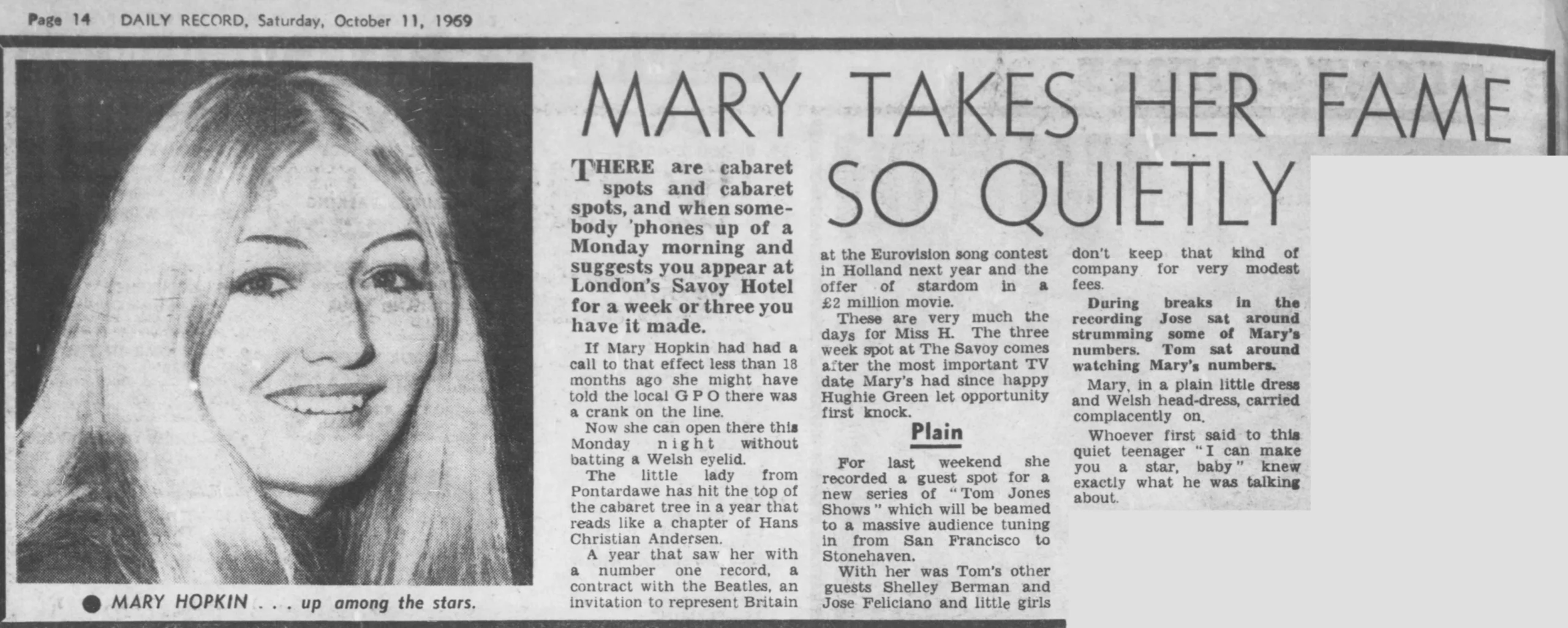
Little Mary Hopkin
Just over a year after she left school, Mary Hopkin has arrived at the Savoy in cabaret. Obviously petrified by that rabble—and who would not be?—she struggles away with her tiny voice, trying to entertain, trying to please. She skips around the stage as if she were attending a Sunday school outing. No mealy-mouthed jokes, no insinuating patter, no pow—just a sad, romantic little girl with her new party dress on, wanting to do her best.
Admittedly her best is not up to much as yet. Lacking in phrasing, lacking in range, lacking in power, her voice struggles to encompass the ache of her songs. She fails and so confirms the suspicion that in her case the singer is only as good as the song. But the voice has a marvellous wistful quality which, with rigorous training and discipline, will surely outclass all her pop rivals. “I want to hear her shout,” observed McCartney correctly.
At first hearing, her timidity is appealing; at second, it’s just a drag. She refuses to go and get the audience, not out of cunning but out of cowardice. When she giggles, she instinctively puts her hand up to cover her crooked teeth. But who, except she, really cares? It’s the voice that matters.
She is almost squashed by a galumphing great band which rattles its way through some of the most clumsy orchestrations ever devised and whose ability to play quietly deserted it centuries ago. In spite of all, she remains infinitely feminine with her dyed-blond hair and cold blue eyes. She is awkward and shy and apologetic. But she epitomises the girl about whom a bad word can hardly be said. “She’s not as daft as she looks,” says Paul McCartney who, with Twynsy, put her on the map. And no matter what she sings, her voice will always be unmistakably that of Mary Hopkin.
Although Pontardawe, a small mining village near Swansea, has tried to persuade us that Mary comes from there, she was actually born in Ystradgynlais 19 years ago. Harry Secombe came from the same valley. The youngest of three daughters of a minor civil servant in the local housing department, she taught herself guitar out of a book and gave forth at the local Congregational Tabernacle. Apple, disguised as the young McCartney, gave her a world smash hit with Those Were the Days and earned her £40,000 whilst she might have been studying for her ‘A’ levels.
After her mesmeric introduction to the pop world, she said: “I don’t want to mix with them too much because I don’t think they’re my sort of people. I hate all their pretence.” Her relations with Apple have soured a little, especially since of late no one seems to be able to find the right material for her new record.
“When I am in London, I feel out of it,” she said. What she will make of Alice Fitzwarren when she opposes Tommy Steele in the Palladium Christmas pantomime, or how she will survive representing Britain at next year’s BBC works-outing, the Eurovision Song Contest, even McCartney doesn’t know.
“I’m a good girl, I am,” she said and meant it. But the ultimate cruelty of show-biz is that it despises such gentleness. So in a sense, if she remains in pop, she is doomed even before she has begun.
Back in Pontardawe she is still at her happiest, in spite of Apple and the Savoy. Curiously, the first song she ever remembers singing was God helps all the little sparrows. She was six at the time.
From The Observer – October 19, 1969