
Sunday, May 31, 2026
Interview for Sunday Today
Interview with Sunday Today on NBC
Interview of Paul McCartney
Last updated on June 14, 2026
Sunday, May 31, 2026
Interview of Paul McCartney
Last updated on June 14, 2026
Interview location: Rough Trade shop • New York • USA
Interview May 30, 2026 • Paul McCartney interview for New Musical Express (NME)
Interview May 31, 2026 • Paul McCartney interview for NBC
Article Early June 2026 • The Dungeon Lane street sign disappears
Next interview Jun 08, 2026 • Paul McCartney interview for Clash
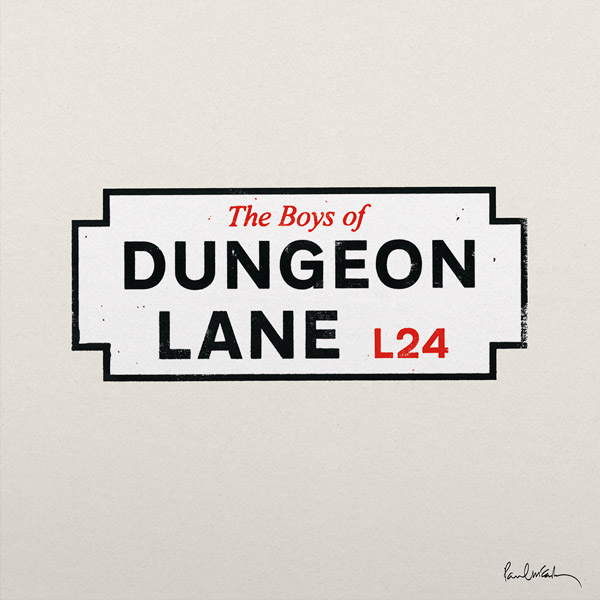
AlbumThis interview was made to promote the "The Boys Of Dungeon Lane" Official album.

Officially appears on A Hard Day's Night (Mono)

Unreleased song

Officially appears on Days We Left Behind

Officially appears on The Boys Of Dungeon Lane

Officially appears on Please Please Me (Mono)

Officially appears on Help! (Mono)
Interview for The Tonight Show
May 14, 1968 • From NBC
Mar 12, 1974 • From NBC
Interview for the Tonight Show
Dec 17, 2014 • From NBC
Paul McCartney at the Tonight Show starring Jimmy Fallon
Dec 17, 2020 • From NBC
This interview remains the property of the respective copyright owner, and no implication of ownership by us is intended or should be inferred. Any copyright owner who wants something removed should contact us and we will do so immediately.
As part of the promotional campaign for his forthcoming album “The Boys Of Dungeon Lane“, Paul McCartney appeared on NBC in an eight-minute interview segment. The full 30-minute conversation was released as an episode of the “Sunday Sitdown” podcast.
The interview was recorded during Paul’s visit to New York in May 2026, when he was scheduled to appear on “Saturday Night Live” on May 16 and on the final episode of “The Late Show with Stephen Colbert” on May 21. It was filmed after rehearsals for “The Late Show”, several days before the actual broadcast and performance.
WILLIE: Hey guys, Willie Geist here with another episode of the Sunday Sitdown podcast. My thanks as always for clicking and listening along. I have a good one for you today — but “good” is not the word. I have a great one for you. I have an iconic one for you. That’s a vastly overused term in our culture today, but this is an honest-to-goodness icon. He is one of the four lads from Liverpool who make up the most famous band in human history. The Fab Four arrived in New York City in February of 1964; two days later they played the Ed Sullivan Show and Beatlemania officially erupted across the United States. He is — Sir Paul McCartney. I can’t believe I’m saying it out loud. We got McCartney on the Sunday Sitdown podcast.
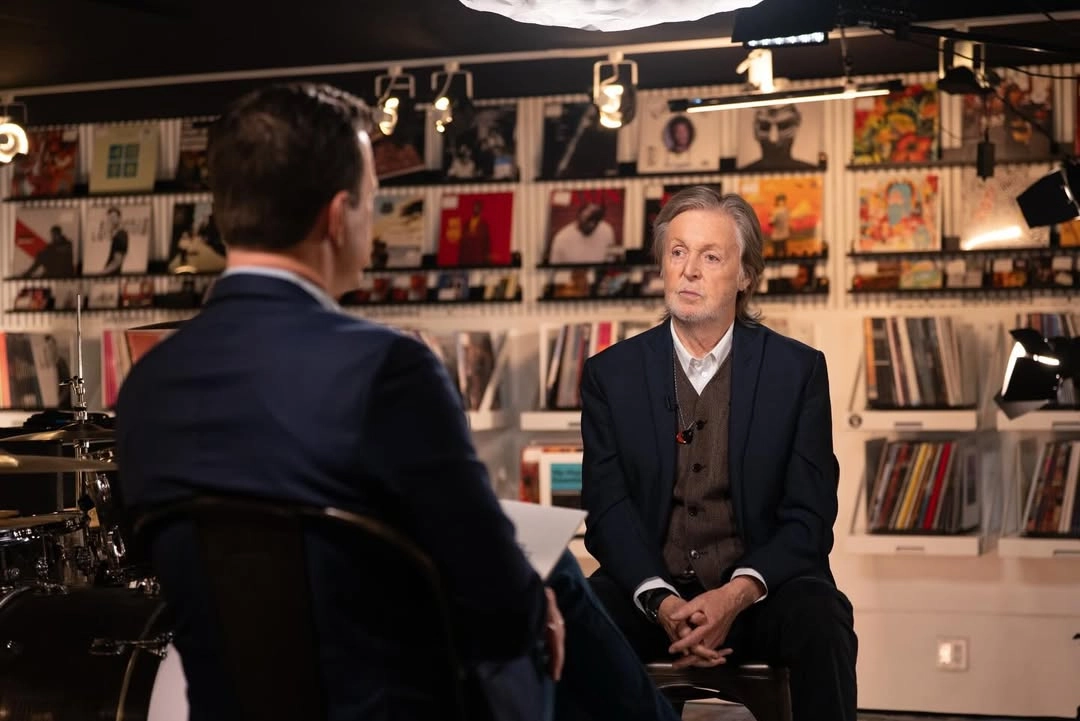
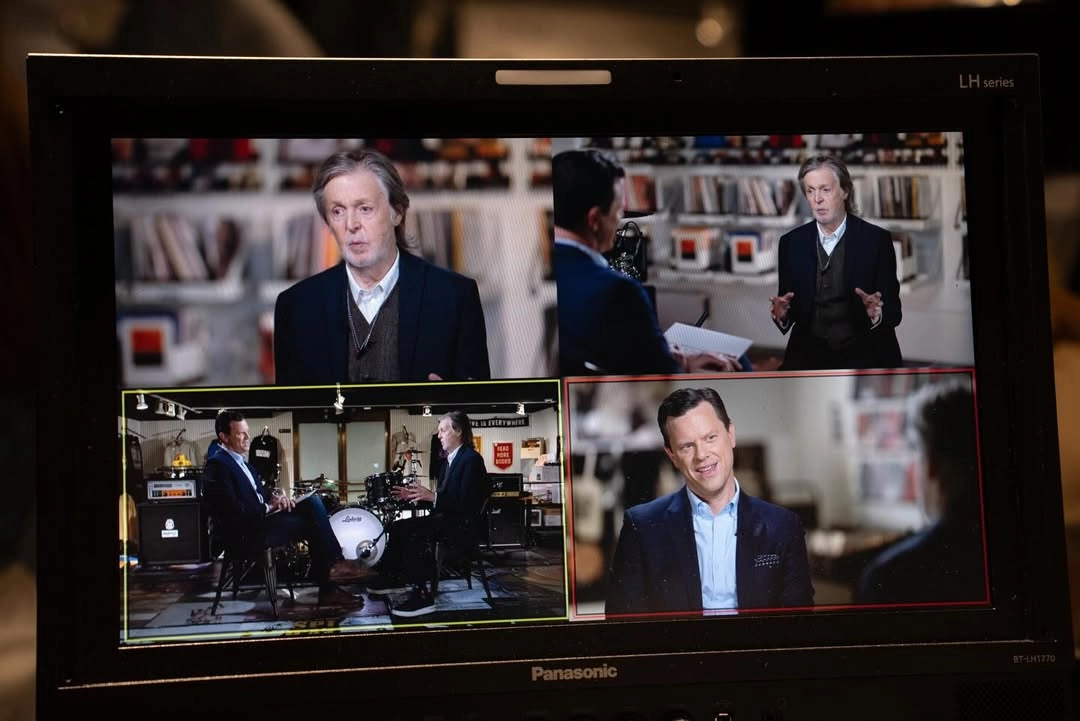
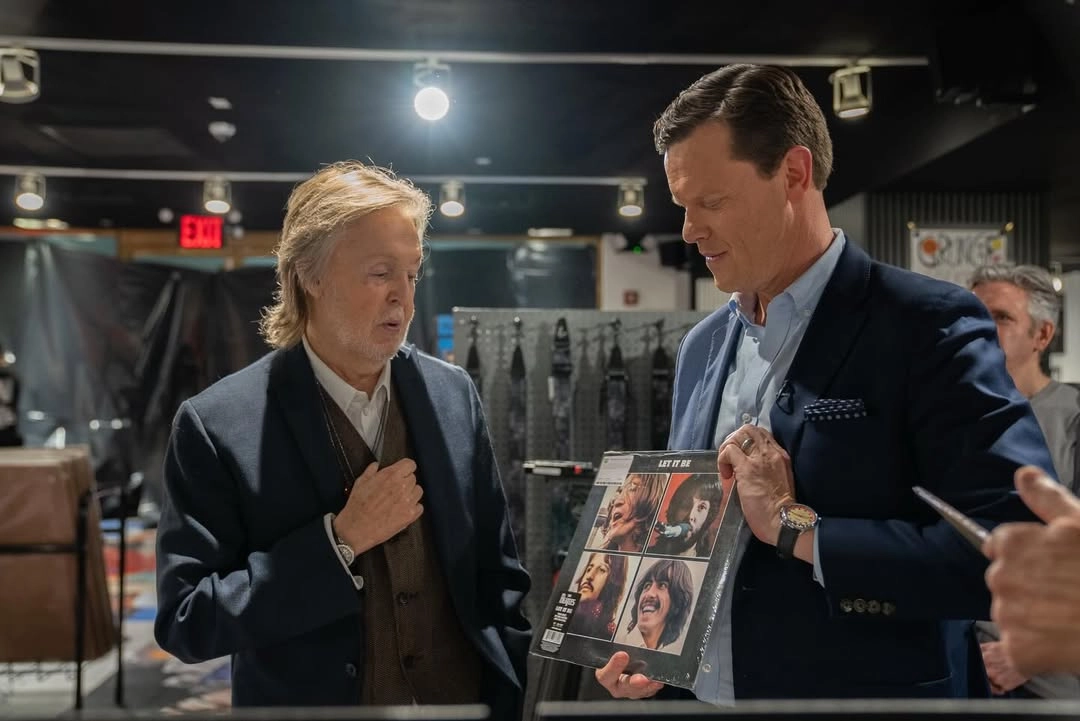
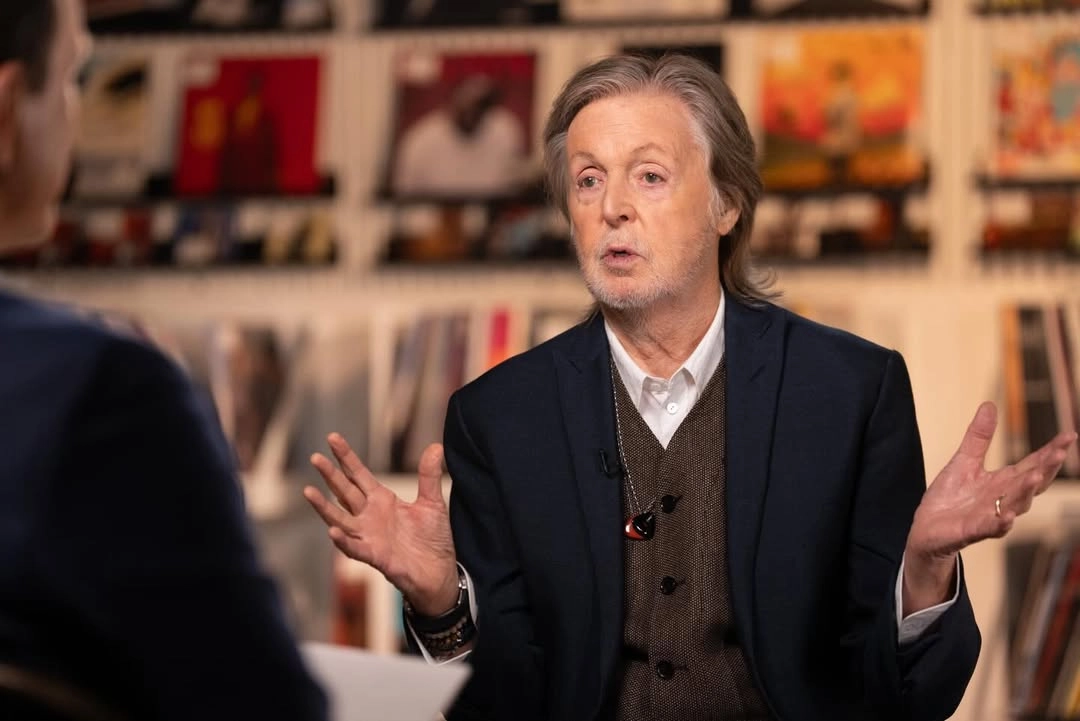
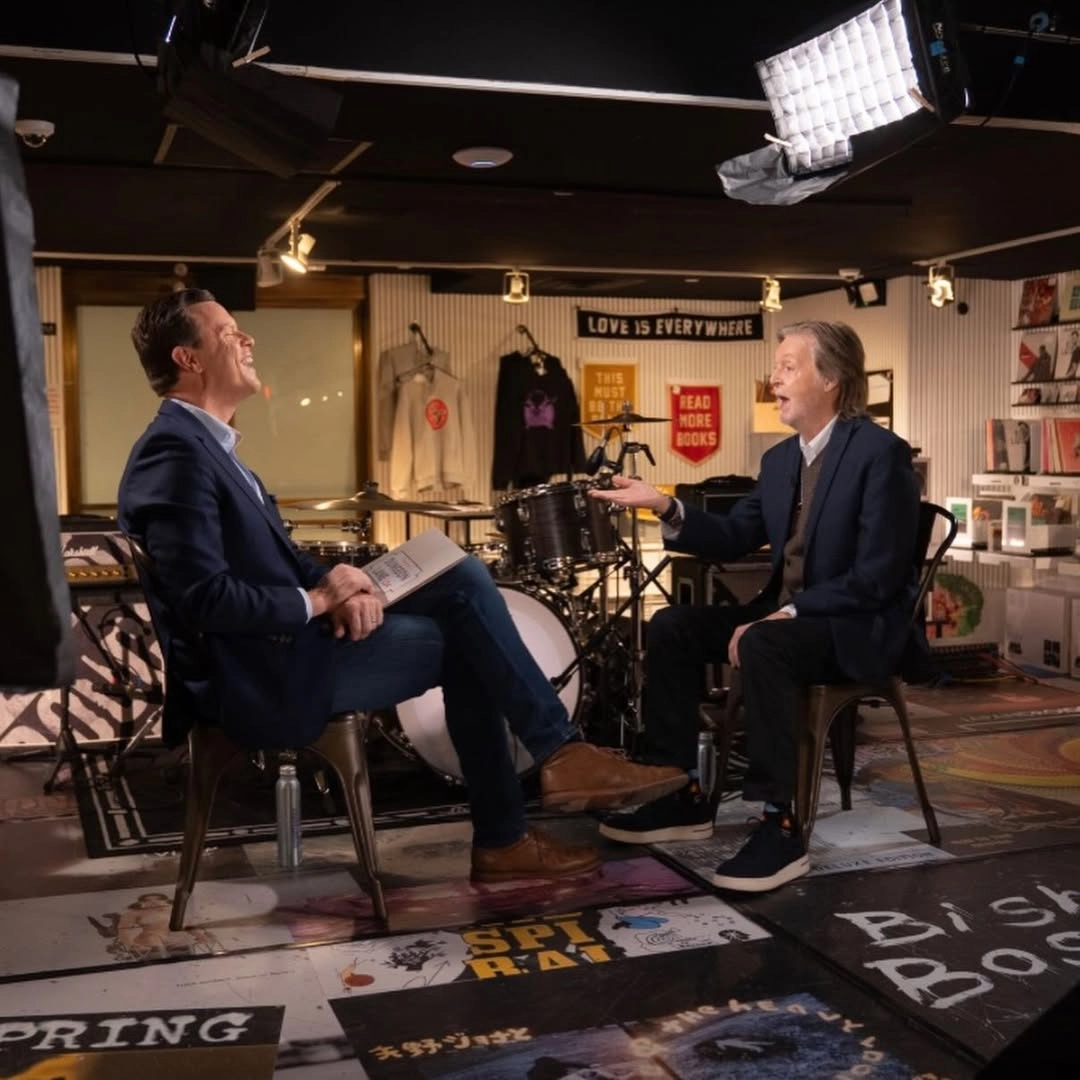
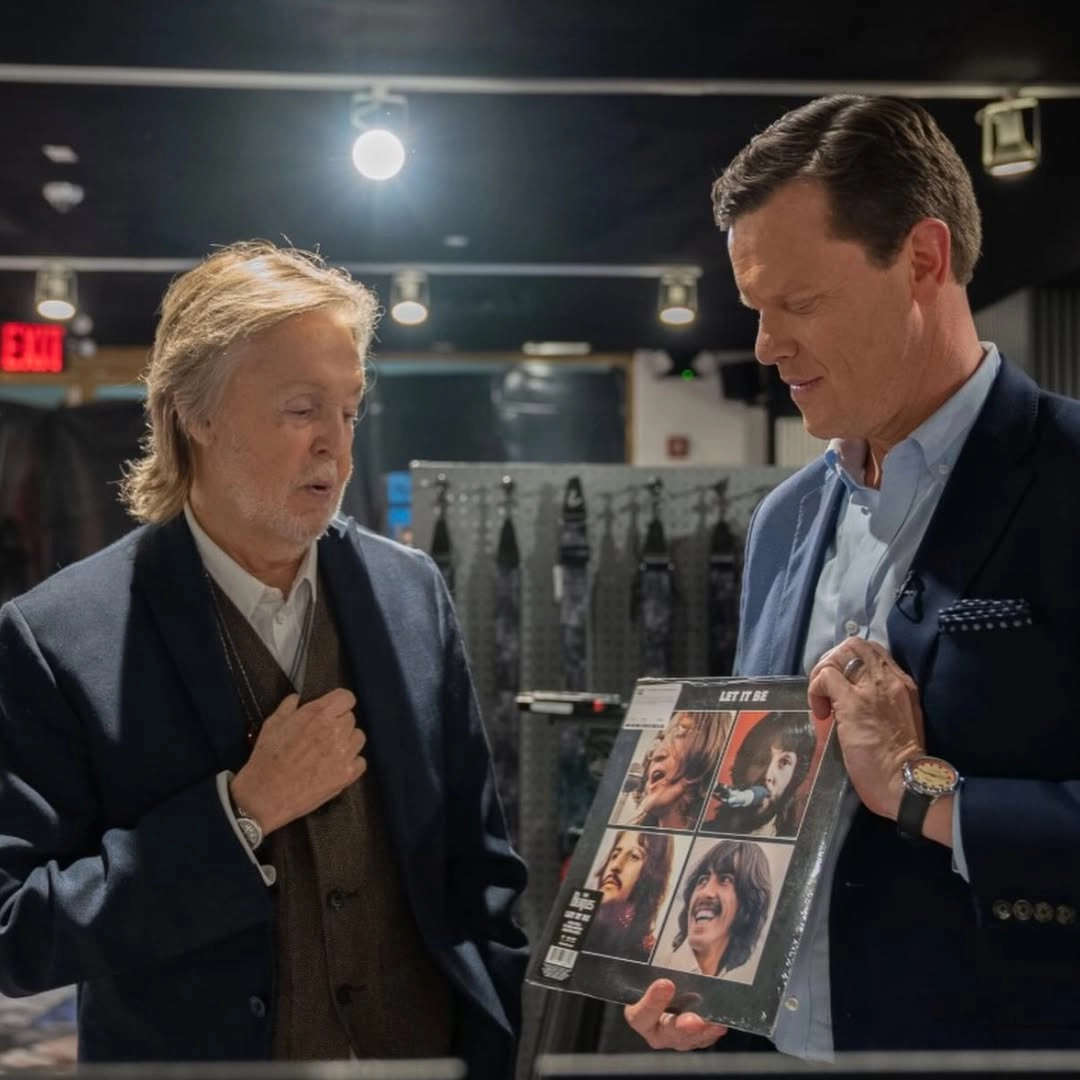
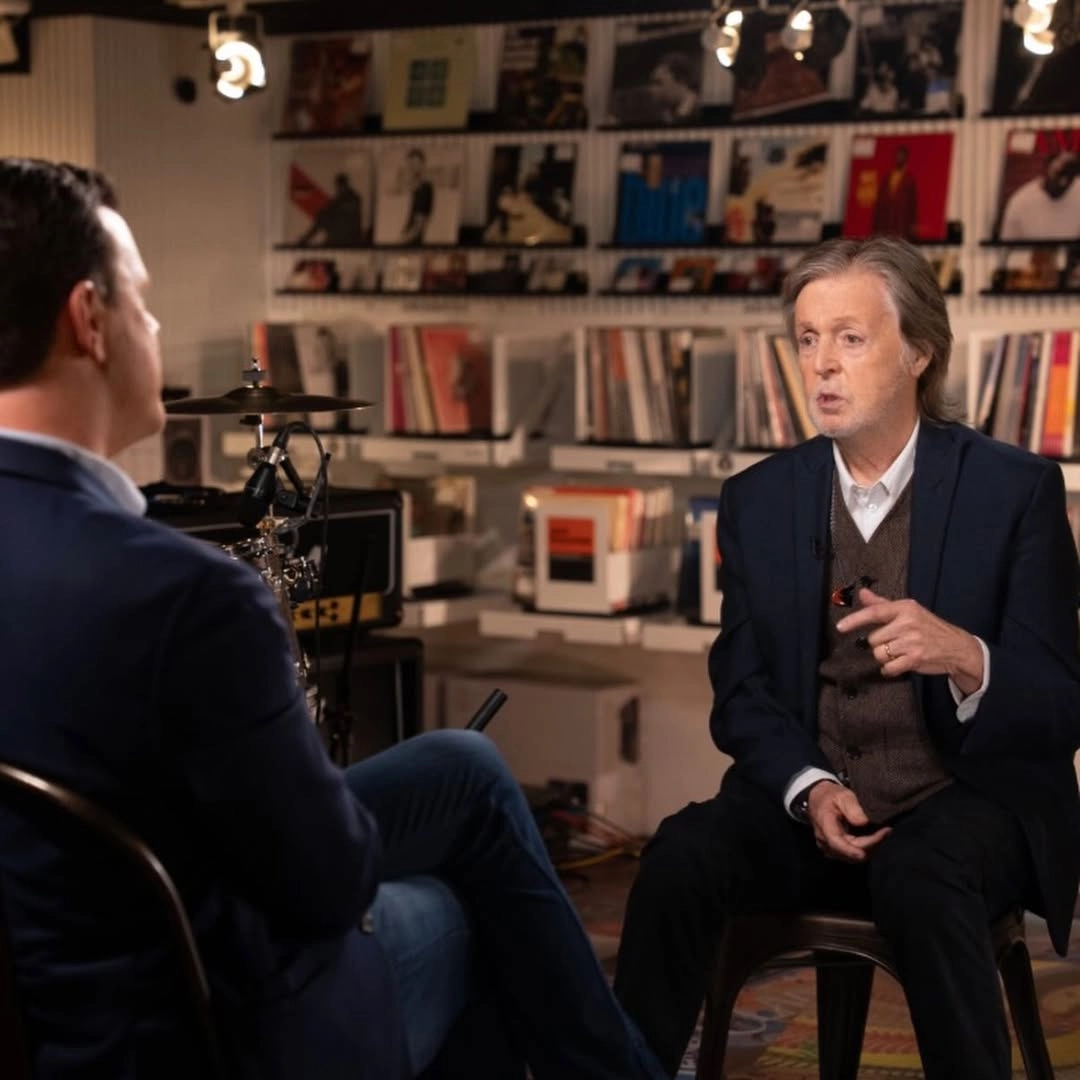
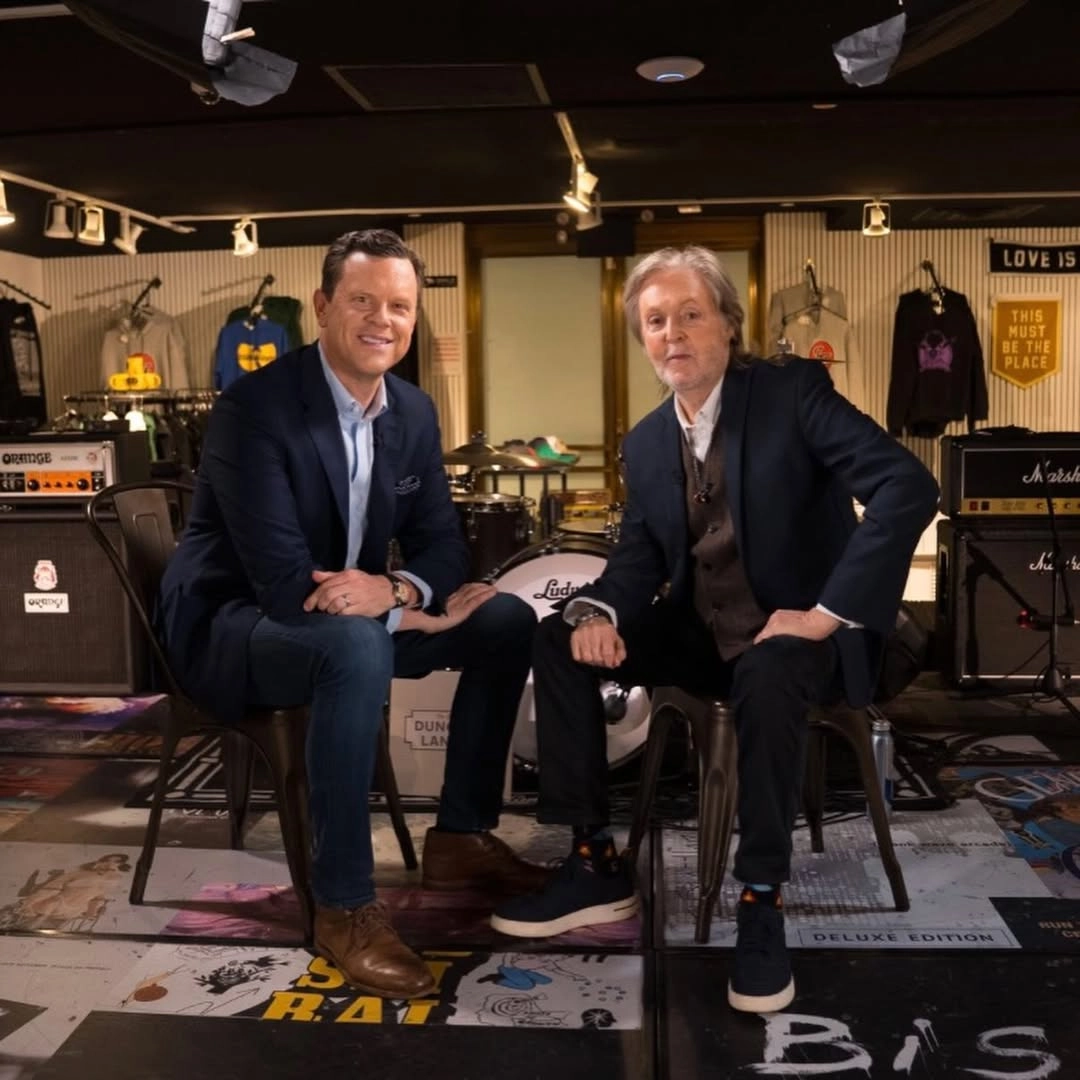
Paul has a new album coming out called The Boys of Dungeon Lane. It’s a solo album that takes him back to those early days in Liverpool, where he met John Lennon in the summer of 1957. He brought his friend George Harrison, a schoolmate of Paul’s, to meet Lennon — George is the guitar player. A few years later they bring in Ringo Starr and the Beatles are born. So we’re talking about his new album. Just to give you a visual: we gathered in a record shop in New York City called Rough Trade. So there we are, sitting in chairs, me across from McCartney, surrounded by albums — Beatles albums, yes, but so many of the records that surround us were inspired by the Beatles, ranging from Springsteen and Billy Joel and even Nirvana. Kurt Cobain used to talk about how he’s inspired by the Beatles — and that’s just the tip of the iceberg. The Beatles’ influence is everywhere you look in music, even to this day.
So we talk about the new album, talk about some memories from Liverpool with John and the boys, talk about his impact on music. And he had just come — we can say now — from his rehearsal for the final show of Stephen Colbert’s Late Show. As you know by now, it was McCartney who shut down the place, in a poetic way, given that he came there in ’64 and played the Ed Sullivan Theater, and then ended Stephen Colbert’s run there all these decades later. So I’ll give you no further introduction, because my goodness — this is Paul McCartney. If there ever was a man who needed no introduction, it is him. Sit back, relax, and enjoy Paul McCartney right now on the Sunday Sitdown podcast.
Paul McCartney, thanks for doing this. What a pleasure to meet you. This is a thrill.
PAUL: Thank you.
WILLIE: The album — The Boys of Dungeon Lane. Just a beautiful, beautiful album. Let’s start with the title. Who are the boys of Dungeon Lane?
PAUL: Well, Dungeon Lane was a place in Speke, which was an area where I lived and where I met George Harrison — so it was where I used to hang out. There was a little lane called Dungeon Lane that led down to the seashore, the Mersey shore. So I used to go down there quite a lot. And I was a bird fancier — I had a little Observer’s Book of Birds, it was cool. So I used to hang out down there. It was a nice place for me. So “the boys of Dungeon Lane” are, in my mind — I’m thinking of a couple of boys who mugged me and stole my watch. But it’s more general. It can be a lot of people from Liverpool. So yeah, it’s just a general thing.
WILLIE: It’s beautiful — the memories that are conjured throughout this. Of your friends, of your parents, of your childhood. What made you, at this point in your career, want to go all the way back to those days and tell those stories?
PAUL: I don’t know, you know. I think when you’re writing stuff — no matter what you’re writing, an essay, an article, a book or a song — I think you’re often looking to the past, because that’s where all the material is. That’s where everything you’re going to draw on is, unless you’re doing some sci-fi futuristic thing. So yeah, I easily look back, and maybe it’s just this point in my life, but I do enjoy looking back. I think a lot of people do. You’re looking back at your childhood, and if you’re lucky, like I was, you’ve got a lot of warm memories. So going back to them is a beautiful, warm feeling. That’s probably why I do it — it’s just a nice place to be. And while you’re there in your mind, you can see things, and I thought I could write about that.
I’m writing about my parents. One of the songs on the album — it suddenly occurred to me, well it’s occurred to me many times, that they had me during the war, World War II. And I just think of a couple of young people — you can’t think of your parents as young people, but they were — having a baby. And meanwhile Hitler is sending over these bombers and bombing the hell out of Liverpool. So I just thought of the bravery, the courage of them to just sort of move forward, carry on. So it’s a good theme to write a song about — plenty of memories and material.
WILLIE: “Salesman Saint” is the song you’re talking about, which is beautiful — which is your father. Your mother’s a nurse, so she’s the saint in the story. You’ve talked about your parents, you’ve written about them in songs before, but to me this is one of the most beautiful tellings of their story. It sounds like you have purely fond memories of those days. Obviously you lost your mother far too young, when you were 14 years old, but you remember your parents very fondly in this song, don’t you?
PAUL: I do, yeah. I think you’d block out the bad bits, you know. But I was lucky — I had a really good family, good parents. And the bits you block out are when your dad caught you doing something and decided he had to slap you. So it’s a good job I’ve blocked it out. (He only used to slap your knees.) But generally I have really warm memories. And also my uncles and aunties and cousins — there were quite a group of them, and they were good people. Some people sort of say, “How come you seem kind of ordinary sometimes?” I said, it was them — they keep your feet on the ground. They were funny. The uncles mainly would say, “Have you heard the one about…”
WILLIE: It’s always the uncles, isn’t it? Me too, yeah.
PAUL: … and come up with a great joke you hadn’t heard. And also, when they left the house, they’d slip you a bit of money. So you’re going to love that guy, you know. And the aunties were fantastic — great cooks, so you remember the food and that. It was good times until my mum died. And then things changed, obviously.
WILLIE: “Days We Left Behind,” which is the first single — you sang it at Saturday Night Live a few nights ago. Beautiful, beautiful song, beautiful songwriting. That’s a song you’ve said is about memory. What do you mean when you say that? When you look back at those days you’ve left, what are you seeing? What do you feel?
PAUL: Yeah. You know, I don’t know how I write stuff. I do a class in Liverpool, at my old school, for songwriting students. And that’s often one of the first things I say when I come in — I sort of say, “Look, I don’t actually know how to do this.” I don’t think it’s very inspiring, but they get what I mean. I don’t know how I do it. But once you start on a song, it takes you to places that can lead to the next place. And so memory songs, like “Days We Left Behind” — just talking about smoky bars and cheap guitars, that’s real. That’s how it was. But it’s also very emotional, because you’ve left them behind. And I think people resonate with that thought. Everyone’s got days they left behind, whether it’s your college days — “Oh, that was so great. What about that girl? What about that guy? What about that football game?” So I think a lot of people can relate to that. And then there’s a line in it which says, “Nothing stays the same — no one needs to cry.”
And that’s when everyone cries. It does make quite a few people well up, that song. But it is just — we’ve lost those days. So it’s sad, but it’s happy, because they were great days. It’s a strange little world of memory.
WILLIE: You can cry either way — whether they were joyful days or mournful days, they’ll bring a tear to your eye… Part of the memory as well is of the boys from the band — you and George hitchhiking, in the song “Down South”. It just feels to me, listening to that, like you’re singing about a simpler time, when the two of you could throw up a thumb, hop on a lorry, and catch a ride somewhere. Before, as you say in the song, before “Twist and Shout.” That’s about your relationship with him, isn’t it?
PAUL: It’s about George, yes — because we did a few hitchhiking trips. It’s a cheap holiday. We didn’t have much money. But it was great, because it was very bonding, and this was before the Beatles, before “Twist and Shout.” So it just made you understand each other a bit more, as mates. You know, it’s lunchtime and you’re still looking for a lift, and you run into a little shop and get a little tin of Ambrosia creamed rice, you open that, share it. Simple little things like that — but they were great. So that when we became the Beatles, and we had to do things like America, the Ed Sullivan Show, Royal Command performances — big-deal stuff — we knew each other very well. We kind of each knew what the other was thinking. We knew what chords he was playing. We had a lot in common by that time, probably because of all this stuff we’d been through.
We had some great times on those trips. We were hitchhiking to Harlech in Wales, me and George, and we got a lift off a milk float — a little guy who just delivered milk. Those were the only electric cars you ever saw back then, you know, before EVs. So there’s a battery next to the driver, and then there’s a passenger seat. We hopped in — George sat on the battery, and I got the passenger seat, I was second in. And then suddenly the guy takes off, and suddenly George jumps up.
What happened — he had a zip on his back pocket, and it connected the battery. So it burned him, and he jumps up. And later on, when we found a place to stay, he showed me — he had like a zip mark on his bum.
WILLIE: He probably had that all his life, and only you knew about it.
PAUL: I wonder. The strange thing — we’re talking about memory — not everyone remembers things the same. They remember things, but from their point of view. I was with Olivia Harrison, George’s wife, recently, and this kind of thing came up. She said, “Oh, George told me about that — when you sat on the battery.” I said, “Oh, George, all right.” So it just got crissed-crossed. We’ll never know — it’s lost to history, maybe.
WILLIE: You say you can’t quite explain how you write a song or put them together. But what is your process? Blank page in front of you — “I want to put out a new album,” even the concept of it: “I want to take it back to Liverpool, to my childhood.” How do you begin to create an album? You’ve done it so many times, on your own and with bands as well.
PAUL: It’s always the same for me. It’s either a guitar or a piano, and it’s normally when I’ve got some time off and I don’t have to go to a meeting or a gig or something. So it’s just a day off, and I just love noodling around on a guitar. So I’ll play, and if I’m lucky, something nice will appear — a nice chord, or some words I like — and then I just follow that trail. Same on the piano. And I don’t know where it’s going to lead me. I don’t know why I’ve started it like that, but I know, if I’m looking, it’s going to lead me somewhere. So it’s great — it’s like this discovery process.
So then you finish your song, and for me it’s a question of when I’ve got enough songs — then I tend to think, “I’ll put together an album.” So I don’t actually consciously think, “This is going to be a nostalgic album or a memory album.” It’s just, when I put them all together, I notice there are six or seven that deal with memory. And then someone was like, “Oh, it’s a concept.” And I’ll go, “Yeah.” I didn’t mean it to be, but the fact is, I’m writing it, so it’s all going to hold together, because it’s coming from my head. But I don’t have any grand plans — “This is going to be memories of Liverpool.” I never think like that. I’m just writing a song, and it can go anywhere it wants, and I’ll follow it.
WILLIE : Speaking of memories from Liverpool — I’m thinking about you as a young boy growing up, the son of a salesman and a nurse, and wondering where music first comes into your life. Because on paper, growing up in Liverpool at that time, as you said, near the end of World War II — tough times. Where does the music begin for you?
PAUL: My dad was a pianist — amateur. He played by ear. And so there was always a piano in the house. I remember reading a biography on [?] who said, in New York where he’s from, that every house had a piano — it’s like, you know, like a computer. So we had one, and he was a good pianist. I liked it, so I would lie on the carpet listening to my dad playing these tunes. And I was lucky, because it all went in. I kind of understood what he was doing while playing these songs. So when it came to writing songs, I had a lot of that, that had already made its way into my mind.
And then radio — there’s a lot of music on the radio. And then later, when rock and roll arrived, that was a big seismic change in the world. Because it had been pretty square till then. And certainly there was Elvis, Little Richard, Chuck Berry, Gene Vincent — all American. And we were just bowled over. “What is this?” I mean, kids today can’t really imagine a time before rock and roll, because it’s in the consciousness, everyone knows. But there was a time when we didn’t know this crazy music. And suddenly there it was — Elvis, “Heartbreak Hotel,” and it was like, “What is that?” Little Richard — “Who is this man that sings like this?”
WILLIE: Pounding the piano the way he does… You lived on both sides of it — pre-rock and roll, then after rock and roll. And then you took it to an entirely new place.
PAUL: Well, I think that is true. We had both sides — John and I, too. So when John and I first hooked up and started writing stuff, we asked each other, “What are your favorite songs?” Rock and roll had only just come in, so your favorite songs were old songs. I said one of mine was a song called “Cheek to Cheek,” which Fred Astaire sang in a movie. And John said “Little White Lies” was his. So we knew these old songs, and the structure of these old songs, and we admired that. So now we were writing in the rock-and-roll world, but we had that old sensibility. We were always trying to put a little bit of that in — a bit of melody, or some of the ideas that appeared in those old songs, like a little lead-up intro before the song got going. So I think that was a bit of a secret of the Beatles — it wasn’t just one type of music, it was influenced by a lot of different types of music.
WILLIE: Yeah, you had that foundation and built off of that.
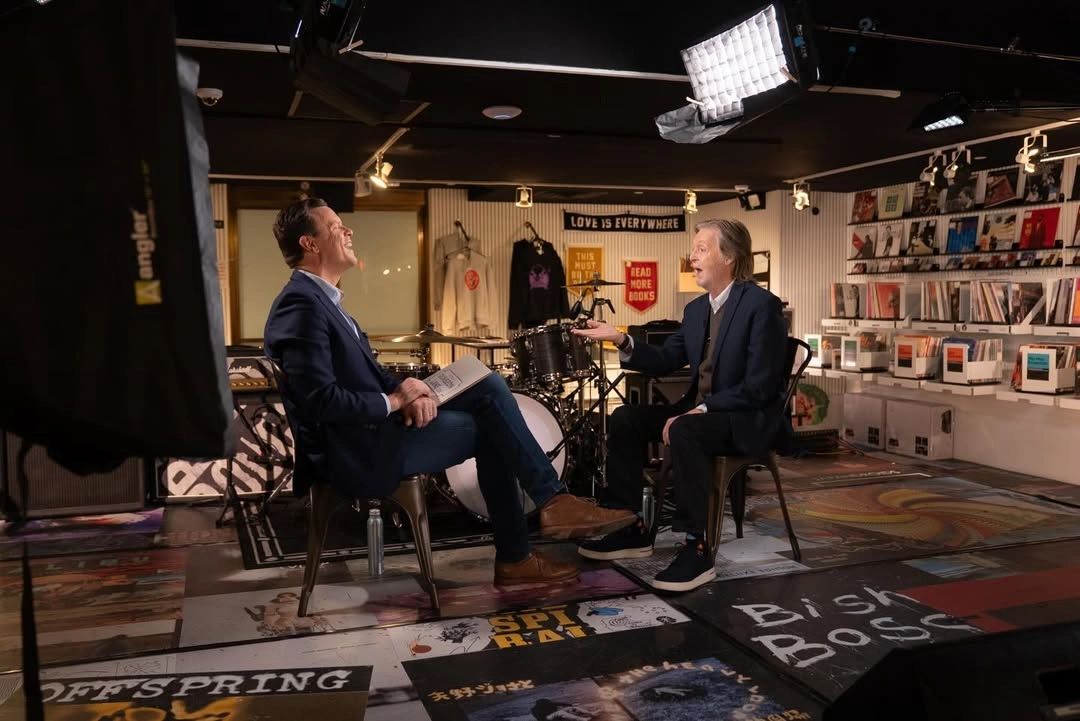
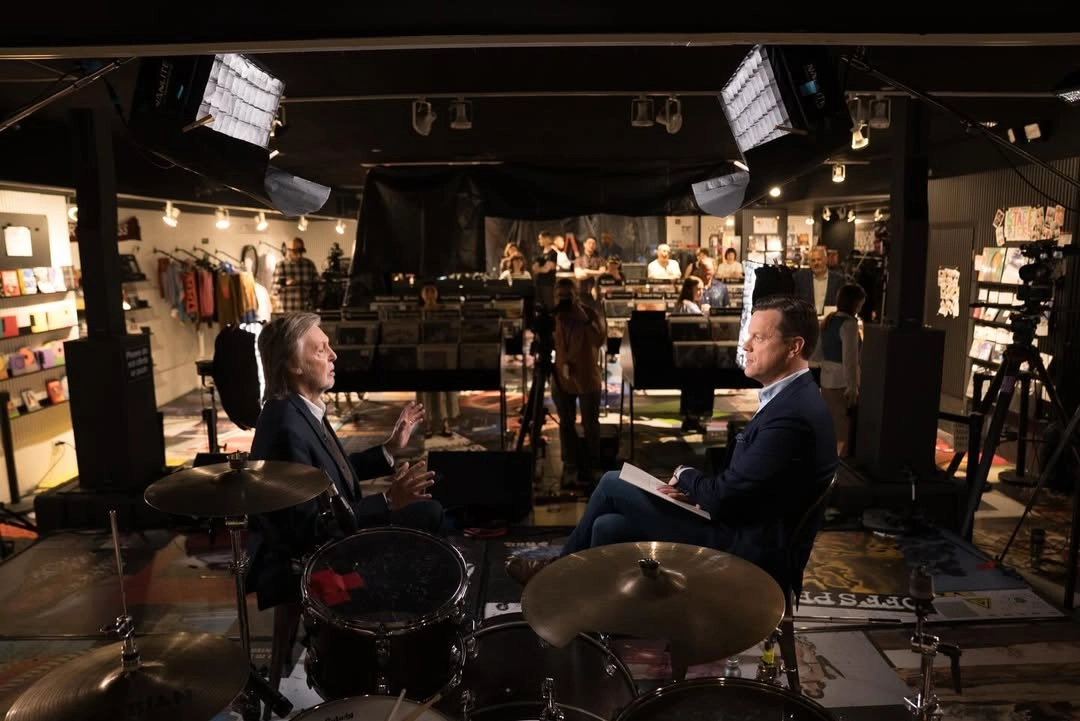
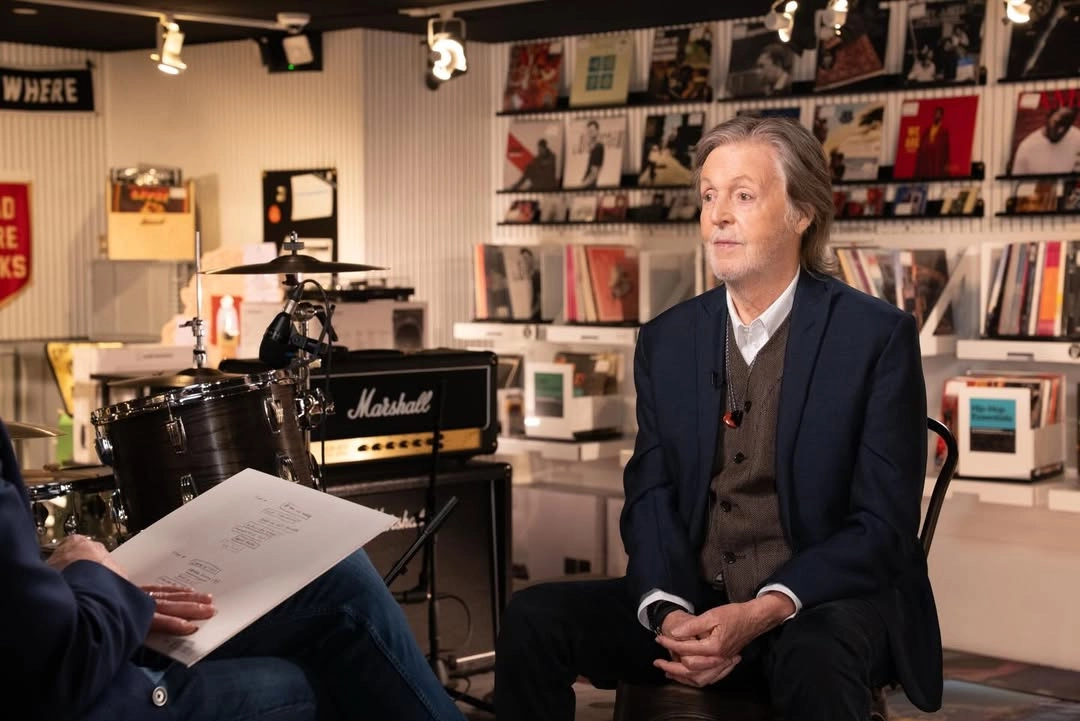
WILLIE: So you’re 15 when you meet John — he’s 16, I believe. And then you go through the Quarrymen, Johnny and the Moondogs, the Silver Beetles, and then we land on the Beatles. We were just talking about being in this city right now, in New York, and thinking about when you arrived here on February 7th, 1964, at JFK, to screaming fans, and then went to the press conference at the Plaza, to the almost hysterical media to greet you, and then of course played the Ed Sullivan Show a couple of days later. When you look back on that time, or you see video of it — what do you see? What do you feel? What do you remember?
PAUL: Well, I remember the thrill that it was for us, because, as I’ve said, all the music we loved came from America. So we just loved the idea of America. Now, then it was “give me your huddled masses” — it was the land of democracy. So it’s sad these days to see it getting eroded a bit. But, in answer to your question, it was a thrill. The fact that our music was on the radio, on American radio, in America — it was like, “Wow, unbelievable.” We didn’t quite know some of the TV shows we were doing. Like Ed Sullivan — we’d never heard of him. He was only really famous over here; he didn’t make it to England. And people like Walter Winchell, who were huge names over here. And they’d say, “It’s really big,” and we’d go, “Oh.” It didn’t faze us. It was just like, “Okay, it’s another gig.” But I look back and I see these young boys being amazed at where they’ve landed and what they’re going through. And, as I said before, because we knew each other and we’d all come up together and done a lot of stuff before we came to America, it was great — we all experienced the same kind of things, and we were all in it together, like a little tight group.
WILLIE: But when you get off that plane and you see that crowd and you see the genuine hysteria — you experienced some of that in the UK, but you maybe didn’t expect that here?
PAUL: No. We didn’t know whether it was going to happen here. We couldn’t work out how it would happen — “How would they know we were at the airport?” But what actually happened is, the captain of a plane always wires ahead to the airport he’s going into, and he heard there were loads of fans. So we knew there were loads of fans, and that made us very excited. So that’s great — what a great welcome. And so then we came down the stairs, and we felt very at home.
WILLIE: And now here we are in the year 2026. You’ve just come from the Ed Sullivan Theater, where you’re going to close things out for Stephen Colbert. When this airs, you will have closed things out for Stephen Colbert. What was it like to be back in that theater? Did some feelings come rushing back to you?
PAUL: Yeah, it’s magical when you realize that the space you’re standing in was the same space that those four boys stood in. And now here we are. I’ve done other things in there, with Letterman and various people over the years. But today, when I went there, it was very warm, and it was really nice. It was kind of amazing to think, “Wow, this is exactly the spot where we did all that stuff.” And what amazed me was that when you hear the tape, and you actually see our performance, it sounds good. It really sounds good — it’s like, okay, we didn’t put a foot wrong, and it’s live. That is live TV in front of a lot of people — the audience, the TV audience. So I think, luckily, we had the strength of the union, us guys, and we’d practiced enough to know: one, two, three, four, bang, and we went into it. We all knew how to do it. So that memory of doing that comes back, if ever I go to that space — it’s like, “Wow, we did okay.”
WILLIE: And you can still see those kids screaming up in the balcony?
PAUL: Yeah, that’s what it is. I see the balcony, and it’s like “Haaa…”
WILLIE: You know, there were 73 million Americans watching that first night. 73 million, in a country that was smaller than it is today. It’s incredible.
PAUL: I know, it was incredible. At one point I was doing the song “Yesterday,” which involves just me and a guitar, and they had a string quartet — the orchestra. It was just me on my own on the stage, and they had curtains, and a couple of guys on the curtains, local teamsters. They’re New York guys, you know, so they don’t care. And one of them turns to me and says, “Are you nervous?” — “no, it’s not too bad”. He said, “You should be. There are 73 million people watching.” I was like, “Oh, now I’m nervous.”
WILLIE: That is not what you want to be told right before you go out on live television.
PAUL: But then I look at it — I don’t look nervous.
WILLIE: No, not at all. It’s amazing, too, when you think about that performance on Ed Sullivan in ’64, and then your last performance as the Beatles was on the rooftop in ’69. It’s really only a five-year stretch in terms of American audiences seeing you. And as prolific as you all were — are you sometimes, when you look back on it, even surprised at yourselves? The volume — really a decade of material that you were able to put out.
PAUL: Yeah, I am. I’m very pleased with it. I think one of the things was, because we were just young guys, we didn’t want to get bored. So everything we did was an effort to not be boring. So if we did a song like “Yesterday,” let’s say, then the next song we wanted to do would be a rocker. And then after that, we’d want to do something strange. We were always trying to do something different. So I think that kept us moving forward — and quite a lot of different work, really. Which made it not boring, kept us interested.
WILLIE: And of course, every Beatles fan has a favorite album. I can throw them all out — you’re familiar with them. If you had to point to a Beatles album and say, “That was us at our best — that’s the Beatles” — could you pick one?
PAUL: That’s always a very difficult question. My mind went to Rubber Soul, because I think that was a change in what we’d been doing — things advanced a little bit there. But then I’d have to say Sgt. Pepper was, like, a crazy, different experience. And then I would probably finish up with Abbey Road.
WILLIE: That’s a pretty good list. I’m looking around this record store, Paul, and just thinking about all the influences you’ve had — when you hear people like Bruce, or Billy Joel, or Kurt Cobain, or Ozzy Osbourne, all these different genres of music, point to the Beatles. Did that surprise you? To think that, “Oh, ‘Helter Skelter’ may have started the heavy metal movement” — or even your work with Wings, indie rock bands talk about that as inspiration today. Just the directions the music has gone is striking.
PAUL: Yeah, I mean, obviously it’s great for me to think that people were listening and that they were influenced. You talked about Kurt Cobain — I remember seeing a little bit of video of him singing “And I Love Her,” which is a real sweet little love song. Just not what I would expect Kurt to do. But he was obviously a sweet guy.
WILLIE: It is amazing, though, to hear somebody like Ozzy Osbourne or others. It was you. I mean, we’re talking about the foundation of your music — so much of the foundation of American music is right there in the Beatles. And now here you are, still putting out really high-level music and songwriting. So I think I know the answer, but is there any world in which you put down the guitar and go, “I think I’ve done it”? Or do you just do it as long as you can?
PAUL: I hope not. I hope I don’t put it down — hang up the boots. It’s just something I love. So if there’s a guitar around, I probably would just enjoy picking it up and seeing what those chords do. So yeah — even though I do it professionally, I can’t believe I do it professionally. I’m actually a singer-songwriter, professionally. I can’t believe that. It still seems like a hobby to me. So it is a hobby. I just love the magical thing where — I’ve learned enough now of how to do it that I can sit at a piano or guitar and conjure up something. There’s a magic to that for me. I can’t imagine stopping.
WILLIE: And why would you, if you have the gift — use it.
PAUL: Yeah, you know, it’s such a pleasure. It’s a great feeling. You start and there’s nothing there, just a little guitar chord. And three or four hours later, if you work on it, you suddenly — on your little bit of paper — you’ve got a set of lyrics, and you’ve got a song, and it’s like, “Oh, wow,” and you’ve amazed yourself. So you try and find someone to play it to. And I don’t think that magic will ever die.
WILLIE: I love that you still amaze yourself. And then that song becomes an album, and here we are. Congratulations on the record, Paul. Fantastic. Pleasure to talk to you.
PAUL: Cheers. Thank you. Cheers.

Notice any inaccuracies on this page? Have additional insights or ideas for new content? Or just want to share your thoughts? We value your feedback! Please use the form below to get in touch with us.