
Saturday, May 30, 2026
Interview for New Musical Express (NME)
NME in conversation with Paul McCartney
Interview of Paul McCartney
Last updated on June 3, 2026
Saturday, May 30, 2026
Interview of Paul McCartney
Last updated on June 3, 2026
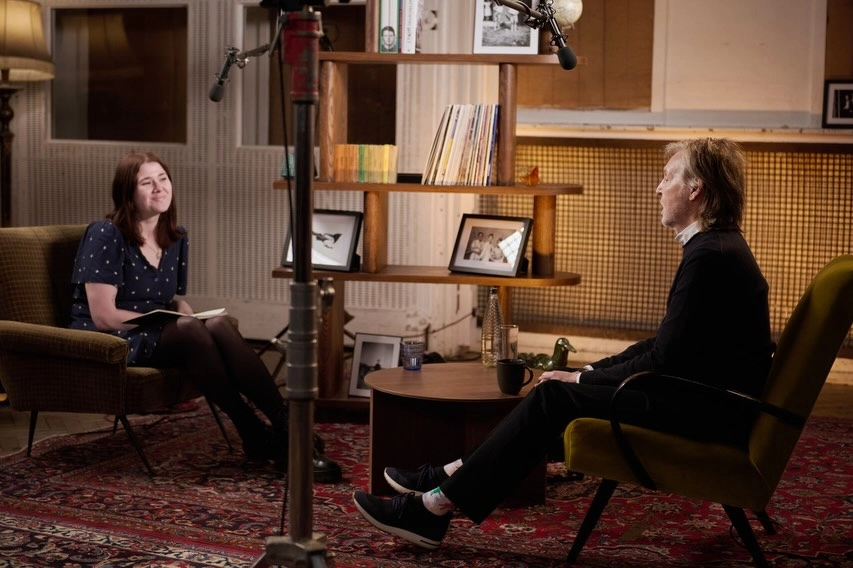
Interview location: EMI Studios, Studio Two, Abbey Road • London • UK
Previous interview May 29, 2026 • Paul McCartney interview for The Guardian
Album May 29, 2026 • "The Boys Of Dungeon Lane (iTunes version)" by Paul McCartney released globally
Interview May 30, 2026 • Paul McCartney interview for New Musical Express (NME)
Interview May 31, 2026 • Paul McCartney interview for NBC
Article Early June 2026 • The Dungeon Lane street sign disappears
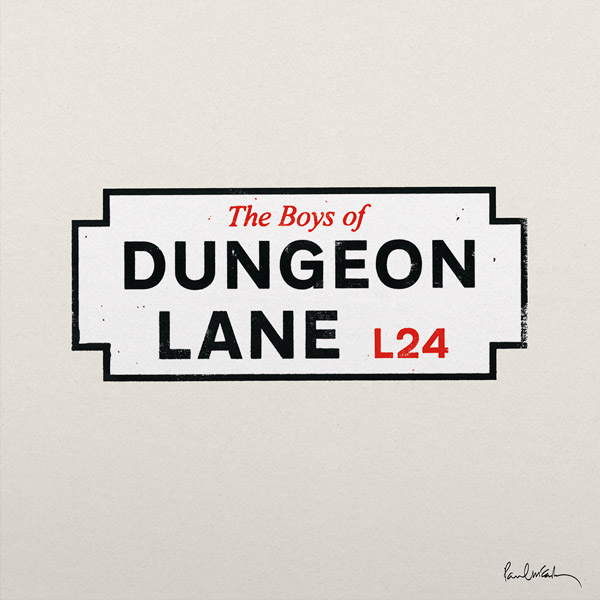
AlbumThis interview was made to promote the "The Boys Of Dungeon Lane" Official album.

Officially appears on Foreign Tongues

Officially appears on Days We Left Behind

Officially appears on The Boys Of Dungeon Lane

Officially appears on The Beatles (Mono)
Officially appears on The Boys Of Dungeon Lane

Officially appears on Love Me Do / P.S. I Love You
This interview remains the property of the respective copyright owner, and no implication of ownership by us is intended or should be inferred. Any copyright owner who wants something removed should contact us and we will do so immediately.
On May 5, 2026, Paul McCartney attended a listening session for his new album “The Boys Of Dungeon Lane” at Abbey Road Studios in London. He also gave interviews to the podcasts “The Rest Is History” and “The Rest Is Entertainment“, as well as to NME.
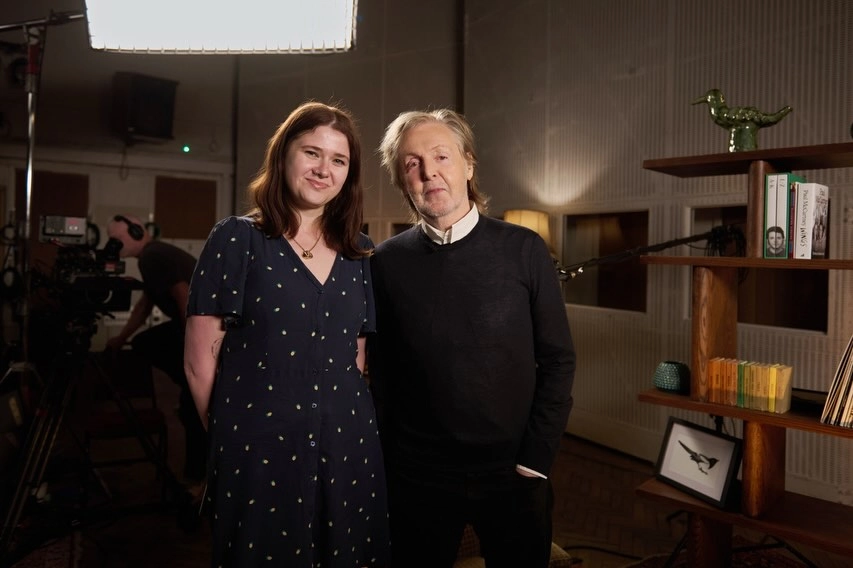
Rhian Daly: I’m joined by Paul McCartney for the latest in NME in Conversation video series. How are you today, Paul?
Paul McCartney: I’m good, thank you very much. I’m Paul McCartney and I don’t work for the NME.
Rhian Daly: You don’t, unfortunately not. Now you do your own thing. We are here in studio 2 at Abbey Road today which is a place where you recorded some of your new album, little parts of it. Also a place that you have a lot of history. What is it like to come back here and come back here with new music?
Paul McCartney: It’s always great for me to come back here because just so many memories, you know. Coming in that door over there which was the tradesman’s entrance and gradually working our way up into the control room. That was a big moment. Yeah, but through the years you know there’s so many memories that it’s great. It’s very nice. You know, I can always sort of think, oh yeah, I remember doing the vocal, John doing the vocal on “Girl”, or I remember me doing “Love Me Do” line and whatever. You know, there’s always little specific things of the stuff we did. So many memories. Yeah.
Rhian Daly: Yeah. And this album, The Boys of Dungeon Lane, it’s looking back at a period of your life — your youth growing up in Liverpool, the early years of being friends with the other Beatles. Why did you want to go and write about that period at this point in your life?
Paul McCartney: Well, you know, I didn’t think I was doing that, but once I sort of looked at all the songs I’d recorded for this album, a lot of them are backward-looking. But then I thought, well, I mean, what else is there? You’re going to look at a year ago and talk about that, you’re going to look at a love you had, or you’re going to look at your youth, your school, growing up or whatever. It’s so rich, that field of information, that I think a lot of people write about that. So I do. And I suppose you know maybe I’m at a kind of sentimental point in my life when I think of things like Liverpool, because a lot of my memories will include John and George, who — the fact that they’re not with us anymore — makes it even more emotional to be here and to think about them in songs. So it is more emotional than it might have been had they been here.
Rhian Daly: Yeah. When you’re writing about John and George, do you feel a sense of responsibility to honour them in the right way and represent them as they were to you?
Paul McCartney: Um, I suppose so. I never think of it like that, but I just think — I mean, there’s in one of the songs, “Days We Left Behind”, I talk about we met at Forthlin Road which was where I used to live in Liverpool, and we wrote a secret code to never be spoken. So yeah, I don’t feel like I have to be respectful. He’s just a mate. This is just this guy who I met and we did stuff together. We wrote songs together. So I don’t feel like a sense of responsibility. I hope it is responsible, you know. I think the thing is I have very good memories of the guys, John and George, even though towards the end of the Beatles, John was slagging me off a lot. At the time it was very hurtful because it’s like sticking little daggers in me, you know. I was like, “Ooh.” And it was just annoying because you thought, “I’ve got to answer him back. What am I going to do?” So that was just annoying. But I suddenly realized, wait a minute, this is John. This is the guy I’ve known since I was 16. That’s what he does — if he doesn’t like someone or something they did, he’ll come back at it. So I thought, “Oh, that’s okay then. That’s how he was, you know.” So it didn’t sting so much once I realized it was just John being John.
Rhian Daly: Yeah. And it’s all water under the bridge now — you guys made up before he died as well.
Paul McCartney: So that was so important to me. I was lucky because we’d been separated because of the business troubles and stuff, and John had eventually come around to my way of thinking that the guy that they wanted to bring in was a crook. And I’d suffered because they all thought I was the nutter, I was the crook. And so when it turned out that I was right, it was good to hear John sort of say, “I think Paul might have been right.” Begrudgingly, you know — he wasn’t going to say, “Yeah, you know what, Paul told me.” He’d be like, “Yeah, he was right.” But yeah, so that made it much better to think that even though it was a painful period, we kind of had to go through it or someone would have robbed us.
Rhian Daly: There’s a lot of memory songs on this album, but good memories. One of the songs is “Down South”, which is about you hitchhiking with George. You were saying earlier at the fan listening event that you can’t remember who suggested the hitchhiking, but you think it was probably you. Is that because you were the more adventurous, more rebellious one?
Paul McCartney: I think that’s just my character — to be a bit more of a planner. You know, I would just think, “Wow, what a good idea.” And so I’d float it and say to George, “What do you think?” We could go on a cheap holiday because we didn’t have much money. So yeah, I’m pretty sure it was me. I went on a couple of hitchhiking trips with George, which were great. They’re very bonding. So that was before the Beatles — when we became the Beatles, we knew we had those memories already in common. And then when John was 21 — I think I was 19 — John got this amazing 21st birthday present of £100 from his rich uncle in Scotland. And so we said, “What are we going to do?” So I said, “Well, we could hitchhike and then you can spend the money as we go.” And so we did. We were going to go to Spain, but we got as far as Paris, loved Paris, and spent everything in Paris.
Rhian Daly: That’s still quite far to get.
Paul McCartney: It was good. Yeah. But again, it was bonding, you know. Getting to know you.
Rhian Daly: Someone else you have a very strong bond with on this album is obviously Ringo, who is drumming and singing on “Home to Us”, which is a song about growing up in Liverpool. Why did you want him not just drumming but also singing the whole way through the song?
Paul McCartney: Well, I’d originally kind of written it for him, because I knew he had done this drumming for Andrew Watt and I knew nothing was being done with it. So I thought, when I listened to it, “Oh, it’s good. It’s nice drumming.” So I thought maybe we should do a song around that. So I wrote it specially with Ringo in mind. Even though it was rough, it was home to us. And I like to think that a lot of people can identify with that. A lot of people look back on their childhood and think we didn’t have much — particularly my generation, because it was right after World War II. So I like to think that even though we didn’t have much, we loved it. We didn’t know any better. And this place was home to us — Liverpool, in my case and Ringo’s case.
Rhian Daly: You have played with Ringo on stage a few times in recent years, including at the O2 at Christmas in 2024. What’s it like when you guys get back on stage together, and are able to perform for a few songs again?
Paul McCartney: It’s great. It’s really lovely, you know. Because the reason Ringo was in the group was that he was depping for our drummer at the time who couldn’t make this engagement. So Ringo sat in, and the three of us — me, John, and George — were up front of the stage. Ringo was behind us. And I remember when we kicked in, all looking at each other and going, “Wow, this is different.” Obviously his style was different from Pete Best, who was our first drummer. But there was just something that gelled with Ringo and it was very special. So nowadays when he comes on stage, we have to do something that’s not got a big complicated arrangement because he’s normally just coming up for a laugh kind of thing. So we’d often do “Helter Skelter” — it’s just a big rocking thing. And we listened back to the recording and there’s my drummer Abe who always plays it great. But then this one night Ringo gets in and plays with Abe and it’s just very special, because he was the original drummer on it. And also because it’s Ringo — he’s got a great style. You know what he brings to a song is interesting to say the least.
Rhian Daly: What do you think that he brought to “Home to Us” then?
Paul McCartney: He brought the drumming — all the drum track. And I like the idea that the two of us are duetting. Because none of us ever did that in the Beatles — you never got John and George doing a special duet. So yeah, the idea that now after all these years we’ve suddenly done a song that’s got me singing the vocal and Ringo singing the vocal, sharing the vocal — it’s really nice. It’s the first time. And I think it kind of works because it’s talking about how Liverpool was home to us. Ringo is from a really rough area called the Dingle. He tells a story, he would go to work and then coming home he would have to go past a mob of guys on the corner — Teddy boys — and he was kind of scared because you could get beaten up. So he came from that rough area, but there was so much goodness. His family, mainly — all his aunties, all the sing-songs that happened in those days. Nobody had iPads and phones, so if you wanted to have a sing-song you just had to have a piano or something somebody could play. It was different. It was very nice. In fact, it’s funny — we did some gigs recently in LA at a small club called The Fonda, and we outlawed phones, because normally people are just not watching your show, they’re just holding their phones up. They’ll watch it when they get home. But there’s a service over there now called Yonder — they put your phones away in a pouch, but if it’s an emergency you can unlock them. So nobody’s standing in the audience holding phones up. They’re all just watching you and I’m watching them. It’s like an old gig. It’s like how everyone used to play. And it’s really special. It’s a great connection.
Rhian Daly: How were those gigs for you? Obviously that’s a very small venue for you to be playing.
Paul McCartney: Yeah, it was — I think it was 6 or 700 people. They were great. Playing without the phones made it very special, and then all the people could be full on with their attention. And also because it was a small gig, you could chat to them from the stage. You’d hear somebody say something – “What? What did you say?” and you know, it made for a great little atmosphere.
Rhian Daly: Is that something you miss when you’re doing bigger venues like the O2 or headlining Glastonbury?
Paul McCartney: You couldn’t do it there, you know. A little bit, but it’s much harder. In those little gigs you can start throwing out requests and go, “Oh yeah, we’ll do that one.”
Rhian Daly: Are you someone who’s still quite agile with the set list and not sticking to a predetermined run of songs?
Paul McCartney: Yeah, you know, you can switch it up a little bit. They’re very nice to do, those gigs, and it’s a special excitement for you and for the audience. It really lifts the vibe in the room and you feel like you play better. You don’t care as much. It’s taking you back to why you got into music in the first place — just the joy of playing, you know.
Rhian Daly: You said earlier at the fan event that if you didn’t have to, you would still be playing, you would still be touring every day. Can we still expect a lot more music and tours from you in the years to come?
Paul McCartney: I don’t know. I never know. I remember when I was 50 years old, my manager at the time said, “Well, so you’re thinking of retiring, are you?” And I went, “Uh, I don’t think so.” But he obviously thought 50 — which I get, you know. We thought 30 was really old because we were 20. So 30 was like, “No, that would be unseemly.” But it came and went and people were still playing, and audiences like the music. So if the music is from that period, they don’t get to hear it live any other way. You’ve got to hear Neil Young live to get the whole feel of Neil — the Neil feel. And same with a lot of bands — the Stones, the Eagles. There’s nothing like it.
Rhian Daly: You mentioned the Stones — just before I came in the room, it was announced that they’re releasing their new album soon with you on it, which is your second time playing on a Stones album in the last few years. What can you tell me about working with them?
Paul McCartney: Well, it was all one day, those two tracks over two albums. But it was really exciting because I normally don’t play as a session guy. It’s really nice to just show up at a studio with your bass and say, “Right, where do you want me? Where do I plug in?” And you start playing and they show you the song and I start thinking — I’m playing with the Stones! And I was well chuffed, you know. I think you could have been a bit blasé and go, “Yeah, okay, so what?” But for me, it went the other way. It was like, “Wow, there’s Mick. There’s Keith. Oh, there’s Ronnie.” And it was exciting. The great thing is all I had to do was play bass and not make mistakes. So I was able to just concentrate on my bass part. At the same time, I could watch them. I could watch Keith working out on the new album — I think the track that I played on is called “Covered in You” — and I could hear Keith as we did various takes working his lick out, Ronnie working his solo out, Mick working the vocal out. So yeah, I went home that day saying to everyone, “I just played with the Stones!” I was glad, I wasn’t blasé about it. It’s really exciting. Not everyone plays with the Stones.
Rhian Daly: No, exactly. Very special.
Paul McCartney: And you’ve got to be quite careful because they’re the Stones — you can’t start doing something that’s like [imitating a bass part], no, that’s not the Stones. So you’ve got to do whatever the groove was, keep it quite simple and let them be the record. I’m just the bass player. I enjoyed it.
Rhian Daly: It’s very nice that you’re still excited at this point in your career about doing stuff like that. What would you say gives you creative satisfaction these days?
Paul McCartney: I think audiences, you know — that’s a great satisfaction. But creative satisfaction is just writing a song. It’s still the same old satisfaction that it was. There’s something magical about it. You know, I often think I never set out to be a singer-songwriter. When I was at school I thought the only thing left for me would be a teacher, because I didn’t have massive qualifications. Unfortunately that means you want to be a teacher. But I got in the band, and it just led me to this. So yeah, the satisfaction is just being able to write a song. And if you pull it off, that’s the same satisfaction that it always was. Some of them you pull them off better than others. But it’s still a great thing — it’s still a great achievement to sit down with my guitar and there’s nothing there, and I’m just noodling around, and suddenly, maybe after three or four hours, I’ve got a song. I know how it goes, I’ve written the lyrics down — it’s like a real achievement. It’s a magic feeling. So yeah, I think that’s the creative buzz still, and hopefully always will be.
Rhian Daly: Hopefully we get to hear a lot more songs from you to come. I think that is sadly all of our time, but thank you so much for talking to me today, Paul.
Paul McCartney: Lovely. Thank you. Pleasure.

Notice any inaccuracies on this page? Have additional insights or ideas for new content? Or just want to share your thoughts? We value your feedback! Please use the form below to get in touch with us.