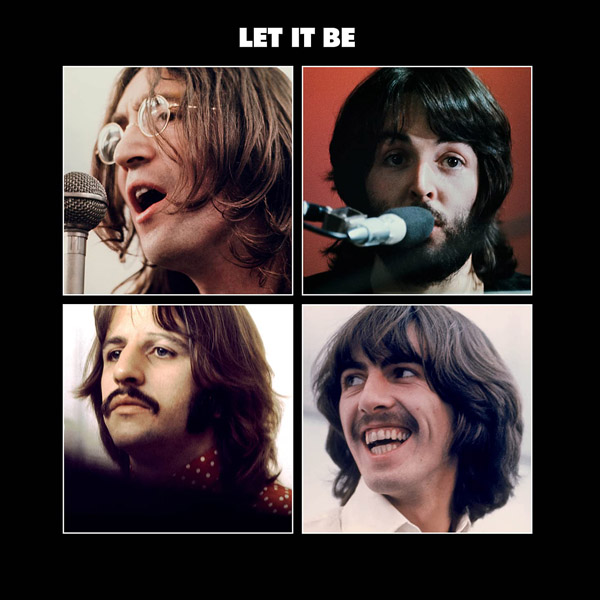

Jan 3 - April 2, 1970 • Songs recorded during this session appear on Let It Be (US version)
Recording studio: EMI Studios, Room 4, Abbey Road • London • UK
Session Mar 30, 1970 • Mixing "Let It Be" album #5
Session Apr 01, 1970 • Overdubs for "Let It Be" album
Session Apr 02, 1970 • Mixing "Let It Be" album #6
Article Apr 07, 1970 • McCartney Productions Ltd. acquires the film rights for Rupert the Bear
Article Apr 09, 1970 • The "McCartney" press kit is sent to UK press
Next session May-August 1970 • Home recordings - "Ram" demos
AlbumSome of the songs worked on during this session were first released on the "Let It Be (UK - 1st pressing with "Get Back" book)" LP

By The Beatles
The day before, on April 1, 1970, producer Phil Spector had overseen the recording of orchestral and choral overdubs to three Beatles tracks: “Across The Universe,” “The Long And Winding Road,” and “I Me Mine.”
On this day, April 2, Spector returned to EMI Studios to complete the final stereo mixes for those songs. This session marked the last day of work on the “Let It Be” album.
Spector, along with engineers Peter Bown and Roger Ferris, began with “The Long And Winding Road.” They created four stereo mixes of Take 18, labeled RS10 through RS13. An edit of RS10 and RS13 became the master used on the “Let It Be” album.
Next came “I Me Mine.” Three stereo mixes of Take 18 were produced (RS10 to RS12). Unlike “The Long And Winding Road,” the orchestral overdubs in these mixes were kept more restrained, allowing The Beatles’ instruments and vocals to remain front and center. An edit of RS11 and RS12 was chosen for the final album release.
Finally, attention turned to “Across The Universe.” The tape was slowed down slightly, extending the track’s length by about nine seconds and lowering its key from D to C#. Four stereo remixes (RS10 to RS13) were prepared, with RS13 ultimately selected for the “Let It Be” LP.
After this final session, acetates of the album were prepared and sent to the four Beatles for approval. It was upon hearing these that Paul McCartney discovered the changes made by Phil Spector — particularly the lavish orchestration added to “The Long And Winding Road.” Outraged, Paul wrote an angry letter to Allen Klein on April 14, 1970, protesting the alterations made without his consent.
Dear Sir,
In future, no one will be allowed to add to or subtract from a recording of one of my songs without my permission.
I had considered orchestrating ‘The Long And Winding Road’ but I had decided against it. I, therefore, want it altered to these specifications:
1. Strings, horns, voices and all added noises to be reduced in volume.
2. Vocal and Beatle instrumentation to be brought up in volume.
3. Harp to be removed completely at the end of the song and original piano notes to be substituted.
4. Don’t ever do it again.Signed
Paul McCartney
c.c. Phil Spector
John Eastman

Mixing • Stereo mixing - Remix 10 from take 18
Mixing • Stereo mixing - Remix 11 from take 18
Mixing • Stereo mixing - Remix 12 from take 18
Mixing • Stereo mixing - Remix 13 from take 18
Written by George Harrison
Mixing • Stereo mixing - Remix 10 from take 18
Written by George Harrison
Mixing • Stereo mixing - Remix 11 from take 18
Written by George Harrison
Mixing • Stereo mixing - Remix 12 from take 18
Mixing • Stereo mixing - Remix 10 from take 9
Mixing • Stereo mixing - Remix 11 from take 9
Mixing • Stereo mixing - Remix 12 from take 9
Mixing • Stereo mixing - Remix 13 from take 9
AlbumOfficially released on Let It Be (UK - 1st pressing with "Get Back" book)
Editing • Editing of stereo remixes 10 and 13
AlbumOfficially released on Let It Be (UK - 1st pressing with "Get Back" book)
Written by George Harrison
Editing • Editing of stereo remixes 11 and 12
AlbumOfficially released on Let It Be (UK - 1st pressing with "Get Back" book)
The Complete Beatles Recording Sessions • Mark Lewisohn
The definitive guide for every Beatles recording sessions from 1962 to 1970. We owe a lot to Mark Lewisohn for the creation of those session pages, but you really have to buy this book to get all the details - the number of takes for each song, who contributed what, a description of the context and how each session went, various photographies... And an introductory interview with Paul McCartney!
The Beatles Recording Reference Manual: Volume 5: Let It Be through Abbey Road (1969 - 1970)

The fifth and final book of this critically acclaimed series, "The Beatles Recording Reference Manual: Volume 5: Let It Be through Abbey Road (1969 - 1970)" follows The Beatles as they "get back to where they once belonged...". Not once, but twice. With "Let It Be", they attempted to recapture the spontaneity of their early years and recordings, while "Abbey Road" was a different kind of return - to the complexity, finish and polish that they had applied to their work beginning with "Revolver" and through to "The Beatles".
If we modestly consider the Paul McCartney Project to be the premier online resource for all things Paul McCartney, it is undeniable that The Beatles Bible stands as the definitive online site dedicated to the Beatles. While there is some overlap in content between the two sites, they differ significantly in their approach.

Notice any inaccuracies on this page? Have additional insights or ideas for new content? Or just want to share your thoughts? We value your feedback! Please use the form below to get in touch with us.


