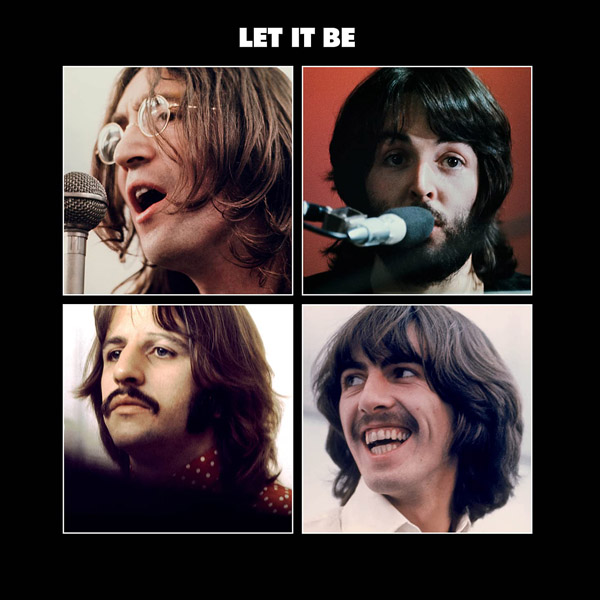

Jan 3 - April 2, 1970 • Songs recorded during this session appear on Let It Be (US version)
Recording studio: EMI Studios, Room 4, Abbey Road • London • UK
Session Mar 23, 1970 • Mixing "Let It Be" album #1
Session Mar 23, 1970 • Creating the master tapes of "McCartney" album
Session Mar 25, 1970 • Mixing "Let It Be" album #2
Session Mar 26, 1970 • Mixing "Let It Be" album #3
AlbumSome of the songs worked on during this session were first released on the "Let It Be (UK - 1st pressing with "Get Back" book)" LP
At the request of Allen Klein, and with the support of John Lennon, American producer Phil Spector was brought in to rework the upcoming “Let It Be” album, using the “Get Back” tapes recorded in January 1969. This followed several earlier attempts by Glyn Johns. Spector’s mixing work began on March 23, 1970.
On this day, March 25, Spector worked on “For You Blue“, “Teddy Boy” and “Two Of Us“.
Phil Spector began the day by creating a stereo mix of “For You Blue” (designated RS1), omitting George Harrison’s original acoustic guitar track while incorporating the new lead vocal George had recorded on January 8, 1970.
However, the acoustic guitar was retained for the song’s introduction. Spector created seven separate stereo mixes of the intro alone, labeled RS2 through RS8.
He ultimately edited RS5 (the selected intro) together with RS1 (the main body of the song) to form a composite version. This was the mix released on the “Let It Be” album.
On March 30, the track would however be augmented with a spoken introduction by John Lennon: “Queen says ‘no’ to pot-smoking FBI members.”
Phil Spector then created two mixes of Paul McCartney’s “Teddy Boy,” originally recorded on January 24, 1969. The second mix was edited down to a duration of 3 minutes and 10 seconds.
It is somewhat surprising that Spector devoted time to the track. “Teddy Boy” had been part of Glyn Johns’ original “Get Back” LP mixes from March / May 1969. However, by December 1969, Johns had been instructed to revise the album to better reflect the content of Michael Lindsay-Hogg’s forthcoming documentary, which was nearing completion. As “Teddy Boy” did not appear in the latest cut of the film, it was dropped from the revised track list.
For “Two of Us,” Phil Spector chose to use a performance from the final day of the “Get Back” sessions, January 31, 1969, instead of using the January 24 version previously selected by Glyn Johns for his “Get Back” LP.
Two stereo mixes of the track were completed on this day (RS1 and RS2), with RS2 ultimately chosen for release.
On March 27, 1970, Spector would add John Lennon’s spoken introduction — “‘I Dig a Pygmy’ by Charles Hawtrey and the Deaf-Aids! Phase one, in which Doris gets her oats!” — to the beginning of the track.
Spector continued work on the “Get Back” tapes the following day, March 26, 1970.
Written by George Harrison
Mixing • DDSI.25.47 • Stereo mixing - Remix 1
Written by George Harrison
Mixing • DDSI.25.47 • Stereo mixing - Remix 2 of edit piece only
Written by George Harrison
Mixing • DDSI.25.47 • Stereo mixing - Remix 3 of edit piece only
Written by George Harrison
Mixing • DDSI.25.47 • Stereo mixing - Remix 4 of edit piece only
Written by George Harrison
Mixing • DDSI.25.47 • Stereo mixing - Remix 5 of edit piece only
Written by George Harrison
Mixing • DDSI.25.47 • Stereo mixing - Remix 6 of edit piece only
Written by George Harrison
Mixing • DDSI.25.47 • Stereo mixing - Remix 7 of edit piece only
Written by George Harrison
Mixing • DDSI.25.47 • Stereo mixing - Remix 8 of edit piece only
Written by George Harrison
Editing • DDSI.25.47 • Edit of stereo remixes 1 and 5, called remix stereo 1
AlbumOfficially released on Let It Be (UK - 1st pressing with "Get Back" book)
Written by Paul McCartney
Mixing • DDSI.24.33 • Stereo mixing - Remix 1
Written by Paul McCartney
Mixing • DDSI.24.33 • Stereo mixing - Remix 2
Written by Paul McCartney
Editing • DDSI.24.33 • Edit of remix stereo 2
Mixing • DDSI.31.13 • Stereo mixing - Remix 1
Mixing • DDSI.31.13 • Stereo mixing - Remix 2
AlbumOfficially released on Let It Be (UK - 1st pressing with "Get Back" book)
The Complete Beatles Recording Sessions • Mark Lewisohn
The definitive guide for every Beatles recording sessions from 1962 to 1970. We owe a lot to Mark Lewisohn for the creation of those session pages, but you really have to buy this book to get all the details - the number of takes for each song, who contributed what, a description of the context and how each session went, various photographies... And an introductory interview with Paul McCartney!
The Beatles Recording Reference Manual: Volume 5: Let It Be through Abbey Road (1969 - 1970)

The fifth and final book of this critically acclaimed series, "The Beatles Recording Reference Manual: Volume 5: Let It Be through Abbey Road (1969 - 1970)" follows The Beatles as they "get back to where they once belonged...". Not once, but twice. With "Let It Be", they attempted to recapture the spontaneity of their early years and recordings, while "Abbey Road" was a different kind of return - to the complexity, finish and polish that they had applied to their work beginning with "Revolver" and through to "The Beatles".
If we modestly consider the Paul McCartney Project to be the premier online resource for all things Paul McCartney, it is undeniable that The Beatles Bible stands as the definitive online site dedicated to the Beatles. While there is some overlap in content between the two sites, they differ significantly in their approach.

Notice any inaccuracies on this page? Have additional insights or ideas for new content? Or just want to share your thoughts? We value your feedback! Please use the form below to get in touch with us.


