March - May 1969
Mixing the Get Back album (2nd & 3rd compilations)
For The Beatles
Last updated on May 17, 2025
March - May 1969
For The Beatles
Last updated on May 17, 2025
Recording studio: Olympic Sound Studios • London • UK
Previous session March 01-02, 1969 • "Goodbye" session
Single Mar 07, 1969 • "Lontano Dagli Occhi / The Game" by Mary Hopkin released globally
Interview Mar 09, 1969 • Paul McCartney interview for The Observer
Session March - May 1969 • Mixing the Get Back album (2nd & 3rd compilations)
Session Mar 11, 1969 • Recording "Thumbin' A Ride", "Going Back to Liverpool"
March - May 1969 • Mixing the Get Back album (2nd & 3rd compilations)
April - May 1969 • The “Get Back” LP rumours • April to May 1969
May 13, 1969 • Photo shoot of the "Get Back" LP album
May 28, 1969 • Mixing the "Get Back" album (3rd compilation)
June - July 1969 • The "Get Back" LP rumours • June to July 1969
August 1969 • The “Get Back” LP rumours • August 1969
September - December 1969 • The "Get Back" LP rumours • September to December 1969
Dec 15, 1969 • Mixing the "Get Back" album (4th compilation)
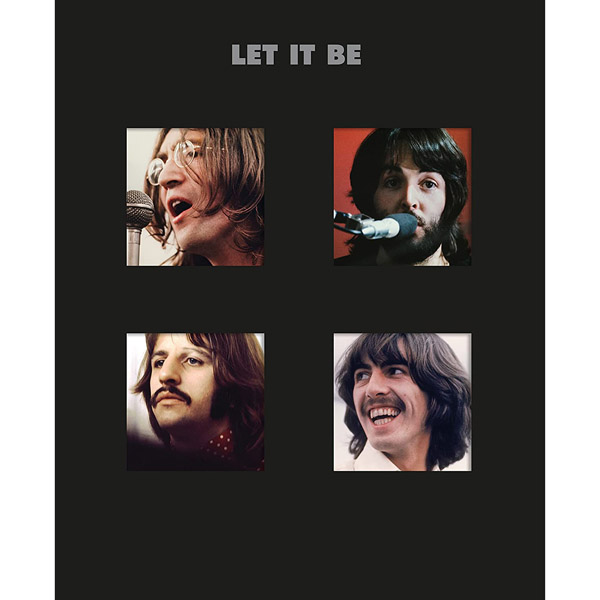
AlbumSome of the songs worked on during this session were first released on the "Let It Be (50th anniversary boxset - SHM - Japanese edition)" Official album
In late January 1969, although the “Get Back” sessions were still ongoing, engineer and producer Glyn Johns began assembling a rough compilation of songs recorded that month. His aim was to give The Beatles a sense of how he envisioned the eventual LP. However, none of the band members were satisfied with this initial effort.
On February 5, Glyn Johns and engineer Alan Parsons mixed a few tracks from the rooftop concert.
In early March 1969, John Lennon and Paul McCartney invited Johns to Abbey Road and handed him the eight-track tapes from the Apple Studio sessions, including the rooftop concert recordings. The tapes from the earlier rehearsals at Twickenham Film Studios not included.
Between March and May 1969, Johns booked several mixing sessions at Olympic Sound Studios, working on roughly twenty tracks. During this period, he compiled and delivered two versions of the “Get Back” LP. While the exact dates of these studio sessions are known, the specific details of which tracks were mixed on which day remain unclear, and the knowledge has evolved over time through new research and documentation.
[…] Accounts/administration department documentation uncovered at EMI in 1991 contains dates for Johns’ Get Back Olympic mix sessions which differ from (and seem more reliable than) those detailed in the 1988 book The Complete Beatles Recording Sessions, so the latest information is used here. However, data about which songs Johns mixed on which dates can no longer be ascertained with absolute accuracy, other than to say that after working on [4 March] (times not known), 3 April, 4 April, 7 April, 2 May, 7 May, 9 May, 15 May and 28 May, the following mixes were eventually delivered back to EMI: ‘Get Back’ (two versions), ‘Teddy Boy’, ‘Two Of Us’ (two versions), ‘Dig A Pony’, ‘I’ve Got A Feeling’ (two versions), ‘The Long And Winding Road’ (three versions), ‘Let It Be’ (two versions), ‘Rocker’, ‘Save The Last Dance For Me’, ‘Don’t Let Me Down’, ‘For You Blue’, ‘The Walk’, ‘Lady Madonna’, ‘Dig It’ (both versions), ‘Maggie Mae’ and the medley ‘Shake Rattle And Roll’/’Kansas City’/’Miss Ann’/’Lawdy Miss Clawdy’/’Blue Suede Shoes’/’You Really Got A Hold On Me’. (Such vague documentation leaves one feeling grateful for EMI’s so-called “bureaucratic” admin system which meant that all Beatles sessions 1962–1970 at Abbey Road were fully noted.)
From “The Complete Beatles Chronicle” by Mark Lewisohn, 1992
| From “The Complete Beatles Recording Sessions” by Mark Lewisohn, 1988 | From “The Complete Beatles Chronicle” by Mark Lewisohn, 1992 |
| March 10, 1969 March 11 March 12 March 13 May 7 (in common) May 9 (in common) May 28 (in common) | March 4, 1969 April 3 April 4 April 7 May 2 May 7 (in common) May 9 (in common) May 15 May 28 (in common) |
Some of the Glyn John’s 1969 mixes were officially released on the “Let It Be (50th anniversary boxset)” in 2021. However, only the Japanese version really contained the 1969 mix of George Harrison’s “For You Blue” (the “rest of the world” release contains the 1970 version.)
Remember that idea you had about putting together an album? There are the tapes, go and do it.
(It is not clear which Beatle said this) – From “The Complete Beatles Recording Sessions” by Mark Lewisohn, 1988
On the 1st of May 1969 [Sic – March instead ?], I got a call from John and Paul asking me to meet them at Abbey Road. I walked into the control room and was confronted by a large pile of multitrack tapes. They told me that they had reconsidered my concept for the album that I had presented to them in January and had decided to let me go ahead and mix and put it together from all the recording that we had done at Savile Row. I was thrilled at the idea and asked when they would be available to start. They replied that they were quite happy for me to do it on my own as it was my idea. I left feeling elated that they would trust me to put the album together without them, but soon realized that the real reason had to be that they had lost interest in the project.
Glyn Johns – From “Sound Man: A Life Recording Hits with The Rolling Stones, The Who, Led Zeppelin, the Eagles , Eric Clapton, the Faces…”, 2014
We finish [some of the early sessions for] “Abbey Road”, a period of time goes by, and I get a call from John and Paul. They asked me to meet them at Abbey Road, so I jump in the car and go up there. I walk in the control room and there’s a pile of multi-track tapes and they said “Do you remember the idea that you had, that you had made acetates on?”. So i said “Yeah”. So they said “Well, we think that’s probably the best way to do the record and we’d like you to do it”. “That’s fantastic, great!”. So I said “Well, when did we start?” and they said “Well, we don’t start, you’re going to do it on your own, like you did before”. And I thought “Well that’s fantastic, they’ve got all this confidence in me to go away and do this without them there”. And in the car on the way home, I thought “hold on a minute, it wasn’t anything to do with that, they were bored rigid with it and they weren’t interested anymore, they’d lost interest so they were quite happy to just give it to me, to go away and do”. Which was a bit disappointing really, so it did get finished and I did deliver it back to EMI and then the band broke up.
Glyn Johns – From Glyn Johns talks Beatles, Michael Lindsay Hogg and Let It Be – YouTube, December 2021
I had to do it. Picture the scene. You are there with John Lennon and Paul McCartney and they are asking me to bring some kind of order from chaos. It was a huge task but you just couldn’t say no, could you? I have always loved making records and that was what they were asking me to do.
Glyn Johns – From “And in the End: The Last Days of the Beatles” by Ken McNab, 2019
The tape [Let It Be] ended up like the bootleg version. We let Glyn Johns remix it, we didn’t want to know. We just left it to him and said: ‘Here, do it.’ It’s the first time since the first album that we didn’t have anything to do with it. None of us could be bothered going in. Everybody was probably thinking: “Well, I’m not going to work on it.” Nobody could face looking at it.
John Lennon – Quoted in Classic Rock, May 2020
A few months after the end of the “Get Back” sessions, engineer/producer Glyn Johns was given the task of compiling an actual album. Glyn made four different variants of the album, two of them having been considered for release at some point.
| Compilation 1 – January 1969 | Compilation 2 – Early May 1969 | Compilation 3 – Late May 1969 | Compilation 4 – January 1970 |
| Mixed: January 24, 1969 January 26, 1969 January 27, 1969 January 30, 1969 | Mixed: February 5, 1969 March-May, 1969 March 4, 1969 April 3, 1969 April 4, 1969 April 7, 1969 May 2, 1969 May 7, 1969 May 9, 1969 | Mixed: May 15, 1969 May 28, 1969 | Additional recording: January 3, 1970 January 8, 1970 Mixed: December 15, 1969 December 21, 1969 January 5, 1970 January 8, 1970 |
| Side one 1. Get Back (false start) — DDSI 23.78 2. Get Back — DDSI 23.79 3. I’ve Got a Feeling (fragment) — DDSI 23.80 4. Help! (fragment) — DDSI 23.81 5. Teddy Boy — DDSI 24.33 6. Two of Us (fragment – false start) — DDSI 24.48 7. Two of Us — DDSI 24.69 8. Dig a Pony — DDSI 23.66 9. I’ve Got a Feeling — DDSI 22.71 Side two 10. The Long and Winding Road — DDSI 26.91 11. Let It Be — DDSI 26.74 12. Don’t Let Me Down — DDSI 22.60 13. For You Blue — DDSI 25.46 14. Get Back — DDSI 27.63 15. The Walk — DDSI 27.83 | Side one 1. One After 909 2. Rocker 3. Save the Last Dance for Me 4. Don’t Let Me Down 5. Dig a Pony 6. I’ve Got a Feeling 7. Get Back Side two 8. For You Blue 9. Teddy Boy 10. Two of Us 11. Maggie Mae 12. Dig It 13. Let It Be 14. The Long and Winding Road 15. Get Back (reprise) | Side one 1. One After 909 — DDSI.30.08 2. Rocker — DDSI.22.58 3. Save the Last Dance for Me — DDSI.22.59 4. Don’t Let Me Down — DDSI.22.80 5. Dig a Pony — DDSI.23.70 6. I’ve Got a Feeling — DDSI.22.71 7. Get Back — DDSI.27.63 & 28.43 Side two 8. For You Blue — DDSI.25.47 9. Teddy Boy — DDSI.24.33 10. Two of Us — DDSI.24.69 11. Maggie Mae — DDSI.24.49 12. Dig It — Excerpt of DDSI.24.85 13. Let It Be — 31.64 + overdubbed guitar solo 14. The Long and Winding Road — DDSI.26.91 15. Get Back (reprise) — DDSI.28.43 | Side one 1. One After 909 2. Rocker 3. Save the Last Dance for Me 4. Don’t Let Me Down 5. Dig a Pony 6. I’ve Got a Feeling 7. Get Back 8. Let It Be Side two 9. For You Blue 10. Two of Us 11. Maggie Mae 12. Dig It 13. The Long and Winding Road 14. I Me Mine 15. Across the Universe 16. Get Back (reprise) |
| Bootlegged on “Kum Back“ | Bootlegged on “O.P.D.“ |

Mixing "Get Back", "Don't Let Me Down"
Apr 03, 1969 • Songs recorded during this session appear on Get Back / Don't Let Me Down (UK - Mono)
Apr 07, 1969 • Songs recorded during this session appear on Get Back / Don't Let Me Down (UK - Mono)

Mixing the "Get Back" album (2nd compilation)
May 07, 1969 • Songs recorded during this session appear on Let It Be (50th anniversary boxset - SHM - Japanese edition)
Mixing the "Get Back" album (2nd compilation)
May 09, 1969 • Songs recorded during this session appear on Let It Be (50th anniversary boxset - SHM - Japanese edition)

Mixing the "Get Back" album (3rd compilation)
May 28, 1969
Mixing • Version 1
Mixing • Version 2
Written by Paul McCartney
Mixing
Mixing • Version 1
Mixing • Version 2
Mixing
Mixing • Version 1
Mixing • Version 2
Mixing • Version 1
Mixing • Version 2
Mixing • Version 3
Mixing • Version 1
Mixing • Version 2
Written by Paul McCartney, John Lennon, Fats Domino, Al Lewis, Sylvester Bradford
Mixing
Written by Doc Pomus, Mort Shuman
Mixing
Mixing
Written by George Harrison
Mixing
Written by Jimmy McCracklin, Bob Garlic
Mixing
Mixing
Written by Paul McCartney, Ringo Starr, John Lennon, George Harrison
Mixing • Version 1
Written by Paul McCartney, Ringo Starr, John Lennon, George Harrison
Mixing • Version 2
Written by Paul McCartney, Ringo Starr, John Lennon, George Harrison
Mixing
Written by Charles E. Calhoun
Mixing
Written by Jerry Leiber, Mike Stoller
Mixing
Written by Richard Penniman / Little Richard, Enotris Johnson
Mixing
Written by Lloyd Price
Mixing
Written by Carl Perkins
Mixing
Written by Smokey Robinson
Mixing
Apr 03, 1969 • Mixing "Get Back", "Don't Let Me Down"
Apr 03, 1969 • Mixing "Get Back", "Don't Let Me Down"
Apr 07, 1969 • Mixing "Get Back"
Inserts for the Get Back LP
May 07, 1969 • Mixing the "Get Back" album (2nd compilation)
Inserts for the Get Back LP
May 09, 1969 • Mixing the "Get Back" album (2nd compilation)
May 28, 1969 • Mixing the "Get Back" album (3rd compilation)
Master tape banding and compilation for GetBack LP
May 28, 1969 • Mixing the "Get Back" album (3rd compilation)
The Complete Beatles Recording Sessions • Mark Lewisohn
The definitive guide for every Beatles recording sessions from 1962 to 1970. We owe a lot to Mark Lewisohn for the creation of those session pages, but you really have to buy this book to get all the details - the number of takes for each song, who contributed what, a description of the context and how each session went, various photographies... And an introductory interview with Paul McCartney!
The Beatles Recording Reference Manual: Volume 5: Let It Be through Abbey Road (1969 - 1970)

The fifth and final book of this critically acclaimed series, "The Beatles Recording Reference Manual: Volume 5: Let It Be through Abbey Road (1969 - 1970)" follows The Beatles as they "get back to where they once belonged...". Not once, but twice. With "Let It Be", they attempted to recapture the spontaneity of their early years and recordings, while "Abbey Road" was a different kind of return - to the complexity, finish and polish that they had applied to their work beginning with "Revolver" and through to "The Beatles".
If we modestly consider the Paul McCartney Project to be the premier online resource for all things Paul McCartney, it is undeniable that The Beatles Bible stands as the definitive online site dedicated to the Beatles. While there is some overlap in content between the two sites, they differ significantly in their approach.

Notice any inaccuracies on this page? Have additional insights or ideas for new content? Or just want to share your thoughts? We value your feedback! Please use the form below to get in touch with us.

Mark Frumento • Dec 12, 2021 • 4 years ago
The ROW version of the Let It Be SDE uses all of the same mixes as the Japan SHM except for "For You Blue" which has the 1970 vocal. The ROW SDE also uses first generation tapes where the Japanese set does not.
The news that has gotten around is that 4 tracks in the first half of the CD are different mixes than the 1969 versions. They are not different mixes. Folks are probably hearing EQ differences, either from mastering or the just the fact that the tapes are better.

The PaulMcCartney Project • Dec 12, 2021 • 4 years ago
Thanks Mark. I didn't listend to the Japan SHM edition, and trusted http://webgrafikk.com/blog/news/wrong-masters-for-the-glyn-johns-1969-mix-and-japan-to-the-rescue/ which reports variations on most tracks between the ROW version and the Japan SHM version


