Friday, April 18, 1969
Recording and mixing "Old Brown Shoe", "I Want You (She's So Heavy)"
For The Beatles
Last updated on April 2, 2025
Friday, April 18, 1969
For The Beatles
Last updated on April 2, 2025

Feb 22 - Aug 25, 1969 • Songs recorded during this session appear on Abbey Road
Previous session Apr 16, 1969 • Recording and mixing "Old Brown Shoe", recording "Something"
Article Apr 17, 1969 • "Get Back" promo film broadcast in the UK
Film Apr 17, 1969 • Release of "Get Back" promo film
Session Apr 18, 1969 • Recording and mixing "Old Brown Shoe", "I Want You (She's So Heavy)"
Session Apr 20, 1969 • Recording and mixing "I Want You (She's So Heavy)", "Oh! Darling"
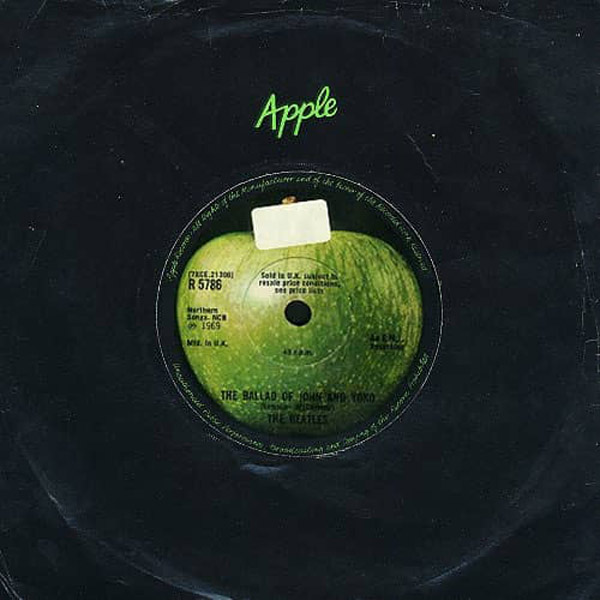
AlbumSome of the songs worked on during this session were first released on the "The Ballad Of John And Yoko / Old Brown Shoe (UK - 1969)" 7" Single
On this day, George Harrison’s “Old Brown Shoe” was completed. The basic track and initial overdubs had been recorded two days earlier, on April 16, but George felt the song could be further improved with the addition of a Hammond organ overdub. He also recorded a new guitar solo for the instrumental verse.
The session began at 2:30 pm and the recording work was wrapped up by 10:30 pm.
Nineteen stereo mixes were then attempted. George’s lead guitar was enhanced using ADT (Artificial Double Tracking). The final mix, remix 23, was selected as the master and would be released as the B-side to the recently recorded “The Ballad Of John And Yoko.“
Recording for “I Want You (She’s So Heavy)” had begun on February 22, 1969. At around 1 am during this session, George and John Lennon — the only two Beatles present — returned to the track to add guitar overdubs. The process involved several tape reduction mixes carried out in tandem with the overdubbing.
John and George went into the far left-hand corner of number two to overdub those guitar. They wanted a massive sound so they kept tracking and tracking, over and over.
Jeff Jarratt – Engineer – From “The Complete Beatles Recording Sessions” by Mark Lewisohn, 1988
The session ended with some rough stereo mixes of the track. Work on “I Want You (She’s So Heavy)” would resume on April 20, 1969.
Written by George Harrison
Recording • SI onto take 4
Written by George Harrison
Mixing • Stereo mixing - Remix 5 from take 4
Written by George Harrison
Mixing • Stereo mixing - Remix 6 from take 4
Written by George Harrison
Mixing • Stereo mixing - Remix 7 from take 4
Written by George Harrison
Mixing • Stereo mixing - Remix 8 from take 4
Written by George Harrison
Mixing • Stereo mixing - Remix 9 from take 4
Written by George Harrison
Mixing • Stereo mixing - Remix 10 from take 4
Written by George Harrison
Mixing • Stereo mixing - Remix 11 from take 4
Written by George Harrison
Mixing • Stereo mixing - Remix 12 from take 4
Written by George Harrison
Mixing • Stereo mixing - Remix 13 from take 4
Written by George Harrison
Mixing • Stereo mixing - Remix 14 from take 4
Written by George Harrison
Mixing • Stereo mixing - Remix 15 from take 4
Written by George Harrison
Mixing • Stereo mixing - Remix 16 from take 4
Written by George Harrison
Mixing • Stereo mixing - Remix 17 from take 4
Written by George Harrison
Mixing • Stereo mixing - Remix 18 from take 4
Written by George Harrison
Mixing • Stereo mixing - Remix 19 from take 4
Written by George Harrison
Mixing • Stereo mixing - Remix 20 from take 4
Written by George Harrison
Mixing • Stereo mixing - Remix 21 from take 4
Written by George Harrison
Mixing • Stereo mixing - Remix 22 from take 4
Written by George Harrison
Mixing • Stereo mixing - Remix 23 from take 4
AlbumOfficially released on The Ballad Of John And Yoko / Old Brown Shoe (UK - 1969)
Recording • SI onto unnumbered Trident master
Recording • Tape reduction of unnumbered Trident master, called take 1
Recording • SI onto take 1
Mixing • Stereo mixing - Unnumbered rough remix from take 1
The Complete Beatles Recording Sessions • Mark Lewisohn
The definitive guide for every Beatles recording sessions from 1962 to 1970. We owe a lot to Mark Lewisohn for the creation of those session pages, but you really have to buy this book to get all the details - the number of takes for each song, who contributed what, a description of the context and how each session went, various photographies... And an introductory interview with Paul McCartney!
The Beatles Recording Reference Manual: Volume 5: Let It Be through Abbey Road (1969 - 1970)

The fifth and final book of this critically acclaimed series, "The Beatles Recording Reference Manual: Volume 5: Let It Be through Abbey Road (1969 - 1970)" follows The Beatles as they "get back to where they once belonged...". Not once, but twice. With "Let It Be", they attempted to recapture the spontaneity of their early years and recordings, while "Abbey Road" was a different kind of return - to the complexity, finish and polish that they had applied to their work beginning with "Revolver" and through to "The Beatles".
Solid State: The Story of "Abbey Road" and the End of the Beatles
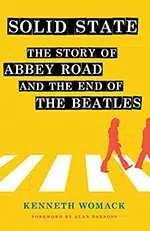
Acclaimed Beatles historian Kenneth Womack offers the most definitive account yet of the writing, recording, mixing, and reception of Abbey Road. In February 1969, the Beatles began working on what became their final album together. Abbey Road introduced a number of new techniques and technologies to the Beatles' sound, and included "Come Together," "Something," and "Here Comes the Sun," which all emerged as classics.
If we modestly consider the Paul McCartney Project to be the premier online resource for all things Paul McCartney, it is undeniable that The Beatles Bible stands as the definitive online site dedicated to the Beatles. While there is some overlap in content between the two sites, they differ significantly in their approach.

Notice any inaccuracies on this page? Have additional insights or ideas for new content? Or just want to share your thoughts? We value your feedback! Please use the form below to get in touch with us.


