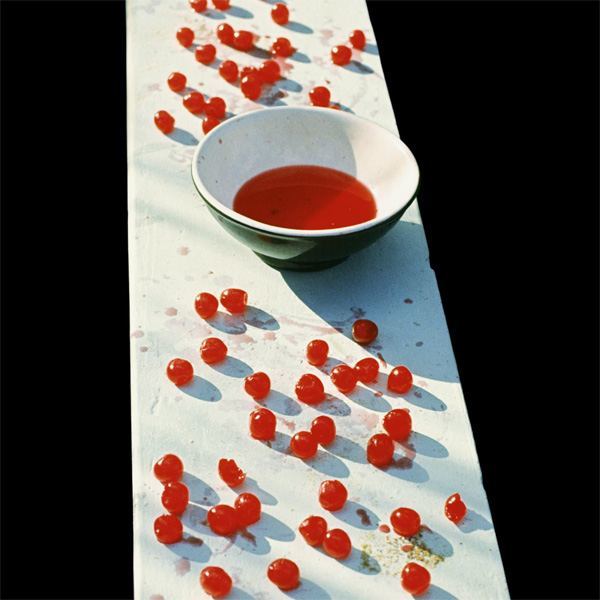
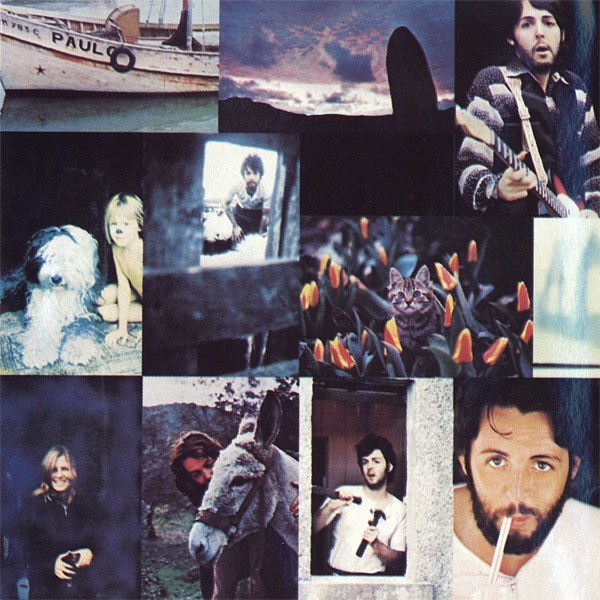
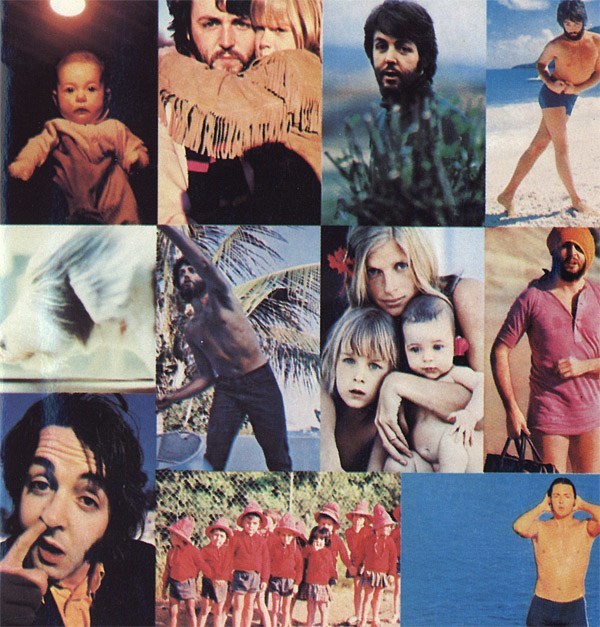
December 23, 1969 - March 1970 • Songs recorded during this session appear on McCartney
Recording studio: Paul McCartney's home, 7 Cavendish Avenue, St John’s Wood • London • UK
Previous session Jan 08, 1970 • Recording & mixing "For You Blue" for the Get Back album (4th compilation), Mixing "Let It Be"
Article January 12-15, 1970 • Paul and Linda spend time in New York
Single Jan 12, 1970 • "Come And Get It / Rock Of All Ages" by Badfinger released in the US
Session Jan 17, 1970 • Recording "Junk"
AlbumSome of the songs worked on during this session were first released on the "McCartney" LP
In late December 1969, Paul McCartney began recording new material using a Studer J37 4-track tape recorder that had recently been installed at his home in London. In early January 1970, he took part in the final Beatles sessions.
Following a short trip to New York to visit Linda’s family, Paul resumed work on his solo project and spent this day, January 17, at home recording “Junk.”
“Junk” had originally been written in February 1968 while Paul and The Beatles were in India. After returning to London, he gradually refined and developed the lyrics.
On this day, he recorded three takes of the song:
Both “Junk” and “Singalong Junk” received overdubs on February 18 at Morgan Studios.
Originally written in India at Maharishi’s camp and completed bit by bit in London. Recorded vocal, two acoustic guitars and bass at home and later added to (bass drum, snare with brushes, and small xylophone and harmony) at Morgan.
Paul McCartney – About the vocal version of “Junk” – From the press release of “McCartney”, April 1970
This was take 1, for the vocal version, which was take 2, and a shorter version. Guitars, and piano and bass, were put on at home, and the rest added at Morgan Studios. The strings are Mellotron, and they were done at the same time as the electric guitar, bass drum, and sizzle cymbal.
Paul McCartney – About the instrumental version “Singalong Junk” – From the press release of “McCartney”, April 1970
Linda was very helpful, because she used to say, ‘I love to hear you play the guitar’. I was no longer sitting in a room on my own, like I used to be. So I’ll strum along when I watch telly. ‘Junk’ came along that way. Handlebars, sentimental jubilee, jam jars: I like images like that. There are certain words you like. I always used to say that candlestick was my favourite word. Certain words either make colours in your head or bring up a feeling. So the song was a pot-pourri of nice words that I had to make some sense out of, so it was ‘buy buy, sell sell, Junk says the sign in the yard’. To lump it all together I got the idea of ‘Junk’. It was a nice way to write a song. There was also the ‘Singalong’ instrumental version, influenced by Phil Spector’s technique of taking off the lyric for a B-side and calling it ‘Singalong’.
Paul McCartney – From Club Sandwich 58, Summer 1991
If I may use a fancy word, the milieu of ‘Junk’ was influenced by the rag-and-bone shop, or junkyard, that was the main setting of [BBC sitcom] Steptoe and Son. That junkyard was as familiar to British audiences in the 1960s and ’70s as the rank in Bonanza or the mansion in The Beverly Hillbillies.
The song started, as so many do, with a chord sequence that I liked, and then the melody. I know it may sound strange, but the chord at the start of this song actually put me in mind of a scrapyard or the back of a shop. The kind of atmospheric place in which, if I were writing a novel, I’d like to set a scene. […]
But it’s mostly a love song. The ‘bicycles for two’ merge into the ‘sleeping bags for two’. Then there’s the line ‘Buy, buy, says the sign in the shop window’, which sounds like one lover saying, ‘Bye-bye,’ and then the other plaintively asking, ‘Why, why?’ even as ‘the junk in the yard’ demands an explanation for the urge to acquire something, or somebody, new.
Paul McCartney – From “THE LYRICS: 1956 to the Present“, 2021


Written by Paul McCartney
Recording • Take 1
Written by Paul McCartney
Recording • Take 2
Written by Paul McCartney
Recording • Take 3
Paul McCartney: Music Is Ideas. The Stories Behind the Songs (Vol. 1) 1970-1989
With 25 albums of pop music, 5 of classical – a total of around 500 songs – released over the course of more than half a century, Paul McCartney's career, on his own and with Wings, boasts an incredible catalogue that's always striving to free itself from the shadow of The Beatles. The stories behind the songs, demos and studio recordings, unreleased tracks, recording dates, musicians, live performances and tours, covers, events: Music Is Ideas Volume 1 traces McCartney's post-Beatles output from 1970 to 1989 in the form of 346 song sheets, filled with details of the recordings and stories behind the sessions. Accompanied by photos, and drawing on interviews and contemporary reviews, this reference book draws the portrait of a musical craftsman who has elevated popular song to an art-form.
The McCartney Legacy: Volume 1: 1969 – 73

In this first of a groundbreaking multivolume set, THE MCCARTNEY LEGACY, VOL 1: 1969-73 captures the life of Paul McCartney in the years immediately following the dissolution of the Beatles, a period in which McCartney recreated himself as both a man and a musician. Informed by hundreds of interviews, extensive ground up research, and thousands of never-before-seen documents THE MCCARTNEY LEGACY, VOL 1 is an in depth, revealing exploration of McCartney’s creative and personal lives beyond the Beatles.
Eight Arms to Hold You: The Solo Beatles Compendium
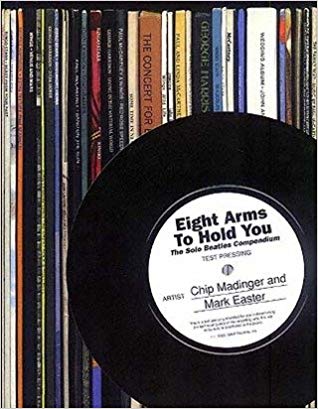
Eight Arms To Hold You: The Solo Beatles Compendium is the ultimate look at the careers of John Lennon, Paul McCartney, George Harrison and Ringo Starr beyond the Beatles. Every aspect of their professional careers as solo artists is explored, from recording sessions, record releases and tours, to television, film and music videos, including everything in between. From their early film soundtrack work to the officially released retrospectives, all solo efforts by the four men are exhaustively examined.

Notice any inaccuracies on this page? Have additional insights or ideas for new content? Or just want to share your thoughts? We value your feedback! Please use the form below to get in touch with us.