Sunday, January 4, 1970
Recording and mixing "Let It Be"
For The Beatles
Last updated on June 4, 2025
Sunday, January 4, 1970
For The Beatles
Last updated on June 4, 2025

Jan 3 - April 2, 1970 • Songs recorded during this session appear on Let It Be (US version)
Recording studio: EMI Studios, Studio Two, Abbey Road • London • UK
Session Jan 03, 1970 • Recording "I Me Mine"
Session Jan 3 - April 2, 1970 • The "Let It Be" sessions
Session Jan 04, 1970 • Recording and mixing "Let It Be"
Session Jan 05, 1970 • Mixing "I Me Mine", "Across The Universe" for the "Get Back" album (4th compilation)
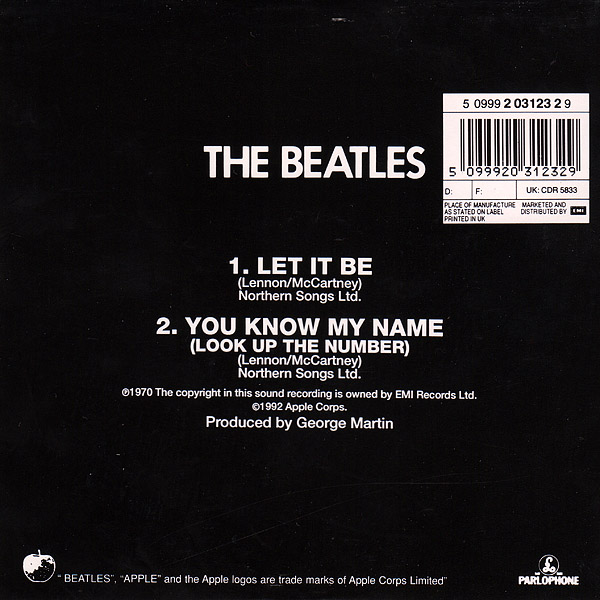
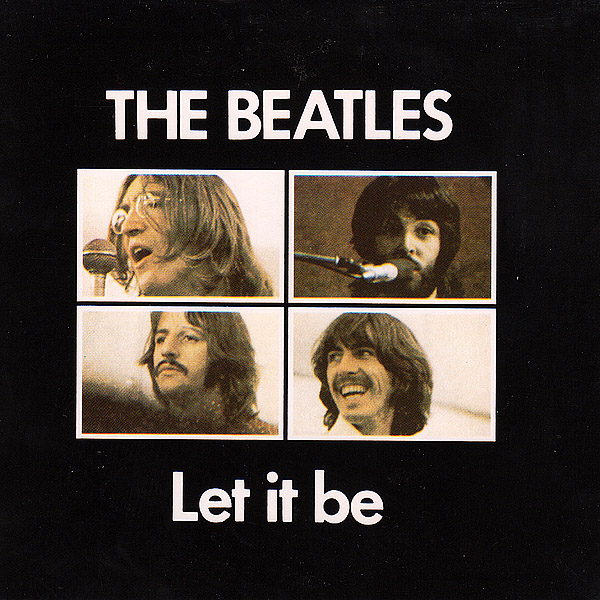
AlbumSome of the songs worked on during this session were first released on the "Let It Be / You Know My Name (Look Up The Number)" 7" Single

By The Beatles
This day marked the final recording session attended by The Beatles as a band. Although two additional sessions for the “Let It Be” album would follow, each involved only a single Beatle. Present on this occasion were Paul McCartney, George Harrison, and Ringo Starr; John Lennon was absent, having travelled to Denmark on holiday.
Paul, George, and Ringo would not reunite at Abbey Road Studios until March 31, 1995 — twenty-five years later — during the recording sessions for the “Beatles Anthology” project.
The day before, the three Beatles had recorded George’s “I Me Mine” for inclusion in the upcoming “Let It Be” soundtrack album. On this day, they turned their attention to Paul’s “Let It Be“, which had first received overdubs on April 30, 1969.
They resumed work from where they had left off on April 30, using Take 27A (DDSI 31.64) as the foundation. Paul and George began by adding backing vocals, and Paul also re-recorded the bass part originally played by John Lennon — meaning John does not appear on either the single or album version of “Let It Be.”
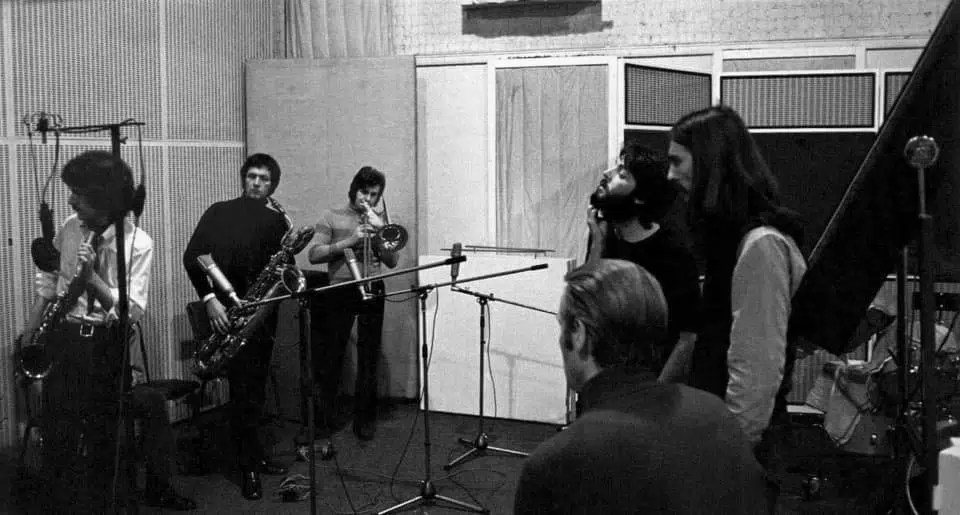
Three tape reductions — labelled Takes 28 through 30 — were then performed, incorporating simultaneous overdubs of a trombone, two tenor saxophones, one baritone saxophone and two trumpets. The orchestral score had been arranged by George Martin. Take 30 was deemed the best.
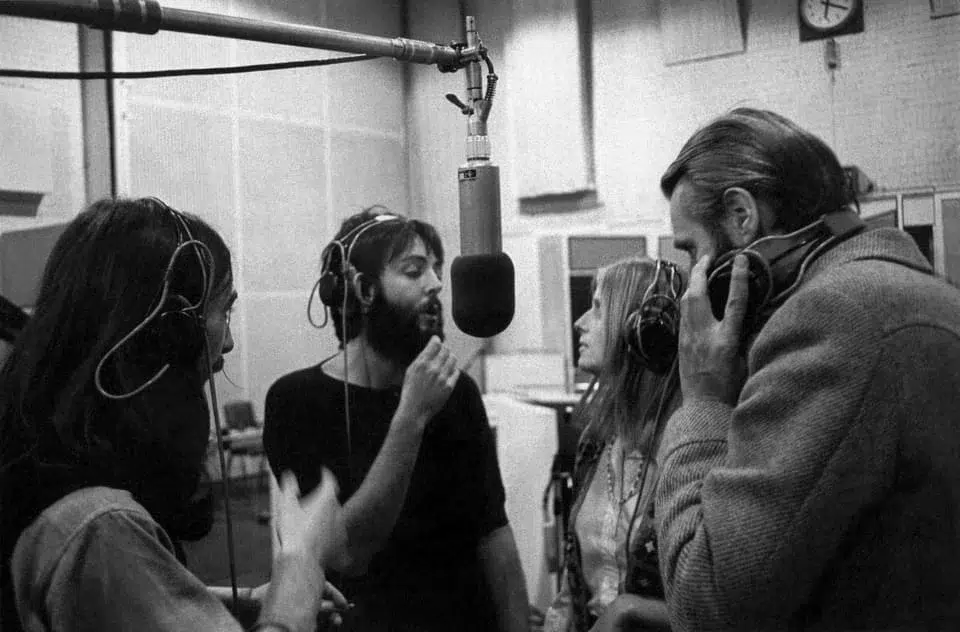
Paul, George and Linda McCartney then added backing vocals to Take 30. They proceeded to record two additional layers of backing vocals, each time on the same track as the previous vocals via internal tape reductions.
A section of celli was then added to the end of the track.
Subsequently, another tape track was filled with further backing vocals, a new guitar solo from George, tom-tom drum fills from Ringo, and Paul adding maracas and electric piano during the instrumental break before the solo and coda.
Two stereo remixes — RS1 and RS2 — were made from Take 30 before the session concluded at 4 a.m., having started at 2:30 p.m. the previous day.
For many years, RS2 was believed to be the mix used for the “Let It Be” single released in March 1970. However, the book included in the “Let It Be (50th anniversary boxset),” released in 2021, features a page from Paul’s diary dated January 8, noting his attendance at a mixing session for “Let It Be” at Olympic Studios, alongside the comment “great mix.”
When Glyn Johns completed his new revision of his “Get Back” LP, he chose not to include the newly recorded overdubs of “Let It Be,” likely because they clashed with the unvarnished, live-in-the-studio aesthetic he envisioned for the project.
The first thing I ever did was with The Beatles. I sang harmonies on Let It Be. It was supposed to be me and Mary Hopkin, but she had to go home.
Linda McCartney – From “The World Tour” program, interview with Paul du Noyer, 1989
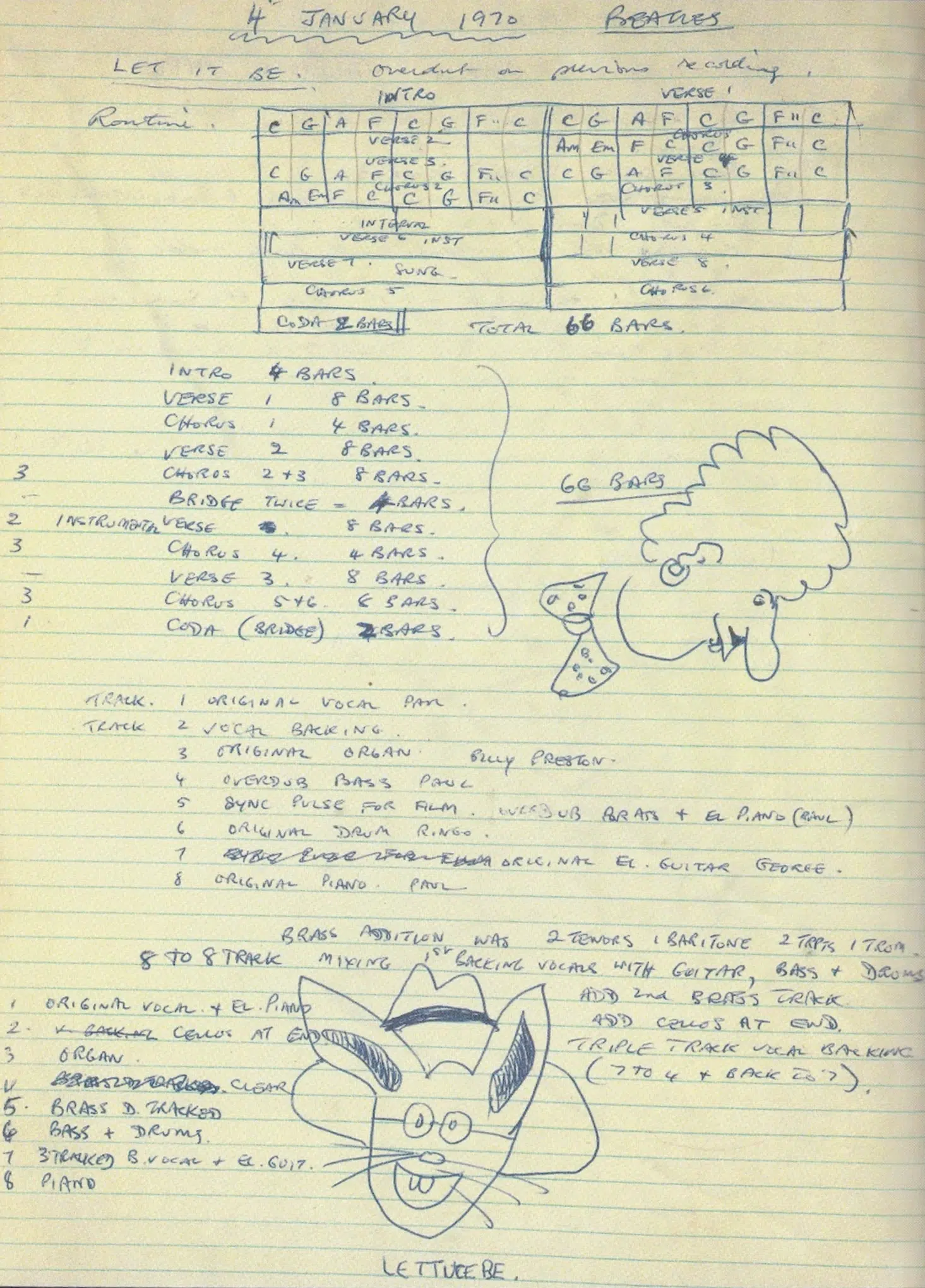
Recording • DDSI.31.64 • SI onto take 27
Tape copying • DDSI.31.64 • Tape reduction edit of take 27 into take 28 with simultaneous SI
Tape copying • DDSI.31.64 • Tape reduction edit of take 27 into take 29 with simultaneous SI
Tape copying • DDSI.31.64 • Tape reduction edit of take 27 into take 30 with simultaneous SI
Recording • DDSI.31.64 • SI onto take 30
Mixing • DDSI.31.64 • Stereo mixing - Remix 1 from take 30
Mixing • DDSI.31.64 • Stereo mixing - Remix 2 from take 30
The Complete Beatles Recording Sessions • Mark Lewisohn
The definitive guide for every Beatles recording sessions from 1962 to 1970. We owe a lot to Mark Lewisohn for the creation of those session pages, but you really have to buy this book to get all the details - the number of takes for each song, who contributed what, a description of the context and how each session went, various photographies... And an introductory interview with Paul McCartney!
The Beatles Recording Reference Manual: Volume 5: Let It Be through Abbey Road (1969 - 1970)

The fifth and final book of this critically acclaimed series, "The Beatles Recording Reference Manual: Volume 5: Let It Be through Abbey Road (1969 - 1970)" follows The Beatles as they "get back to where they once belonged...". Not once, but twice. With "Let It Be", they attempted to recapture the spontaneity of their early years and recordings, while "Abbey Road" was a different kind of return - to the complexity, finish and polish that they had applied to their work beginning with "Revolver" and through to "The Beatles".
If we modestly consider the Paul McCartney Project to be the premier online resource for all things Paul McCartney, it is undeniable that The Beatles Bible stands as the definitive online site dedicated to the Beatles. While there is some overlap in content between the two sites, they differ significantly in their approach.

Notice any inaccuracies on this page? Have additional insights or ideas for new content? Or just want to share your thoughts? We value your feedback! Please use the form below to get in touch with us.