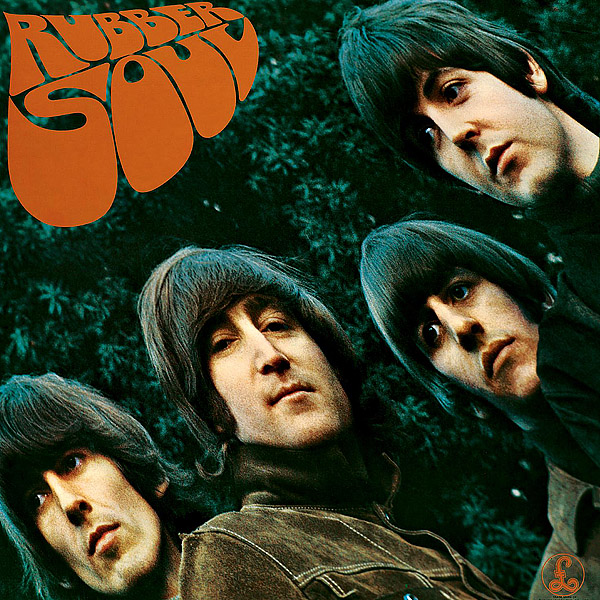

Designing the “Rubber Soul” cover
October 23 - Mid November 1965

The Beatles win two Ivor Novello awards
Mar 23, 1967
From The Beatles:
Rubber Soul was another album for Christmas – released on 3rd December, 1965 just two weeks after final mixing had taken place. Following the release of their previous album The Beatles had undertaken a momentous tour of the USA and Canada including a record breaking appearance at New York’s famous Shea Stadium.
Following a deserved holiday, the guys returned to the studios in mid October, not only to record the album but also a new single – their first double A-side featuring “Day Tripper” and “We Can Work It Out”
The album consisted of eleven songs by John and Paul, two by George and another with the unique writing credit of Lennon-McCartney-Starkey. The inclusion of a sitar on the song Norwegian Wood (This Bird Has Flown) also illustrated George’s growing interest in Indian music and culture.
Rubber Soul was also the last Beatles album for which Norman Smith manned the control desk. He took his leave after six albums and eleven singles going on to produce Pink Floyd and later still to enjoy success as ‘Hurricane’ Smith.
The front cover photograph of Rubber Soul was again taken by Robert Freeman but the way the faces appear slightly distorted on the sleeve was a result on a happy accident while the image was being projected. It is also interesting to note that the group’s name is absent from the front of the sleeve.
The album spent nine weeks at the album chart summit in the UK during a healthy 43 chart stay.
In the US Rubber Soul was released but despite the fact that sleeve looked similar to its UK counterpart, the track listing was different. Of the twelve tracks released on the American album only ten were common to the UK version. ‘I’ve Just Seen A Face’ and ‘It’s Only Love’ from side two of the British Help! album replaced four tracks which the US would save for a future release titled “Yesterday….And Today”. The US “Rubber Soul” album reached # 1 in early January 1966 and stayed there for six weeks during an initial chart run of 51 weeks.
‘Rubber Soul’ for me is the beginning of my adult life
Paul McCartney – From Facebook, December 3, 2025
In October 1965, we started to record the album. Things were changing. The direction was moving away from the poppy stuff like ‘Thank You Girl’, ‘From Me To You’ and ‘She Loves You’. The early material was directly relating to our fans, saying, ‘Please buy this record,’ but now we’d come to a point where we thought, ‘We’ve done that. Now we can branch out into songs that are more surreal, a little more entertaining.’ And other people were starting to arrive on the scene who were influential. Dylan was influencing us quite heavily at that point.
Paul McCartney – From “The Beatles Anthology” book, 2000
The title Rubber Soul was kind of, ‘Hey man, it’s got soul – it’s a lot of soul. A lot of soul, that music’. – It was a spoof on that you know. Seemed nice and amusing. Very us – you know, very whacky.
Paul McCartney – From Rubber Soul | The Beatles
We were getting better, technically and musically. We finally took over the studio. In the early days, we had to take what we were given; we had to make it in two hours, and one or three takes was enough and we didn’t know how you could get more bass – we were learning the techniques. Then we got contemporary. I think Rubber Soul was about when it started happening.
Everything I, any of us, do is influenced, but it began to take its own form. Rubber Soul was a matter of having all experienced the recording studio, having grown musically as well, but [getting] the knowledge of the place, of the studio. We were more precise about making the album, that’s all, and we took over the cover and everything.
John Lennon – From “The Beatles Anthology” book, 2000
Rubber Soul was my favourite album, even at that time. I think that it was the best one we made; we certainly knew we were making a good album. We did spend a bit more time on it and tried new things. But the most important thing about it was that we were suddenly hearing sounds that we weren’t able to hear before. Also, we were being more influenced by other people’s music and everything was blossoming at that time; including us, because we were still growing.
George Harrison – From “The Beatles Anthology” book, 2000


By The Beatles • LP

By The Beatles • LP

Rubber Soul (Mono - 2009 remaster)
By The Beatles • Official album

Rubber Soul (Stereo - 2009 remaster)
By The Beatles • Official album

Rubber Soul (US - 2006 remaster)
By The Beatles • Official album

Rubber Soul (US - 2014 reissue)
By The Beatles • Official album

Yesterday and Today (2014 reissue)
By The Beatles • Official album

By The Beatles • EP

By The Beatles • 7" Single

Officially appears on Anthology 2
Officially appears on Rubber Soul (UK Mono)
Officially appears on Rubber Soul (UK Mono)
Officially appears on Rubber Soul (UK Mono)
Officially appears on Rubber Soul (UK Mono)
Officially appears on Rubber Soul (UK Mono)
Officially appears on Rubber Soul (UK Mono)
Norwegian Wood (This Bird Has Flown)
Officially appears on Rubber Soul (UK Mono)
Officially appears on Rubber Soul (UK Mono)
Officially appears on Rubber Soul (UK Mono)
Officially appears on Rubber Soul (UK Mono)
Officially appears on Rubber Soul (UK Mono)
Officially appears on Rubber Soul (UK Mono)

Officially appears on We Can Work It Out / Day Tripper (UK)
Officially appears on Rubber Soul (UK Mono)
Officially appears on Rubber Soul (UK Mono)
Recording "Run For Your Life", "Norwegian Wood (This Bird Has Flown)"
Oct 12, 1965 • Songs recorded during this session appear on Rubber Soul (UK Mono)
Oct 12 - Nov 30, 1965 • Songs recorded during this session appear on Rubber Soul (UK Mono)
Oct 13, 1965 • Songs recorded during this session appear on Rubber Soul (UK Mono)
Recording "Day Tripper", "If I Needed Someone"
Oct 16, 1965 • Songs recorded during this session appear on We Can Work It Out / Day Tripper (UK)
Recording "If I Needed Someone", "In My Life"
Oct 18, 1965 • Songs recorded during this session appear on Rubber Soul (UK Mono)
Recording "We Can Work It Out"
Oct 20, 1965 • Songs recorded during this session appear on We Can Work It Out / Day Tripper (UK)
Recording "Norwegian Wood (This Bird Has Flown)", "Nowhere Man"
Oct 21, 1965 • Songs recorded during this session appear on Rubber Soul (UK Mono)
Recording "In My Life", "Nowhere Man"
Oct 22, 1965 • Songs recorded during this session appear on Rubber Soul (UK Mono)
Oct 25, 1965 • Songs recorded during this session appear on Rubber Soul (UK Mono)
Recording and mixing "We Can Work It Out", mixing "Day Tripper"
Oct 29, 1965 • Songs recorded during this session appear on We Can Work It Out / Day Tripper (UK)
Nov 03, 1965 • Songs recorded during this session appear on Rubber Soul (UK Mono)
Recording "What Goes On", "12-Bar Original"
Nov 04, 1965 • Songs recorded during this session appear on Rubber Soul (UK Mono)
Recording "Think For Yourself", "The Beatles Third Christmas Record"
Nov 08, 1965 • Songs recorded during this session appear on Rubber Soul (UK Mono)
Nov 09, 1965 • Songs recorded during this session appear on Rubber Soul (UK Mono)
Mixing "Run For Your Life", "We Can Work It Out", recording "The Word", "I'm Looking Through You"
Nov 10, 1965 • Songs recorded during this session appear on Rubber Soul (UK Mono)
Mixing "The Word", recording "You Won't See Me", "Girl", "Wait", "I'm Looking Through You"
Nov 11, 1965 • Songs recorded during this session appear on Rubber Soul (UK Mono)
Mixing "I'm Looking Through You", "You Won't See Me", "Girl", "Wait", "The Word", "Michelle"
Nov 15, 1965 • Songs recorded during this session appear on Rubber Soul (UK Mono)

Nov 30, 1965

Remixing "Help!", "Rubber Soul"
Circa December 1986 / January 1987 • Songs recorded during this session appear on Rubber Soul (1987 mix)
Beatles Paul and John, the bards of pop
Mar 21, 1966 • From Newsweek
Close-up: Paul McCartney as Songwriter
Dec 04, 1965 • From London Life


