Thursday, February 18, 1965
Recording "You've Got to Hide Your Love Away", "If You've Got Trouble", "Tell Me What You See"
For The Beatles
Last updated on July 18, 2026
Thursday, February 18, 1965
For The Beatles
Last updated on July 18, 2026

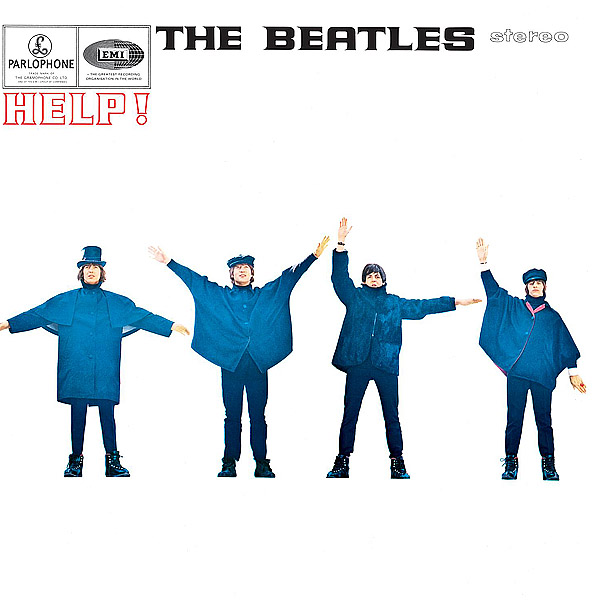
Feb 15 - Jun 18, 1965 • Songs recorded during this session appear on Help! (UK - Mono)
Recording studio: EMI Studios, Studio Two, Abbey Road • London • UK
Session Feb 17, 1965 • Recording "The Night Before", "You Like Me Too Much"
Article Feb 18, 1965 • Northern Songs goes public on the London Stock Exchange
Session Feb 18, 1965 • Recording "You've Got to Hide Your Love Away", "If You've Got Trouble", "Tell Me What You See"
Article Feb 19, 1965 • The Beatles attend a private party given by EMI's Joe Lockwood
Session Feb 19, 1965 • Recording "You're Going to Lose That Girl"
AlbumSome of the songs worked on during this session were first released on the "Help! (UK - Mono)" LP
This was the fourth day of work on The Beatles’ “Help!” album. On this day, the five tracks recorded so far were mixed in mono, and work began on three new tracks.
The first session of the day, from 10 am to 1 pm, was devoted to mixing. “Ticket To Ride” and “Yes It Is” were mixed in mono, completing the next Beatles single (to be released in April 1965). Two further tracks, “Another Girl” and “I Need You“, were also mixed in mono. All four were completed in a single attempt each.
In the second session of the day (from 3:30 to 5:15 pm), The Beatles began work on a new track, “You’ve Got To Hide Your Love Away.”
The backing track featured John Lennon on acoustic guitar and guide vocals, Paul McCartney on bass, George Harrison on acoustic guitar, and Ringo Starr on drums. All instruments were recorded onto track one of the four-track tape. Nine takes were attempted, with Take 9 judged the best. The version released on “Anthology 2” in 1996 is Take 5 — the only other complete recording — prefaced by studio banter drawn from Takes 1 and 2.
The fourth day of the Help! sessions was a typically productive one, the Beatles recording three new songs and mixing a number of other titles. The first of the three was John’s all-acoustic You’ve Got To Hide Your Love Away, taken from conception to completion in less than two hours during the afternoon. The master (Take 9) was distinguished by a flute overdub — the first time the Beatles had brought in an outside musician to augment their sound — but the version presented [in Anthology 2] is Take 5, the only other complete recording. This is prefaced by some studio banter: John’s “1,2,3, 1,2,3, hold on, hold on” count-in that is all there was of Take 1, and some “shattering” talk that preceded Take 2.
From Anthology 2 liner notes
Overdubs followed. John recorded his lead vocals onto track two. Ringo added tambourine, Paul maracas, and George acoustic guitar, all onto track three.
The track would be completed two days later with the addition of flutes.
From 5:15 to 6 pm, “The Night Before” and “You Like Me Too Much” — the two most recently recorded tracks — were mixed in mono, each in a single take.
From 6 to 10:30 pm, The Beatles recorded two further new tracks: “If You’ve Got Trouble” and “Tell Me What You See.”
“If You’ve Got Trouble” was a Lennon-McCartney composition intended as a lead vocal vehicle for Ringo. The backing track featured Ringo on drums, Paul on bass, and George on electric guitar, all recorded onto track one of the four-track tape. Only one take was recorded, after which overdubs followed.
John, George, and Paul recorded electric guitar parts onto track three. Onto track four, Ringo recorded his lead vocals, Paul and John contributed backing vocals, and George added his guitar solo. Ringo then double-tracked his vocals onto track two.
“If You’ve Got Trouble” was mixed in mono on February 20 and in stereo on February 23, but remained unreleased until its inclusion on “Anthology 2” in 1996.
The Beatles captured the basic track of If You’ve Got Trouble in a single take and then lead and backing vocals were overdubbed, but the overall sound did not gel and it was soon decided to pass over the recording, and, indeed, the song itself. Ringo made his vocal contribution to Help! by recording a cover version of Buck Owens’ country number Act Naturally on 17 June 1965, and If You’ve Got Trouble has remained locked inside EMI’s archive until now.
From Anthology 2 liner notes
The backing track of “Tell Me What You See” featured John on electric guitar, Paul on bass, Ringo on drums, and George on guiro (a percussive instrument). All instruments were recorded onto track one. Four takes were needed, with overdubs applied to Take 4.
John and Paul’s lead vocals were recorded onto track three, then double-tracked onto track four alongside Ringo on tambourine and George on claves. Paul then added an electric piano part onto track two.
With the recording complete, the track was mixed in mono on February 20 and in stereo on February 23.
Ray Coleman, a journalist for Melody Maker, attended both sessions and reported on them in the issue of the magazine dated February 27, 1965.
Mixing • Mono mixing - Remix 1 from take 2
AlbumOfficially released on Ticket To Ride / Yes It Is (UK)
Mixing • Mono mixing from take 1
AlbumOfficially released on Help! (UK - Mono)
Written by George Harrison
Mixing • Mono mixing from take 5
AlbumOfficially released on Help! (UK - Mono)
Mixing • Mono mixing from take 14
AlbumOfficially released on Ticket To Ride / Yes It Is (UK)
You've Got to Hide Your Love Away
Recording • Take 1
AlbumOfficially released on Anthology 2
You've Got to Hide Your Love Away
Recording • Take 2
AlbumOfficially released on Anthology 2
You've Got to Hide Your Love Away
Recording • Take 3
You've Got to Hide Your Love Away
Recording • Take 4
You've Got to Hide Your Love Away
Recording • Take 5
AlbumOfficially released on Anthology 2
You've Got to Hide Your Love Away
Recording • Take 6
You've Got to Hide Your Love Away
Recording • Take 7
You've Got to Hide Your Love Away
Recording • Take 8
You've Got to Hide Your Love Away
Recording • Take 9
You've Got to Hide Your Love Away
Recording • SI onto take 9
Mixing • Mono mixing from take 2
AlbumOfficially released on Help! (UK - Mono)
Written by George Harrison
Mixing • Mono mixing from take 8
AlbumOfficially released on Help! (UK - Mono)
Recording • Take 1
Recording • SI onto take 1
AlbumOfficially released on Anthology 2
Recording • Take 1
Recording • Take 2
Recording • Take 3
Recording • Take 4
Recording • SI onto take 4
The Complete Beatles Recording Sessions • Mark Lewisohn
The definitive guide for every Beatles recording sessions from 1962 to 1970. We owe a lot to Mark Lewisohn for the creation of those session pages, but you really have to buy this book to get all the details - the number of takes for each song, who contributed what, a description of the context and how each session went, various photographies... And an introductory interview with Paul McCartney!
The Beatles Recording Reference Manual - Volume 2 - Help! through Revolver (1965-1966)
The second book of the Association for Recorded Sound Collections (ARSC)-nominated series, "The Beatles Recording Reference Manual: Volume 2: Help! through Revolver (1965-1966)" follows the evolution of the band from the end of Beatlemania with "Help!" through the introspection of "Rubber Soul" up to the sonic revolution of "Revolver". From the first take to the final remix, discover the making of the greatest recordings of all time.Through extensive, fully-documented research, these books fill an important gap left by all other Beatles books published to date and provide a unique view into the recordings of the world's most successful pop music act.

Notice any inaccuracies on this page? Have additional insights or ideas for new content? Or just want to share your thoughts? We value your feedback! Please use the form below to get in touch with us.


