
Tuesday, September 9, 1969
Paul McCartney, John Lennon and George Harrison discuss the future of The Beatles
Last updated on September 7, 2025
Tuesday, September 9, 1969
Last updated on September 7, 2025
Article September - December 1969 • The "Get Back" LP rumours • September to December 1969
Article September to November 1969 • ATV finalizes its acquisition of Northern Songs
Article Sep 09, 1969 • Paul McCartney, John Lennon and George Harrison discuss the future of The Beatles
Article Sep 16, 1969 • John Lennon tells the other Beatles he's leaving the band
Article Sep 16, 1969 • Maclen Ltd launches legal proceedings against Northern Songs Ltd

Officially appears on Abbey Road

Officially appears on The Beatles (Mono)

The Beatles hire Alexis “Magic Alex” Mardas
Aug 24, 1967

Apple Corps open offices in London
Jan 22, 1968

Designing the Apple Records logo
February - July 1968
Mar 29, 1968
Paul McCartney meets American scriptwriter Francie Schwartz
April or May 1968
Apple publishes an ad to find new talent
Apr 19, 1968
Paul and John meet Ron Kass in New York
May 12, 1968
The Beatles promote Apple Corps in New York
May 14, 1968
Paul and John fly from New York to London
May 15, 1968
The Apple shop mural is being removed
May 15-18, 1968
May 23, 1968
Paul McCartney celebrates his 26th birthday
Jun 18, 1968
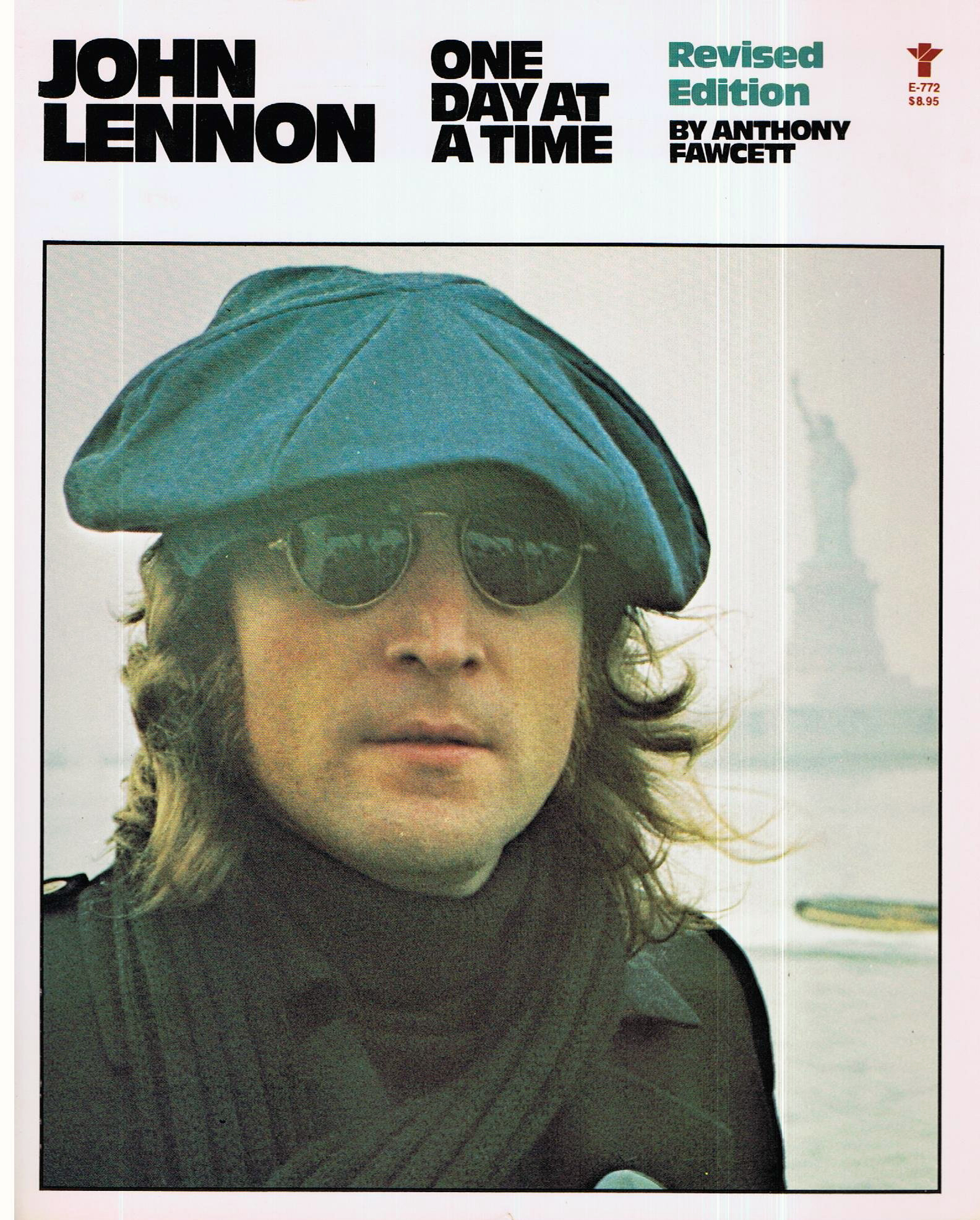
On this day, Paul McCartney, John Lennon and George Harrison met at Apple headquarters on Savile Row to discuss their future plans as The Beatles. John’s assistant, Anthony Fawcett, brought a portable tape recorder to capture the conversation, mainly for the benefit of Ringo Starr, who was in hospital undergoing tests.
With the release of “Abbey Road” just days away, the three Beatles discussed their next steps as a band, including potential future recording projects. John appeared actively engaged in the conversation, despite the fact that just two weeks later, on September 20, 1969, he would inform the others of his decision to leave the group.
Anthony Fawcett later shared details of the meeting in his 1976 book “One Day at a Time.” In 2019, the original tape recording resurfaced when it was rediscovered by Beatles historian Mark Lewisohn.
From Wikipedia:
On 8 September [sic – 9], while Starr was in hospital, Lennon, McCartney and Harrison met to discuss recording a follow-up to Abbey Road. In the meeting Lennon and Harrison expressed frustration with having to compete with McCartney to get their songs recorded. Lennon proposed a different approach to songwriting by ending the Lennon–McCartney pretence and having four compositions apiece from Lennon, McCartney and Harrison, with two from Starr and a lead single around Christmas. Harrison referred to the possibility of a new Beatles album in an interview he gave in November, and he called this songwriting arrangement “an equal rights thing”. McCartney later dismissed the new division of songwriting, saying it “wasn’t the right balance” and was “too democratic for its own good”. Speaking to Melody Maker in September, Lennon said: “The trouble is we’ve got too much material. Now that George is writing a lot, we could put out a double album every month …” During the 8 September meeting, McCartney expressed that, before Abbey Road, he “thought that George’s songs weren’t that good”, to which Lennon reacted by saying none of the other Beatles liked McCartney’s “Ob-La-Di, Ob-La-Da” and “Maxwell’s Silver Hammer” and that those types of songs should be given to other artists to record.
It’s September the 9th actually. Richard Williams in The Guardian called it the 8th in error and that’s how it’s gone around now, but it was the ninth. It was 9-9-69, and it was in Savile Row and Ringo was in hospital, in observation for problem with his intestines.
Mark Lewisohn – In conversation with Greg Armstrong – November 2019
John Lennon: We always carved the singles up between us. We have the singles market, they [George and Ringo] don’t get anything! I mean we’ve never offered George ‘B’ sides; we could have given him a lot of ‘B’ sides, but because we were two people you had the ‘A’ side and I had the ‘B’ side.
Paul McCartney: Well the thing is, I think that until now, until this year [1969], our songs have been better than George’s. Now this year his songs are at least as good as ours.
George Harrison: Now that’s a myth, ’cause most of the songs this year I wrote about last year or the year before, anyway. Maybe now I just don’t care whether you are going to like them or not, I just do ’em… If I didn’t get a break I wouldn’t push it, I’d just forget about it. Now for the last two years, at any rate, I’ve pushed it a bit more.
John: I know what he’s saying ’cause people have said to me you’re coming through a lot stronger now than you had.
George: I don’t particularly seek acclaim. That’s not the thing. It’s just to get out whatever is there to make way for whatever else is there. You know, ’cause it’s only to get ’em out, and also I might as well make a bit of money, seeing as I’m spending as much as the rest of you, and I don’t earn as much as the rest of you! […] Most of my tunes, I never had the Beatles backing me.
John: Oh! C’mon, George! We put a lot of work in your songs, even down to “Don’t Bother Me”; we spent a lot of time doing all that and we grooved. I can remember the riff you were playing, and in the last two years, there was a period where you went Indian and we weren’t needed!
George: That was only one tune. On the last album [“White Album”]. I don’t think you appeared on any of my songs — I don’t mind.
John: Well, you had Eric [Clapton], or somebody like that…
[Silence]
Paul: When we get in a studio, even on the worst day, I’m still playing bass, Ringo’s still drumming, and we’re still there you know.
From “John Lennon – One Day At A Time” by Anthony Fawcett, 1976
It seemed mad for us to put a song on an album that nobody really dug, including the guy who wrote it, just because it was going to be popular, ’cause the LP doesn’t have to be that. Wouldn’t it be better, because we didn’t really dig them, yer know, for you to do the songs you dug, and ‘Ob-La-Di, Ob-La-Da’ and ‘Maxwell’ to be given to people who like music like that, yer know, like Mary [Hopkins], or whoever it is needs a song. Why don’t you give them to them? The only time we need anything vaguely near that quality is for a single. For an album we could just do only stuff that we really dug.
John Lennon – From “John Lennon – One Day At A Time” by Anthony Fawcett, 1976
It was carte blanche because you’d come up with a Magical Mystery Tour. I didn’t write any of that except ‘Walrus’; I’d accept it and you’d already have five or six songs, so I’d think ‘fuck it, I can’t keep up with that.’ So I didn’t bother, yer know—and I thought I don’t really care whether I was on or not, I convinced myself it didn’t matter, and so for a period if you didn’t invite me to be on an album personally, if you three didn’t say: ‘write some more ’cause we like your work,’ I wasn’t going to fight!”
John Lennon – From “John Lennon – One Day At A Time” by Anthony Fawcett, 1976
If you look back on the Beatles’ albums, good or bad or whatever you think of ’em, you’ll find that most times if anybody has got extra time it’s you! For no other reason than you worked it like that. Now when we get into a studio I don’t want to go through games with you to get space on the album, yer know! I don’t want to go through a little maneuvering, or whatever level it’s on, to get time. ‘Cause there was a time, about three years ago, I gave up fighting for an ‘A’ side or fighting for time. I just thought, well I’m content to put ‘Walrus’ on the ‘B’ side, when I think it’s much better, and ‘Strawberry Fields,’ because I’m content to be on, yer know, and get the cooperation of the group to produce a ‘Walrus’ and a ‘Strawberry Fields’ out of all of you.
John Lennon – From “John Lennon – One Day At A Time” by Anthony Fawcett, 1976
From The Guardian, September 11, 2019:
[The Beatles have] wrapped up the recording of Abbey Road, which would turn out to be their last studio album, and are awaiting its release in two weeks’ time. Ringo Starr is in hospital, undergoing tests for an intestinal complaint. In his absence, John Lennon, Paul McCartney and George Harrison convene at Apple’s HQ in Savile Row. John has brought a portable tape recorder. He puts it on the table, switches it on and says: “Ringo – you can’t be here, but this is so you can hear what we’re discussing.”
What they talk about is the plan to make another album – and perhaps a single for release in time for Christmas, a commercial strategy going back to the earliest days of Beatlemania. “It’s a revelation,” Lewisohn says. “The books have always told us that they knew Abbey Road was their last album and they wanted to go out on an artistic high. But no – they’re discussing the next album. And you think that John is the one who wanted to break them up but, when you hear this, he isn’t. Doesn’t that rewrite pretty much everything we thought we knew?”
Lewisohn turns the tape back on, and we hear John suggesting that each of them should bring in songs as candidates for the single. He also proposes a new formula for assembling their next album: four songs apiece from Paul, George and himself, and two from Ringo – “If he wants them.” John refers to “the Lennon-and-McCartney myth”, clearly indicating that the authorship of their songs, hitherto presented to the public as a sacrosanct partnership, should at last be individually credited.
Then Paul – sounding, shall we say, relaxed – responds to the news that George now has equal standing as a composer with John and himself by muttering something mildly provocative. “I thought until this album that George’s songs weren’t that good,” he says, which is a pretty double-edged compliment since the earlier compositions he’s implicitly disparaging include Taxman and While My Guitar Gently Weeps. There’s a nettled rejoinder from George: “That’s a matter of taste. All down the line, people have liked my songs.”
John reacts by telling Paul that nobody else in the group “dug” his Maxwell’s Silver Hammer, a song they’ve just recorded for Abbey Road, and that it might be a good idea if he gave songs of that kind – which, John suggests, he probably didn’t even dig himself – to outside artists in whom he had an interest, such as Mary Hopkin, the Welsh folk singer. “I recorded it,” a drowsy Paul says, “because I liked it.” […]
From The Guardian, September 11, 2019
The Beatles Diary Volume 1: The Beatles Years
With greatly expanded text, this is the most revealing and frank personal 30-year chronicle of the group ever written. Insider Barry Miles covers the Beatles story from childhood to the break-up of the group.
If we modestly consider the Paul McCartney Project to be the premier online resource for all things Paul McCartney, it is undeniable that The Beatles Bible stands as the definitive online site dedicated to the Beatles. While there is some overlap in content between the two sites, they differ significantly in their approach.

Notice any inaccuracies on this page? Have additional insights or ideas for new content? Or just want to share your thoughts? We value your feedback! Please use the form below to get in touch with us.

Mariusz • Sep 03, 2025 • 6 months ago
A few days ago, as Ageing Head, I asked Joe, author of The Beatles Bible, when this meeting actually took place: September 8, 1969, or the day after. Joe referred me to the comments section for clarification. Indeed, the very first comment (from January 2021) points to Mark Lewisohn, who states that the meeting took place on September 9: https://www.youtube.com/watch?v=SEwT1RTPhDk&t=2396s

The PaulMcCartney Project • Sep 07, 2025 • 6 months ago
Thanks a lot Mariusz, I'm going to fix that !

