December 23, 1969 - March 1970 • Songs recorded during this session appear on McCartney
Recording studio: Paul McCartney's home, 7 Cavendish Avenue, St John’s Wood • London • UK
Single Dec 19, 1969 • "The Beatles Seventh Christmas Record" by The Beatles released in the UK
Session Dec 21, 1969 • Mixing the "Get Back" album (4th compilation)
Session Dec 23-30, 1969 • "McCartney" home recordings
Session December 23, 1969 - March 1970 • Recording "McCartney"
Article Dec 25, 1969 • "Get Back" promo clip broadcast in color in the UK
AlbumSome of the songs worked on during this session were first released on the "McCartney" LP
I loved making music and I found that I didn’t want to stop… I found that I was enjoying working alone as much as I had enjoyed the early days of The Beatles.
Paul McCartney – From “And in the End: The Last Days of the Beatles” by Ken McNab, 2019
In October 1969, shortly after John Lennon informed the other Beatles of his decision to leave the band, Paul McCartney and his wife Linda retreated from London to their farm in Campbeltown, Scotland, seeking isolation with their daughters, Heather and newborn Mary. It was a period of deep depression for Paul.
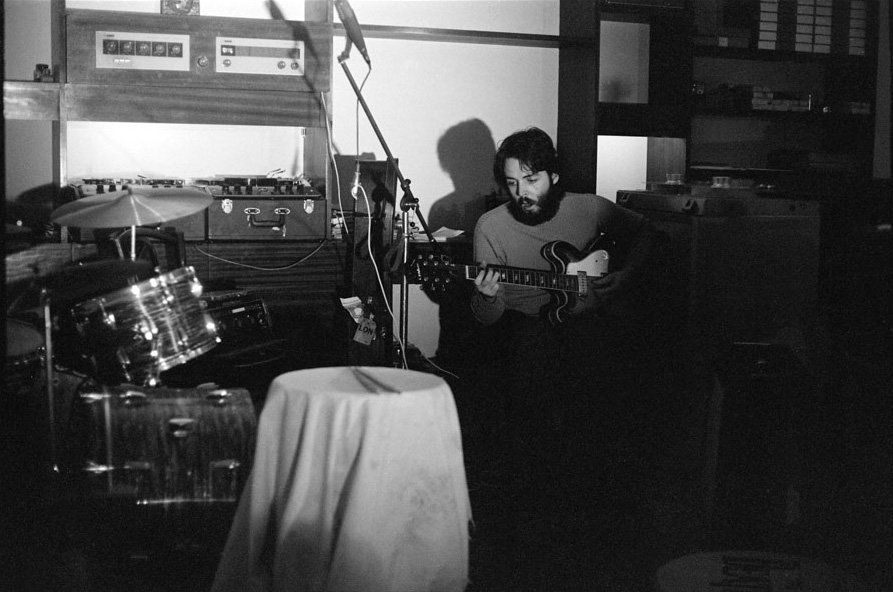
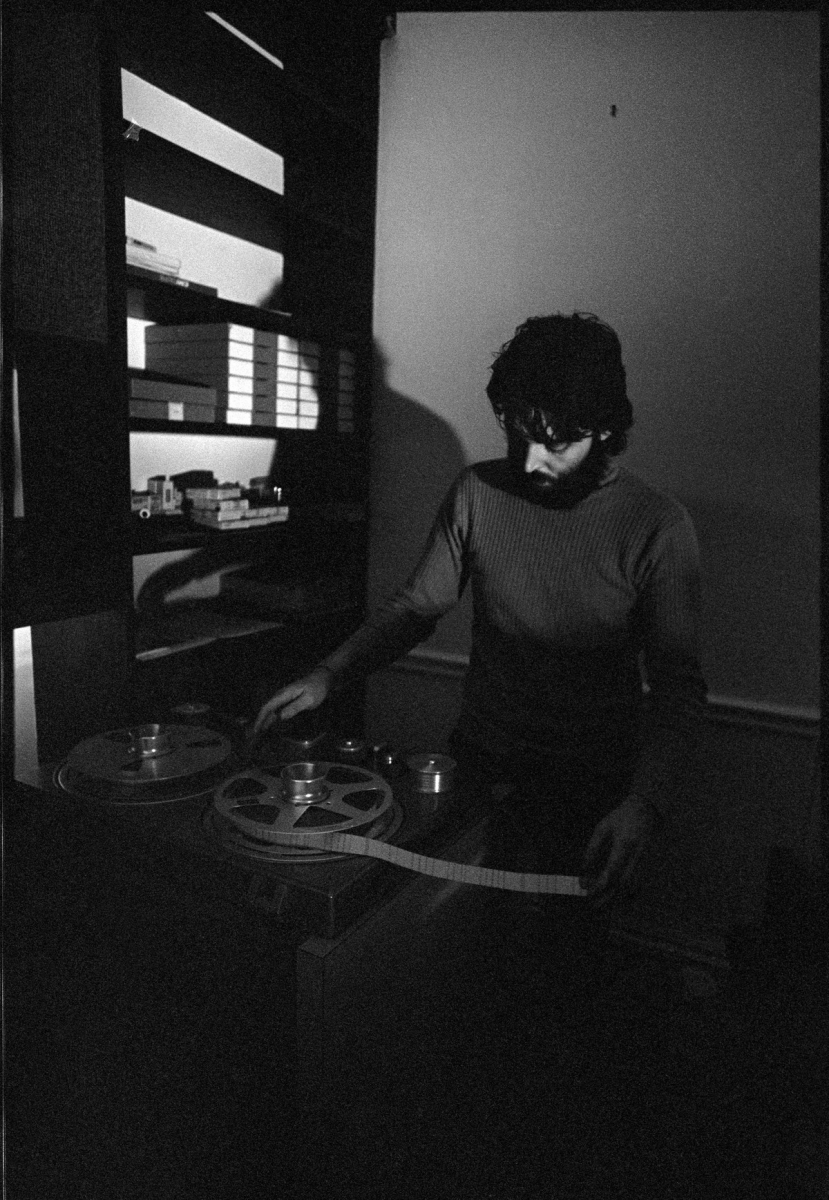
The family returned to London on November 17. Soon after, Paul began upgrading his home studio at 7 Cavendish Avenue, following advice from EMI Studios engineer Eddie Klein. EMI lent him a Studer J37 4-track tape recorder but did not provide a mixing console. This may have been by design, as it forced Paul to plug microphones and instruments directly into the machine, encouraging a lo-fi, experimental approach.
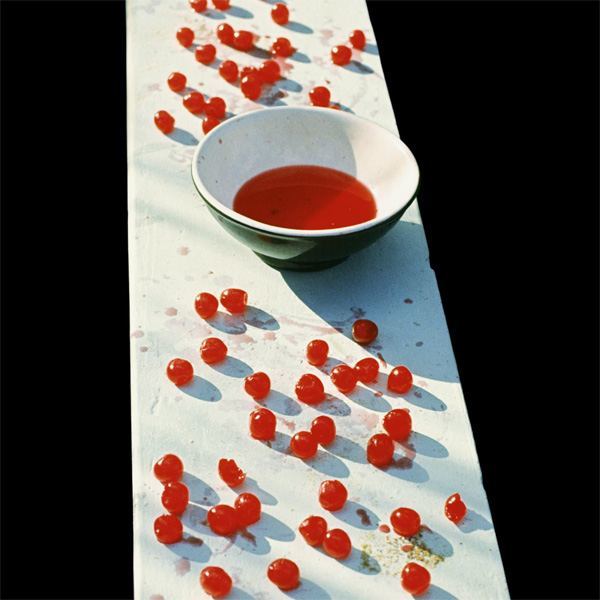
In December, Paul and his family left for a holiday in Antigua. One of the photographs taken by Linda during the trip would later be used as the cover of the “McCartney” album.
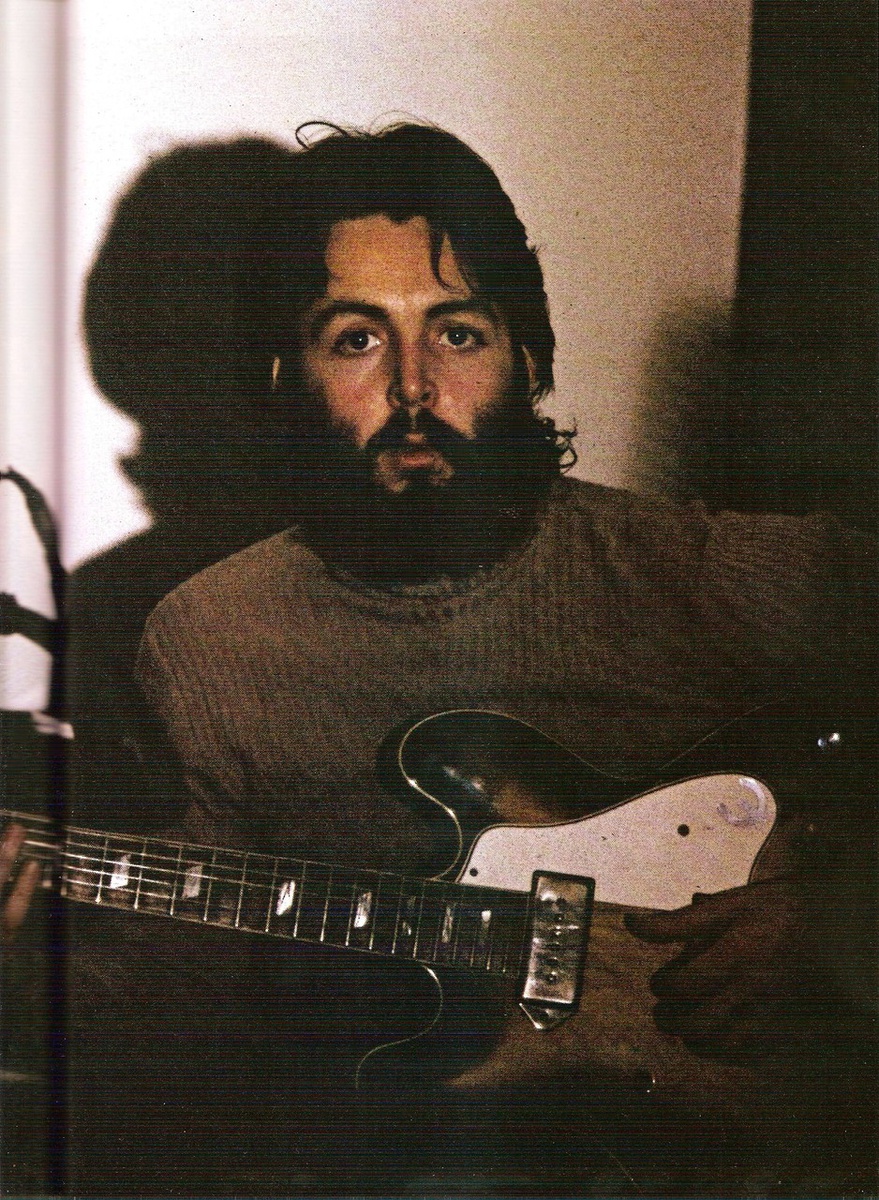
Back in London in late December, Paul began recording new material using the Studer. Although he wasn’t consciously setting out to make a solo album at first, he became increasingly immersed in the process. The sessions were kept private, with only a few people aware of his work — among them Beatles assistant Mal Evans.
The songs recorded for “McCartney” were a mix of leftover material from the Beatles era — such as “Teddy Boy,” “Junk,” and “Hot As Sun” — and new compositions either recently written in Scotland — like “The Lovely Linda” and “That Would Be Something” — or created spontaneously.
Unlike the meticulously documented sessions at EMI Studios, where every take was logged in detail, the informal, home-recorded nature of “McCartney“ meant no comprehensive records were kept. Paul’s typical approach involved laying down a basic track on one of the four available tracks of the Studer J37 tape recorder, then building the arrangement by overdubbing additional parts onto the remaining tracks.
The first song recorded was “The Lovely Linda,” a short tune Paul had written in Campbeltown. Initially intended as a simple test of his new recording equipment, he recorded a 45-second version. On the tape box, he noted the title as “Lovely Linda”; the preposition would be added only later in the album’s production.
Despite its modest purpose — and the audible sound of a door squeaking as Linda entered the room, followed by Paul’s laughter — the take was included as the album’s opening track.
When the Studer 4 track was installed at home, this was the first song I recorded, to test the machine. On the first track was vocal and guitar, second – another acoustic guitar – then overdubbed hand slaps on a book, and finally bass. Written in Scotland, the song is a trailer to the full song which will be recorded in the future.
Paul McCartney – About “The Lovely Linda” – From the press release of “McCartney”, April 1970
That was when Linda and I first got together. The record is me playing around the house. You hear her walking through the living room doorway out to the garden, and the door squeaks at the end of the tape. That’s one of the songs from my personal experience, with “the flowers in her hair.” She often used to wear flowers in her hair, so it’s a direct diary. I was always going to finish it, and I had another bit that went into a Spanish song, almost mariachi, but it just appeared as a fragment and was quite nice for that reason. It opened the “McCartney” album, so it’s evocative of it now.
Paul McCartney – About “The Lovely Linda” – Interview with Billboard, 2001
In the opening track, The Lovely Linda, you can hear the door squeak as Linda came in while I was recording. It was a good take, so we left it in.
Paul McCartney – From the “Wingspan – An Intimate Portrait” documentary, 2001
The second song, “That Would Be Something“, was also written in Scotland. Paul played acoustic guitar, bass, electric guitar, tom-tom, and cymbal, and provided vocal percussion to emulate a drum rhythm.
This song was written in Scotland in 1969 and recorded at home in London – mixed later at EMI (No. 2). I only had one mike, as the mixer and VU meters hadn’t arrived (still haven’t).
Paul McCartney – About “That Would Be Something” – From the press release of “McCartney”, April 1970
The third track was an improvisation. Paul introduced it by saying “Rock ’n’ Roll Springtime” at the start of the recording, but listed it as “Momma” on his handwritten tracking sheet.
He then recorded another instrumental, initially labelled “instrumental” and later renamed “Miss America” (the earlier title being struck through in red ink on the tracking sheet). These two recordings were later edited together to form a single piece, released as “Momma Miss America.”
An instrumental recorded completely at home. Made up as I went along – first a sequence of chords, then a melody on top. Piano, drums, acoustic guitar, electric guitar. Originally it was two pieces but they ran into each other by accident and became one.
Paul McCartney – About “Momma Miss America” – From the press release of “McCartney”, April 1970
The next track was titled “Rupert.” On August 28, 1969, Linda gave birth to their first daughter, Mary. While visiting them in the hospital, Paul noticed a print of Picasso’s “The Old Guitarist” hanging on the wall. The artwork inspired him to write a track that he recorded during those sessions. On the handwritten tracking sheet, he named it “Rupert,” in reference to Rupert the Bear – a character for which he was in the process of acquiring the film rights, an acquisition announced in April 1970.
This recording remains unreleased. The piece was retitled “When The Wind Is Blowing” when Paul re-recorded it in October 1970.
An instrumental followed, initially labelled “Instrumental” and later titled “Oo You.” It would be enhanced with vocals and overdubs in February 1970.
Next came another instrumental, noted as “Valentine” on Paul’s track list and renamed “Valentine Day” on the tape box.
Recorded at home. Made up as I went along – acoustic guitar first, then drums (maybe drums were first). Anyway – electric guitar and bass were added and the track is all instrumental. Mixed at EMI. This one and Momma Miss America were ad-libbed, with more concern for testing the machine than anything else.
Paul McCartney – About “Valentine Day” – From the press release of “McCartney”, April 1970
I was feeling quite comfortable, the more I went on like this. I could actually do something again.
Paul McCartney – From interview with RollingStone, 1970
Paul then revisited one of his earliest compositions, “Suicide,” likely written in 1956 when he was fourteen. In a cabaret style, it had been conceived with the idea of writing it to Frank Sinatra. From the version recorded here, only a nine-second excerpt appeared on the album, at the end of “Glasses,” which was recorded just after. The complete recording was eventually released on the “McCartney – Archive Collection” in 2011.
Paul McCartney then turned to something more experimental. Using wine glasses filled with varying amounts of water, he produced resonant tones, making them “sing.” This track reflects Paul’s ongoing interest in experimental sound, a curiosity that had been sparked in 1966 when Barry Miles and others introduced him to the works of Karlheinz Stockhausen, Luciano Berio, Cornelius Cardew, and other avant-garde composers.
According to “The McCartney Legacy: Volume 1: 1969 – 73” by Allan Kozinn and Adrian Sinclair, the track was created entirely at Paul’s home. This contrasts with the recollection of Abbey Road engineer Phil McDonald, who stated in the “McCartney – Archive Collection” book:
The title “Glasses” was fun as we ended up with a huge amount of glasses all filled with water on a big table in Number 3. All glasses were meticulously filled with water to the desired pitch of the song. It seemed a very personal and warm album to do at the time, and good fun.
Phil McDonald – Engineer – From “McCartney – Archive Collection” book, 2011
When contacted, Adrian Sinclair confirmed that there are numerous errors in the Archive Collection book, and that all existing session paperwork clearly indicates no further recording work on the track beyond the December home sessions.
The next song was “Teddy Boy,” written during The Beatles’ 1968 visit to India. Paul first introduced the song to the other Beatles on January 9, 1969, during the “Get Back” sessions, and the band recorded several takes on January 24, 28, and 29.
In December 1969, Paul recorded two takes with the same instrumentation — acoustic guitar, lead vocals, backing vocals by Linda, and bass. Take 1 was considered the best and received overdubs on February 17, 1970.
Another song started in India and completed in Scotland and London, gradually. This one was recorded for Get Back film but later not used. Rerecorded partly at home…(guitar, voices and bass)…and finished at Morgan. Linda and I sing the backing harmonies on the chorus and occasional oos.
Paul McCartney – About “Teddy Boy” – From the press release of “McCartney”, April 1970
The following track, “Backwards Guitar Piece,” was recorded but ultimately shelved, never seeing official or unofficial release.
Using a technique similar to one the Beatles used during the Revolver sessions, […] Paul recorded four guitar lines. He then cut the tape, spliced some white leader onto the end, and turned the recording upside down so that the leader was at the top, and the guitar music was heard running backward. […] In the absence of a better title, he listed it as ‘Backwards Guitar Piece.’
From “The McCartney Legacy: Volume 1: 1969 – 73” by Allan Kozinn and Adrian Sinclair, 2022
Paul then returned to another pre-Beatles composition, “Hot As Sun,” dating from The Quarry Men era, circa 1958 or 1959. It was first recorded with The Beatles during the “Get Back” sessions on January 24, 1969. The version recorded in December 1969 was discarded due to tape distortion, leading Paul to restart it from scratch on February 19, 1970.
Another instrumental track, titled “Cavendish Parade,” is rumoured to have been recorded during those sessions, but nothing is know about it.
With the home recordings complete, Paul felt the collection could form the basis of an album. He asked Linda to book studio time at Morgan Studios and EMI Studios, Abbey Road, but wanting to keep the project secret for the time being, he instructed her to use a pseudonym. She booked the sessions under the name “Billy Martin,” borrowed from the American baseball player and manager.
After a last day of home recording on January 17, 1970, Paul would restart work on his new album at EMI Studios on January 24, 1970.

Written by Paul McCartney
Recording • "When the Studer 4-track was installed at home, this was the first song I recorded, to test the machine. On the first track was vocal and guitar, second - another acoustic guitar - then overdubbed hand slaps on a book, and finally bass. Written in Scotland, the song is a trailer to the full song which will be recorded in the future." Track-by-track commentary by Paul McCartney, 1970
Written by Paul McCartney
Recording • "This song was written in Scotland in 1969 and recorded at home in London - mixed later at EMI (No. 2). I only had one mike, as the mixer and VU meters hadn’t arrived (still haven’t). "
Written by Paul McCartney
Recording • "An instrumental recorded completely at home. Made up as I went along – first a sequence of chords, then a melody on top. Piano, drums, acoustic guitar, electric guitar. Originally it was two pieces but they ran into each other by accident and became one."
Written by Paul McCartney, Linda Eastman / McCartney
Recording • The title of this track was "Rupert" at this stage
Unreleased track
Written by Paul McCartney
Recording • "The first three tracks were recorded at home as an instrument that might someday become a song. This, like 'Man We Was Lonely', was given lyrics one day after lunch, just before we left for Morgan Studios, where it was finished that afternoon. "
Written by Paul McCartney
Recording • "Recorded at home. Made up as I went along - acoustic guitar first, then drums (maybe drums were first). Anyway - electric guitar and bass were added and the track is all instrumental. Mixed at EMI. This one and ‘Momma Miss America’ were ad-libbed, with more concern for testing the machine than anything else."
Written by Paul McCartney
Recording
AlbumOfficially released on McCartney - Archive Collection
Written by Paul McCartney
Recording • "Wineglasses played at random and overdubbed on top of each other – the end is a section of a song called Suicide – not yet completed."
Written by Paul McCartney
Recording • Take 1. "Another song started in India and completed in Scotland and London, gradually. This one was recorded for Get Back film but later not used. Rerecorded partly at home…(guitar, voices and bass)…and finished at Morgan. Linda and I sing the backing harmonies on the chorus and occasional oos."
Written by Paul McCartney
Recording • Take 2
Written by Paul McCartney
Recording • Rumored unreleased and unsurfaced instrumental
Unreleased track
Written by Paul McCartney
Recording
Written by Paul McCartney
Recording • Rumored unreleased and unsurfaced instrumental
Unreleased track
Eight Arms to Hold You: The Solo Beatles Compendium
Eight Arms To Hold You: The Solo Beatles Compendium is the ultimate look at the careers of John Lennon, Paul McCartney, George Harrison and Ringo Starr beyond the Beatles. Every aspect of their professional careers as solo artists is explored, from recording sessions, record releases and tours, to television, film and music videos, including everything in between. From their early film soundtrack work to the officially released retrospectives, all solo efforts by the four men are exhaustively examined.

Notice any inaccuracies on this page? Have additional insights or ideas for new content? Or just want to share your thoughts? We value your feedback! Please use the form below to get in touch with us.

Ben Smeenk • Mar 31, 2020 • 5 years ago
The recording date for Singalong Junk is given as at home (december 1969). In the list of songs recorded at home (december 1969) this song is not mentioned. At least I cannot see it there.