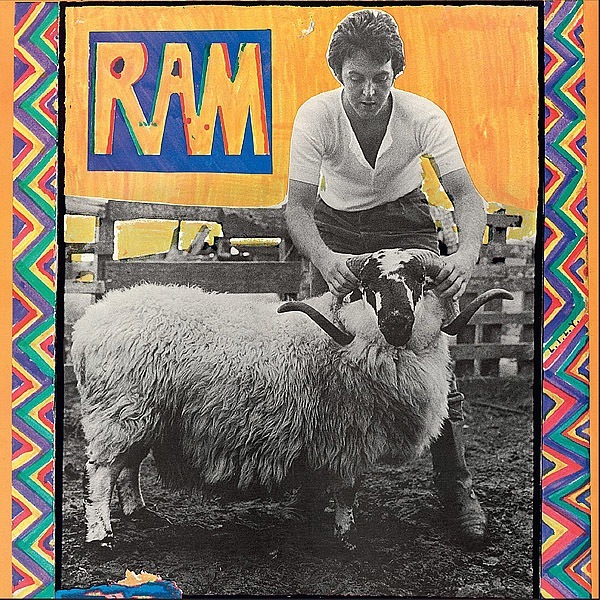

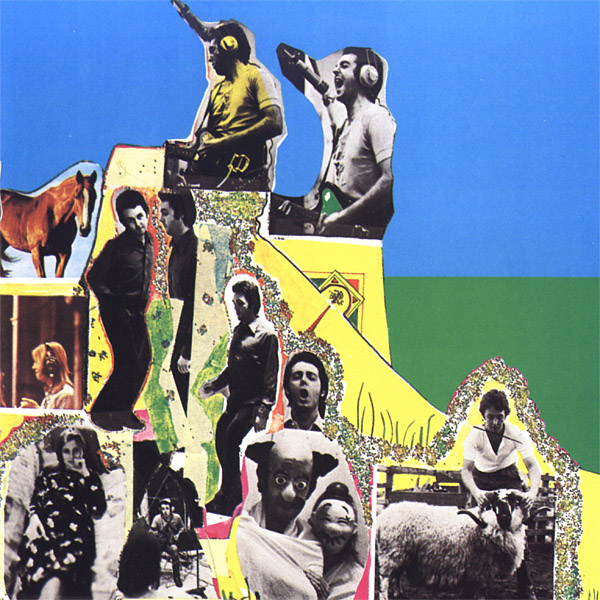
Oct 12 to Nov 20, 1970
"Ram" sessions (CBS Studios, New York City)
Last updated on September 28, 2025
Oct 12 to Nov 20, 1970
Last updated on September 28, 2025
Recording studio: CBS Studios • New York City • USA
Previous session May-August 1970 • Home recordings - "Ram" demos
Article October 10-11, 1970 • Paul McCartney holds secret auditions for a guitar player
Interview Oct 10, 1970 • George Martin interview for New Musical Express (NME)
Session Oct 12 to Nov 20, 1970 • "Ram" sessions (CBS Studios, New York City)
Session Oct 12, 1970 • Recording "Another Day"
AlbumSome of the songs worked on during this session were first released on the "Ram" LP
After a few days of audition to hire a drummer and a guitarist, the recording of the “Ram” album – and the related single “Another Day” – started in CBS Studios on October 12, 1970.
In the studio were Paul & Linda McCartney (and their kids on some days), drummer Denny Seiwell, guitarist David Spinozza (replaced on October 22 by Hugh McCracken), engineer Tim Geelan and assistant assistant Ted Brosnan. Tim Geelan remembers the mood of those sessions:
Paul was a great producer: thorough, businesslike and loose at the same time. They were very comfortable sessions that followed a pattern. We’d start working at nine or 10 in the morning. Paul would show Denny Seiwell, the drummer [who would later become an original member of Wings], and David Spinozza and Hugh McCracken, the guitar players who split the date, the song we’d be tracking that day. After rehearsing for several hours, we’d cut a version of the tune and then have a lunch break. After lunch, we’d listen to what we had and then record another couple of takes if it was necessary.
We had a 3M MM-1000 16-track recorder and a homemade console at CBS. Studio B was a big room, about 40 or 50 feet long and 50 feet wide with a 40-foot-high ceiling. We didn’t worry about bleeding at all. The setup was real tight and everyone had headsets. Paul was absolutely the best. I was impressed with his musicianship and command of the studio.
Tim Geelan, from MixOnline, August 1, 2004
While we were in New York making Ram, twenty kids would follow us everywhere we went, everywhere, hotels, rehearsals, the studio. After a while, I asked them to lay off and one of them turned and said, ‘Well, what the hell did you expect?’ I wasn’t expecting that.
Linda McCartney – From “The Beatles: Off The Record 2 – The Dream is Over: Dream Is Over Vol 2” by Keith Badman
The first time I ever saw Paul was in November 1970 when he was in New York recording his album “Ram” at CBS Studios. To say that I was beside myself is the understatement of the year. It happened quite a few years ago and my mind is very vague about details. I know I went there a couple of days. One day (the first time I saw him) I saw him three times. When I arrived he was already there. There were a lot of people there every day and I was told – which I found out myself – that he is usually in a vicious mood. This was his bad period. I saw him come out for lunch with Linda and I was in heaven! To finally see him in the flesh was too much. Believe it or not, he decided to stop right outside the doorway and let people take pictures of him but he wasn’t too thrilled about it. And believe it or not my camera decided not to work! When he left to go to lunch, he and Linda simply walked up the block and people were following him up to the corner but didn’t dare follow him any further.
After semi-composing myself he came back and 1 ½ hour later. All of a sudden people looking and noticed him bopping down the block from the same direction that he’d left in. He simply walked in and that was that. Afterwards, I saw him leave for the day – around 6 pm. As a joke, everyone decided that when he came out to leave we would all be quiet and not even flash photos of him. Sure enough, around 6 pm a cab pulled up and he comes walking out and no one does a thing. Total silence. It took a lot of willpower not to want to take his pic or even say goodbye or anything for that matter. But you should have seen the look on his face as he walked to the cab! And when he got into the cab he turned around to look at all of us and we still weren’t doing anything. He had such a perplexed look on his face! My next encounter with him at this time was a couple of days later. We cut school and went down there in the morning. We got there about 9 am and no one was there. We couldn’t figure this out. We found out later that he absolutely, positively does not want to see anyone there in the morning and he scared them enough that no one went.
We were standing there saying how great it was that we were the only ones there. Finally, he pulls up in a cab with Linda and Mary and Heather. Both of us standing in front of the entrance and he is paying the driver and scowling at us from inside the cab. Everyone gets out and he stops directly in front of us- only 3 feet away. We say good morning to him and not only does he not say good morning, he says absolutely nothing but continues to stare at us and mean really looking at us. We were a little uneasy and my friend Linda finally asks him if we can take a picture and he says “not in the morning” and leaves it at that and walks in. Linda and I found out afterwards that we were very lucky as there were a few bad incidents with girls there in the morning. Then we knew why he was staring at us the way he was. He was looking to see if he recognized us. If he had previously warned us not to be there at that time of day. Obviously realizing we did not know, he did not go into a tirade. In spite of the fact that most of the time he was in a miserable mood, Linda and I were glad he didn’t decide to randomly abuse us that morning considering we were innocent. It showed us that his good nature was still intact under all the hostility apparent at that period of time.
Tess Basta, “Beatle Encounters”, 1982 issue of With a Little Help From My Friends – From “The Beatles: Off The Record 2 – The Dream is Over: Dream Is Over Vol 2” by Keith Badman and from Meet the Beatles for Real: Tess’s Beatles Encounters
Working in the studio with [Linda and Paul] was fine. Paul knew what he wanted. I think the whole album was done in the same form as the McCartney album, only we played the parts for him. We were told exactly what to play. He knew exactly what he wanted and he just used us to do it. He just sang us the parts he wanted and the tune developed as we went along. We added things and we made suggestions. But I would say that two out of ten times he took one of our suggestions, or at least if he did, he modified it and made it into a Paul McCartney thing. It always comes out Paul McCartney regardless of the suggestion.
Linda didn’t have much to do in the studio, she just took care of the kids. The kids were there all the time, every day. They brought the whole family every day to the studio and they stayed no matter how long Paul stayed. If he was there at four o’clock in the morning, everybody stayed. I thought to a certain degree, it was distracting. It was a nice, loose atmosphere, but distracting. I really don’t know what Linda did in the studio aside from just sitting there and making her comments on what she thought was good and what she thought was bad. She sang all right. I heard some of the things she sang on the album and she sings fine, like any girl that worked in a High School glee club. She can hold a note and sing background. Paul gives her a note and says, ‘Here Linda, you sing this and I’m going to sing this,’ and she does… There’s one track, which is a cute thing, a blues tune, which I think has a pretty unique sound and I had fun doing ‘3 Legs’. Paul likes to double track a lot of things. We both played acoustic on some tracks and then tripled. Sometimes Paul played piano but he never played bass while we were there. He overdubbed the bass. It was a little weird, because bass, drums and guitar would have been more comfortable, but that’s the way he works … Working with Paul was fun, in as much as it was good to see how he works and where he’s coming from. But as a musician, it wasn’t fun, because it wasn’t challenging or anything like that. But it was very good. Paul is definitely a songwriter, not a musician, but he writes beautiful songs. In the studio, he’s incredibly prompt and businesslike. No smoking pot, no drinks, or carrying on, nothing. Just straight-ahead. He came in at nine in the morning. We were all there and we would listen to what we had done before so that it would get us psyched ready to do the day’s work, then we went into the studio and it was eight hours of just playing. He’s not a very loose cat, not eccentric in any way at all. Very much of a family man. He just wants to make good music.”
David Spinozza – Interview with Vicky Wickham, 1971 – From “The Beatles: Off The Record 2 – The Dream is Over: Dream Is Over Vol 2” by Keith Badman
Paul had a great personality, very witty, but when he came in and started working, it was 9 to 5. He was very serious about his music. He wasn’t in New York to hang.
David Spinozza – From Uncut, September 2020
The sessions for Ram would begin early in the morning. It surprised me how regimented they were. Paul and Linda would arrive together with the kids, and you drank your cup of coffee and you rolled up your sleeves and you played whatever song you were doing that day.
David Spinozza – From Uncut, June 2012
Every time Paul would come into the studio there was no rehearsal, no jams, none of that stuff. He’d come in in the morning, Linda and the kids would be in the studio, in the control room, and she’d make a cup of tea for everybody. Paul would just come into the studio itself and Hugh or Dave and I would get to hear the song we were going to make that day. He’d play it on an acoustic or piano or whatever, and kind of give us a rough idea of the song, and then we’d start working on the parts. There was usually only three of us in the studio: Paul, a guitar player – Hugh or Dave – and me; never anybody else on the whole thing. Paul and I would look at each other and have this real nice musical ESP going. When he played something and I responded and played along with him, it was like, ‘you know what I’m talking about here’; that’s what was so beautiful. I don’t think I’ve ever had that thing with anybody else that I’ve ever worked with.
Denny Seiwell – From “RAM – Archive Collection“, 2012
The sessions were very organised and business like. I got the feeling that Paul knew exactly what he wanted to hear and we were expected to reproduce it. I wasn’t intimidated by Paul in the studio. I had lots of experience in the studio, but I did and do admire Paul’s natural talent for writing, arranging and producing his music. He seemed to have a clear vision for the outcome of his work. I never thought I was in his band; I was quite comfortable with my studio musician role. He was the singer/songwriter/producer and it was my job to help the songs come to life and assist him with his vision of them. We worked on a song per day. We’d get in at 9am and go to 5pm. It was very efficient.
David Spinozza – From “RAM – Archive Collection“, 2012
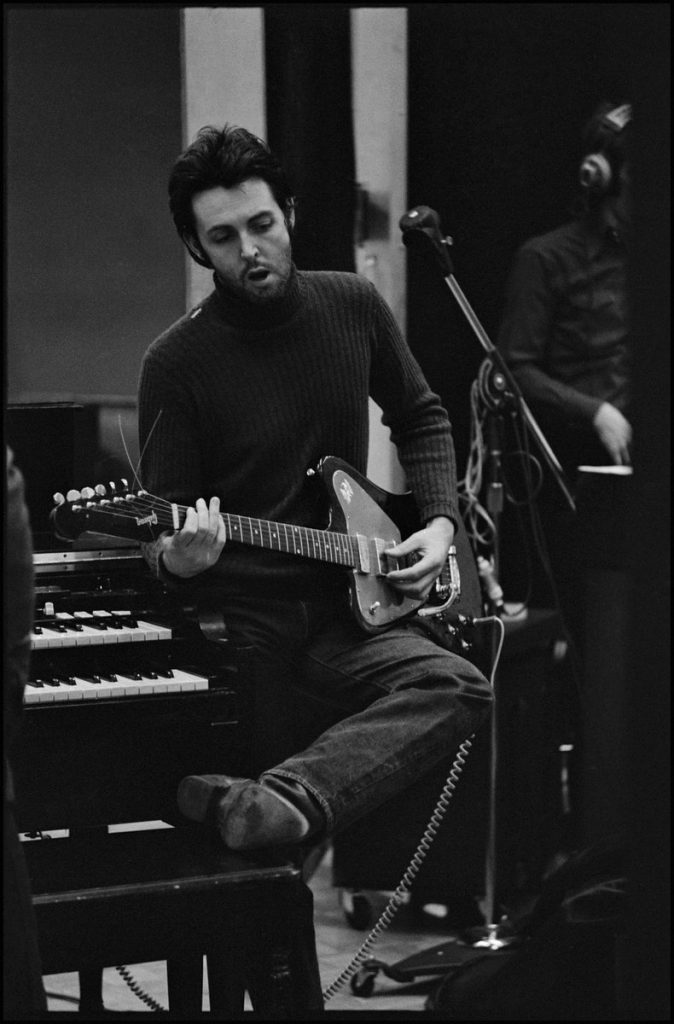

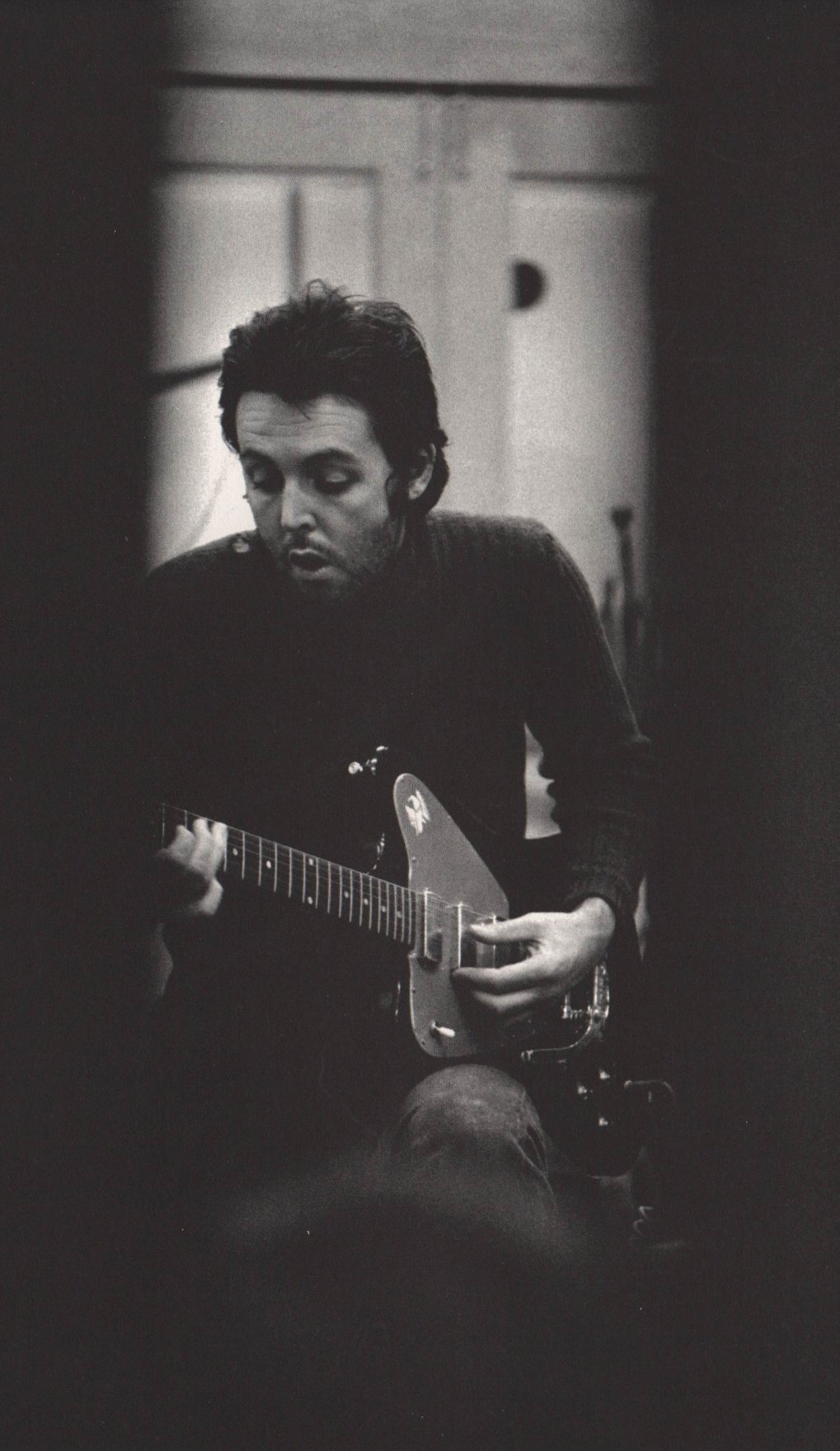
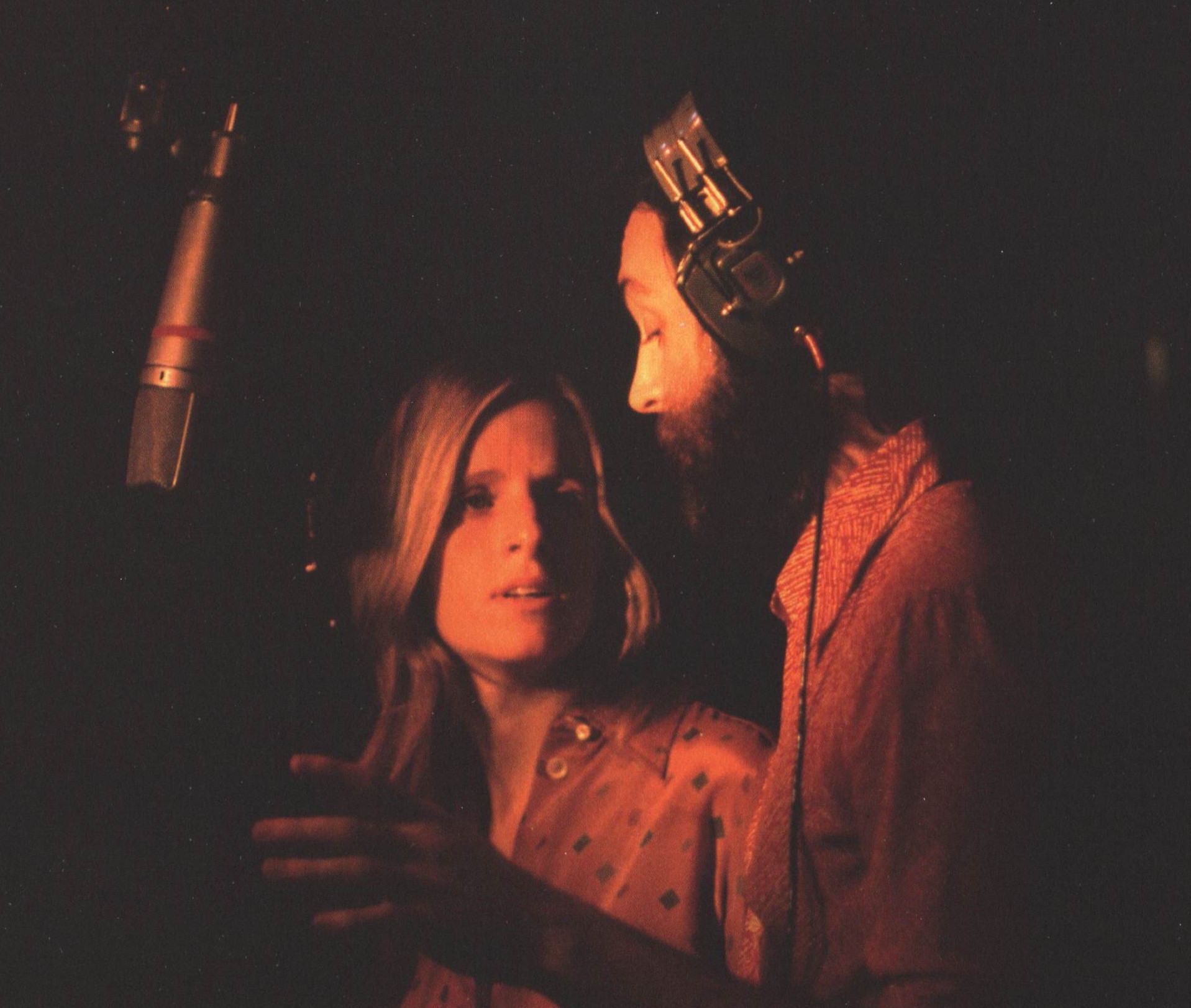
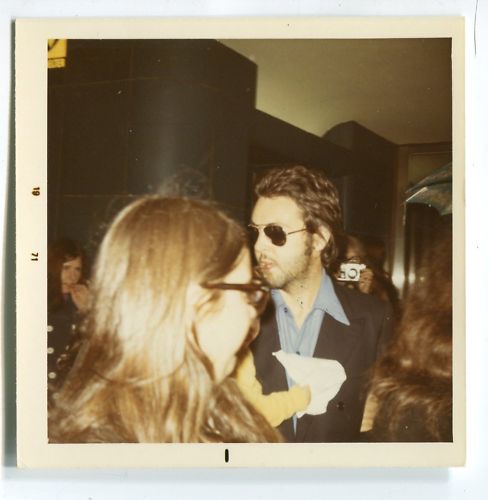
We went to New York to try and find the best recording studio in the world. But I tried them all, and I still think No. 2 at Abbey Road is the best. It’s the one that suits me best, anyway. It’s also got so many facilities there. In America, if you suddenly decide that you want a harmonium, you have to ring up a firm, ‘Yes, we want a harmonium. Yes, we will pay for it. Yes, we’ll pay for delivery costs,’ all this business. Here in England, I just say to Tony (Clark, engineer), ‘Can we have a harmonium,’ he phones the man downstairs and he wheels one up. Anyway, in New York we got to Harlem on the subway, we had a great evening at the Apollo Theater and we had a walk through Central Park after hours. You may find us murdered one day… It was snowy like moonlight in Vermont, just fantastic and I figure anyone who scares me, I scare him.
Paul McCartney – From “The Beatles: Off The Record 2 – The Dream is Over: Dream Is Over Vol 2” by Keith Badman
I saw Paul once at Columbia Studio B, when my own group, the Rascals, were recording there. I burst mistakenly into the wrong room and there were these strangers with a couple of kids and a big picnic lunch all over the control board, and I heard this heavy accent ‘Eh, Sid Bernstein’ and it was Paul — behind the beard that I hadn’t seen before.
Sid Bernstein – From “The Makka Material : Investigation by Adam Block“, 1976 – Quoted in “The McCartney Legacy: Volume 1: 1969 – 73” by Allan Kozinn and Adrian Sinclair, 2022
NEW YORK — Paul McCartney and his wife Linda and their two children (shown here arriving with shades, Fifties haircut and assorted diapers and dolls) have been in New York for the past two weeks, in near-total isolation. Paul is working on a new album at the Jason Studios, and in addition to the professional session men backing him, Dino Danelli and Felix Cavaliere of the Rascals have reportedly joined up. All of this is off the record, of course; even though Sid Bernstein, the Rascals’ manager, went on WMCA radio two months ago and announced that he had offered McCartney a chance to tour with the Rascals as back-up, with Paul getting half the take. Paul is known to be interested in a US tour for himself. At this point, however, nobody is saying anything, especially Bernstein. When asked if Dino and Felix’s studio work was a prelude to a longer McCartney association, Sid said he wasn’t even “aware” that they’d been in the studio with Paul at all.


Oct 12, 1970 • Songs recorded during this session appear on Another Day / Oh Woman Oh Why

Recording "Get On The Right Thing"
Oct 14, 1970 • Songs recorded during this session appear on Red Rose Speedway

Recording "3 Legs", "Eat At Home"
Oct 16, 1970 • Songs recorded during this session appear on Ram

Oct 19, 1970 • Songs recorded during this session appear on Live And Let Die / I Lie Around

Recording "The Back Seat Of My Car," "When The Wind Is Blowing"
Oct 20, 1970 • Songs recorded during this session appear on Wild Life - Archive Collection
Recording "The Back Seat Of My Car", "Rode All Night"
Oct 22, 1970 • Songs recorded during this session appear on Ram
Recording "The Back Seat Of My Car"
Oct 23, 1970 • Songs recorded during this session appear on Ram

Recording "Hey Diddle", "A Love For You"
Oct 26, 1970 • Songs recorded during this session appear on Ram - Archive Collection
Recording "A Love For You," "Long Haired Lady"
Oct 27, 1970 • Songs recorded during this session appear on Ram
Recording "Long Haired Lady", "Sunshine Sometime"
Oct 29, 1970 • Songs recorded during this session appear on Ram - Archive Collection
Recording "Oh Woman, Oh Why", mixing "Sunshine Sometime"
Nov 02, 1970 • Songs recorded during this session appear on Ram - Archive Collection
Recording "Oh Woman, Oh Why", "Monkberry Moon Delight"
Nov 03, 1970 • Songs recorded during this session appear on Another Day / Oh Woman Oh Why
Recording "Monkberry Moon Delight", "Uncle Albert"
Nov 05, 1970 • Songs recorded during this session appear on Ram
Recording "Uncle Albert/Admiral Halsey"
Nov 06, 1970 • Songs recorded during this session appear on Ram
Nov 10, 1970 • Songs recorded during this session appear on Ram

Nov 13, 1970 • Songs recorded during this session appear on Mary Had A Little Lamb / Little Woman Love (UK)
Recording "Smile Away", "Heart Of The Country"
November 16-18, 1970 • Songs recorded during this session appear on Ram
Recording "Little Lamb Dragonfly"
Nov 19, 1970 • Songs recorded during this session appear on Red Rose Speedway
Oct 12, 1970 • Recording "Another Day"
Oct 14, 1970 • Recording "Get On The Right Thing"
Oct 16, 1970 • Recording "3 Legs", "Eat At Home"
Oct 16, 1970 • Recording "3 Legs", "Eat At Home"
Oct 19, 1970 • Recording "I Lie Around"
Oct 20, 1970 • Recording "The Back Seat Of My Car," "When The Wind Is Blowing"
Oct 20, 1970 • Recording "The Back Seat Of My Car," "When The Wind Is Blowing"
Oct 22, 1970 • Recording "The Back Seat Of My Car", "Rode All Night"
Oct 22, 1970 • Recording "The Back Seat Of My Car", "Rode All Night"
Oct 23, 1970 • Recording "The Back Seat Of My Car"
Oct 26, 1970 • Recording "Hey Diddle", "A Love For You"
Oct 26, 1970 • Recording "Hey Diddle", "A Love For You"
Oct 27, 1970 • Recording "A Love For You," "Long Haired Lady"
Oct 27, 1970 • Recording "A Love For You," "Long Haired Lady"
Oct 29, 1970 • Recording "Long Haired Lady", "Sunshine Sometime"
Oct 29, 1970 • Recording "Long Haired Lady", "Sunshine Sometime"
Nov 02, 1970 • Recording "Oh Woman, Oh Why", mixing "Sunshine Sometime"
Nov 02, 1970 • Recording "Oh Woman, Oh Why", mixing "Sunshine Sometime"
Nov 03, 1970 • Recording "Oh Woman, Oh Why", "Monkberry Moon Delight"
Nov 03, 1970 • Recording "Oh Woman, Oh Why", "Monkberry Moon Delight"
Nov 05, 1970 • Recording "Monkberry Moon Delight", "Uncle Albert"
Nov 05, 1970 • Recording "Monkberry Moon Delight", "Uncle Albert"
Nov 06, 1970 • Recording "Uncle Albert/Admiral Halsey"
Nov 10, 1970 • Recording "Too Many People"
Nov 13, 1970 • Recording "Little Woman Love"
November 16-18, 1970 • Recording "Smile Away", "Heart Of The Country"
November 16-18, 1970 • Recording "Smile Away", "Heart Of The Country"
Nov 19, 1970 • Recording "Little Lamb Dragonfly"
Paul McCartney: Music Is Ideas. The Stories Behind the Songs (Vol. 1) 1970-1989
With 25 albums of pop music, 5 of classical – a total of around 500 songs – released over the course of more than half a century, Paul McCartney's career, on his own and with Wings, boasts an incredible catalogue that's always striving to free itself from the shadow of The Beatles. The stories behind the songs, demos and studio recordings, unreleased tracks, recording dates, musicians, live performances and tours, covers, events: Music Is Ideas Volume 1 traces McCartney's post-Beatles output from 1970 to 1989 in the form of 346 song sheets, filled with details of the recordings and stories behind the sessions. Accompanied by photos, and drawing on interviews and contemporary reviews, this reference book draws the portrait of a musical craftsman who has elevated popular song to an art-form.
The McCartney Legacy: Volume 1: 1969 – 73

In this first of a groundbreaking multivolume set, THE MCCARTNEY LEGACY, VOL 1: 1969-73 captures the life of Paul McCartney in the years immediately following the dissolution of the Beatles, a period in which McCartney recreated himself as both a man and a musician. Informed by hundreds of interviews, extensive ground up research, and thousands of never-before-seen documents THE MCCARTNEY LEGACY, VOL 1 is an in depth, revealing exploration of McCartney’s creative and personal lives beyond the Beatles.
Eight Arms to Hold You: The Solo Beatles Compendium
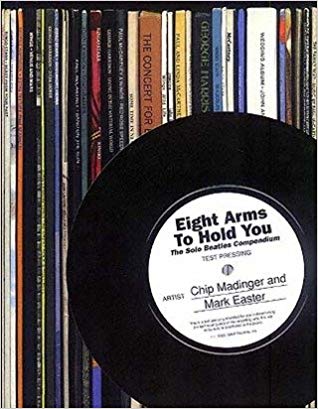
Eight Arms To Hold You: The Solo Beatles Compendium is the ultimate look at the careers of John Lennon, Paul McCartney, George Harrison and Ringo Starr beyond the Beatles. Every aspect of their professional careers as solo artists is explored, from recording sessions, record releases and tours, to television, film and music videos, including everything in between. From their early film soundtrack work to the officially released retrospectives, all solo efforts by the four men are exhaustively examined.
Maccazine - Volume 40, Issue 3 - RAM Part 1 - Timeline

This very special RAM special is the first in a series. This is a Timeline for 1970 – 1971 when McCartney started writing and planning RAM in the summer of 1970 and ending with the release of the first Wings album WILD LIFE in December 1971. [...] One thing I noted when exploring the material inside the deluxe RAM remaster is that the book contains many mistakes. A couple of dates are completely inaccurate and the story is far from complete. For this reason, I started to compile a Timeline for the 1970/1971 period filling the gaps and correcting the mistakes. The result is this Maccazine special. As the Timeline was way too long for one special, we decided to do a double issue (issue 3, 2012 and issue 1, 2013).

Notice any inaccuracies on this page? Have additional insights or ideas for new content? Or just want to share your thoughts? We value your feedback! Please use the form below to get in touch with us.