Tuesday, July 22, 1969
Recording "Oh! Darling", "Come Together"
For The Beatles
Last updated on May 14, 2025
Tuesday, July 22, 1969
For The Beatles
Last updated on May 14, 2025

Feb 22 - Aug 25, 1969 • Songs recorded during this session appear on Abbey Road
Recording studio: EMI Studios, Studio Three, Abbey Road • London • UK
Article Jul 20, 1969 • The Beatles are shown a rough cut of the "Let It Be" film
Session Jul 21, 1969 • Recording "Come Together"
Session Jul 22, 1969 • Recording "Oh! Darling", "Come Together"
Session Jul 23, 1969 • Recording "Oh! Darling", "Come Together", "The End"
Session Jul 24, 1969 • Recording and mixing "Come And Get It", "Sun King", "Mean Mr Mustard"
AlbumSome of the songs worked on during this session were first released on the "Abbey Road" LP

By The Beatles
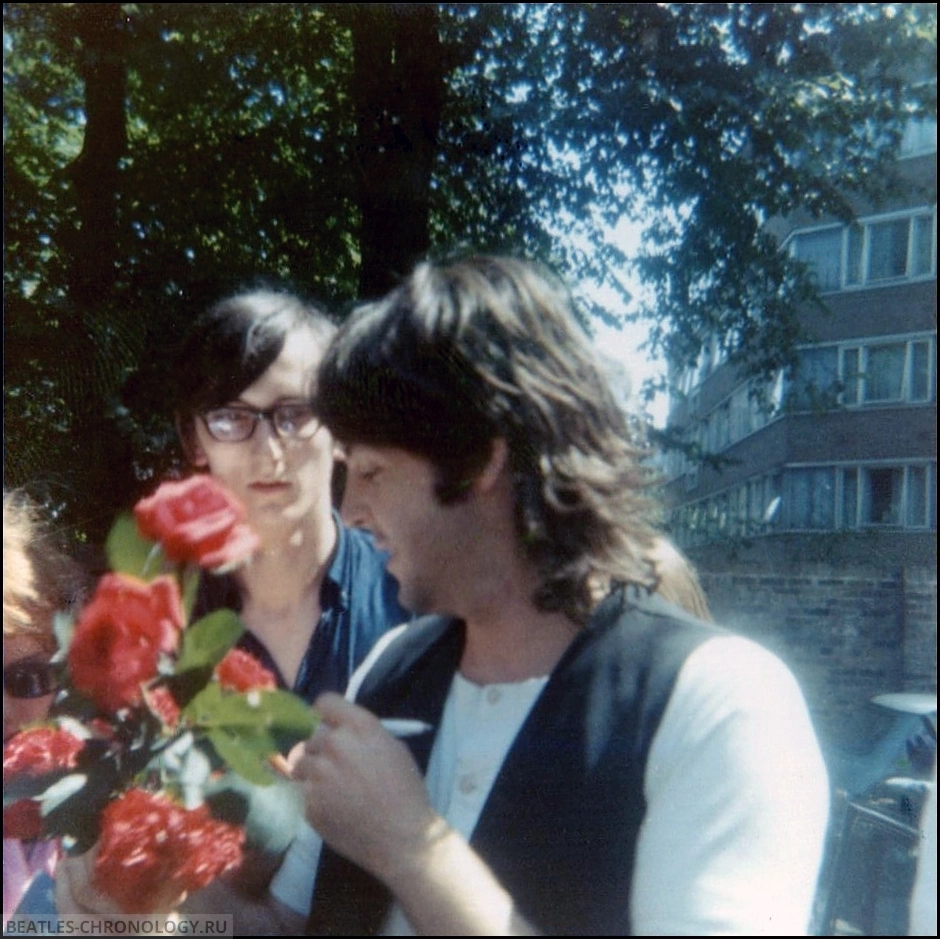
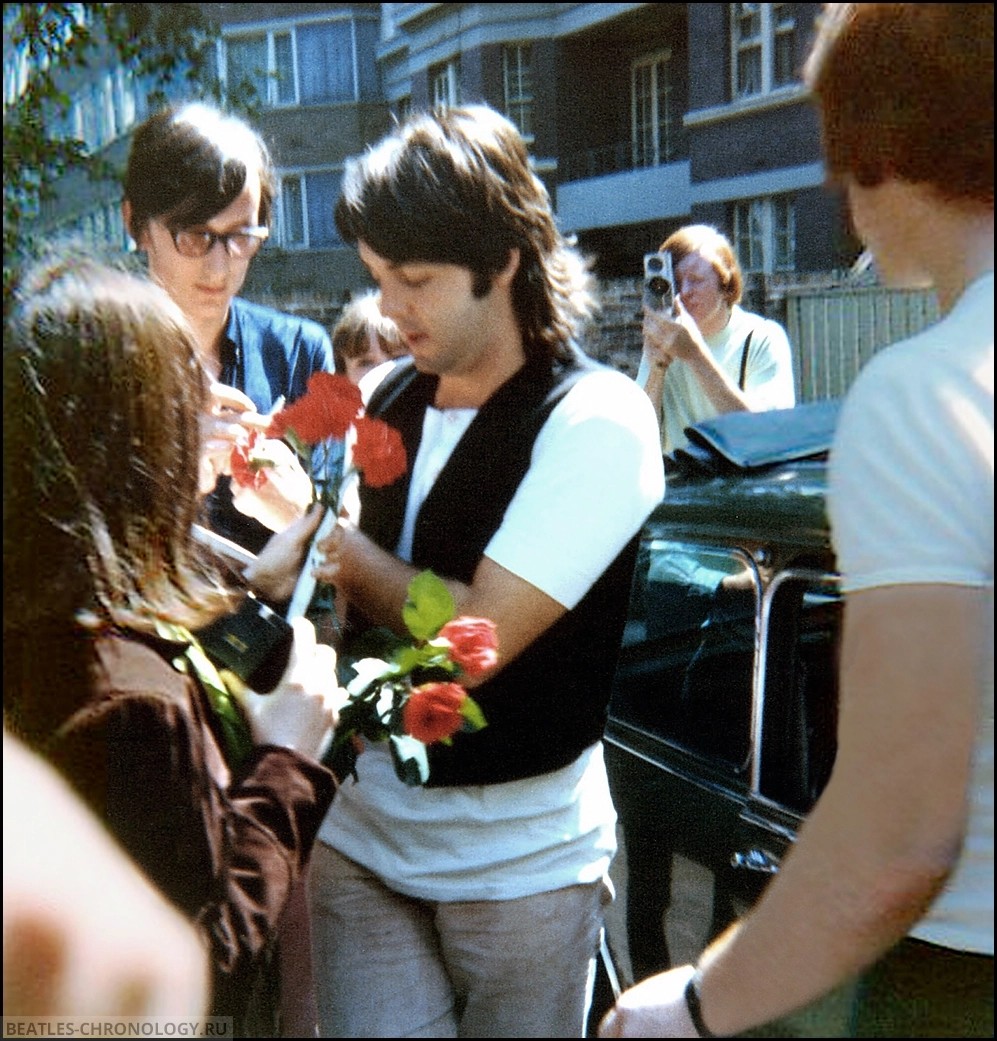
As he had done on July 17 and July 18, Paul McCartney arrived early at EMI Studios to re-record the lead vocals of “Oh! Darling“. Still dissatisfied with the result, he would try again on July 23.
Perhaps my main memory of the Abbey Road sessions is of Paul coming into studio three at two o’clock or 2.30 each afternoon, on his own, to do the vocal on Oh! Darling. […] Paul came in several days running to do the lead vocal on Oh! Darling. He’d come in, sing it and say ‘No, that’s not it, I’ll try it again tomorrow’. He only tried it once per day, I suppose he wanted to capture a certain rawness which could only be done once before the voice changed. […]
Alan Parsons – Engineer – From “The Complete Beatles Recording Sessions” by Mark Lewisohn, 1988
The previous day, The Beatles had recorded the basic track for John Lennon’s “Come Together“. On this day, from 2:30 pm to 9:30 pm, they began adding the first series of overdubs.
John re-recorded his lead vocals and handclaps onto track four of the eight-track tape, with tape delay applied to alter the vocal sound.
Track five received an electric piano part and rhythm guitar, the latter played by George Harrison. There is some dispute over who played the piano: engineer Geoff Emerick recalled it was John, while Kevin Howlett, in the “Abbey Road” Super Deluxe edition book (2019), credits Paul McCartney. Paul himself, in a 1984 interview with Playboy, stated that he played the part.
Additional guitar by John and a maraca part by Ringo Starr were recorded onto track six.
Work on “Come Together” would continue the following day.
With Come Together, for instance, [John] wanted a piano lick to be very swampy and smoky, and I played it that way and he liked that a lot. I was quite pleased with that.
Paul McCartney – Interview with Playboy, December 1984
Initially, Paul played the electric piano part, but John kind of looked over his shoulder and studied what he was playing. When it came time to record it, John played the electric piano instead of Paul. Paul might have been miffed, but I think he was more upset about not singing on the choruses – John did his own backing vocals.
Geoff Emerick – From MusicRadar, 2014 interview
I could see that John was treating Paul in an offhand manner, despite the fact that Paul came up with the electric piano lick and swooping bass line that pretty well define “Come Together.” John even made a point of playing the piano line, once he’d looked over Paul’s shoulder and learned the part. That would have never happened in the old days: both men knew that Paul was the better piano player, and he normally would be manning the keyboards even if they were recording a Lennon song.
John not only sang the lead, but also did all the backing vocals on “Come Together” by himself. He didn’t ask either Paul or George to join in, and neither of them volunteered. Harrison didn’t seem to care one way or the other, but I could see that it was getting to Paul. Finally, in some frustration, he blurted out, “What do you want me to do on this track, John?” John’s reply was a diffident “Don’t worry, I’ll do the overdubs on this.” Paul looked a bit hurt, then angry. For a moment I thought there was going to be an explosion. Instead, he contained himself, shrugged his shoulders, and simply walked out of the studio—one of the few times he ever left a session early. Paul had to have felt humiliated, but rather than having a fight or an argument about it, he chose to just get up and leave, without any dramatics. The next day, he returned, and nothing further was ever said about it.
Geoff Emerick – From “Here, There and Everywhere: My Life Recording the Music of The Beatles“, 2006
Recording • SI onto take 26
Recording • SI onto take 9
The Complete Beatles Recording Sessions • Mark Lewisohn
The definitive guide for every Beatles recording sessions from 1962 to 1970. We owe a lot to Mark Lewisohn for the creation of those session pages, but you really have to buy this book to get all the details - the number of takes for each song, who contributed what, a description of the context and how each session went, various photographies... And an introductory interview with Paul McCartney!
The Beatles Recording Reference Manual: Volume 5: Let It Be through Abbey Road (1969 - 1970)

The fifth and final book of this critically acclaimed series, "The Beatles Recording Reference Manual: Volume 5: Let It Be through Abbey Road (1969 - 1970)" follows The Beatles as they "get back to where they once belonged...". Not once, but twice. With "Let It Be", they attempted to recapture the spontaneity of their early years and recordings, while "Abbey Road" was a different kind of return - to the complexity, finish and polish that they had applied to their work beginning with "Revolver" and through to "The Beatles".
Solid State: The Story of "Abbey Road" and the End of the Beatles
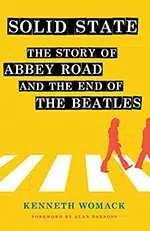
Acclaimed Beatles historian Kenneth Womack offers the most definitive account yet of the writing, recording, mixing, and reception of Abbey Road. In February 1969, the Beatles began working on what became their final album together. Abbey Road introduced a number of new techniques and technologies to the Beatles' sound, and included "Come Together," "Something," and "Here Comes the Sun," which all emerged as classics.
If we modestly consider the Paul McCartney Project to be the premier online resource for all things Paul McCartney, it is undeniable that The Beatles Bible stands as the definitive online site dedicated to the Beatles. While there is some overlap in content between the two sites, they differ significantly in their approach.

Notice any inaccuracies on this page? Have additional insights or ideas for new content? Or just want to share your thoughts? We value your feedback! Please use the form below to get in touch with us.


